

Quick answer: Keratosis pilaris (KP) causes small, rough bumps around hair follicles, often on the arms, thighs, cheeks or buttocks. It is common, harmless and not contagious. Gentle cleansing and regular moisturizing help with dryness; some people also benefit from an appropriate exfoliating treatment. KP often improves with age, but it can persist into adulthood.1, 2, 3

Keratosis pilaris explained
Keratosis pilaris, usually shortened to KP, is a common condition that gives skin a persistent goosebump-like texture. Tiny plugs form at the openings of hair follicles, the small structures from which hairs grow. Those plugs contain keratin, a normal protein in skin cells. The roughness comes from how the cells collect at the follicle, rather than a dangerous buildup throughout the body.3, 4


Simplified illustrations, not to scale. Skin tones and the appearance of bumps vary.
KP is often nicknamed “chicken skin.” It is harmless, and having it does not mean that your skin is dirty or unhealthy. If the bumps do not bother you or your child, there is no need to pursue perfectly smooth skin. When dryness, itching or appearance does become a concern, a gentle care plan can make the skin more comfortable.2
The condition often becomes less noticeable as people grow older, but there is no particular birthday when it is guaranteed to disappear. Some adults continue to have KP for years. Understanding that variable course helps set a more useful goal: comfortable skin and a routine that is easy to keep up.6, 9
Symptoms, appearance and common locations
KP usually appears as clusters of small, fairly uniform bumps. You may notice the texture when you run a hand over an upper arm before you notice anything in the mirror. The surrounding skin can feel dry, and occasional itching is possible, although the bumps are generally painless. Their color may match the skin or look white, pink, red, purple or brown, depending on skin tone and inflammation.1
The areas most often affected
The outer upper arms, thighs, cheeks and buttocks are common locations. Cheek bumps are especially familiar in children; some people also have patches on the forearms or lower legs. KP does not occur on the palms or soles, which have no hair follicles. Dry winter air can make existing bumps and roughness more noticeable.1
Rubra, rubra faciei and alba
These terms describe differences in appearance. Rubra refers to KP with more conspicuous redness, while rubra faciei describes facial involvement. Alba is used for bumps with little surrounding redness. These labels are useful descriptions, rather than a simple severity scale or a reason to choose a stronger product.

The photographs show some of the variation in KP. A person’s skin tone, lighting and degree of dryness all affect what is visible. Persistent facial inflammation, eyebrow thinning or small areas of scarring deserve a closer assessment because less common follicular conditions can need different care.4, 11
Causes, genetics and risk factors
The exact reason that certain follicles become plugged is not fully understood. KP often runs in families, and inherited differences in skin formation and shedding appear to contribute. A parent may recognize the same rough upper arms in a child, but that family pattern does not predict exactly how noticeable the child’s bumps will be or how long they will last.3, 4
Dry skin, eczema and ichthyosis vulgaris, a condition that causes very dry, scaly skin, commonly accompany KP. Associations with asthma and hay fever are also described. These associations do not mean that every child with KP has another condition or needs testing for one; symptoms and medical history guide that decision.3
KP is not contagious. You cannot catch it from a sibling or pass it to someone by touching their skin. Because the bumps arise from follicular plugging, extra washing cannot remove the underlying tendency. Scrubbing harder usually adds irritation to a problem that is already easier to feel when skin is dry.6
Keratosis pilaris in babies, children and teens
KP can begin in early childhood or become more obvious around puberty. In a young child, the cheeks may be involved along with the arms and thighs. The distribution can change over time, so it is more helpful to follow how the skin feels than to expect the bumps to follow a fixed timetable.3
For babies and young children, start with uncomplicated care: a mild cleanser when washing and a fragrance-free moisturizer for dry areas. Smooth the cream on gently rather than rubbing repeatedly over each bump. Keeping it beside the pajamas or changing supplies can make moisturizing a familiar part of the day, instead of another task to remember.
Peeling creams and exfoliating acids can sting and irritate young skin. They should not be borrowed from an adult’s KP routine, especially for a child’s cheeks. If an older child or teenager is bothered by persistent roughness, a pediatrician or dermatologist can help select an appropriate product. The aim is a routine the child can tolerate, not the strongest treatment on the shelf.2, 5
A new or uncertain rash should be examined before it is treated as KP. Eczema and other childhood rashes can also feel rough. Our guide to choosing a KP moisturizer explains how age, body area and sensitivity affect product selection.
KP, eczema and similar-looking bumps
Rough bumps do not always have the same cause. The pattern, location and accompanying symptoms help a clinician distinguish KP from another condition. KP and eczema can also occur together, so a child can have a familiar bumpy texture and a separate itchy flare in the same general area.2, 11
| Condition | Typical appearance | A useful distinction |
|---|---|---|
| Keratosis pilaris | Small, fairly uniform bumps centered on follicles. | Rough texture is often more noticeable than discomfort. |
| Eczema | Dry, inflamed patches that may crack or become thickened. | Itching is often prominent, and inflammation extends beyond individual follicles. |
| Acne | Blackheads, whiteheads and inflamed pimples. | Different types of spots commonly occur together. |
| Folliculitis | Inflamed follicular bumps, sometimes with pus. | Tenderness or pustules call for a different assessment. |
These are clues rather than a way to diagnose a rash from a table. If bumps hurt, drain or change quickly, treat that as a new problem instead of simply adding an exfoliating lotion.
Strawberry legs, under-eye bumps and unusual locations
“Strawberry legs” is an informal description of visible dark follicular dots. KP may contribute, but shaving irritation and other follicular problems can look similar. Likewise, a small white bump near an eye may be milia rather than KP. Keep exfoliating products away from the eyelids and have uncertain bumps assessed.11
Persistent scalp bumps or hair loss should not automatically be attributed to ordinary KP. Some uncommon conditions involving follicles can cause scarring or hair loss, and they need a more specific diagnosis.4
Daily care and treatment options
Moisturizing and treating follicular plugs address different parts of KP. A moisturizer helps the surrounding dry skin hold water and feel softer. A keratolytic, or exfoliating treatment, helps loosen accumulated skin cells. Starting with that distinction makes it easier to understand why a cream can improve comfort even when some bumps remain.
Gentle washing and regular moisture
Keep baths or showers brief and use lukewarm water with a mild, fragrance-free cleanser. Pat the skin dry and apply moisturizer while it is still slightly damp. Reapply when dry areas need it; there is no need to wash again before every application. A cream or ointment may provide more lasting moisture than a light lotion.5, 13
Avoid picking, squeezing and forceful scrubbing. If clothing, shaving or waxing repeatedly irritates an area, adjust that part of the routine as well. In very dry indoor air, a properly maintained humidifier may help reduce dryness. These habits support comfort without turning skin care into a constant effort to rub the bumps away.6, 12
For a closer look at textures, ingredients and application, read lotion and cream for keratosis pilaris. That guide separates an everyday moisturizer from an exfoliating formula so you can choose for the concern you actually want to address.
Exfoliating ingredients and prescription creams
Lactic acid, salicylic acid and urea are used in products for rough, bumpy skin. Their effects and tolerability depend on the formulation and strength. Follow the product directions or the plan provided by your clinician, and pause a product if the skin becomes persistently irritated. Combining several exfoliants or using them more often is not a shortcut to better results.12
A dermatologist may also prescribe a topical retinoid to change skin-cell turnover and reduce plugging. These medicines can cause dryness or irritation, and pregnancy or nursing affects treatment choice. Young children generally need a gentler approach than an adult exfoliation regimen.5
Treatment for troublesome redness or persistent symptoms
Selected cases may benefit from a short course of an anti-inflammatory cream. Laser or light procedures are sometimes used for redness or texture when simpler measures have not helped, but responses vary and procedures are not a cure. They are not the usual starting point for routine childhood KP.2, 9
An appropriate plan needs time and, often, ongoing maintenance. The American Academy of Dermatology advises checking back if a treatment plan has not helped after about four to six weeks. That is a reason to reassess the plan, rather than keep increasing the amount or frequency on your own.9
Diet, vitamins and home remedies
Phrynoderma and KP: a visual comparison
Ordinary KP does not, by itself, mean that you lack vitamin A or essential fatty acids. Phrynoderma is a different condition that can produce follicular bumps in the setting of nutritional deficiency or problems absorbing nutrients. The photographs below show why the two conditions can be confused.7
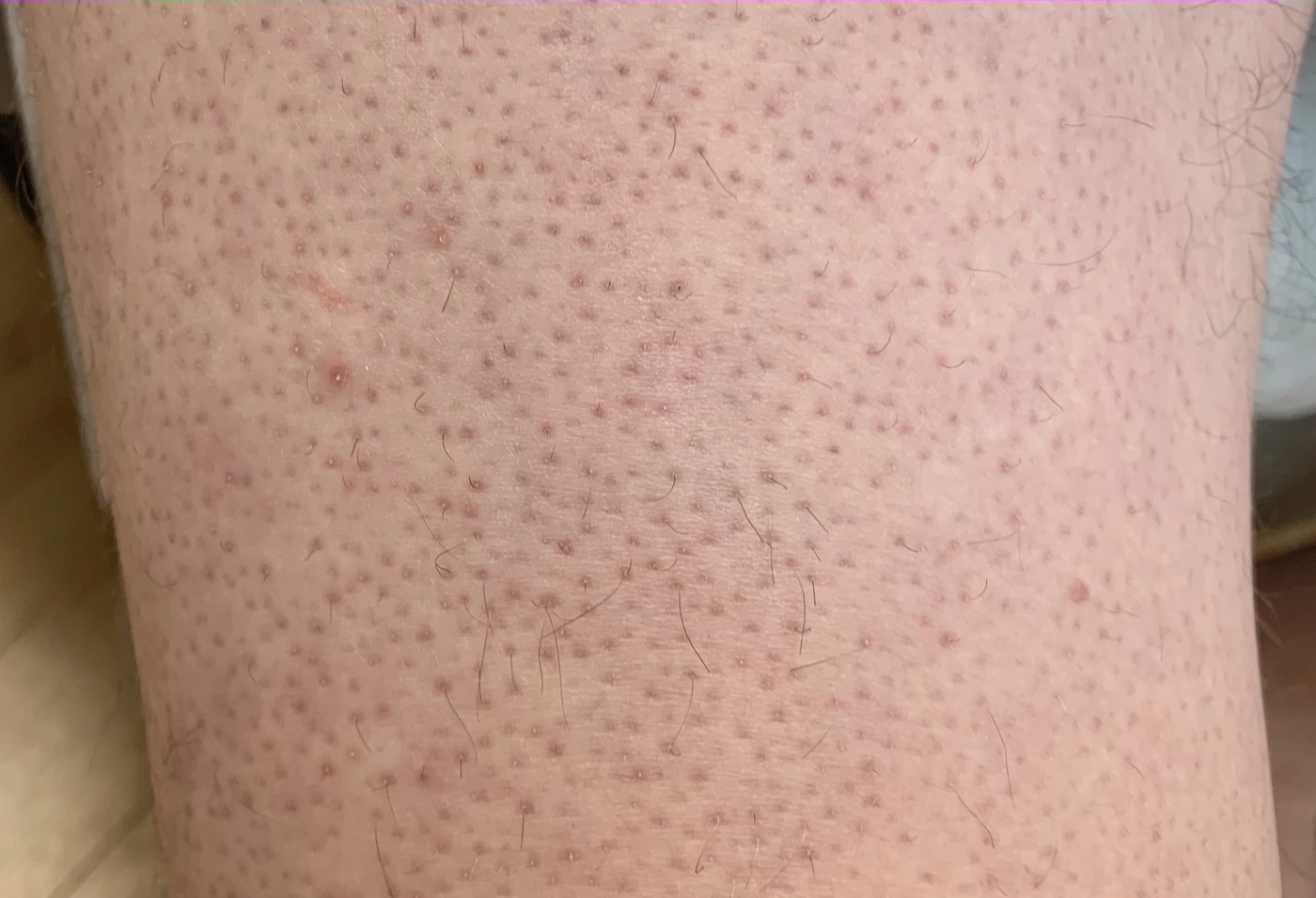
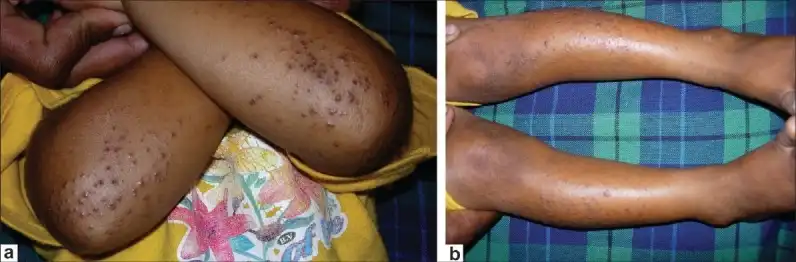
These photographs show different people at different magnifications. Compare the pattern of the bumps, not skin color or apparent size. Select either image to view it in full.
KP usually produces small bumps on the outer upper arms and thighs, and it may also affect the cheeks. Phrynoderma can have more prominent, firm bumps with a central plug of keratin. It often begins around the backs of the elbows or fronts of the knees before extending to other areas. Those patterns provide useful clues, but there is enough overlap that a photograph alone cannot settle the diagnosis.7, 11
The person’s health history helps put the skin findings in context. With suspected phrynoderma, a clinician considers prolonged dietary restriction, poor growth or a condition that interferes with nutrient absorption. That assessment helps determine whether nutritional testing or treatment is needed. The distinction matters because moisturizing can ease roughness, but it does not correct an underlying nutritional deficiency.7
Vitamin supplements are not routine KP care
Vitamin A supplements are not an established routine treatment for ordinary KP. Taking too much preformed vitamin A can be harmful, including during pregnancy. A prescription retinoid applied to the skin is a different treatment from taking a vitamin supplement; the two should not be treated as interchangeable approaches.5, 8
A balanced diet supports health, but rough bumps alone are not a reason to eliminate whole food groups or add high-dose supplements. If there is a concern about a restricted diet, poor growth or nutrient absorption, address that concern directly with a clinician.
Home remedies need the same scrutiny as other products
A homemade scrub or a kitchen acid is not equivalent to a carefully formulated skin product. Baking-soda mixtures, abrasive rubbing and preparations that sting can leave the skin more irritated. “Natural” does not reliably describe how gentle something will be. Moisturizing dry skin is a worthwhile goal, but an oil or home remedy should not be presented as a cure for KP.
A closer look at newer KP research
A small randomized study published online in December 2025 compared a particular scrub-and-lotion regimen with a salicylic-acid lotion in 60 adults aged 18 to 35. Both groups had fewer measured bumps over 28 days. The study was open-label, and the groups did not differ significantly in bump counts at individual follow-up visits.10
The results add to research on texture and skin-barrier care, but they do not establish a lasting cure or show that every two-step routine has the same effect. The products were not Happy Cappy products, and the study did not test young children. Longer studies would help clarify how durable any benefit is.
Happy Cappy for rough, dry, sensitive skin
Happy Cappy Daily Shampoo & Body Wash and Moisturizing Cream fit the gentle cleansing and moisturizing part of a KP routine. The wash is fragrance-free and made without SLS or SLES. The cream contains glycerin to attract moisture and petrolatum to help retain it, giving dry skin practical daily support.
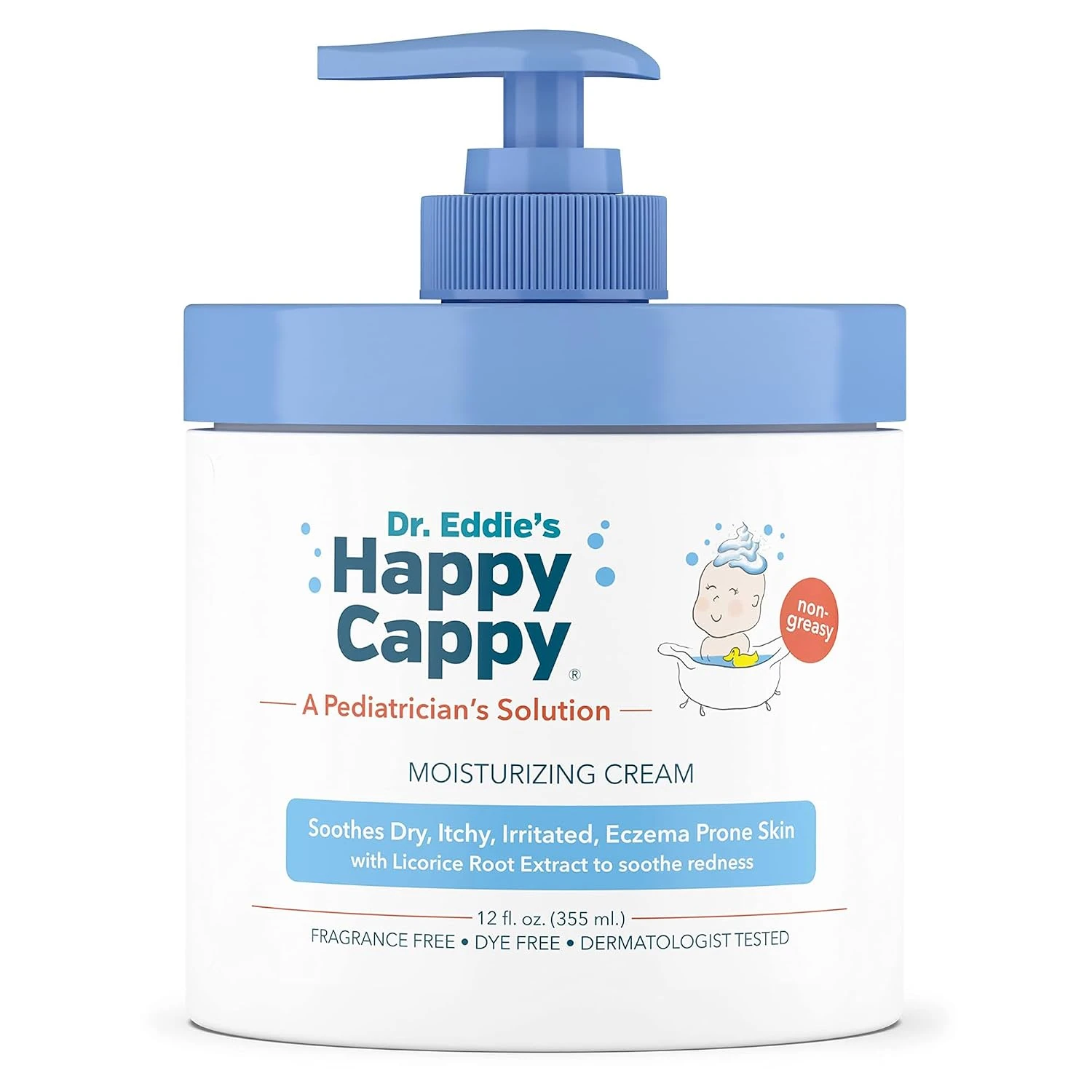
Use Daily Wash for gentle cleansing and smooth on Moisturizing Cream after bathing and when skin feels dry. The cream is fast-absorbing and non-greasy, making regular application easier for children and adults.
Explore the Daily Wash + Cream routineThese products can help dry skin feel softer and more comfortable. They do not act as exfoliating medicines or cure KP. If follicular bumps remain bothersome after dryness is better controlled, the next decision is whether an additional treatment suits the person’s age and skin sensitivity.
Medical advice for persistent or unusual bumps
Arrange an assessment when the diagnosis is uncertain, a rash is new or changing, or itching and inflammation interfere with comfort or sleep. Pain, pus, spreading warmth or rapidly worsening redness need prompt attention. Persistent facial redness, scarring or eyebrow or scalp hair loss also deserves a closer look.4, 11
KP is not a sign that you have failed to care for your skin. Some texture may remain even with a thoughtful routine. A useful plan should make everyday care easier and the skin more comfortable, while leaving room to seek additional help when the bumps themselves are troubling.
Sources and further reading
- American Academy of Dermatology: KP signs and symptoms.
- Society for Pediatric Dermatology: Keratosis pilaris.
- American Academy of Dermatology: KP causes and risk factors.
- Primary Care Dermatology Society: KP and its variants.
- Mayo Clinic: KP diagnosis and treatment.
- NHS: Keratosis pilaris.
- DermNet: Phrynoderma.
- NIH Office of Dietary Supplements: Vitamin A and carotenoids.
- American Academy of Dermatology: KP treatment.
- Liu et al.: Randomized adult KP study, Journal of Cosmetic Dermatology, 2026.
- DermNet: Keratosis pilaris.
- American Academy of Dermatology: KP self-care.
- American Academy of Dermatology: Tips for relieving dry skin.