


Quick answer: Sensitive skin tends to sting, burn, itch or become irritated by products and everyday exposures that other people tolerate. It can be dry or oily, and it may look normal. Start with gentle cleansing, fragrance-free moisturizer and a simpler routine. A recurring rash, persistent pain or symptoms that do not improve need a closer look at the cause.
Sensitive skin explained
Sensitive skin describes a pattern of discomfort or reactivity. It is not one specific diagnosis, and it does not always mean an allergy. It can occur on the face or body, with or without visible changes. DermNet explains the symptoms and possible causes.
When even a familiar cleanser stings, it is tempting to keep buying products until something works. A better first step is to notice what your skin reacts to and simplify what touches it.
Articles in this hub
Browse 2 articles in this collection. Each title opens a separate guide.
Signs of skin sensitivity
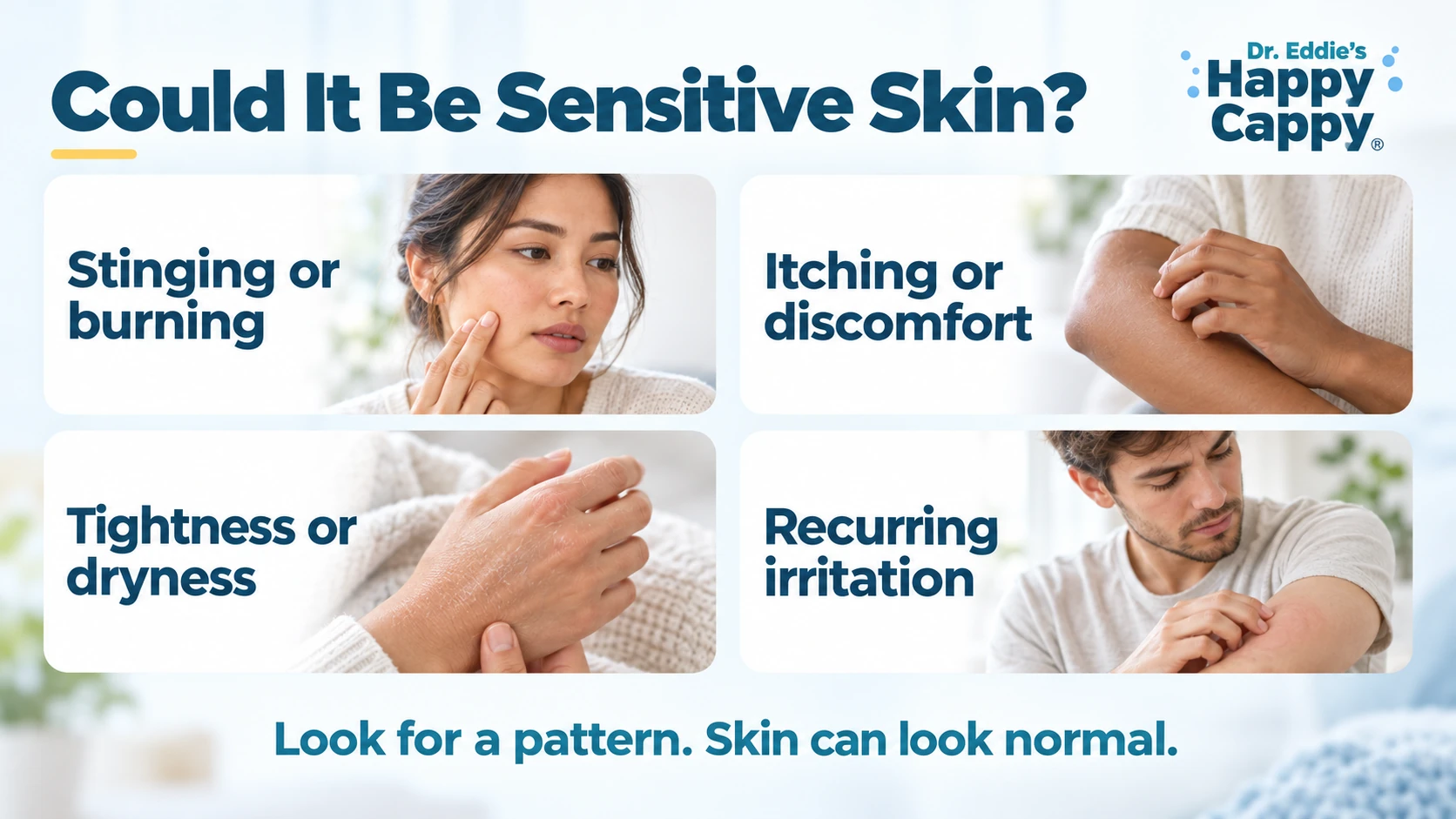
Look for a pattern rather than counting symptoms. Useful clues include:
- Stinging or burning when you apply a product, wash or shave.
- Itching or discomfort after friction, sweat, temperature changes or a particular product.
- Tight, rough or flaky skin, especially when dryness accompanies the sensitivity.
- Recurring visible irritation, such as redness, patches or a rash after an exposure.
You do not need all these signs. Symptoms can be real even when the skin looks normal. Recurrent hives, marked swelling or a spreading rash deserve assessment rather than being dismissed as “just sensitive skin.”
Causes of skin sensitivity
Overwashing, scrubbing, dry weather and irritating products can make skin less comfortable. Sometimes an underlying condition needs treatment:
- Dry skin or eczema: a disrupted skin barrier can lose moisture and react more readily to irritants.
- Irritant contact dermatitis: repeated contact with water, detergents or another irritant can inflame the skin without an allergy.
- Allergic contact dermatitis: an ingredient or material triggers an immune reaction. A product can become a problem after years of use.
- Rosacea: facial flushing, burning and persistent irritation may need a specific care plan.
Acne treatments can also irritate skin; acne itself does not prove sensitivity. Unusual reactions to sunlight, recurrent hives or other persistent changes call for an examination. A clinician can distinguish these from less common conditions. See how dermatologists identify contact dermatitis.
If the change is new, our guide to sudden skin sensitivity explores that question in more detail.
Sensitive skin, dry skin and allergies
| Term | What it describes |
|---|---|
| Dry skin | A lack of moisture that can leave skin tight, rough, flaky or cracked. |
| Sensitive skin | A tendency to feel irritated or uncomfortable after ordinary exposures. Skin may be oily, dry or a combination. |
| Contact allergy | A specific immune reaction to something touching the skin. Formal patch testing may help identify the trigger. |
These can overlap, but choosing the right next step depends on the cause. Our dry-skin guide covers dryness in more depth.
A gentle daily routine

- Simplify. Pause nonessential products that repeatedly sting or irritate. Avoid scrubs, brushes and routine exfoliation while skin is uncomfortable.
- Cleanse gently. Use lukewarm water and a fragrance-free cleanser. Rinse well and pat dry.
- Make moisturizing a habit. For dry, itchy skin, use a tolerated cream at least twice daily and after bathing. Keep it where the morning and bedtime routines happen.
- Protect against sun and friction. Use shade, comfortable clothing and an age-appropriate sunscreen. For adults and children 6 months and older, choose broad-spectrum SPF 30 or higher.
For dry skin, moisturizer usually goes on soon after bathing. If damp facial skin stings, letting it dry first may help, particularly with rosacea. AAD's rosacea skin-care guidance explains this distinction. Persistent burning is a reason to reassess the product and the skin.
A morning and evening example
Morning: cleanse gently as needed, moisturize dry areas, and use the age-appropriate sun protection described above. Evening: gently remove makeup if worn, wash without scrubbing, and moisturize. Adjust cleansing to your skin rather than repeatedly washing whenever it feels uncomfortable. Toner, scrubs and multiple serums are not required for this basic routine. AAD explains gentle face washing.
A manageable routine is easier to repeat. Start with the basics and give your skin a chance to settle before adding more. Medicines should address a diagnosed problem; our itch-treatment guide covers those options separately.
Trying a new skin-care product
Add one product at a time. For an ordinary skin-care product, try a small area twice daily for seven to ten days before wider use, following its directions. Rinse off a cleanser as directed; do not turn a wash into a leave-on treatment. Stop if a reaction develops.
This home use test is different from medical patch testing and cannot guarantee that a product will never cause a reaction. Do not deliberately retest a product that previously caused a significant reaction. See AAD's product-testing instructions.
Choosing a cleanser and moisturizer
Look for fragrance-free products and check your known allergies. “Unscented,” “natural” and “hypoallergenic” do not guarantee that every person will tolerate a formula. There is no single ingredient blacklist that fits everyone. For dry skin, creams and ointments generally retain moisture better than thin lotions. AAD's dry-skin tips offer practical selection guidance.
Daily cleansing
Happy Cappy Daily Shampoo & Body Wash provides gentle, fragrance-free cleansing for dry, sensitive, eczema-prone skin. It is made without SLS/SLES. Its humectants include glycerin, panthenol (provitamin B5) and hyaluronic acid, which help attract and hold moisture. Licorice root extract helps calm the look of redness. The formula also contains oat kernel extract, aloe vera and apple fruit extract to help keep dry, sensitive skin feeling soft and comfortable.
Moisture support
Happy Cappy Moisturizing Cream supplies daily moisture for the face and body. Glycerin attracts moisture, petrolatum helps retain it, and licorice root extract (dipotassium glycyrrhizate) helps calm the look of redness. Apply at least twice daily.
The cream has a SkinSAFE 100 rating, which reflects screening for common allergy-causing ingredients. Your individual allergies still matter.
Sensitive skin in babies and children
Keep your child's routine simple and consistent. When skin is dry and itchy, a fragrance-free cream in the morning and again at bedtime is a practical starting habit, with another application after bathing. A bath alone does not replace moisturizer.
Everyday exposures can irritate young skin
Notice whether irritation follows drooling, sweaty clothing, rubbing, or a new wash or laundry product. Gently pat away moisture instead of repeatedly rubbing the skin, and change damp clothing. Choose soft, comfortable fabrics and fragrance-free laundry detergent; avoid fragranced fabric softeners and dryer sheets.
A persistent rash may have another cause
Dryness or irritation after an exposure can be useful clues, but counting rashes does not diagnose sensitive skin. Eczema, baby acne and other rashes have their own explanations. Our newborn peeling and dry-skin guide covers that concern separately. Seek an assessment for a persistent or worsening rash rather than adding more products.
The American Academy of Pediatrics explains care for childhood eczema.
When to get medical advice
Contact a clinician for recurrent rashes, persistent burning, symptoms that disturb sleep, or irritation that continues despite gentle care. Bring the products you use and photos of flares. An examination may be enough; patch testing is useful in selected cases, not a requirement for everyone.
Seek prompt care for painful spreading redness, pus, fever or significant blistering. Trouble breathing, faintness or swelling of the tongue or throat requires emergency help.
Sensitive-skin guides for your next step
If sensitivity appeared suddenly, read the guide to sudden skin sensitivity. For ongoing dryness, follow the dry-skin care guide.