

Quick answer
Irritated skin may sting, burn, itch or feel sore after a product, repeated washing, friction or another exposure. For mild irritation, avoid the suspected trigger, cleanse gently, use a cool damp cloth, and moisturize with a fragrance-free cream or ointment that feels comfortable. Get medical advice for symptoms that persist, recur or worsen. 1,3,6
Steps to soothe irritated skin
A few well-chosen steps can make mild irritation more manageable.
Pause the likely trigger
If a new product seems responsible, stop using it. Gently rinse off a product that is irritating your skin now. Pause nonessential scrubs, exfoliating acids or other products that sting. If a prescribed treatment is causing trouble, ask your prescriber how to adjust it. 1,5
Keep cleansing light
Use lukewarm water and a gentle, fragrance-free cleanser where needed. Rinse well and pat dry. Skip hot water, scrubbing and extra washes intended to make irritated skin feel “deep cleaned.” 5
Try a cool compress
Rest a clean, cool, damp cloth on the area for 10 to 15 minutes. It can ease discomfort while you address the cause. Avoid scratching or rubbing the area. 3
Let the cause guide the next step. A rash that keeps returning may need treatment for contact dermatitis or another condition. A clinician can help when simplifying care is not enough. 2
Common irritation triggers
Think about what touched the skin, how often, and where the symptoms began. A single strong exposure or repeated contact with milder irritants can upset the skin’s protective barrier. 1
| Possible change | What to look for |
|---|---|
| A skin or hair product | A cleanser, cosmetic, fragrance or acne product used on the affected area, including something used more often than usual. |
| More washing or wet work | Frequent handwashing, dishwashing, long showers or repeated contact with soap and water. |
| Friction, heat or sweat | Rubbing from clothing, straps, shaving or exercise, especially when skin stays damp. |
| Household products or materials | Cleaning products, detergents, fragrances, adhesives, gloves or jewelry that contact the same spot. |
The pattern is a clue. It does not identify the cause by itself. 1,2
Irritation
Irritant contact dermatitis happens when an exposure damages the skin barrier. Even repeated contact with water and soap can contribute. An allergy is not required. 2
The two can look similar and can occur together. A dermatologist may recommend patch testing when an allergy is suspected. 1 Explore the contact dermatitis guide.
Signs and symptoms of irritation
Irritated skin describes skin that feels uncomfortable or shows signs of inflammation. It can involve stinging, burning, tenderness or itching. You may notice roughness, flakes, cracks, bumps or swelling. Color changes can appear pink or red on lighter skin, or brown, purple or gray on darker skin. The appearance depends on the cause and skin tone. 6
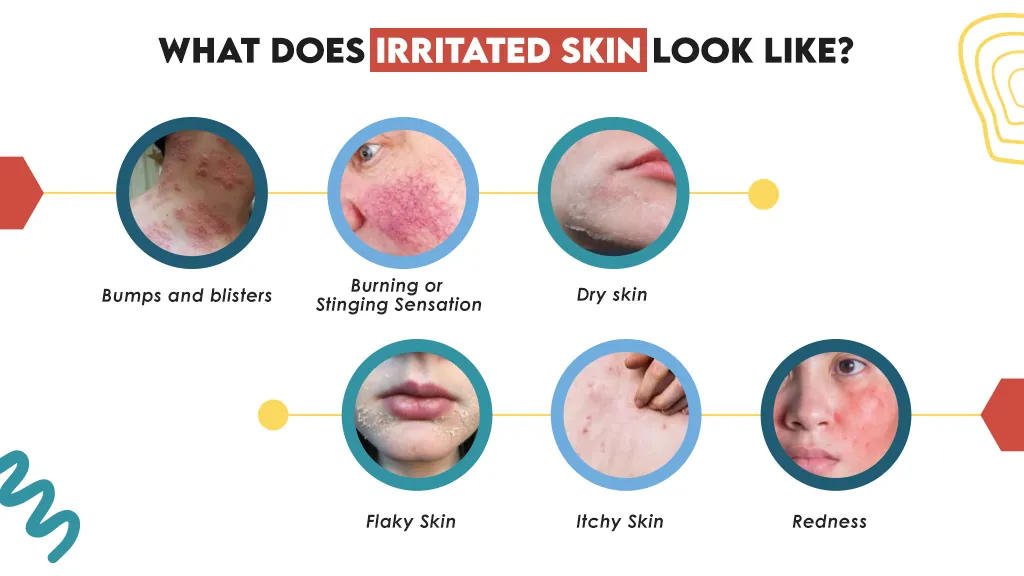
These skin changes can have several causes and look different across skin tones. Our skin redness guide explains color changes in more detail.
Blistering, open sores, marked pain or a rapidly spreading rash deserves medical attention. See when to get help. 9
Babies, facial skin and the eye area
For babies
Drool and food left around the mouth can irritate delicate skin. Gently clean the area, pat it dry and change a wet bib. For recurring patches or an uncomfortable rash, ask your pediatrician to help identify the cause. Our guides to red cheeks in babies and redness on a child’s neck cover those patterns separately. 7
For more specific questions, visit our eye-area irritation guide. If the main concern is scalp itching, use the itchy-scalp guide.
A gentle cleanse-and-moisturize routine
A fragrance-free routine can reduce exposure to one common source of irritation. For dryness, choose a cream or ointment your skin tolerates; our eczema moisturizer guide compares textures and ingredients. Happy Cappy Daily Shampoo & Body Wash and Moisturizing Cream provide gentle cleansing and leave-on moisture within that routine.
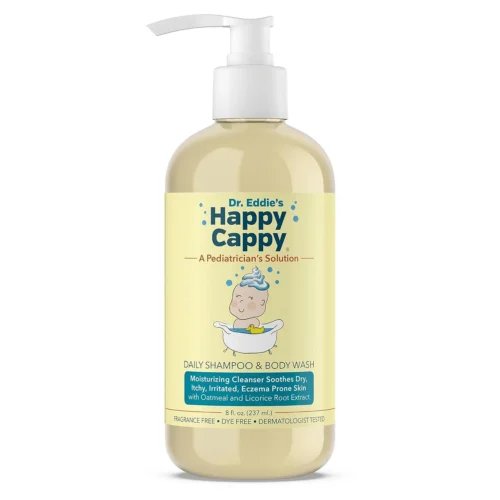
Step 1 · Cleanse gently
Daily Shampoo
& Body Wash
A fragrance-free cleanser for dry, itchy, sensitive and eczema-prone skin, made without SLS/SLES. Glycerin and panthenol help hold moisture as part of the cleansing formula. Use daily or as often as needed, gently lather, and rinse well.
Explore Daily Wash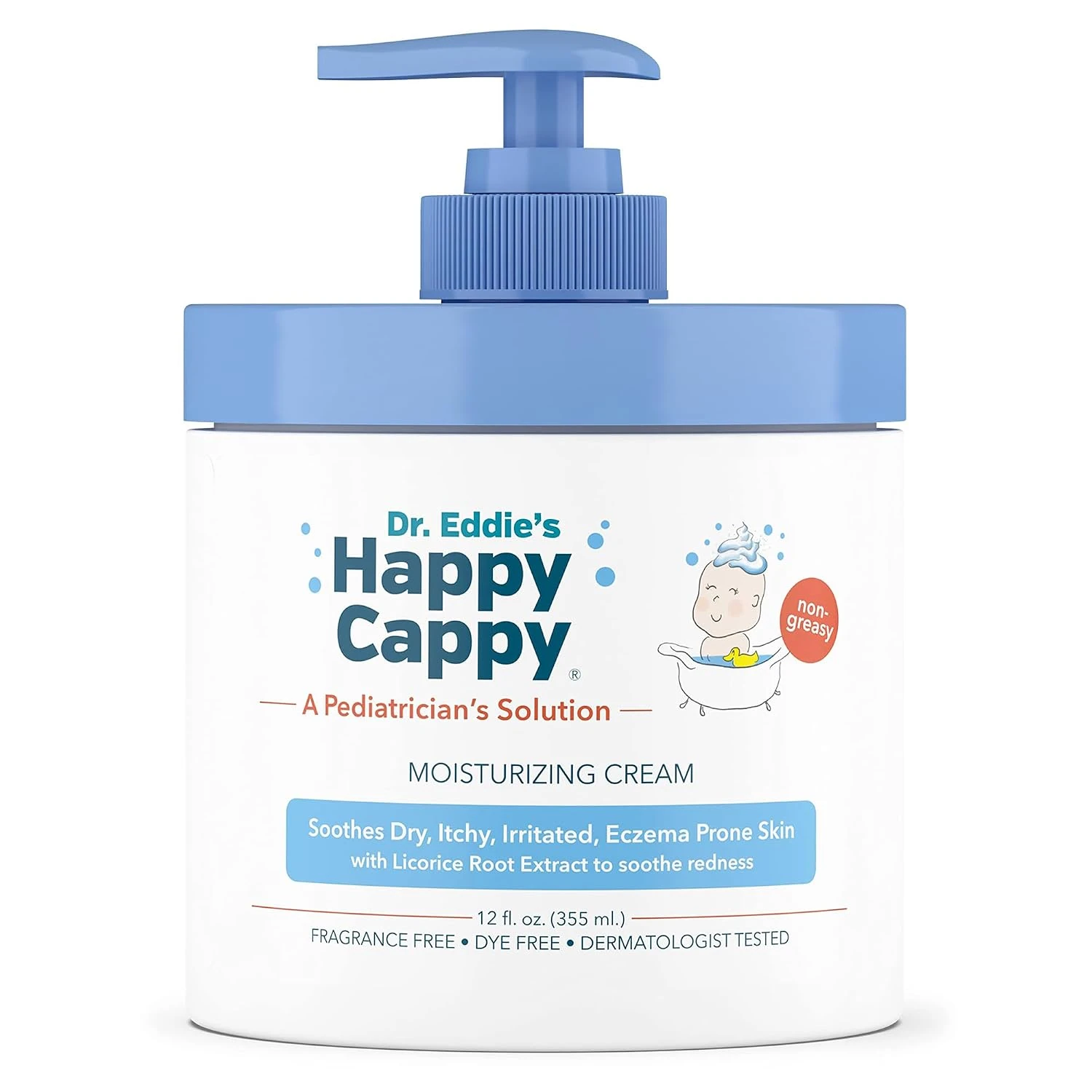
Step 2 · Moisturize
Moisturizing
Cream
A fragrance-free cream for dry, itchy, irritated and eczema-prone skin. Glycerin attracts moisture and petrolatum helps retain it. Smooth onto the face and body after washing and at least twice daily.
Explore Moisturizing CreamA comfortable formula matters. Fragrance-free products can be a useful starting point, but individual reactions are still possible. Preservatives serve a purpose by protecting cosmetics from harmful bacteria and mold. 3,10 For formula details, explore the ingredient guide.
When to get medical advice
Arrange an assessment if irritation keeps coming back, does not improve with gentle care, or interferes with sleep or everyday activities. An exam can help distinguish contact dermatitis from eczema, infection or another cause. 5,6
Get help sooner for a concerning rash
- A painful or rapidly spreading rash, blisters, or open sores.
- Fever, feeling unwell, pus, crusting, warmth or increasing swelling.
- A rash involving the eyes, mouth or genital skin.
These signs need prompt medical assessment. 9
Call 911 for trouble breathing or swallowing, or sudden swelling of the lips, tongue or throat. These can be signs of a serious allergic reaction. 9
Care beyond a brief irritation
For recurring reactions, explore the sensitive-skin guide. For continuing moisture care, use the dry-skin routine. If itching is the main ongoing concern, the itchy-skin guide explains other possible causes. A rash that keeps returning needs care directed at its cause.
Sources & further reading
- DermNetIrritant contact dermatitis
- American Academy of DermatologyContact dermatitis: causes
- American Academy of DermatologyContact dermatitis: tips for managing
- NHSEmollients
- Mayo ClinicContact dermatitis: diagnosis and treatment
- Mayo ClinicContact dermatitis: symptoms and causes
- American Academy of Pediatrics · HealthyChildren.orgTeething pain relief
- NHSHydrocortisone for skin
- American Academy of DermatologyRash 101: when to seek medical treatment
- U.S. Food and Drug AdministrationParabens in cosmetics
Sources checked September 22, 2026; core care guidance rechecked October 4, 2026.