


Quick Answer: Eczema is a group of conditions that cause inflamed, itchy skin. Atopic dermatitis is the most common type. Use this hub to understand eczema, recognize possible symptoms, find a care guide, and explore advice for a particular age or body area.
Eczema can first announce itself as a rough patch on a baby's cheek, an itch that interrupts sleep, or hands that never seem to stay comfortable. The visible rash is only part of the picture. Understanding the condition helps make sense of both the daily care that supports the skin and the treatment a flare may need.
This guide brings together the foundations: what eczema means, how the skin barrier is involved, how symptoms change with age, and where to go for more specific help. Photographs, treatment plans and guides to particular body areas appear alongside the sections they explain.
Eczema and atopic dermatitis
Eczema is a name for a group of conditions that cause inflamed, itchy skin. Dermatitis means skin inflammation. Atopic dermatitis is the most common type of eczema, and people often shorten its name to “eczema” in everyday conversation.
Those terms are related, but they do not make every itchy rash the same condition. Atopic dermatitis tends to return in flares. Contact dermatitis develops when skin encounters an irritant or a substance to which a person has become allergic. Someone can have more than one type, which is one reason a persistent rash deserves a diagnosis.
“Baby eczema” describes eczema in an infant; it is not a separate condition that becomes atopic dermatitis only in adulthood. The types of eczema guide compares the main conditions. For a closer explanation of atopy, family history and diagnostic testing, continue to Atopic Dermatitis, Atopy and Atopic-Prone Skin.
Skin barrier changes and inflammation
The outer layer of skin helps hold water in and limit what gets through from the environment. In atopic dermatitis, that barrier can be less effective. Skin loses moisture more readily, and irritating exposures can add to inflammation. Dryness and itch encourage scratching, which can further damage the surface. This repeating pattern is often called the itch-scratch cycle.1
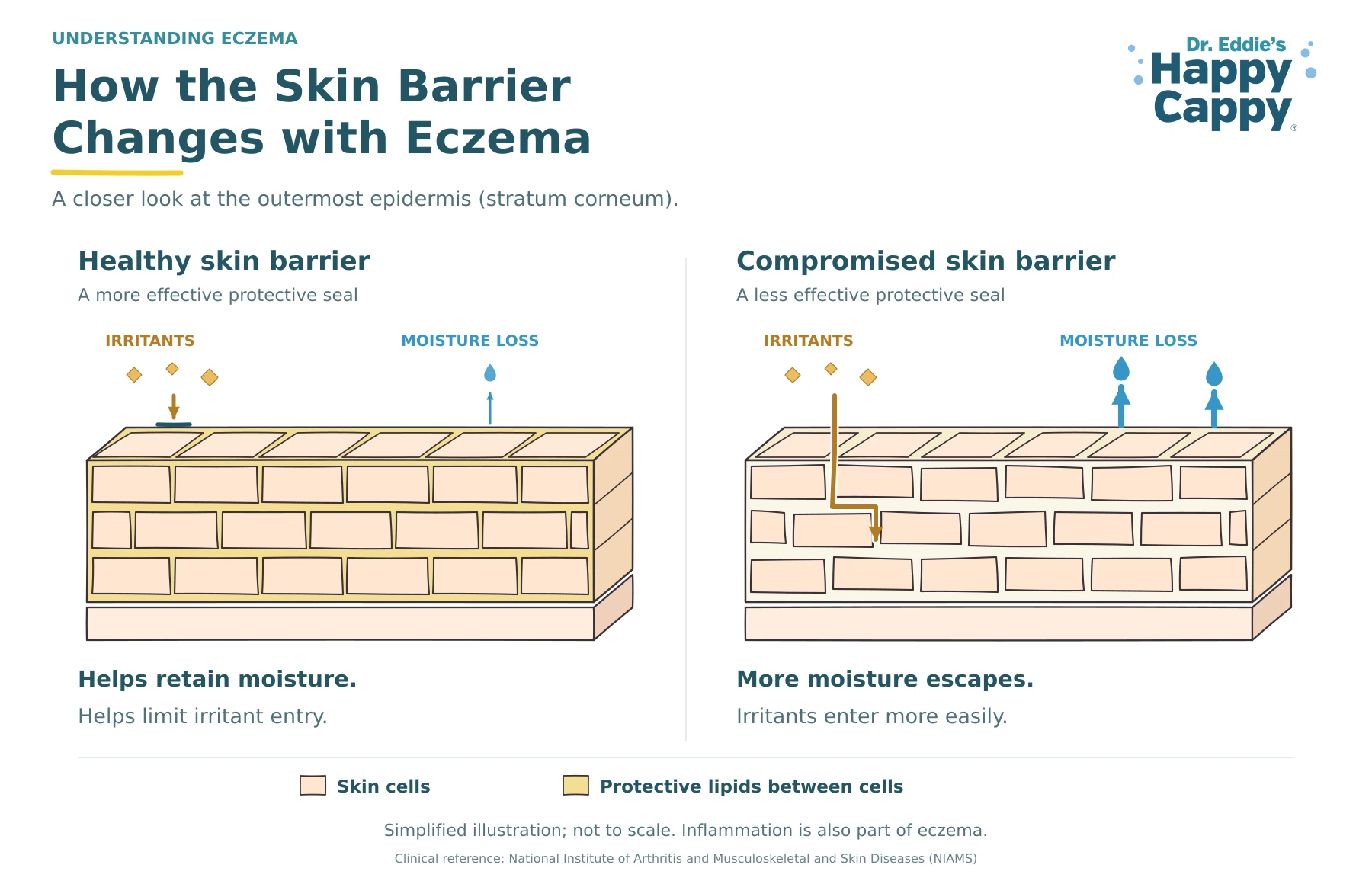
There is no single explanation for every case. Inherited differences, immune activity and environmental exposures interact. Some inherited differences affect proteins that help the skin maintain its protective structure. This is why finding one detergent, food or missing skin-care product rarely explains the whole condition.1
Immune involvement does not mean that eczema is simply a weak immune system. Nor is it caused by being dirty or passed from one person to another through ordinary contact. Scrubbing harder can make irritated skin more uncomfortable. These distinctions are explored in our guides to eczema and the immune system, genetics and family history, eczema and contagion and common eczema myths.
For another part of the barrier story, read about skin pH and eczema.
Symptoms and skin changes
Itch, dryness and a change in texture are useful clues. A patch may feel rough or scaly, develop small bumps, or show scratch marks. Inflammation can look pink or red on lighter skin and purple, gray or darker brown on deeper skin tones. Comparing a patch with nearby skin is often more useful than looking for redness alone.2
The Eczema Symptoms and Pictures guide explains these changes with clinical photographs, including baby eczema appearance and common locations. Photographs help describe what you are noticing; a clinician also considers where the rash occurs, how it feels and how it changes over time.
For additional examples across skin tones, explore eczema on Black skin.
Several rashes share features with eczema. These guides explain the differences and the clues that may need an examination:
Underlying causes and flare triggers
A cause helps explain why a condition develops. A trigger is something that aggravates a person's existing eczema. Fragranced skin products, rough fabrics, sweating or dry weather may matter for one person and cause little trouble for another. A contact allergy can also complicate eczema.
Look for a repeated pattern instead of changing everything at once. A short record of symptoms, products and exposures can make a clinician's assessment more useful. Stress may worsen symptoms, but that does not make the rash imaginary or the person's fault.
Food allergy can coexist with eczema. The rash alone does not prove that a food is responsible, and broad food restrictions can create problems of their own. Discuss suspected reactions and any proposed change to a baby's feeding with a clinician. Food avoidance and eczema and the role of allergy testing explain when a more focused investigation can help.3
For practical decisions about everyday exposures, explore the guides below. A “natural” label does not guarantee that an ingredient will suit sensitive skin.
Eczema at different ages
Atopic dermatitis often begins in childhood, but it can first appear in adults. A personal or family history of eczema, asthma or allergic conditions can make it more likely. That history is useful context, not a prediction of exactly how the condition will behave.2
Babies and toddlers
In babies, the cheeks, scalp and outer arms or legs are familiar sites. A baby may rub an itchy face before being able to scratch. The baby eczema photographs and recognition advice bring those clues together. Once the diagnosis is clear, baby eczema treatment covers bathing, moisturizing and a plan for flares. Parents can also explore why babies develop eczema, help with scratching and care around a baby's face.
Improvement can be gradual. Less rubbing, more comfortable sleep and calmer skin may be more useful to notice than expecting every mark to disappear immediately. See signs baby eczema is healing and marks, color changes and scars. For a specific bathing question, read about oatmeal baths for babies with eczema.
Children and adults
As children grow, patches commonly involve the elbow or knee creases. Later, the hands, face, neck and other areas may become troublesome. Some children have fewer symptoms over time; others continue to have flares or see symptoms return. There is no age by which every child is guaranteed to outgrow eczema.2
The atopic dermatitis care guide explains how daily care and flare treatment fit together across ages. For adult-specific questions, see eczema in adults, a new eczema-like rash in adulthood and eczema and aging.
Eczema types and affected areas
The word eczema does not tell you the whole diagnosis. Atopic dermatitis, contact dermatitis and other forms can share itch and scaling while having different patterns and care priorities. Start with the Types of Eczema comparison guide when you need that broader view.
Contact dermatitis includes both irritant damage and allergic reactions to something touching the skin. The separate allergic contact dermatitis guide goes further into allergens, patch testing and avoiding a confirmed trigger. Other guides cover specific conditions and patterns:
Face, scalp, hands and other body areas
Location changes the practical problem. Washing and work exposures matter for hands; delicate eyelid skin calls for a different approach; sweating or clothing may complicate a patch elsewhere. These location guides apply the basics to those situations without making location alone a diagnosis:
Care, treatment and flare-ups
Care has two connected jobs: support the skin every day and bring active inflammation under control. Gentle washing and regular moisturizing help with the first. A flare may also need medicine selected for the person's age, affected area and severity. A written plan makes clear what to keep doing between flares and what changes when symptoms return.
The Atopic Dermatitis Care guide brings those steps into a routine. For a current flare, use eczema flare-up guidance. Parents can follow the age-specific discussion in baby eczema treatment.
Treatment choices deserve more than a product list. Our guides to hydrocortisone, prescription nonsteroid medicines and wet wraps explain their place in a clinician-directed plan. Follow the instructions for the medicine and body area you are treating.
When flares keep returning, revisit the plan with a clinician. Sleep, repeated scratching and treatment burden matter as well as the size of the rash. Read about reducing flares and the long-term effects of eczema for that wider perspective.
Everyday skin care for eczema-prone skin
Choose a gentle, fragrance-free cleanser and a fragrance-free cream or ointment. Moisturize at least twice daily and after washing. Our eczema moisturizer guide explains what to look for.
Happy Cappy Daily Shampoo & Body Wash is a fragrance-free cleanser made without SLS or SLES. Glycerin and hyaluronic acid help attract moisture, panthenol (provitamin B5) helps keep skin soft, and oat, aloe and apple extracts support comfortable dry skin. Licorice root extract helps calm the appearance of redness. Use daily or as often as needed.
Happy Cappy Moisturizing Cream pairs glycerin to attract moisture with petrolatum to help retain it. Licorice root extract helps calm the appearance of redness. The fragrance-free cream absorbs quickly without a greasy feel. Apply at least twice daily and after washing. These products support care for dry, sensitive, eczema-prone skin alongside any prescribed treatment.
For help fitting moisturizing into the day, see moisturizing frequency with eczema. The hand cream guide addresses frequent washing and the extra demands on hands.
Diagnosis and signs that need medical attention
A clinician considers the rash's appearance, location, itch and duration, along with personal and family history. Bring photographs if the rash changes between appointments, and note which treatments helped or caused discomfort. Testing may be useful when contact allergy, infection or another diagnosis is suspected. The atopic dermatitis diagnosis guide explains that assessment.
Arrange an examination for a new or uncertain rash, persistent itching, disrupted sleep, or eczema that is not improving with its plan. Seek prompt medical care for painful, hot, swollen or rapidly worsening skin, pus, clusters of blisters, or fever. These changes can signal infection rather than an ordinary fluctuation in dryness.4
A clear diagnosis and a workable care plan make the next step easier to choose. Use the symptoms and pictures guide to describe what you see, and the daily care and treatment guide to understand the plan that follows.