


Part of the Eczema Resource Center.
Quick Answer
An eczema flare-up is a period of returning or worsening symptoms. Gentle cleansing, moisturizer and the prescribed flare plan support recovery. New pain, pus, rapidly worsening skin or fever need prompt medical assessment.
Changes during an eczema flare-up
A flare-up is a period when eczema becomes more active: existing patches worsen or symptoms return after a quieter period. It does not mean that someone has caught a new infection, although infection can sometimes complicate a flare.
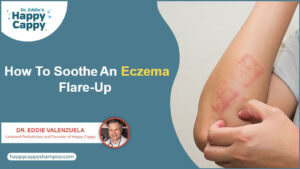
Common eczema symptoms include itching, dryness, rough or scaly patches and cracked or thickened skin. Inflammation may look pink or red on lighter skin, or darker, purple or gray on darker skin. Scratching can make skin raw and interfere with sleep. New weeping, crusting or blisters deserve medical advice rather than being dismissed as a routine flare.
Individual flare triggers
Triggers differ from person to person, and sometimes no single trigger is obvious. Common aggravators include:
- Dry skin, cold or dry air, and changes in temperature.
- Heat, sweating, friction and scratchy clothing.
- Fragranced products, irritating cleansers, detergents and cigarette smoke.
- Stress and, for some people, hormonal changes.
- Specific allergens, such as pollen, dust mites or pet dander, in a person who is sensitive to them.
- A skin infection.
Keep a brief record if flares repeatedly follow the same exposure. A dermatologist can decide whether targeted allergy or contact-allergy testing would help; there is no test that identifies every eczema trigger. Do not remove major foods from a child’s diet based only on an eczema flare.
Heat, sweating and sunburn can also aggravate eczema. Avoid overheating and protect the skin from sunburn. Deliberate sun exposure and tanning beds are not substitutes for prescribed phototherapy.
Supportive care during a flare
A consistent routine can make a flare more manageable. These steps support care at home while you follow the treatment plan agreed with your clinician.
Gentle cleansing
Keep baths or showers lukewarm and brief, around 5 to 10 minutes. Use a mild, fragrance-free cleanser where needed, avoid scrubbing and pat gently with a soft towel. Hot water and vigorous rubbing can aggravate already irritated skin. AAD guidance for baby eczema1 explains how gentle bathing fits into skin care.
Moisturizing after washing and throughout the day
Apply a fragrance-free cream or ointment promptly after washing, while the skin is still slightly damp. Reapply at least twice daily and when skin feels dry. If you have a prescription skin medicine, follow your clinician’s directions about how to use it alongside moisturizer.
For a practical cleansing and moisturizing routine, see the Happy Cappy two-step routine. Use daily skin care alongside the treatment in your flare plan.
Reducing scratching and friction
Itch can be difficult to resist, so telling a child to stop scratching is rarely enough. Keep nails short and smooth, choose loose, soft clothing and avoid seams or fabrics that rub. Address persistent inflammation with the clinician’s treatment plan, especially when itching keeps someone awake.
Comfort and known irritants
Avoid overheating and change out of sweaty clothing. Pause a new product if it consistently stings or worsens the rash, and choose fragrance-free laundry products. Focus on triggers that matter for you or your child instead of trying to eliminate every possible exposure.
Humidifiers in dry rooms
A humidifier may make a dry room more comfortable. Change the water and clean the unit as directed; avoid making the room damp or allowing moisture to collect on walls. It is an optional comfort measure, not a treatment for inflammation.
Home remedies and skin irritation
Apple cider vinegar is not an established eczema treatment. A small study of dilute vinegar soaks2 found no sustained improvement in skin-barrier integrity and irritation in most participants. Avoid experimenting with vinegar on a baby’s skin or on broken, inflamed skin.
Clinician-directed flare treatment
If skin care alone is not controlling the flare, ask for a clear plan covering which medicine to use, where to apply it and when to stop or seek a review.
Topical corticosteroids and other prescription creams
Topical corticosteroids treat inflammation. The appropriate strength and duration depend on age, body site and severity. Hydrocortisone is one example; not every strength is sold over the counter. Ask a clinician before using it on a baby or on sensitive areas such as the face or skin folds.
A clinician may also select a nonsteroidal medicine, such as tacrolimus or pimecrolimus, when appropriate. Do not assume that stronger medicine or a longer course is better. Use the plan written for the person and the body area being treated.
Individual instructions for wet wraps
Wet wrap therapy uses a damp layer covered by a dry layer over moisturizer or selected medication. Ask your clinician whether it is suitable and how long to use it. Wrapping increases absorption of medicines, so do not automatically cover a steroid-treated area with a wet bandage. Extra care is needed with babies and suspected infection. AAP treatment guidance3 explains these precautions.
The limited role of antihistamines
Antihistamines do not treat eczema inflammation or reliably relieve its itch. A clinician may occasionally recommend a sedating antihistamine for a short period to help with sleep. Do not give a baby or child an antihistamine for eczema without specific medical advice. See AAD guidance on antihistamines and eczema4.
Specialist treatment for persistent eczema
When eczema remains poorly controlled, a dermatologist may discuss prescription phototherapy or systemic treatment, including a biologic such as dupilumab when appropriate. Phototherapy is supervised medical treatment; sunbathing or a tanning bed is not a substitute.
Care between flares
You cannot guarantee that eczema will never return, but a steady routine can help reduce future flares. Continue moisturizing between flares rather than stopping as soon as the skin looks better.
- Keep the cleansing and moisturizing routine simple and consistent.
- Use comfortable clothing and avoid overheating or repeated friction.
- Choose products the skin tolerates and avoid known irritants.
- Ask for a written maintenance plan if the same areas repeatedly flare.
AAD self-care guidance5 offers practical advice on bathing, clothing and everyday comfort.
For the ongoing routine after a flare settles, see atopic dermatitis daily care.
Happy Cappy for daily cleansing and moisture
Happy Cappy Daily Shampoo & Body Wash is a fragrance-free cleanser for dry, sensitive, eczema-prone skin, made without SLS/SLES. Glycerin, panthenol and hyaluronic acid attract water, while oat and aloe help condition the skin. Lather gently and rinse well; use daily or as often as needed.
Follow with Happy Cappy Moisturizing Cream. Glycerin attracts moisture and petrolatum helps reduce moisture loss, while the lightweight formula absorbs without a greasy feel. Apply after washing and at least twice daily. Continue any maintenance medicine included in your care plan.
Shop the two-step routine: Choose Daily Wash + 6 oz Cream Tube or Daily Wash + 12 oz Cream Jar. Each bundle contains one 8 oz Daily Wash and one Cream.
Signs that need medical assessment
Arrange a review if the diagnosis is uncertain, the agreed treatment is not helping, or itching interferes with sleep, school, work or wellbeing. A persistent, spreading or uncomfortable rash in a baby should be assessed rather than treated by trial and error.
Seek prompt medical assessment for pus, new crusting or weeping, increasing pain or warmth, rapidly spreading skin changes, fever or feeling unwell. Sudden widespread painful blisters or sores need urgent care, particularly around the eyes. These changes may signal infection, including eczema herpeticum. NHS eczema guidance6 describes signs that need urgent assessment.
Recovery and reassessment
There is no fixed duration for an eczema flare. Some begin improving within days of appropriate treatment; others last longer. Severity, ongoing triggers, infection and the treatment used all affect recovery. Arrange a review if improvement is not occurring within the timeframe your clinician recommended.
Signs of improvement
Less itching, better sleep and less inflamed or cracked skin can indicate improvement. Skin-color changes may take longer to settle. New crusting, oozing or painful blisters should not be assumed to mean healing because they may indicate infection.