


Quick answer: Nummular eczema, also called discoid eczema, causes itchy, round or oval patches. It is not contagious, but it can resemble ringworm, a fungal infection that needs different treatment. Moisturizers and anti-inflammatory medicines help eczema; new pain, warmth, pus, or fever calls for medical assessment.
Nummular eczema causes coin-shaped patches
Nummular eczema is an inflammatory skin condition that causes itchy, coin-shaped patches. Nummular dermatitis and discoid eczema are other names for it. Patches can be dry and scaly or inflamed and weepy. One person may have a few spots; another may have many. It can occur in children and adults, and episodes may recur.1
As a young coin collector, I later learned the word “numismatist.” During pediatric residency, the name nummular eczema sounded familiar for a reason: its patches are often shaped like coins.
Nummular eczema symptoms and pictures
Typical patches are round or oval and often very itchy. They commonly affect the arms or legs, although the trunk and other areas can be involved. Small bumps or blisters can join into a larger patch. The surrounding skin is often dry.1, 2
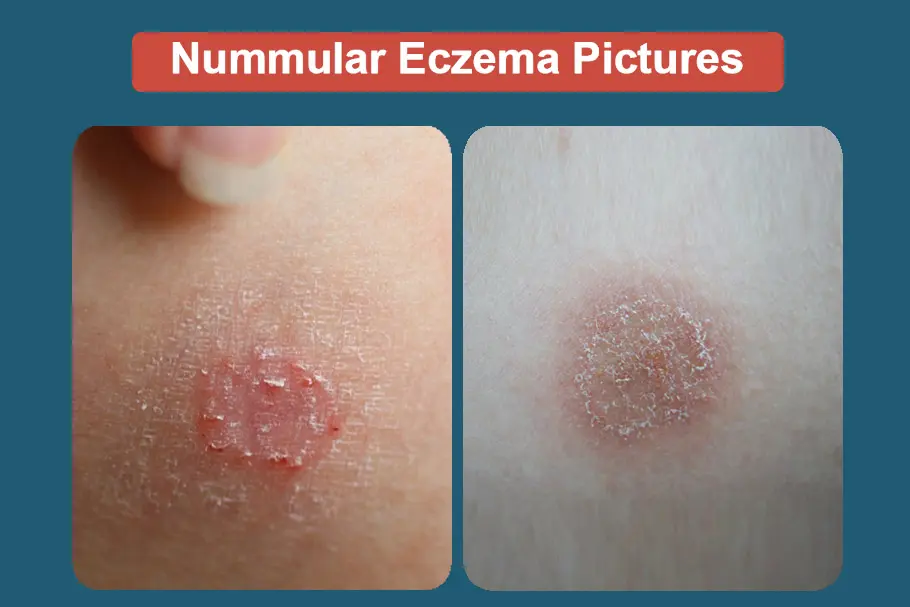
Skin tone and healing changes
Inflammation may look pink or red on lighter skin and brown, purple, or darker than the surrounding skin on deeper skin tones. After the roughness and itch improve, lighter or darker marks may remain. A flat color change does not necessarily mean the eczema is still active. Patches may take weeks or longer to settle, and some recur. Ongoing itch, roughness, or spreading patches warrant reassessment.1, 2
Nummular eczema vs. ringworm
A circular rash is not enough to distinguish these conditions. Ringworm often has a more active, scaly outer edge with a clearer center, but nummular eczema can also clear in the middle. Either can itch.3, 4


Clues that help distinguish the two conditions
| Clue | Nummular eczema | Ringworm of the body |
|---|---|---|
| Underlying problem | Inflammatory eczema, often with dry skin. | A fungal infection of the skin. |
| Typical surface | A coin-shaped area that may be scaly throughout, crusted, or weepy. | An expanding patch that often has a raised, scaly border. |
| Clear center | May occur; it does not rule eczema out. | Common, but not present in every case. |
| Contagious? | No. | Yes, it can spread through infected people, animals, or contaminated objects. |
| Main treatment | Moisturizing plus an appropriate anti-inflammatory medicine. | An antifungal medicine selected for the affected site. |
Skin scrapings can check for fungus
When the appearance is uncertain, a clinician can take a scraping from the scaly edge and examine it for fungus, often using a potassium hydroxide (KOH) preparation. Culture or another test may help when needed. An antifungal treats a fungal infection, not the inflammation of nummular eczema. Our ringworm versus eczema guide covers the broader comparison. Guessing from a photograph can lead to the wrong treatment.4
Do not start a steroid-containing cream on an undiagnosed ring-shaped rash. Steroids can mask or worsen ringworm. If a presumed eczema patch spreads or changes while you treat it, ask for the diagnosis to be checked.5
Nummular eczema triggers and contact allergy
The cause is not fully understood. Dry skin, irritation, and minor skin injuries such as a scratch or insect bite can be associated with an episode. Contact allergy may contribute, particularly when patches persist despite treatment.1
Exposure history and patch testing
It helps to review what changed before the flare: a new product, repeated exposure at work, rough clothing, or a dry-weather change. This history guides the investigation; it does not mean every patch has one identifiable trigger. Patch testing looks for delayed contact allergy, not simply “sensitive skin.”6
Treatment for nummular eczema
Moisture and irritation control
Apply a fragrance-free cream or ointment regularly, including soon after bathing. Use lukewarm water and a gentle cleanser, and avoid scrubbing the patches. Consistent moisture helps the skin barrier while other treatment calms the flare.6
Prescription anti-inflammatory treatment
Topical corticosteroids are commonly prescribed for active patches. The clinician chooses the strength, amount, and duration for the patient’s age and the location. Thick body patches may need a different preparation from thin facial skin. Tacrolimus or pimecrolimus may be considered in selected cases.6
Reassessment of persistent patches
If treatment is not working, review the diagnosis, application routine, possible contact allergy, and infection. Widespread or stubborn disease may need phototherapy or specialist-directed systemic treatment. Repeated intensive treatment should prompt a broader discussion of control and longer-term options.1, 6
Daily Wash and Cream support cleansing and moisture
Happy Cappy Daily Shampoo & Body Wash is a pediatrician-designed, dermatologist-tested, hypoallergenic cleanser for dry, sensitive, eczema-prone skin. Its fragrance-free, dye-free formula is made without SLS or SLES and gently cleanses hair, face, and body. Glycerin, panthenol, and hyaluronic acid help attract moisture, while oat extract and aloe help skin feel comfortable. Use daily or as often as needed.
Happy Cappy Moisturizing Cream uses glycerin to attract moisture and petrolatum to help retain it, with a fast-absorbing, non-greasy feel. Licorice root extract helps calm the look of redness. These fragrance-free products support everyday skin care alongside prescribed treatment for active patches.
Weeping, crusting, and signs of infection
Weeping and crusting do not automatically mean infection. An eczema flare can ooze and crust without a bacterial infection that requires antibiotics. A clinician looks at the overall pattern, including pain, heat, swelling, rapid worsening, and how the person feels.7
- Arrange prompt assessment for increasing tenderness, warmth, swelling, pus, rapidly spreading inflammation, or a patch that is suddenly much worse.
- Seek urgent care for fever, feeling unwell, rapidly spreading painful skin changes, or severe pain.
- Do not add an antibiotic cream to every flare. Antibiotics are used when the clinical assessment supports them, and a swab may be useful for recurrent or nonresolving infection.
Continue the eczema treatment plan as directed while infection is assessed or treated. The need for an antibiotic does not remove the need to manage the underlying inflammation.3, 7
References
- DermNet. Discoid eczema.
- American Academy of Dermatology. Nummular eczema: Signs and symptoms.
- NHS. Discoid eczema.
- American Family Physician. Annular lesions: Diagnosis and treatment.
- Centers for Disease Control and Prevention. Treatment of ringworm.
- American Academy of Dermatology. Nummular eczema: Diagnosis and treatment.
- NICE. Secondary bacterial infection of eczema: Recommendations.