

Quick answer: Hand eczema can cause dry, itchy, burning, cracked, or blistered skin. Atopic eczema, repeated irritation, and contact allergy can overlap. Protecting the skin during wet work, moisturizing after washing, and using the right prescription treatment can help. Persistent hand eczema may need patch testing or a check for another diagnosis.
Hand eczema explained
Hand eczema, also called hand dermatitis, is inflammation affecting the palms, backs of the hands, fingers, or wrists. It is not a single disease with one cause. It may come and go or become persistent, and it can make ordinary tasks such as cooking, typing, washing, or caring for a child uncomfortable.
It can affect people with a history of atopic dermatitis as well as people who have never had eczema elsewhere. Repeated contact with water, detergents, solvents, and other irritants makes some jobs and household tasks particularly challenging.1
Hand eczema symptoms and pictures
- Dryness, roughness, peeling, or scale.
- Itching, burning, stinging, or tenderness.
- Cracks or splits, especially around fingertips, knuckles, or palms.
- Small deep blisters on the palms or sides of the fingers in a vesicular or dyshidrotic pattern.
- Thickened skin, painful fissures, or nail changes when inflammation persists.
Inflammation may look pink or red on lighter skin or appear darker, purple, brown, or gray on deeper skin tones. Pain, texture, and function are useful clues even when color changes are subtle. Eczema itself is not contagious.1, 2
Clinical pictures of hand eczema
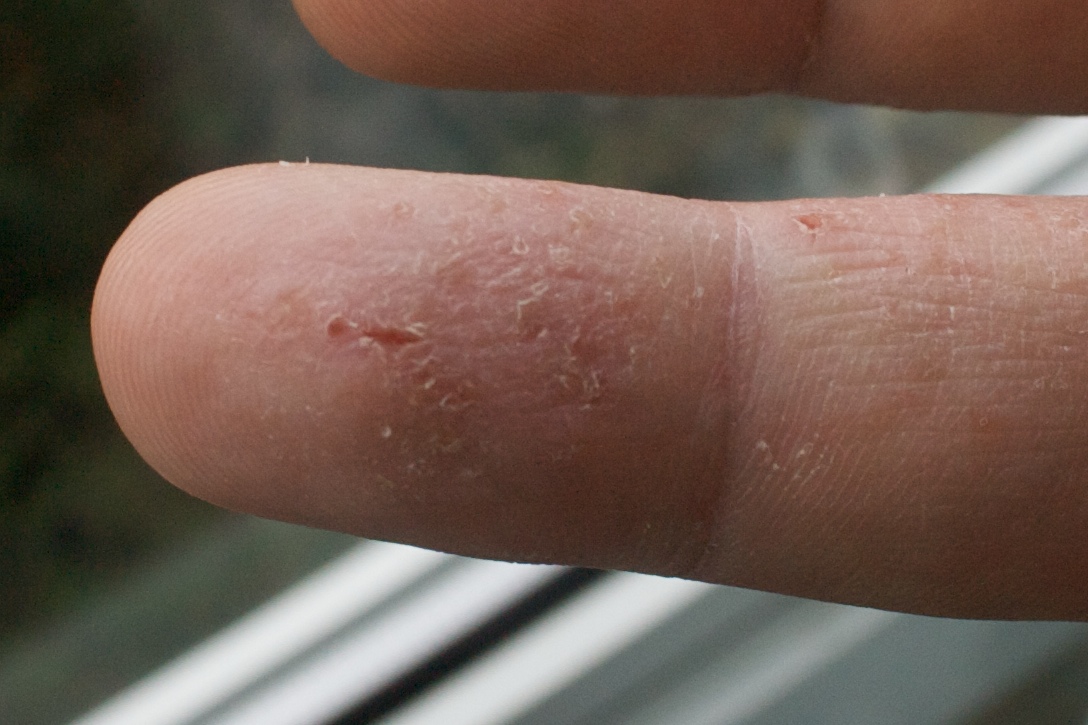

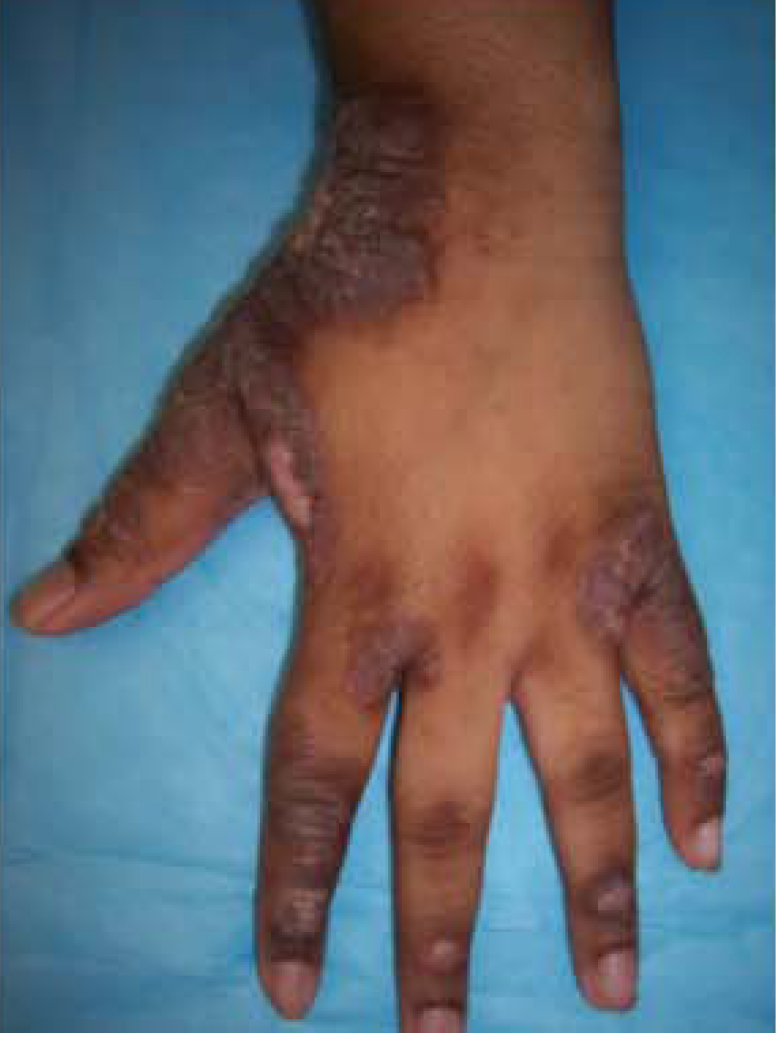
These are different clinical examples, not a before-and-after series. A picture can illustrate skin changes but cannot identify the trigger or confirm your diagnosis.
Causes and triggers of hand eczema
Repeated wet work can strip away protective oils and leave skin less able to tolerate the next exposure. Cleaning agents, friction, and frequent handwashing can add to the irritation. Contact allergy is a different process: the immune system reacts to a particular substance that touches the skin.
Bring up workplace chemicals, cleaning products, cosmetics, metals, adhesives, and gloves when discussing recurrent flares. Ingredients used to manufacture rubber gloves can cause contact allergy in some people. Even a product used for years may become relevant.2, 3
Stress may intensify itch or make a routine harder to maintain, but it is not the only explanation for hand eczema. See our guide to stress-related eczema on the hands for practical support.
Types of hand eczema and testing
| Type or pattern | What it means |
|---|---|
| Irritant contact dermatitis | Repeated exposures damage the skin barrier; wet work is a common contributor. |
| Allergic contact dermatitis | A delayed allergy to a substance touching the skin; patch testing may help identify it. |
| Atopic hand eczema | Hand inflammation associated with an underlying tendency to atopic dermatitis. |
| Dyshidrotic or vesicular eczema | An intensely itchy blistering pattern on the palms and sides of fingers; it can have more than one contributing factor. |
These categories overlap. Read more about dyshidrotic eczema if small deep blisters are a prominent feature.2
Psoriasis, a fungal infection of the hand, and other conditions can resemble eczema. A clinician may examine the feet and nails as well as the hands, and may take a scraping or arrange other tests. Persistent or exposure-related disease may need patch testing for delayed contact allergy; this is different from a skin-prick allergy test.2, 3
Hand eczema treatment
Hand protection and necessary hygiene
- Wash when needed. Keep following appropriate hand-hygiene guidance at home and at work. Use lukewarm water and a gentle fragrance-free cleanser when appropriate, rinse, and dry carefully, including between fingers.
- Moisturize after washing. Reapply a fragrance-free cream or ointment whenever the hands feel dry. Keep a tube where you wash or work so the routine is practical.
- Match gloves to the task. Use suitable protective gloves for wet work or chemicals. Cotton liners can reduce friction and absorb sweat. Change damp liners and take breaks when safe because prolonged sweating inside gloves can worsen irritation.
- Review occupational exposures. If symptoms track work shifts, involve occupational health or a clinician. The right glove material depends on the chemical and any contact allergy, not just whether a glove is labeled latex-free.
These changes help reduce repeated injury to the skin, but an active flare often needs anti-inflammatory medicine as well.3
Prescription treatment for persistent inflammation
A clinician may prescribe a topical corticosteroid with a strength suited to the affected hand skin and a defined treatment course. Other topical medicines, phototherapy, or systemic treatment may be considered for persistent or severe disease. The choice depends on the cause, severity, age, and previous response.2
In the United States, delgocitinib cream (Anzupgo) is an FDA-approved option for adults with moderate to severe chronic hand eczema when topical corticosteroids have not worked adequately or are not advisable. It is not a general recommendation for every hand rash or for children. A clinician should review the benefits and risks, including infection risk, before prescribing it.4
Moisturizer in hand eczema care
Moisturizer helps manage dryness and supports the skin barrier between flares as well as during treatment. The most useful hand cream is one you tolerate and can reapply consistently. It complements treatment for active inflammation; it does not remove a workplace exposure or replace prescribed medicine.
Match the texture to the task
A cream often fits daytime use because it is easier to return to typing, work or caring for a child after applying it. A heavier ointment can be useful on very dry areas at bedtime, when a greasy feel is less inconvenient. Lotions feel lighter but may not provide enough lasting moisture for cracked hands. There is no need to use the same texture at every time of day.
Allow a product to absorb before handling something that needs a secure grip. For work involving protective gloves, follow occupational guidance about products compatible with the glove material. Our eczema moisturizer guide compares textures and moisturizing ingredients in more detail.
Choose for your own skin and allergy history
Start with a fragrance-free cream or ointment. Glycerin attracts water, petrolatum helps limit water loss, and some formulas include ceramides. The whole formulation and your tolerance matter more than whether an ingredient name looks familiar. “Unscented,” “natural” and “hypoallergenic” are not guarantees that a product will suit you.
If you have a diagnosed contact allergy, check the full ingredient list against your avoidance advice. Repeated burning or a worsening rash calls for reassessment, even when the label says sensitive skin. A dermatologist can help distinguish irritation from allergy and decide whether patch testing is useful.
Build reapplication into necessary hand hygiene
After washing, pat your hands gently and apply moisturizer while the skin is still slightly damp, including the fingers, fingertips and backs of the hands. When using sanitizer, let it dry completely before applying cream or ointment. Keep a tube near the sink or where you work, and reapply when your hands feel dry. These steps follow the AAD's handwashing and moisturizing guidance.
Continue necessary hand hygiene. If you use prescribed hand medicine, follow the clinician's instructions about how and when to apply it alongside moisturizer.
Moisturizing Cream for everyday hand care
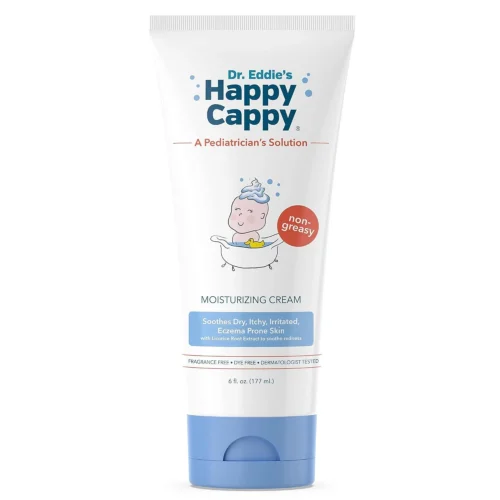
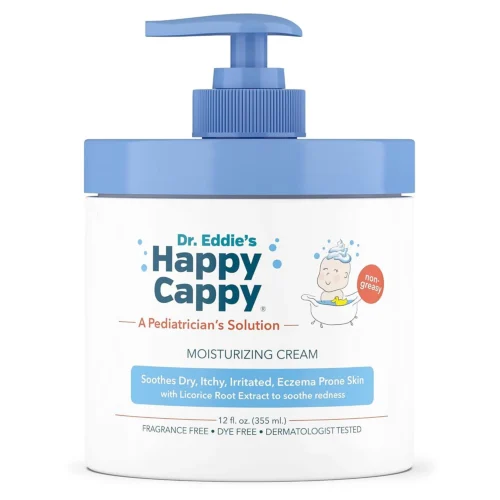
Happy Cappy Moisturizing Cream is fragrance-free, fast-absorbing and non-greasy for frequent application to dry, sensitive hands. Glycerin attracts moisture, petrolatum helps retain it, and licorice root extract helps calm the look of redness. It supports everyday moisture care while active inflammation may still need prescribed treatment.
The 6 oz tube and 12 oz pump jar contain the same formula. A tube can fit a work bag or desk; a pump jar can stay beside a sink or at home. Choose the packaging that makes regular use convenient.
Signs that need medical help
Make an appointment if painful cracks limit activities, itch affects sleep, blisters recur, or the rash does not respond to your care plan. Bring photographs, product labels, and a short record of work and household exposures.
Get prompt care for increasing pain, warmth, swelling, pus, spreading redness or other color change, or fever. These can be signs of infection. An unexplained rash affecting one hand more than the other also deserves a careful diagnosis.1, 2
Explore the Eczema Resource Center, the eczema symptoms and pictures guide, and the guide to eczema types.
References
- American Academy of Dermatology. Hand eczema.
- DermNet. Hand dermatitis.
- Eczema UK (formerly National Eczema Society). Hand eczema.
- U.S. Food and Drug Administration. Anzupgo prescribing information, revised June 2026.
This guide provides general information. A clinician can diagnose a rash and recommend treatment for your age, symptoms, and medical history.