
Part of the Eczema Resource Center.
Quick answer: Scalp eczema can reflect atopic dermatitis, seborrheic dermatitis or contact dermatitis. These conditions can look alike but need different treatment. Gentle cleansing and avoiding personal irritants can help; persistent sores, pain or hair loss need assessment.
Scalp eczema and diagnosis
Scalp eczema describes dermatitis affecting the skin beneath the hair. It can occur in children and adults. It is not a single diagnosis: the clinician looks at the pattern, other affected areas and recent hair-product exposures to identify the cause.
Types of dermatitis on the scalp
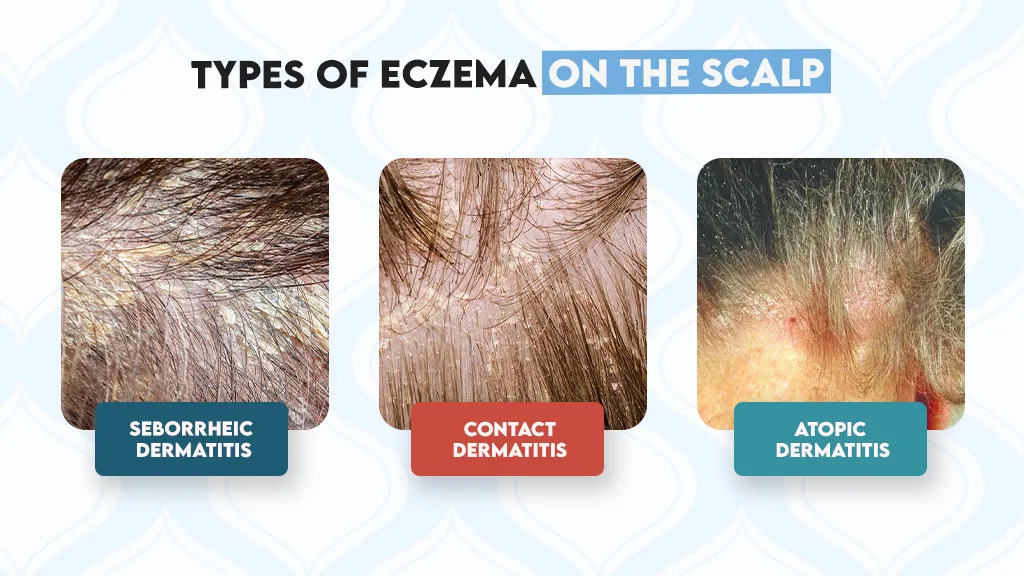
Atopic dermatitis, seborrheic dermatitis and contact dermatitis can affect the scalp. Their overlapping appearance makes the diagnosis important for choosing treatment. The comparison of seborrheic dermatitis and atopic eczema in adults explains differences in their usual patterns.
Seborrheic Dermatitis
Seborrheic dermatitis commonly affects the scalp and may cause greasy or dry-looking scales, itching and inflammation. Dandruff is a mild form. Infant seborrheic dermatitis on the scalp is often called cradle cap.
Contact Dermatitis
Contact dermatitis follows exposure to an irritant or an allergen. Hair dye, fragrance, preservatives or adhesives may be responsible for an individual reaction; this does not mean that every product in these categories is harmful. Relevant exposures can include:
- Shampoo
- Conditioners
- Hair spray and gels
- Hair dyes
- Hair extension glue
- Swimming caps
- Headgear
Atopic Dermatitis
Atopic dermatitis can affect the scalp at any age. It can cause dry, itchy, inflamed skin and may occur alongside eczema elsewhere on the body. It involves changes in the skin barrier and immune response, rather than simply a weak immune system. Learn more about these factors from the American Academy of Dermatology1.
Scalp eczema symptoms
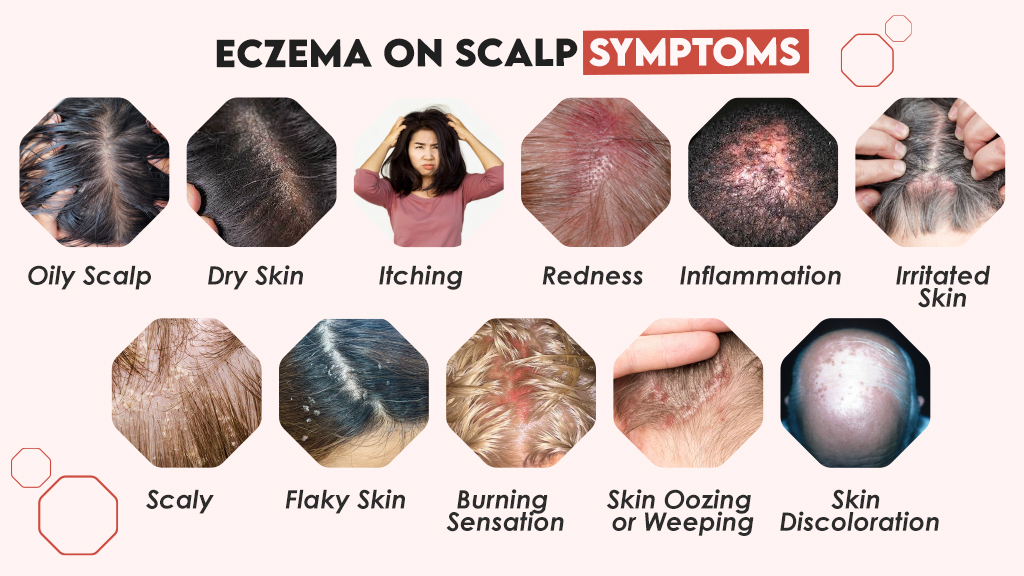
Symptoms vary with the type and severity of dermatitis. Common findings include:
- Itching, dryness and flaky or scaly patches.
- Greasy-looking scale, particularly with seborrheic dermatitis.
- Inflamed skin that may look pink or red on lighter skin, or purple, brown or gray on darker skin.
- Burning, soreness or skin-color changes after inflammation.
Appearance alone cannot confirm the cause. New weeping, sores or crusting need assessment rather than being assumed to be ordinary dandruff.
Causes and flare triggers
The cause depends on the diagnosis. Atopic dermatitis involves skin-barrier changes, genetics and immune activity. Contact dermatitis follows exposure to an irritant or allergen. Seborrheic dermatitis involves an inflammatory response associated with Malassezia yeast, which normally lives on the skin.
Heat, sweat, stress and irritating hair products can aggravate symptoms, but triggers vary. Keeping track of products and symptoms can help you discuss possible triggers with your dermatologist. Not every itchy or flaky scalp has the same cause.
Conditions that resemble scalp eczema
Scalp ringworm
Tinea capitis (scalp ringworm) is a fungal infection that can cause scaly patches, broken hairs and patchy hair loss, particularly in children. It requires medical diagnosis and usually an oral antifungal medicine; shampoo alone does not cure scalp ringworm. See the CDC’s ringworm treatment guidance. The ringworm and eczema comparison explains the broader distinction.
Scalp psoriasis
Psoriasis can cause inflamed plaques with overlying scale on the scalp or hairline. Its treatment differs from atopic or contact dermatitis. See the scalp psoriasis and dandruff comparison for more detail.
Care matched to the scalp diagnosis
Start by identifying the condition. Gentle cleansing and suitable moisturizers can support dry, eczema-prone skin, while an active flare may need prescribed treatment.
Cleansing and medicated shampoos
For atopic or contact dermatitis, choose a mild, fragrance-free cleanser that your scalp tolerates. Lather gently, rinse well and follow the prescribed plan for active inflammation. The Happy Cappy product guide below explains how to match a wash to the scalp diagnosis.
For dandruff or seborrheic dermatitis, a medicated shampoo may help control flaking, scaling and itching. Options use ingredients such as pyrithione zinc, selenium sulfide or ketoconazole. Scale-softening ingredients such as salicylic acid serve a different purpose: they help loosen accumulated scale. These products have different directions and age restrictions.
Follow the product label and your clinician’s instructions for frequency and contact time. Washing needs vary with the diagnosis, scalp sensitivity and hair type. A fixed schedule is not right for everyone. See the AAD’s seborrheic dermatitis treatment guidance2.
Product tolerance
Look for fragrance-free products for sensitive skin and avoid ingredients that have caused a reaction for you. A product being natural, or free of a particular ingredient, does not guarantee that your skin will tolerate it. If a product causes burning or worsening irritation, stop using it and seek advice. For children, a dermatologist can help select eczema-friendly products3.
Leave-on scalp moisturizers
A leave-on moisturizer helps dry skin retain moisture after washing. A cream can be practical around the hairline, while a scalp-suitable lotion or gel may be easier to apply through thick hair. Ask your clinician which formulation fits the affected area.
Prescription scalp treatment
A clinician may prescribe a scalp preparation to reduce inflammation. The choice and duration depend on the diagnosis, age and severity. Infection requires assessment and may need separate treatment. Persistent or severe eczema may need a broader treatment plan.
Antihistamines do not treat eczema itself. A clinician may sometimes recommend a sedating antihistamine briefly for sleep disruption, but it should not replace eczema treatment. The AAD explains this distinction4.
Scalp care in children
Use lukewarm water, a gentle cleanser when needed and your child’s prescribed care plan. Keep nails short to reduce damage from scratching. Choose products with directions appropriate for the child’s age and the condition being treated. Follow the label and any prescribed care plan. Patchy hair loss, broken hairs or a persistent scalp rash also need assessment because ringworm and other conditions can resemble eczema.
Oils and individual tolerance
An oil may help some dry scalps, but it is not a treatment for every cause of itching or flaking. Coconut oil and fragranced oil blends can also irritate some people. Stop a product that worsens symptoms and ask which leave-on formulation suits the diagnosis.
Choosing a Happy Cappy scalp product
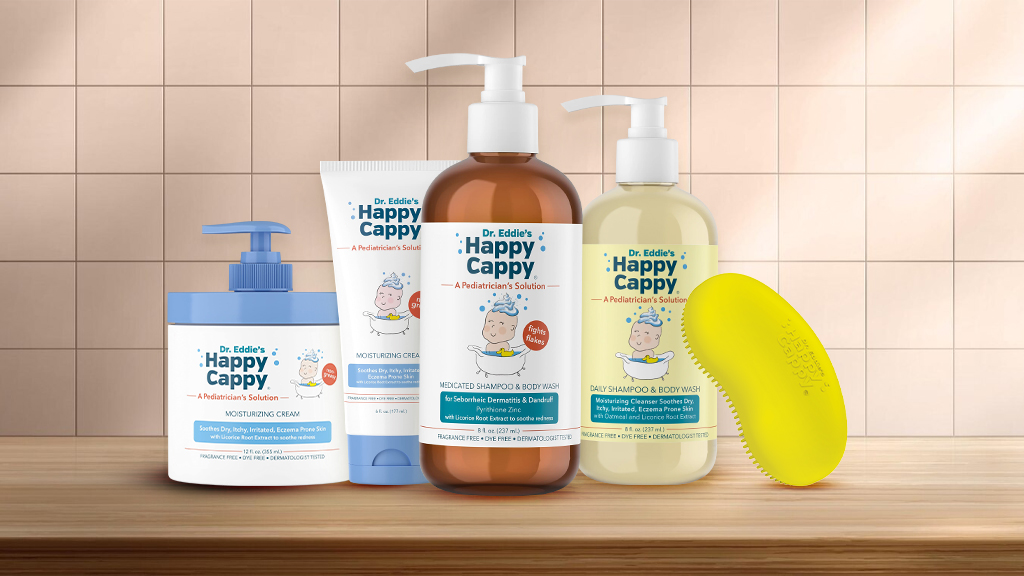
The best choice depends on why your scalp is itchy or flaky. Happy Cappy products serve different purposes:
Daily Wash for gentle cleansing
Happy Cappy Daily Shampoo & Body Wash gently cleanses dry, sensitive, eczema-prone hair and scalp without fragrance or SLS/SLES. Oat and aloe help condition the skin. Use daily or as often as needed, lather gently and rinse well.
Moisturizing Cream for dry skin around the hairline
Happy Cappy Moisturizing Cream combines glycerin to attract water with petrolatum to help reduce moisture loss. Its lightweight texture spreads easily on accessible dry skin around the hairline. Apply after washing and at least twice daily where needed.
Medicated Wash for dandruff and seborrheic dermatitis
Happy Cappy Medicated Shampoo is for flaking, scaling and itching associated with dandruff and seborrheic dermatitis. It is not a treatment for atopic dermatitis.
Choose according to the diagnosis and product directions. If a child has persistent symptoms, or you are unsure which condition is present, ask a pediatrician or dermatologist.
For the gentle cleansing and moisturizing steps in an eczema-prone skin routine, choose Daily Wash + 6 oz Cream Tube or Daily Wash + 12 oz Cream Jar. Each contains one 8 oz Daily Wash and one Cream. The Medicated Wash above is a separate choice for dandruff or seborrheic dermatitis.
Reducing repeat irritation
You may be able to reduce flare-ups by identifying your triggers and following a consistent care plan:
- Avoid hair products or materials that have caused irritation or a confirmed allergy.
- Use lukewarm water and rinse products out thoroughly.
- Avoid scratching or picking at scales.
- Keep cool and manage sweat in a way your scalp tolerates.
- Continue prescribed maintenance care, and discuss persistent symptoms with your clinician.
These habits can help, but they do not guarantee that eczema will never flare.
Scalp symptoms that need medical assessment
Arrange assessment for persistent itching or flaking, patchy hair loss, broken hairs or an uncertain diagnosis. Our guide to eczema-related shedding and hair breakage explains these changes without assuming that every bald patch is eczema. An itchy scalp alone does not establish an autoimmune disorder.
Increasing pain, warmth, swelling, pus, blisters, rapidly worsening symptoms, fever or feeling unwell need prompt medical care. These changes can indicate infection or another condition needing treatment.