
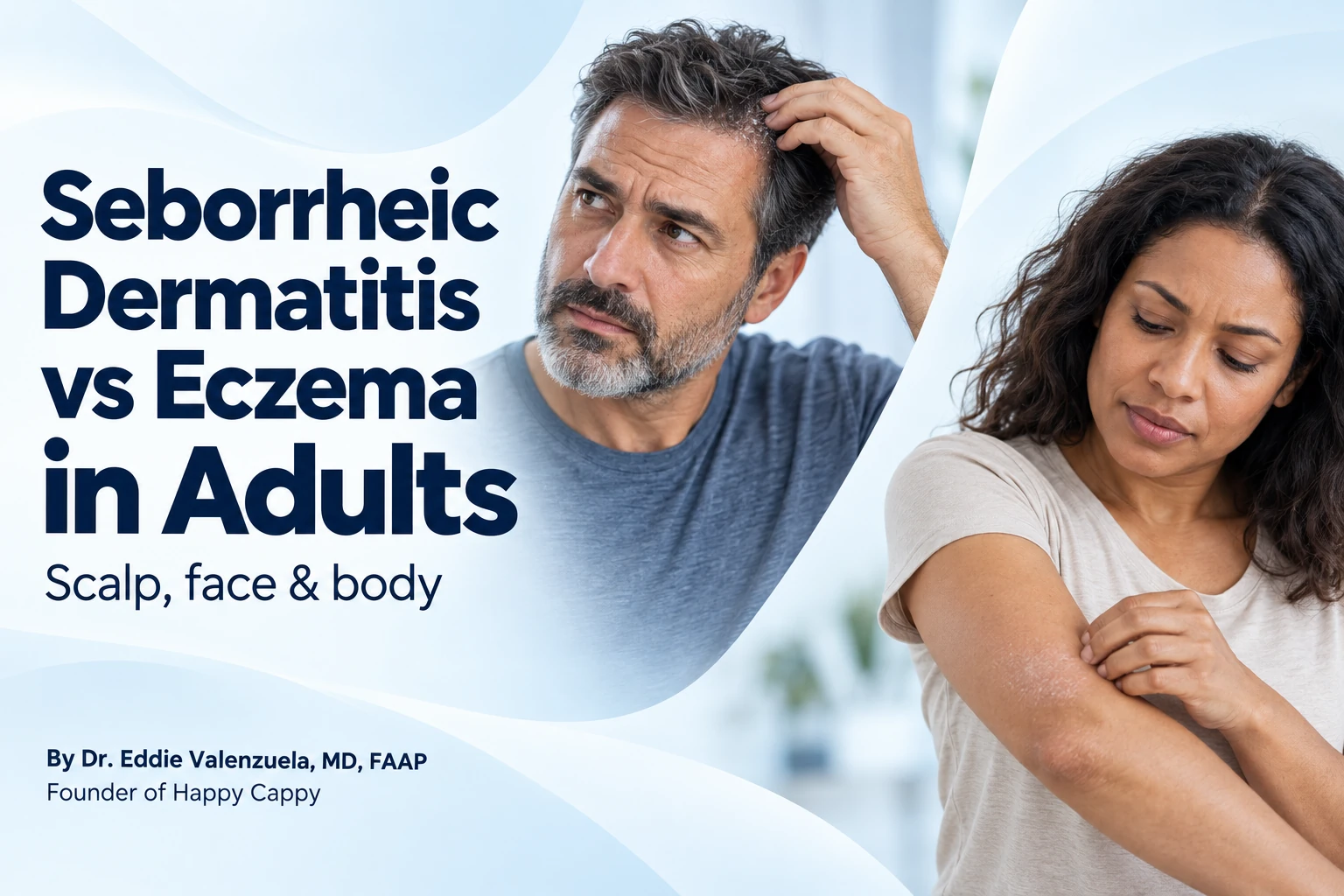
Quick answer: In adults, seborrheic dermatitis often affects the scalp and other oil-rich areas. Atopic dermatitis commonly causes dry, intensely itchy patches. Both can itch and affect the scalp. Here, “eczema” means atopic dermatitis, because eczema is a broader group that includes seborrheic dermatitis.1, 2, 3
Seborrheic dermatitis vs atopic dermatitis at a glance
“Eczema” is an umbrella term, and seborrheic dermatitis is one form of eczema. This guide compares these conditions in adults. Here, eczema means atopic dermatitis. The conditions can overlap, so this table provides clues rather than a self-diagnosis.1
| Feature | Seborrheic dermatitis | Atopic dermatitis |
|---|---|---|
| Common sites | Scalp, eyebrows, sides of the nose, ears, beard area, and chest | Skin folds, face, neck, hands, or other areas; the scalp can also be affected |
| Typical skin changes | Flaking with white or yellowish scale, sometimes greasy, on inflamed skin | Dry, itchy patches; scratching may cause cracks, thickening, or oozing |
| Itching | Can itch or burn | Itching is often prominent and can disrupt sleep |
| Pattern over time | Often comes and goes in adults | Often follows a relapsing course |
| Treatment focus | Control scalp scale, yeast-related activity, and inflammation | Support the skin barrier and control inflammation |
Appearance varies with skin tone. Inflammation may look pink or red, violet, brown, or darker than surrounding skin, so color alone is not a reliable way to distinguish them.2, 3
What is seborrheic dermatitis?
Seborrheic dermatitis commonly affects areas with many oil glands. Dandruff is a milder scalp presentation. It is not caused by poor hygiene and is not contagious. In adults it may improve and then return, so maintenance care is sometimes needed.1
White or yellow scale around the eyebrows, sides of the nose, and scalp can suggest seborrheic dermatitis. Itching can come from the inflammation itself; it is not limited to the presence of loose flakes.2
What is atopic dermatitis?
Atopic dermatitis involves an impaired skin barrier and inflammation. Dryness and itch are common, and repeated scratching can thicken the skin. It often begins in childhood, but atopic dermatitis can also begin in adults.3, 4
Atopic dermatitis can affect the scalp. A scalp rash should not automatically be called seborrheic dermatitis just because of its location.
Why the conditions develop
Seborrheic dermatitis is associated with an inflammatory response involving Malassezia yeast, which normally lives on skin, along with other individual factors. Oil-rich areas are commonly affected, but excess oil alone does not explain the condition.5
Atopic dermatitis reflects a combination of barrier changes, immune activity, and inherited susceptibility. The two conditions do not have one interchangeable cause or one treatment that fits every rash.4
How a clinician tells them apart
A clinician considers the sites involved, type of scale, degree of dryness and itch, medical history, and response to previous treatment. Psoriasis, contact dermatitis, and fungal infections are among other possibilities. Sometimes examination is enough; testing may be useful when the pattern is unclear.6, 7
For babies and young children, use our guide to cradle cap vs eczema. Adult scalp and facial symptoms should be assessed in their own context.
Treatment depends on the diagnosis
Seborrheic dermatitis: a dandruff shampoo may help scalp symptoms. A clinician may recommend an antifungal treatment or a short course of an anti-inflammatory medicine for certain areas. The best product and schedule depend on the location and severity.6
Atopic dermatitis: gentle cleansing and regular moisturizing support the skin barrier. Active inflammation may require a prescribed topical medicine, and more extensive disease may need other treatment.7
Seek medical care when symptoms persist despite appropriate care or when the diagnosis is uncertain. Pain, pus, rapidly spreading inflammation, or fever warrant prompt assessment.
Where Happy Cappy products fit
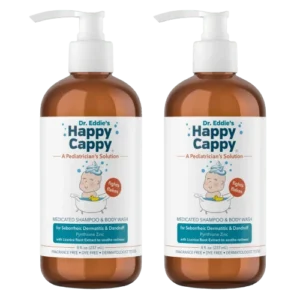
Happy Cappy Medicated Shampoo & Body Wash is for flaking, scaling, and itching associated with dandruff and seborrheic dermatitis. Follow the label directions. It is not an atopic dermatitis treatment.
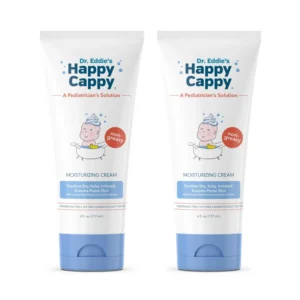
Happy Cappy Daily Shampoo & Body Wash and Moisturizing Cream support cleansing and moisturizing for dry, itchy, eczema-prone skin. The Cream is fast absorbing and non-greasy. These cosmetic care steps do not replace prescribed treatment for an active eczema flare.