Cradle cap
Toddler Cradle Cap: Persistent Scales and Scalp Care
Learn what persistent or new scalp scales in toddlers may mean, how common lookalikes differ, and when gentle care needs a pediatric assessment.
 — A Pediatrician's Solution —
Happy Cappy Blog
90 short articles by pediatrician Dr. Eddie Valenzuela, each answering one question about cradle cap, eczema, dandruff or telling one rash from another. Pick a condition, search by symptom, or start with the questions parents ask most.
For the full picture of each condition, with symptoms, causes and care, start at the Skin Conditions guide.

90 articles 8 topics Last updated
Browse by condition
Showing all 90 articles
The questions readers search for most
Cradle cap
Learn what persistent or new scalp scales in toddlers may mean, how common lookalikes differ, and when gentle care needs a pediatric assessment.
Comparisons
Learn how styes, chalazia, syringomas and eyelid rashes differ from milia, with gentle care guidance and eye symptoms that need medical attention.

Dandruff
Malassezia normally lives on the scalp. Learn how it relates to dandruff, seborrheic dermatitis, and folliculitis, and how to choose appropriate scalp care.
Eczema
Recognize eczema on the shoulders and back, review sweat and product triggers, and apply moisturizer and treatment to hard-to-reach skin.
25 articles
Scales, flakes and crusts on a baby's scalp, brows and hairline, and gentle ways to care for them.

Compare attached cradle-cap scales with fine dry flakes and normal newborn peeling, then choose care that matches your baby’s scalp.

Compare cradle cap and atopic eczema in babies: scalp scales, itching, rash patterns, different care roles and signs that need an examination.

Cradle cap and dandruff differ in age, appearance and course. Happy Cappy Medicated helps control flaking and scaling from both; the care routine should fit the person’s age.

Yellow scalp flakes, hard pieces and crust can have different causes. Learn what to notice, how to care for the scalp and when to get help.

Cradle cap, itching, and pain: how to recognize discomfort, care for the scalp gently, and know when to seek medical advice.

A new smell from cradle-cap scales deserves a closer look. Check the scalp and ear folds, recognize warning signs, and see where gentle care fits.
Leaking fluid is different from ordinary cradle-cap scales. Start with the signs that need urgent care, then see how to care for the scalp while arranging an assessment.

Learn how long cradle cap usually lasts, signs that care is helping, why flakes can return, and when persistent or changing symptoms need a closer look.
Learn what persistent or new scalp scales in toddlers may mean, how common lookalikes differ, and when gentle care needs a pediatric assessment.

Cradle cap can affect baby eyebrows. Learn gentle care for flakes, where medicated washing fits, and which eyelid or eye symptoms need attention.

Care for cradle cap on a baby's forehead and hairline with gentle washing, careful scale removal, and treatment suited to the skin.

Normal newborn shedding and cradle cap can happen together. Learn why babies lose hair, what regrowth looks like, and how to care for scales gently.

Explore cradle cap and gut health, what probiotic studies can and cannot show, and why scalp care usually does not require feeding changes.

Compare cradle cap shampoo ingredients, active and supporting roles, and label claims. See how Happy Cappy Medicated washes away flakes without an oil step.

Compare Head & Shoulders and Happy Cappy shampoo formulas, medicated ingredients, baby scalp care and product-specific directions.

Cradle cap is common and is not a measure of how well you care for your baby. Mild cases may improve with simple care; some need additional treatment.

Use a cradle cap brush with a light touch, learn when to stop, and keep it clean. Happy Cappy Medicated washes away flakes without a separate oil step.
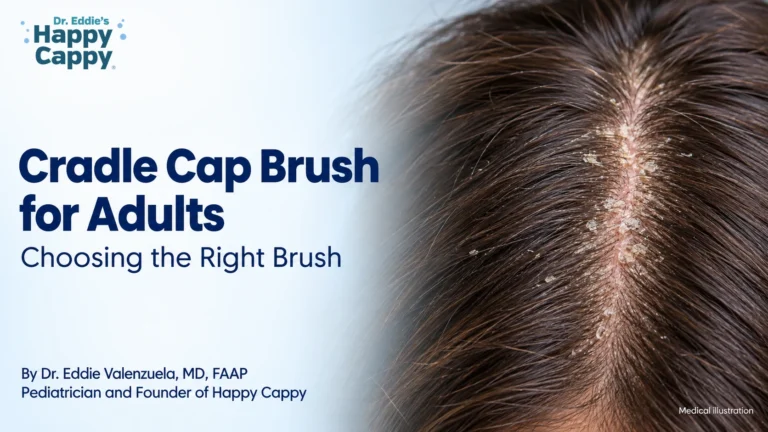
Choose a scalp brush that fits your hair length and density. Learn gentle adult brushing technique, the limits of short baby-brush bristles, and how medicated shampoo fits into care.

Do not pick attached cradle-cap scales. Learn how to wash away loose flakes gently, care for an accidental scratch, and recognize when your baby’s scalp needs medical attention.

Learn how gentle washing can limit cradle cap buildup, what to do when flakes return, and when to choose Daily Wash or Happy Cappy Medicated.

Learn why olive oil is not recommended for cradle cap, what newborn skin research shows, and how to wash away flakes without a separate oil step.

Coconut oil may soften cradle cap scales, but evidence is limited. Learn how guidance differs, when to skip oil, and where a cradle cap shampoo fits.

Breast milk is not an established cradle cap treatment. Review the evidence, gentle scale removal, and a medicated shampoo option without an oil step.
Learn why essential oils are not recommended for baby cradle cap, what tea tree studies show, and how to wash away flakes without a separate oil step.

Compare coconut oil, olive oil, petroleum jelly, breast milk, and essential oils for cradle cap. Learn what may loosen scales and which methods to avoid.
37 articles
Dry, itchy patches in babies, children and adults, by body area, trigger and daily care.
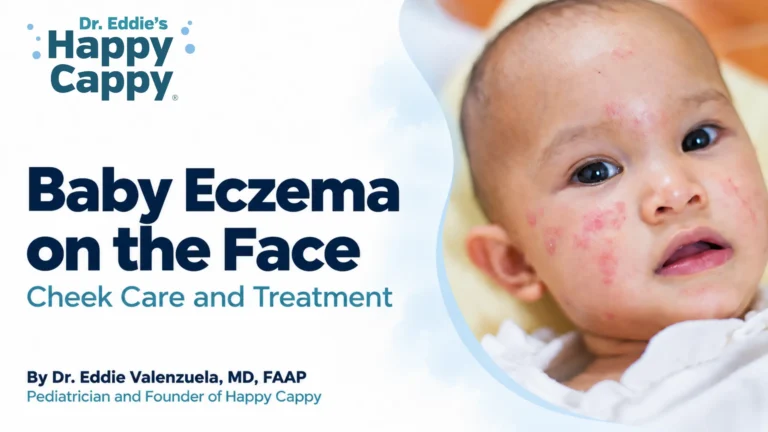
Recognize common facial eczema patterns in babies, care for dry cheeks, manage drool irritation and know when a rash needs medical attention.

Compare baby acne and eczema by appearance, texture, itching, timing, and location. Learn how care differs and when to contact your pediatrician.
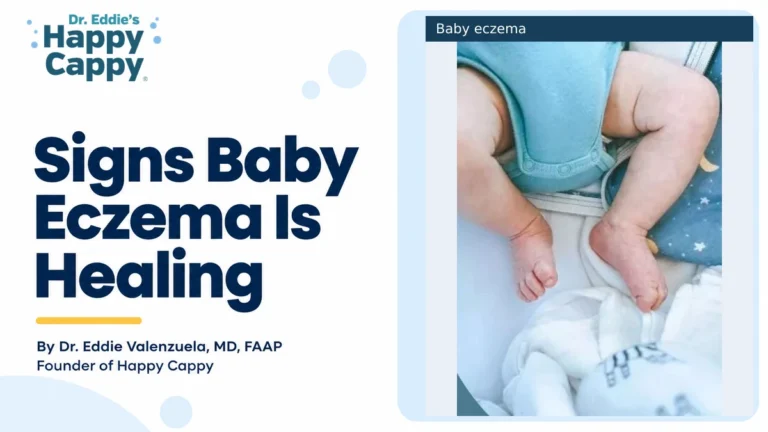
Look for less rubbing, smoother skin and better comfort as baby eczema improves. Learn about lingering color changes, peeling and signs that need care.

Learn how to give a baby a colloidal oatmeal bath, choose the right product, recognize reactions and moisturize afterward while following the eczema plan.

A practical guide to easing eczema itch, protecting your baby’s skin, and helping the family sleep while a flare gets under control.
Learn how baby eczema marks differ from true scars, why lighter or darker patches linger, and which skin changes need a pediatrician’s assessment.

Build a practical winter eczema routine with brief lukewarm baths, regular moisturizer, comfortable layers and sensible indoor humidity.
Understand scalp eczema symptoms, the differences between atopic, contact and seborrheic dermatitis, and diagnosis-specific care.
Recognize facial eczema, compare similar rashes and build a gentle care plan with medicines suited to facial skin.
Understand itchy, flaky eyelid skin, common contact triggers, and treatment options for eczema around the eyes.
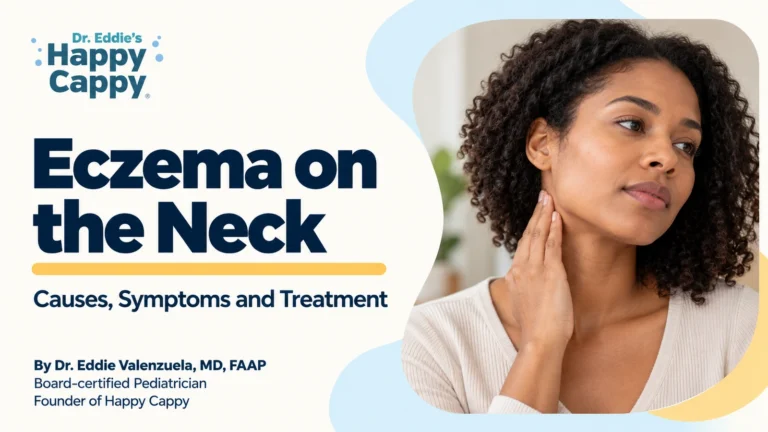
Find out why the neck becomes dry, itchy, or irritated, which everyday exposures matter, and how treatment differs on this sensitive area.
Recognize eczema on the shoulders and back, review sweat and product triggers, and apply moisturizer and treatment to hard-to-reach skin.

Compare eczema behind the knees, cracked shins, round patches and swollen ankles, with clinical photos, care advice and signs that need assessment.

Learn how stress, handwashing, irritants, and allergies can affect hand eczema, with practical moisturizing, glove, patch-testing, and treatment guidance.

Breast eczema can cause dry, itchy or cracked skin, while persistent nipple rashes, discharge or unexplained breast changes need examination.

Recognize nipple eczema, reduce irritation and plan treatment and breastfeeding care, including when a one-sided rash needs assessment.
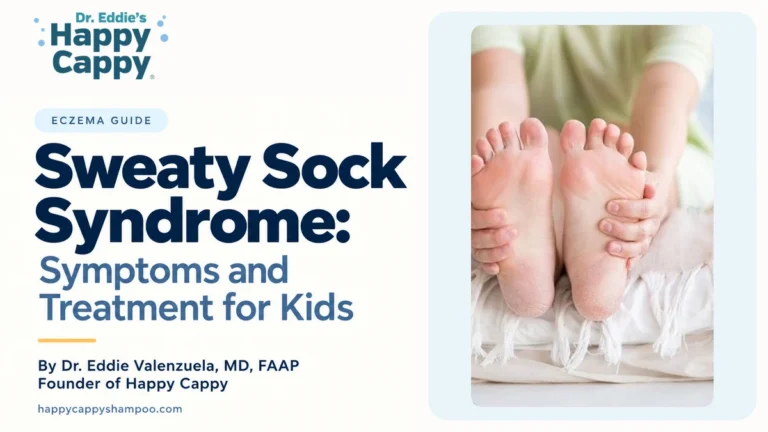
A practical guide to juvenile plantar dermatosis, including Dr. Eddie’s childhood experience and a routine for sore, cracked soles.
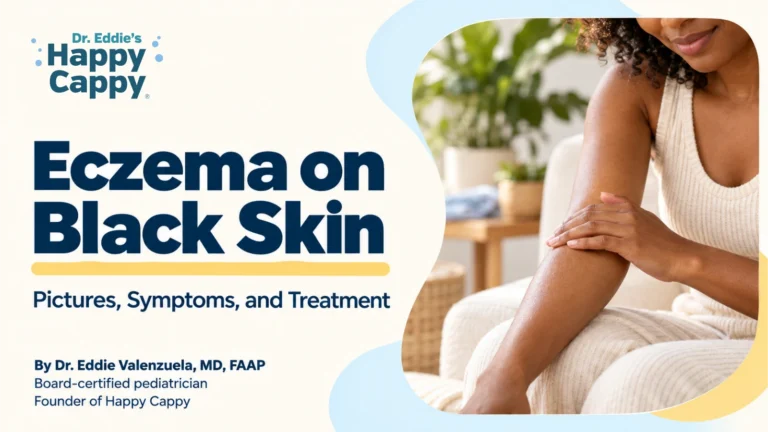
Learn to recognize inflammation beyond redness, distinguish an active flare from lingering color changes, and choose care that fits your skin.
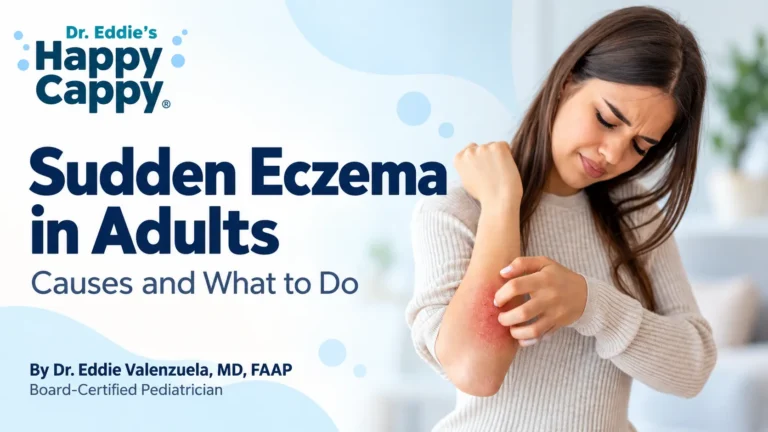
Eczema can first appear in adulthood, but a sudden itchy rash may have another cause and persistent or unusual symptoms need examination.
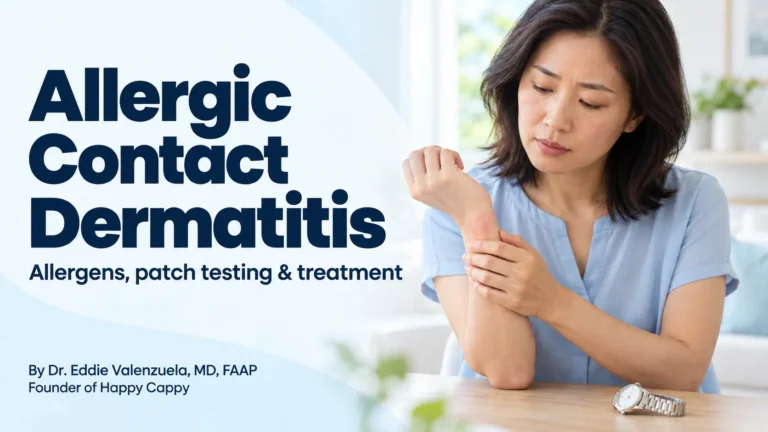
Allergic contact dermatitis is a delayed reaction to skin contact with an allergen, and patch testing may help identify exposures to avoid.

Learn how genes, filaggrin and family history influence eczema risk, why inheritance is not destiny, and when genetic testing may be useful.

Learn how eczema affects immune signaling and the skin barrier, why skin infections occur, and when recurrent infections need an immune evaluation.

Eczema and food avoidance, infant peanut and egg introduction, FPIES, allergy testing and the role of commercial allergen powders.

Eczema is not contagious. Learn why a rash can spread, which infections can resemble or complicate eczema, and when to seek medical care.

Get the facts behind 15 eczema myths about contagion, genetics, food, swimming and treatment, with clear guidance from Dr. Eddie Valenzuela.

Learn how eczema can improve, persist, return or begin in adulthood, why skin-care needs change, and when worsening symptoms need reassessment.

Learn how scalp eczema relates to hair breakage and shedding, which other causes need checking, and when hair loss needs a medical assessment.

Tattooing eczema-prone skin can trigger a flare, allergy or infection, so preparation starts with fully healed skin, a discussion of treatment and medicines, and appropriate aftercare.
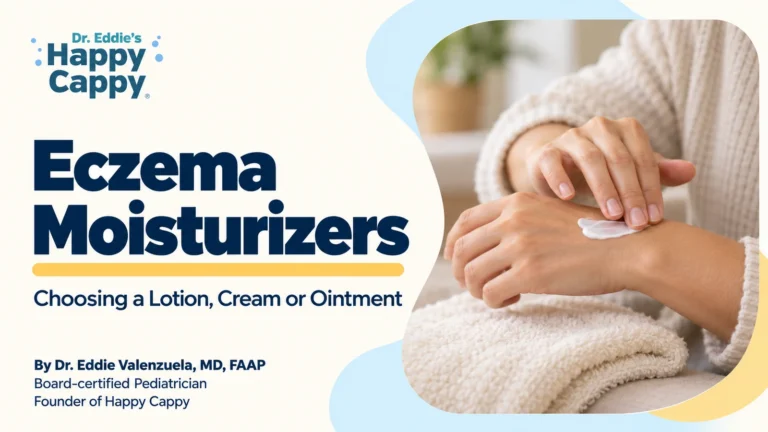
Compare lotions, creams and ointments for eczema-prone skin, with ingredient guidance and practical moisturizing routines.

Moisturize eczema-prone skin at least twice daily and after washing. Learn when to reapply, how to choose a cream, and what changes during a flare or summer.
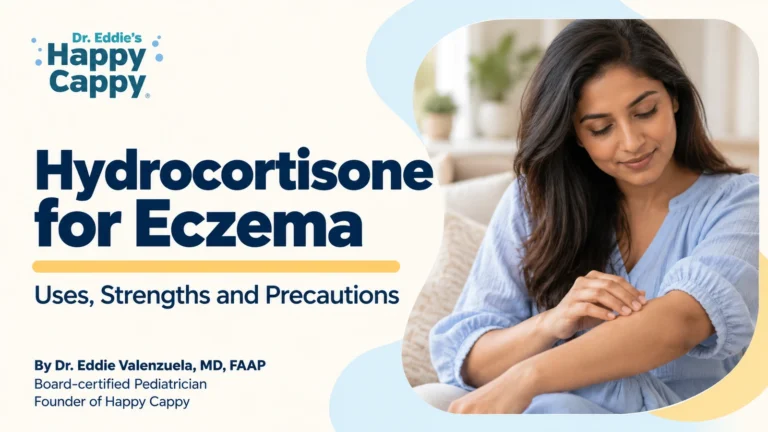
Hydrocortisone can calm an eczema flare. Here is how it fits with moisturizing, what affects safe use, and when a clinician should reassess treatment.
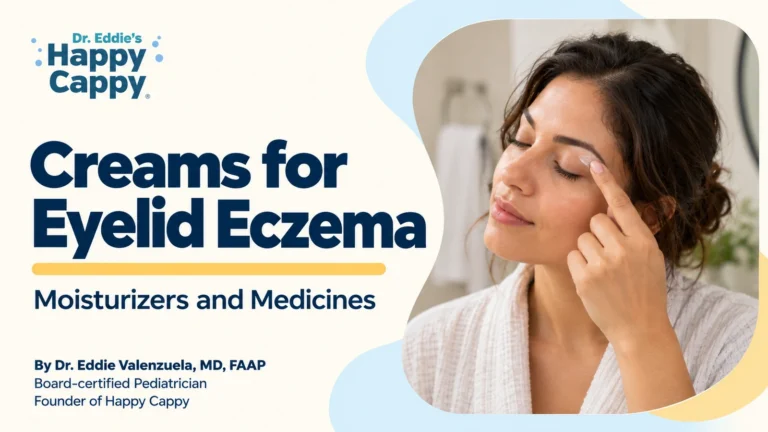
Compare moisturizers and prescription medicines for eyelid eczema, with practical application advice, eye precautions and signs that need medical care.
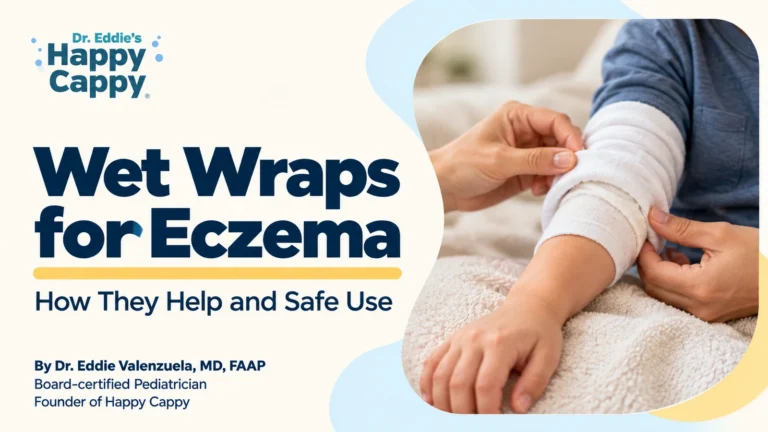
Wet wraps can help selected eczema flares, but safe use requires a clinician-directed plan, especially with topical steroids, and avoiding suspected infected skin.
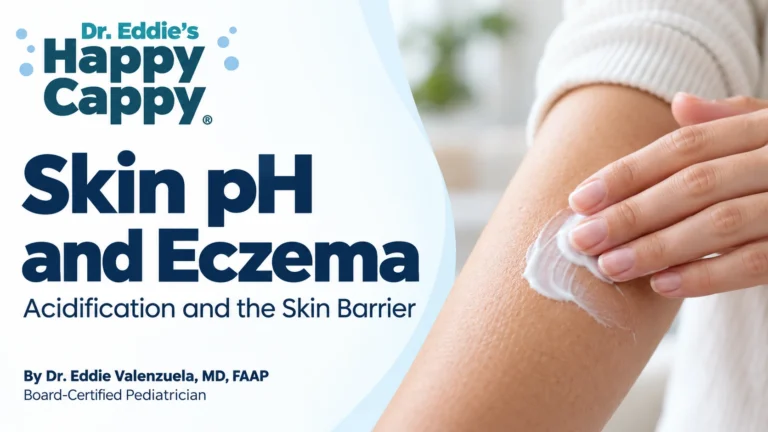
The skin’s mildly acidic surface supports its barrier, but eczema care depends on suitable formulations and treatment rather than choosing the lowest pH or applying vinegar.

Find out when a humidifier may help eczema comfort, how to monitor humidity, and how to choose, clean and place a unit safely in a child’s room.
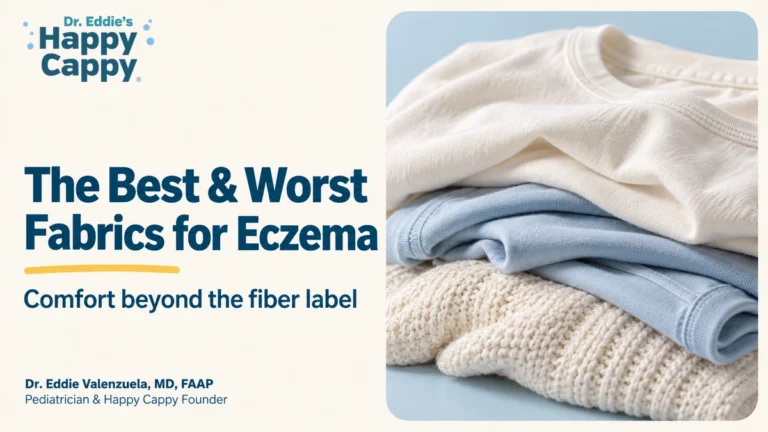
Choose eczema-friendly clothes by texture, fit, seams and sweat. Compare cotton, wool, silk and synthetics, with practical laundry and bedding tips.
Understand sunlight versus prescribed phototherapy, choose sunscreen for eczema-prone skin, and manage heat, sweat and daily moisture outdoors.
14 articles
Flaky, itchy scalps in older children and adults, and the role of the Malassezia yeast.
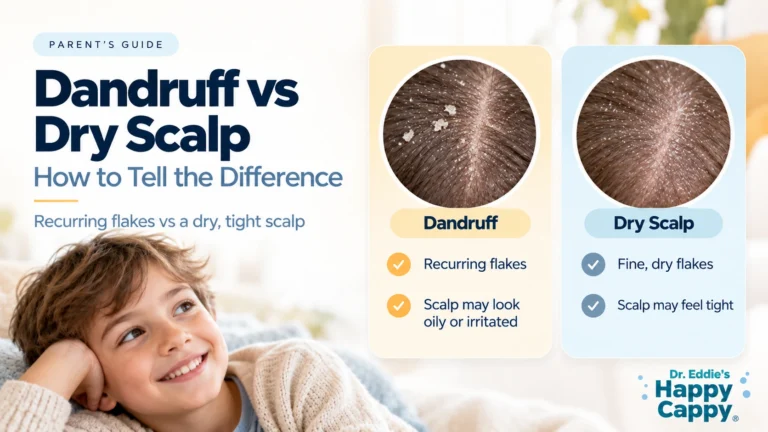
Dandruff and dry scalp can both itch and flake, but oiliness, irritation and moisture loss provide clues to the different care each may need.

Greasy and dry-looking flakes describe appearance rather than a diagnosis, so scalp symptoms and the cause of flaking should guide dandruff care.

See real dandruff microscopy images, learn what flakes are made of, and understand what magnification can and cannot tell you about your scalp.
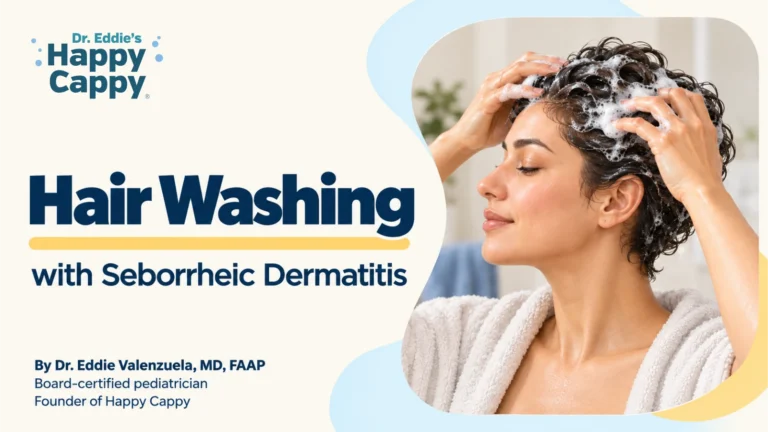
Set a hair-washing routine for seborrheic dermatitis, distinguish cleansing from medicated shampoo use, and adjust for hair type and scalp response.

Dandruff shampoo results are best judged over regular, label-directed use, with reassessment for persistent symptoms and earlier action for worsening symptoms or label warnings.

Compare eyebrow dandruff with dry skin, eczema, and product reactions, then choose gentle care and treatment for the affected skin.
Malassezia normally lives on the scalp. Learn how it relates to dandruff, seborrheic dermatitis, and folliculitis, and how to choose appropriate scalp care.

Malassezia is a normal skin resident involved in several different skin conditions. Learn to distinguish flaking, follicular bumps, and finely scaly changes in skin color.
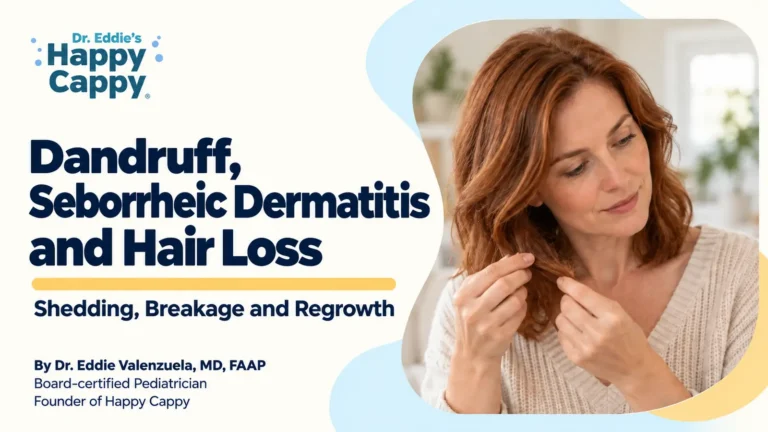
Scratching a scaly scalp can loosen or break hairs, but persistent or patterned hair loss needs its own assessment and is not treated by dandruff shampoo.

Stress can worsen dandruff or seborrheic dermatitis in some people, and managing it supports rather than replaces care for the scalp.
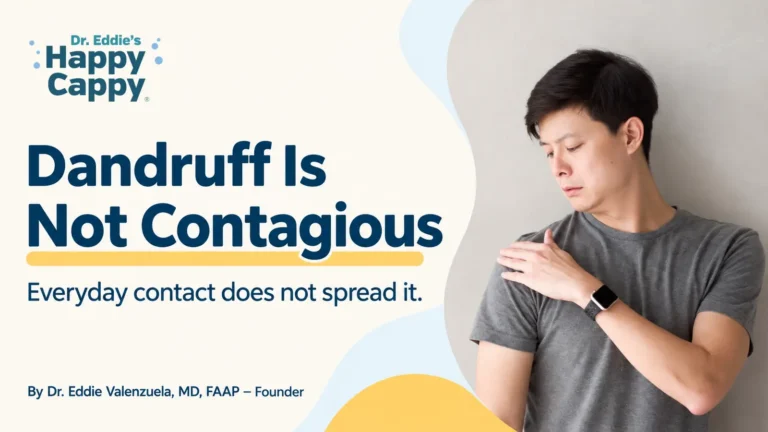
Dandruff cannot spread through ordinary contact, while look-alike conditions such as head lice and scalp ringworm can be contagious.
Dandruff affects scalp skin even without hair, so shaving alone does not reliably clear flakes or replace appropriate scalp care.

Review human research on coconut oil for dandruff, its limits, irritation concerns, and how it compares with established scalp-care options.
Dandruff and acne can occur together, but falling flakes are not an established cause of ordinary acne and each condition needs care matched to its cause.
14 articles
Side-by-side comparisons for rashes, bumps and flakes that look alike.
Pictures and Key Differences
Compare pictures and clues for eczema, ringworm, psoriasis, scabies and other lookalikes. Learn when an exam or skin test can clarify the diagnosis.
Pictures and Key Differences
Compare real eczema and psoriasis pictures, common patterns, nail and joint clues, and how clinicians choose the right diagnosis and treatment.

Skin Patterns and Overlap
Seborrheic dermatitis and psoriasis often differ in location and patch pattern, but overlapping features require care matched to the condition and body area.

In adults, seborrheic dermatitis often affects oil-rich areas, while atopic dermatitis commonly causes dry, intensely itchy patches, although their symptoms can overlap.
How to Tell the Difference
Loose flakes suggest dandruff, while thicker, persistent patches may suggest scalp psoriasis, but overlapping features mean appearance alone cannot confirm the diagnosis.

Appearance and Key Differences
Compare lice eggs and dandruff by attachment, appearance and scalp symptoms. Learn how to check for live lice and choose the right next step.

Pictures and Treatment
Compare actual ringworm and nummular eczema pictures, key differences, contagiousness and treatment. Learn why a fungal test may be needed.
Symptoms, Pictures and Treatment
Compare rosacea and atopic eczema: causes, immune pathways, skin-barrier changes, clinical pictures, symptoms and treatment differences.
Pictures and Treatment
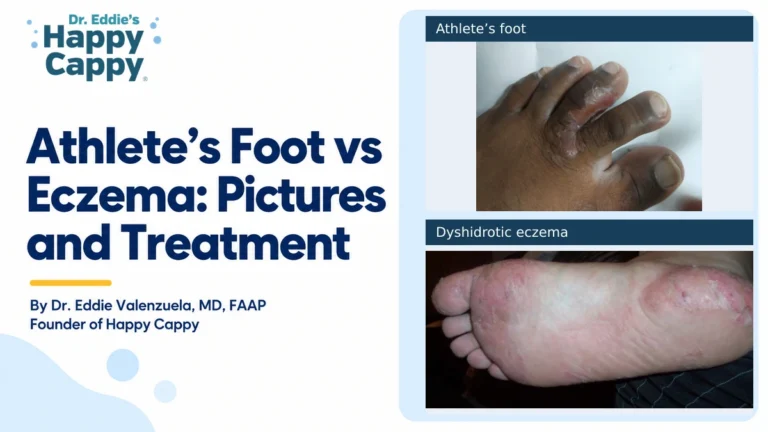
Compare athlete’s foot and foot eczema pictures, toe-web and sole symptoms, testing and treatment. Learn how sweaty sock syndrome differs in children.
Key Differences
Compare fungal acne and closed comedones with pictures, symptom clues and treatment differences, including what to do when both occur together.

Patterns, Clues and Differences
Compare the bump patterns, timing and symptoms that help distinguish fungal folliculitis from acne influenced by hormones.
Pictures and Causes
Learn how styes, chalazia, syringomas and eyelid rashes differ from milia, with gentle care guidance and eye symptoms that need medical attention.
Causes and Skin Changes
Understand pimples on breast skin, common look-alikes, gentle care, and breast or nipple changes that need prompt medical assessment.
Patterns, Causes and Care
Melasma is one type of hyperpigmentation. Compare pigment patterns, common triggers, sun protection and treatment choices, including pregnancy precautions.
No articles match that search. Try a body area such as scalp or eyelids, or browse the Skin Conditions guide.
Each guide covers one condition from start to finish, and links back to the articles above where they fit.
Every article here is written by Dr. Eddie Valenzuela, a board-certified pediatrician who sees these conditions in practice. Each one lists its sources and shows the date it was last updated.
These articles explain common conditions and do not replace an exam. Call your child’s doctor if a rash spreads, oozes, bleeds or comes with a fever, or if your baby seems unwell.