

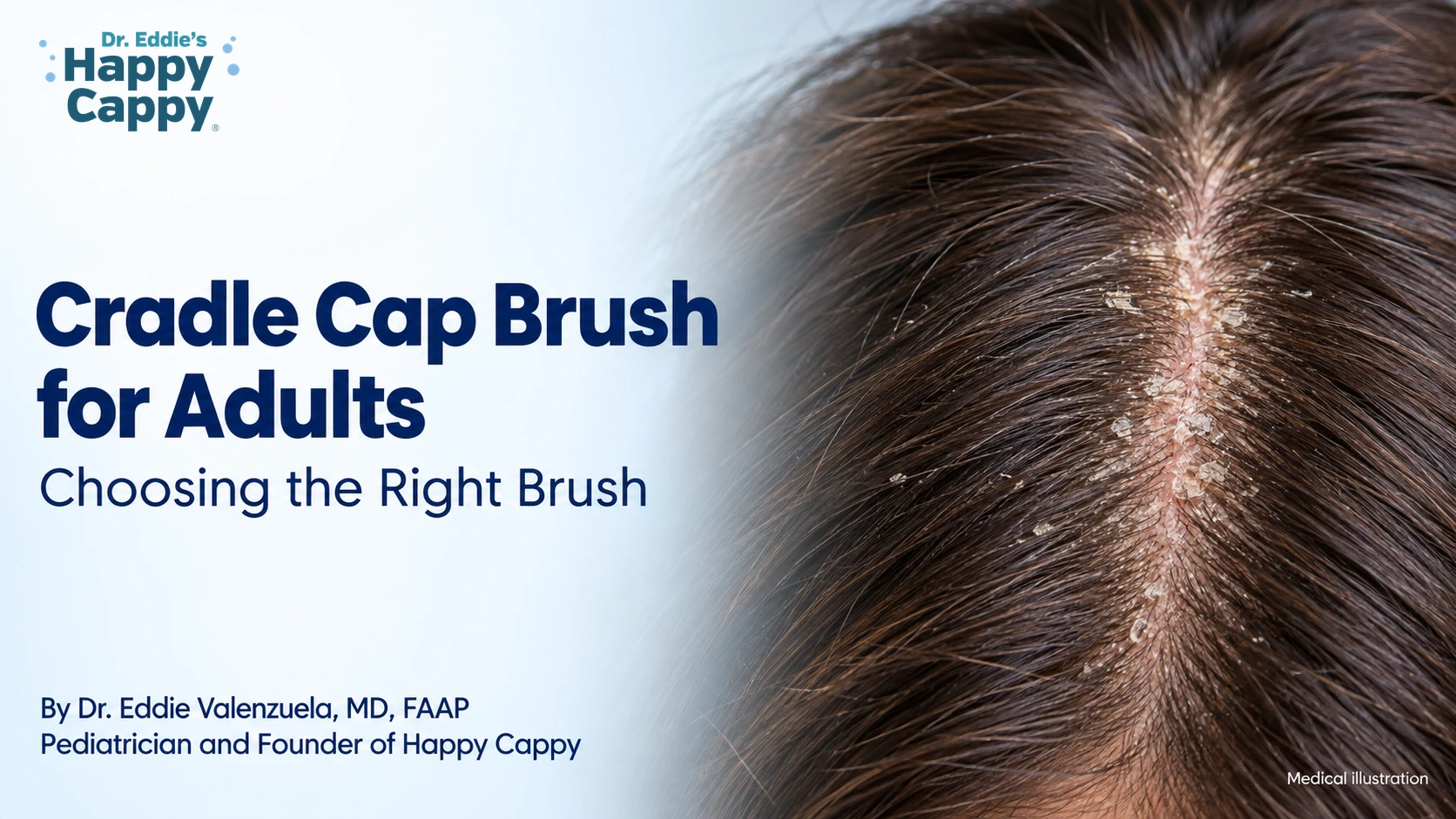
Quick answer
A cradle cap brush is optional for adults. Choose bristles that reach your scalp comfortably without pulling your hair; longer, rounded tines may suit long or dense hair better than a short-bristled baby brush. Use a light touch to lift loose flakes. Medicated shampoo helps control recurring seborrheic dermatitis symptoms.
In adults, the condition often called “cradle cap” is scalp seborrheic dermatitis. For diagnosis and the full range of treatments, see our adult seborrheic dermatitis guide. For a baby's scalp, use our separate baby cradle cap brush guide.1
A scalp brush is an optional aid for loose flakes
The useful job of a scalp brush is to move flakes that already release easily during washing. It should not scrape away attached crusts. Gentle washing with the pads of your fingers is enough if a brush catches your hair or irritates your scalp. Skin affected by seborrheic dermatitis is easily irritated, and more vigorous scrubbing can make a flare worse.2
Choose a brush that reaches through your hair
Hair length, density, and texture affect how easily a tool reaches the scalp. Test the brush with very light pressure. If it rides over the hair, catches strands, or requires you to press down hard, choose a different tool or use your fingertips.
- Short or sparse hair: Short, soft silicone bristles may reach the scalp easily. Keep the pressure light.
- Long or dense hair: Look for longer tines with enough firmness to reach between sections of hair. Rounded tips and some flexibility help you keep the contact comfortable. “Firmer” does not mean sharp, rigid, or abrasive.
- Curly or coily hair: Work in small sections and lift the brush between movements. If the tool catches, stop instead of pulling it through a tangle.
A scalp brush is not a detangling tool. Avoid using a fine-toothed comb or a stiff brush to rake attached scale off the skin.
Use small movements during scalp washing
- Separate the hair into manageable sections. Make room to reach the scalp without dragging a brush through the lengths.
- Wet the scalp and hair thoroughly. Apply shampoo to the scalp and gently massage with your fingertips, keeping your nails off the skin.
- Add the brush only if it feels comfortable. Use light pressure and small movements in one section. Lift and reposition the brush instead of making large circles that wind long hair around the tines.
- Leave resistant scales alone. Stop working on any patch that hurts, bleeds, or needs scraping. You do not need to remove every flake in one wash.
- Rinse thoroughly. Let loosened flakes wash away, then clean the brush and allow it to dry.
There is no need to add daily brushing to an already irritated scalp. Let comfort guide whether you use a brush at a particular wash. Medicated shampoos have different use schedules, so choose a routine that fits the product and your hair type.2,3
Stop brushing over irritated or broken skin
Skip the brush over raw, bleeding, or oozing areas. Increasing pain, swelling, pus, or a spreading rash needs medical assessment. Persistent thick scale also deserves a closer look if ordinary care is not helping.1,2
Patchy hair loss or broken hairs should not be dismissed as flakes needing a stronger brush. Other scalp conditions can resemble seborrheic dermatitis. Our seborrheic dermatitis and hair loss guide explains those distinctions.
The Beanie Brush has limits with long adult hair
The Happy Cappy Beanie Brush is a soft silicone scalp brush with short bristles. Its short bristles do not work as well through long adult hair. If your hair keeps them from reaching the scalp, a brush with longer, somewhat firmer rounded tines is a more practical choice.
For adults with short or sparse hair, the Beanie Brush can be an option when its bristles reach comfortably. It is a physical accessory and contains no medication.4 Choose the brush for your hair, rather than assuming a baby brush will suit every adult.
Keep the brush clean
Wash the Beanie Brush before its first use. After each use, rinse it thoroughly under warm water and let it air-dry. Replace it if it becomes torn, damaged, sticky, or difficult to clean. Follow the manufacturer's cleaning directions for other brushes.4
Medicated shampoo addresses recurring scalp symptoms
Common medicated shampoo ingredients include pyrithione zinc, selenium sulfide, ketoconazole, salicylic acid, sulfur, and coal tar. Their roles and formulas differ. A brush can help with loose flakes, but it does not replace treatment for seborrheic dermatitis. The adult treatment guide compares the options in more detail.1,3
Happy Cappy Medicated Shampoo & Body Wash for sensitive scalps
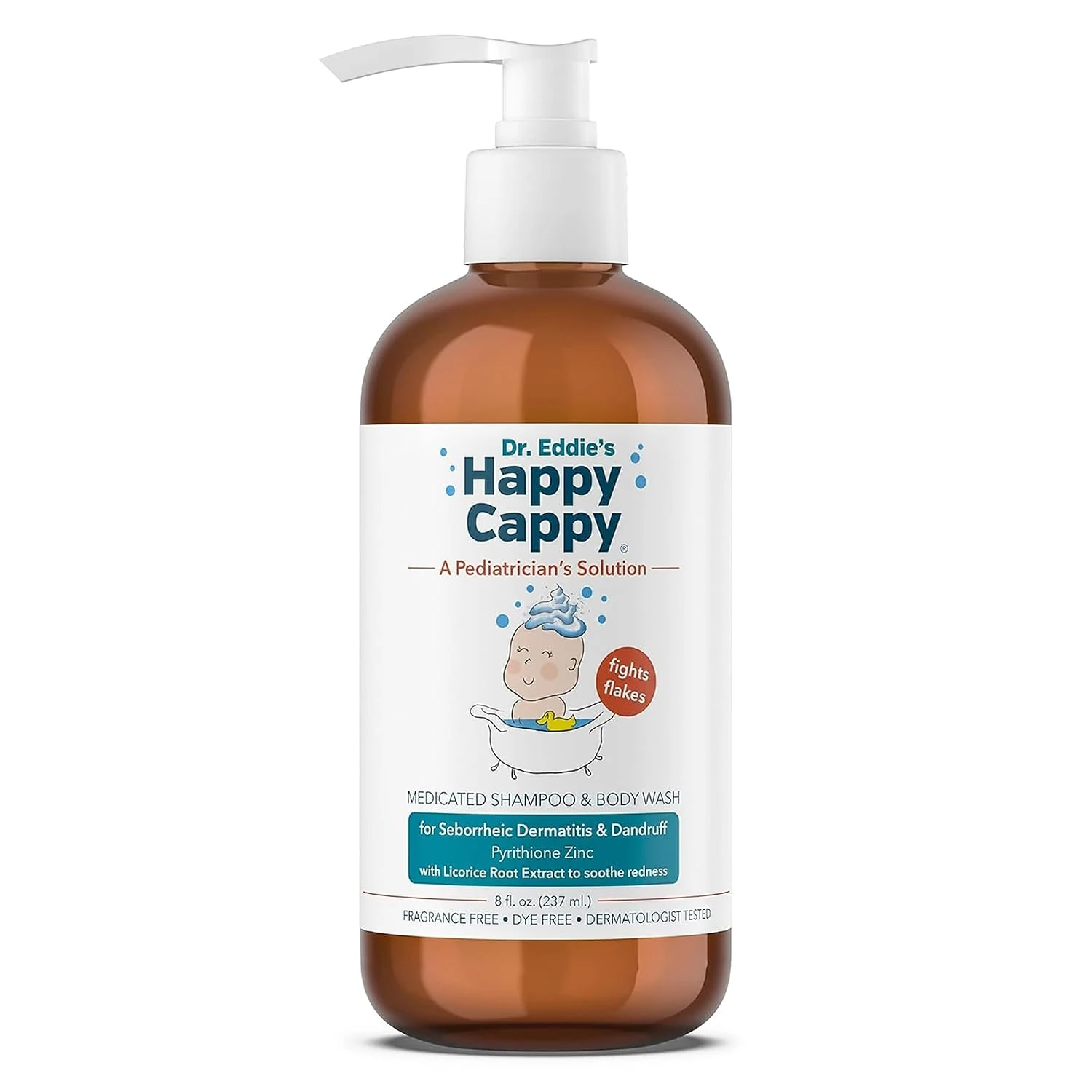
Happy Cappy Medicated Shampoo & Body Wash is a medicated wash for adults and children with dandruff or seborrheic dermatitis. It contains 0.95% pyrithione zinc to help control flaking, scaling, redness, itching, and irritation associated with these conditions.5,6
Its fragrance-free, dye-free formula is designed with sensitive skin in mind. Glycerin helps retain moisture, panthenol supports softness, and licorice root extract helps soothe visible redness.6 You can use the shampoo on its own, with your fingertips, or with a brush that suits your hair.
Use directions: Wet the hair thoroughly, gently massage the shampoo onto the scalp, and rinse well. Use at least twice a week. Keep it out of the eyes. Stop use and ask a doctor if the condition worsens or does not improve with regular use.5
If the short-bristled brush suits your hair: The Medicated Shampoo + Beanie Brush Bundle combines the 8 oz wash with the silicone brush. For long adult hair, choose the shampoo separately and a brush that can reach your scalp comfortably.
Brush fit and a light touch matter most
A useful adult scalp brush reaches the skin without tangling the hair or requiring force. For long hair, longer rounded tines and section-by-section use may be more practical. Keep brushing optional, leave attached scales alone, and use medicated shampoo consistently to help control recurring seborrheic dermatitis symptoms.