

Quick answer: A new or persistent smell from cradle-cap scales is a reason to have your baby’s scalp checked. It can accompany an infection, but odor alone cannot tell you the cause. Look for soreness, swelling, bleeding, or drainage, and use the warning signs below to decide how promptly to call.1,3
A new scalp odor deserves assessment
Ordinary cradle cap causes greasy, attached scales and usually does not bother the baby. It is not caused by poor hygiene. More vigorous washing or scrubbing is not the answer.1,2
A scalp can carry the scent of products used on it, so notice what you are smelling and where it seems to come from. An unexplained odor from the rash, a smell that returns after gentle washing, or odor with changing skin deserves a call to the pediatrician. You do not need to wait for it to become strong or foul.1,3
Scalp changes that need medical advice
These signs need urgent care
- Fever in a young baby: younger than 3 months with a temperature of 100.4°F (38°C) or higher.5
- Your baby looks very ill, or redness is spreading rapidly with pain or swelling.3,4
- Blisters in a newborn: a baby younger than 1 month has a cluster of small fluid-filled blisters or pimples.4
Contact the pediatrician or on-call service for where to be seen. Call 911 for life-threatening symptoms, such as severe trouble breathing or unresponsiveness.4
Odor and changing skin need a prompt call
Contact the pediatrician about new or persistent odor from the scalp rash. Mention pain, swelling, increasing inflammation, wet or cracked skin, pus, bleeding, or new blisters. These changes need assessment even if your baby otherwise seems well.1,3,6
If there is drainage, our guide to an oozing baby scalp explains what to do while arranging care.
Smell alone cannot identify an infection
Calling an odor “yeasty,” “sour,” “cheesy,” or “musty” does not identify a particular germ or tell you which medicine to use. The smell is a clue to mention, not a diagnosis.
Malassezia, a yeast normally found on skin, may play a role in seborrheic dermatitis. That does not make ordinary cradle cap a contagious fungal infection. The cause is not fully understood, and the baby’s skin response and oil glands also appear to matter.1
Skin beneath the scales can become secondarily infected, including with bacteria. Your pediatrician will consider the appearance of the rash, discomfort, drainage, and how your baby is acting. Treatment depends on that assessment, not on the odor description alone.3
The scalp and ear folds can have different problems
Without lifting stuck-on crusts, look at the scalp and the skin folds behind the ears. Note whether the surface is dry and scaly or has become raw, wet, or cracked. A raw rash behind the ear is a reason to contact your pediatrician.4
If fluid seems to come from inside the ear rather than the surrounding skin, mention that specifically. The ear needs a separate examination. Keep shampoo and scalp treatments out of the ear canal.
A photo taken before washing, the time you first noticed the smell, and a list of products recently applied can help you describe the change to the clinician.
Gentle care while the cause is assessed
If your baby is otherwise well and the skin is intact, gentle cleansing can continue while you arrange advice about the odor. Stop brushing any area that is raw, painful, bleeding, or weeping.
- Wash gently. Use a mild, fragrance-free baby shampoo and rinse thoroughly. Avoid repeated washing in an attempt to scrub away a smell.2,6
- Leave firmly attached scales alone. You may gently loosen softened flakes during washing, but do not pick, scrape, or force them off.2,6
- Do not cover the odor with fragrance. Perfumed products can irritate a baby’s skin. Do not start an antifungal, antibiotic, or steroid solely because of how the scalp smells.6
Routine scale care after the cause is addressed
Once unexplained odor and concerning skin changes have been assessed, routine cradle-cap care can focus on comfortable skin and gradually loosening scales. Gentle washing may be enough; a medicated wash can help when typical flaking and scaling persist.2
Happy Cappy Medicated is a cradle cap shampoo
Happy Cappy Medicated Shampoo & Body Wash is a cradle cap shampoo that helps gently wash away flakes and scales while cleansing your baby’s hair and scalp. Cradle cap is the infant form of seborrheic dermatitis.1,7
Its 0.95% pyrithione zinc helps relieve flaking, scaling, redness, and itching associated with seborrheic dermatitis and dandruff. The formula is fragrance-free and dye-free.7
Use as directed and keep the wash out of the eyes. Stop use and ask a doctor if symptoms worsen or do not improve with regular use. Medicated shampoo does not replace assessment or treatment of the cause of an unexplained odor.7
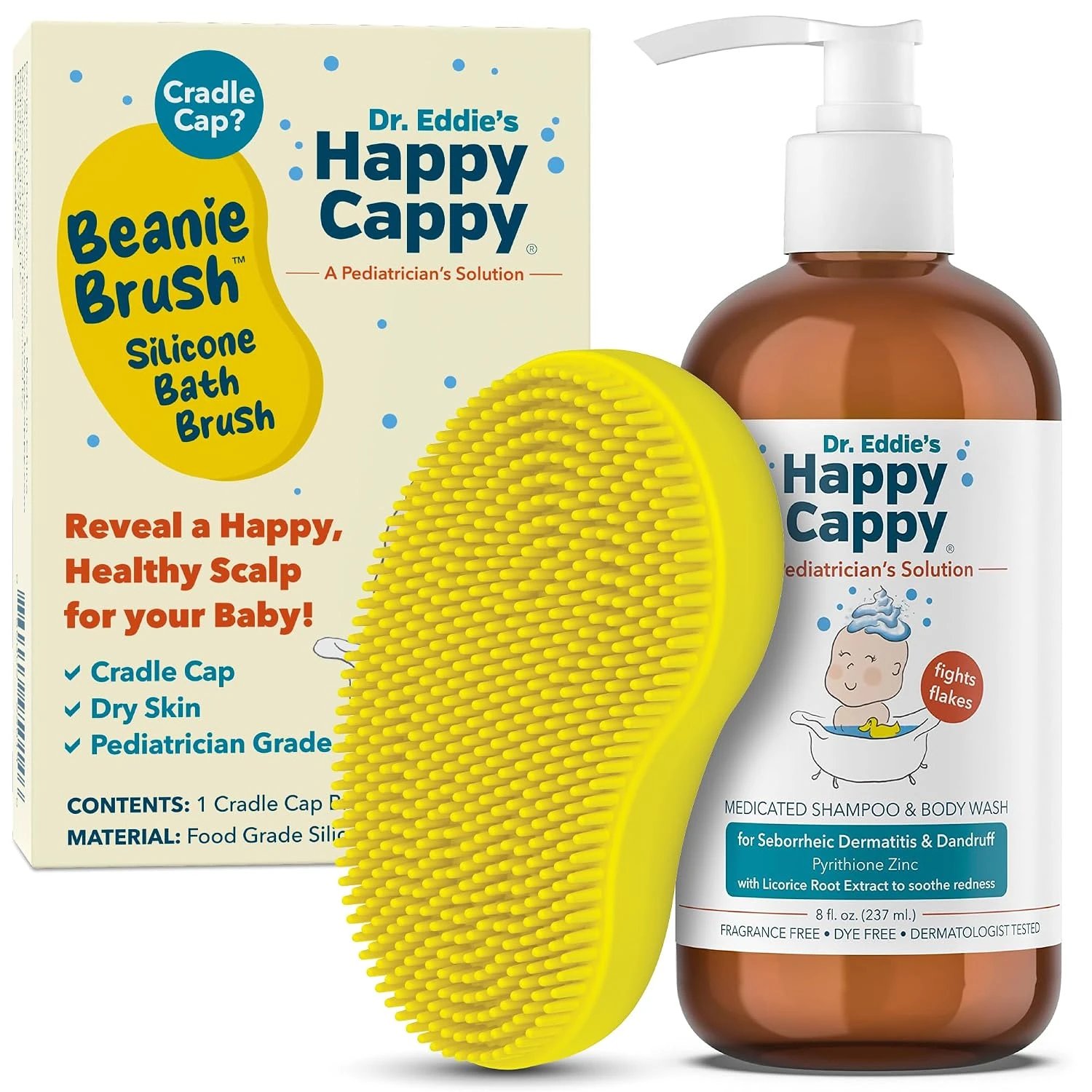
A brush is optional. The Medicated Shampoo + Beanie Brush Bundle pairs the 8 oz wash with a soft silicone brush. Use a light touch only on intact, comfortable skin and scales that release easily. Leave attached crusts alone.
For the full routine, visit the cradle-cap care guide. The brush technique guide explains gentle pressure and when to stop.