

Quick answer: Cradle cap is seborrheic dermatitis of a baby’s scalp. Dandruff usually starts around puberty and causes scalp flakes without obvious inflammation. They belong to the same spectrum of conditions, but cradle cap is not simply “more severe dandruff.” Age, appearance, discomfort, and how the condition changes over time help distinguish them.1,2
Cradle Cap vs. Dandruff at a Glance
| Feature | Cradle cap | Dandruff |
|---|---|---|
| Usual age | First weeks or months of life | Adolescence and adulthood3 |
| Appearance | Greasy white or yellow scales that cling to the scalp | Loose white or yellowish flakes; may look dry or oily2 |
| Discomfort | Usually little or no itching | May itch; obvious inflammation suggests seborrheic dermatitis or another cause5 |
| Location | “Cradle cap” refers to the scalp; infantile seborrheic dermatitis can affect other areas | Scalp; a flaky rash on the face or elsewhere needs a broader assessment1 |
| Course | Usually clears during the first year, although some cases last longer | Often comes and goes and may need ongoing management2 |
The good news: Happy Cappy Medicated Shampoo helps control flaking and scaling associated with both cradle cap and dandruff. The care routine should fit the person’s age: see baby cradle-cap care or dandruff care for older users.10
Greasy scales on a baby’s scalp suggest cradle cap
Greasy, stuck-on scales on an otherwise comfortable baby’s scalp fit the usual appearance of cradle cap. The scales may be thin or form thicker patches. Cradle cap is not contagious and does not mean your baby is dirty.1
“Baby dandruff” is a common search term, but it does not establish the cause. Loose flakes alone can also occur with peeling skin or other scalp conditions. Significant itching, soreness, or hair loss deserves a closer look.3,4
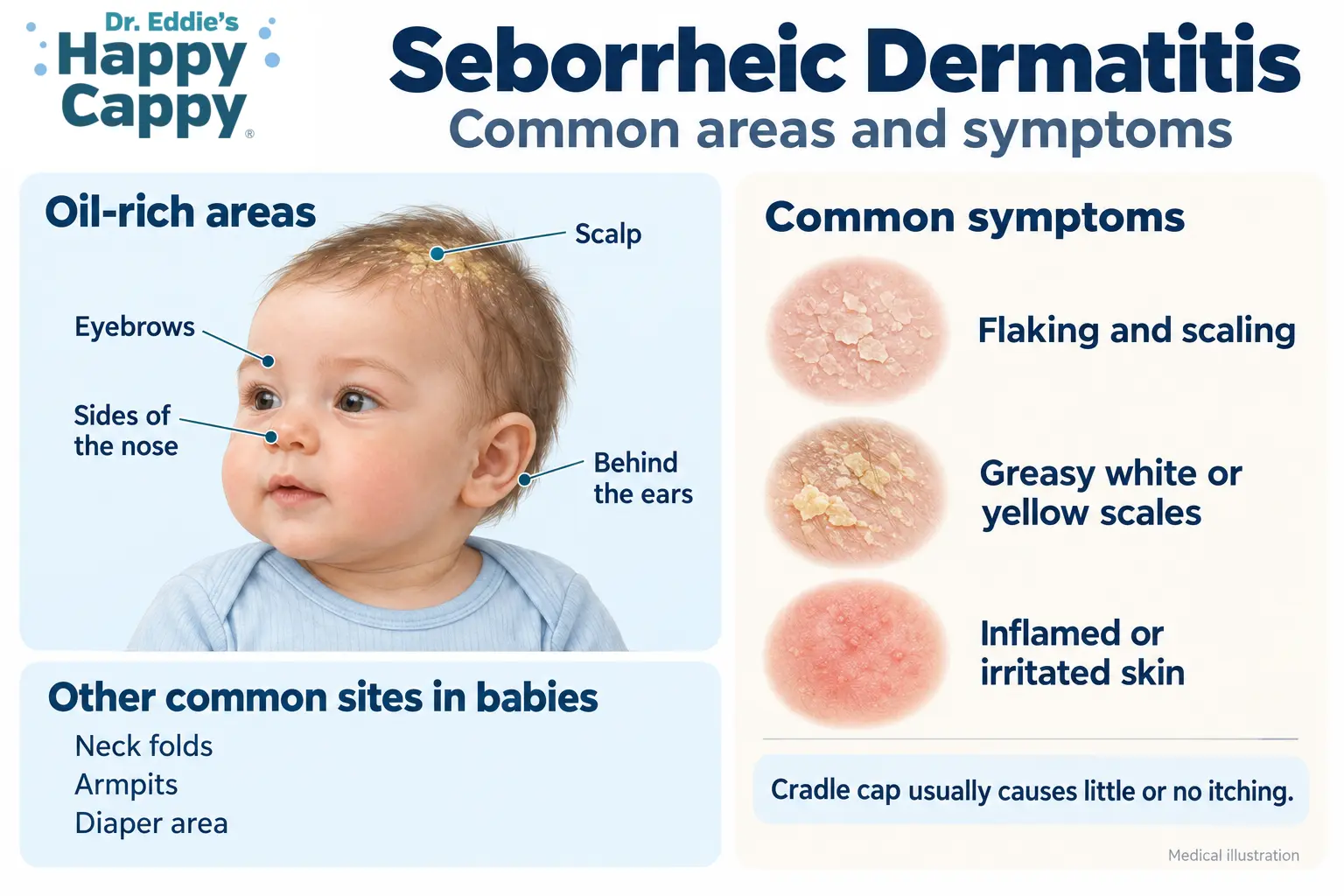
For a fuller care guide, see cradle cap symptoms and treatment.
For closer views of infant scalp scale, see the cradle-cap appearance photographs. These examples complement the comparison above; age, symptoms and the course of the rash still matter.
Dandruff is scalp flaking without obvious inflammation
Dandruff is generally considered the scalp-limited, noninflamed end of the seborrheic dermatitis spectrum. Flakes can be dry-looking or oily, and some people notice itching. A visibly inflamed rash or thick, adherent scale may be seborrheic dermatitis or another condition rather than simple dandruff.2,5
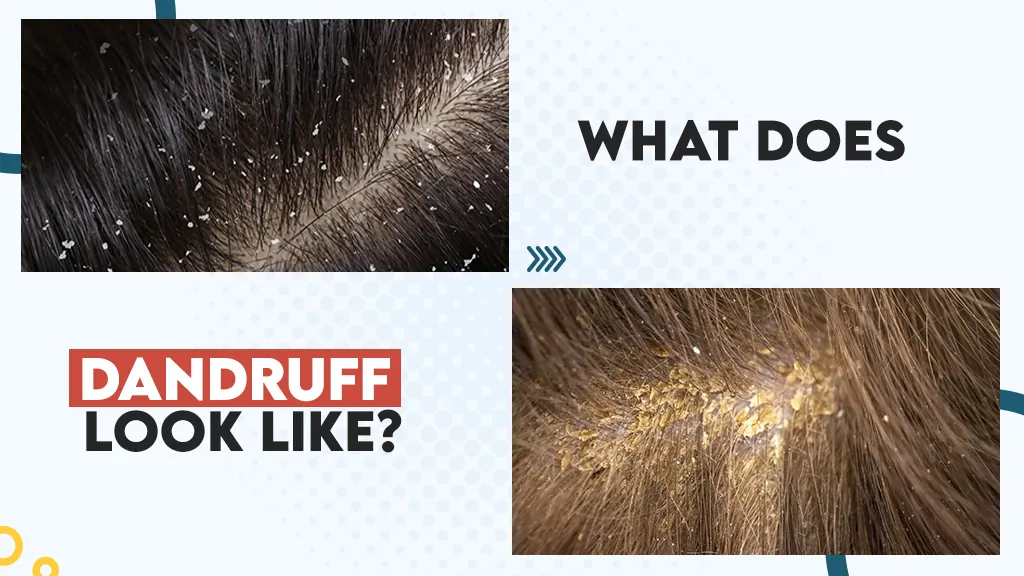
See our dandruff guide for care aimed at older children and adults.
Related biology with different ages and courses
The cause is not fully understood. Researchers describe an interaction among skin oils, the skin barrier, individual susceptibility, and Malassezia, a yeast normally found on skin. Finding yeast does not by itself diagnose a scalp disorder.2,5
Both conditions involve this broader biology, but their different ages of onset and courses matter. Neither should be explained as simply too much oil or poor washing.1,2
Other causes of baby scalp flakes
- Normal newborn peeling: Some peeling after birth is normal and does not necessarily need treatment.6
- Dry or irritated skin: Flaking without greasy buildup may have another cause. The cradle cap vs. dry skin comparison explains the distinction. Consider whether a new product coincided with irritation; persistent symptoms deserve assessment.3
- Eczema: Itching, dryness, and inflamed skin are more characteristic than painless greasy scale. Inflammation may look red, darker brown, purple, or gray depending on skin tone. See cradle cap vs. eczema for the signs that help distinguish them.7
- Scalp ringworm: Scaling with broken hairs or patchy hair loss needs medical assessment. Scalp ringworm generally requires an oral antifungal; shampoo alone does not cure it.8
- Other conditions: Psoriasis, contact dermatitis, and infection can resemble cradle cap. Do not keep treating an unusual or worsening rash as ordinary flakes.3
Cradle-cap care starts with gentle washing
Mild cradle cap may settle with a gentle, fragrance-free baby shampoo and removal of scales that have already loosened. Avoid picking or scraping scales that are still attached. If gentle washing is not keeping the flakes and scale under control, a medicated shampoo formulated for babies can be a useful next step.4
Happy Cappy Medicated provides that option for seborrheic flaking and scaling. The complete baby cradle-cap care guide explains washing, shampoo use and optional gentle brushing.
Dandruff care differs by age and hair type
Older children and adults may need ongoing dandruff care. Shampoo choice and washing frequency depend on the intended user, product directions, and hair type.9 See the dandruff care guide for the full routine. An adult routine should not automatically be applied to a baby.
Happy Cappy Medicated helps with both conditions
Happy Cappy Medicated Shampoo & Body Wash is a cradle cap shampoo that helps gently wash away flakes and scales while cleansing your baby’s hair and scalp. Cradle cap is the infant form of seborrheic dermatitis.1,10
Its 0.95% pyrithione zinc helps relieve flaking, scaling, redness, and itching associated with seborrheic dermatitis and dandruff. The formula is fragrance-free and dye-free. The same wash can support baby cradle-cap care and help control dandruff in older users.10
Its fragrance-free, dye-free formula is designed for sensitive skin and made without SLS or SLES. Follow the bottle’s Drug Facts and the age-appropriate care guide above. Avoid contact with the eyes; stop use and seek advice if symptoms worsen or do not improve with regular use. Ask before use when seborrheic dermatitis covers a large area of the body.10
A brush is optional. The Medicated Shampoo + Beanie Brush Bundle pairs the same wash with a soft silicone brush for gently lifting loose scales. Keep the pressure light; the wash supplies the medicated ingredient.
Scalp changes that need medical advice
Have a baby’s scalp checked if it becomes painful, swollen, wet, bleeding, or develops pus or a persistent odor. Significant itching, patchy hair loss, or a rash that is spreading or not improving can suggest another condition.1,4
For an older child or adult, seek advice when dandruff is severe, visibly inflamed, or does not respond to appropriate over-the-counter care.9