
Quick answer
No routine is proven to prevent a baby's first episode of cradle cap. Regular washing with a mild baby shampoo can help limit scale buildup and reduce recurrence after it clears. Remove only flakes that release easily. A medicated wash may help persistent symptoms, but it does not guarantee that cradle cap will never return.1,2
Cradle cap is infantile seborrheic dermatitis of the scalp. It is common and is not caused by poor hygiene. If flakes develop despite regular care, you have not done anything wrong.2 Our main cradle cap guide covers recognition and treatment of existing scales.
A gentle routine to limit scalp buildup
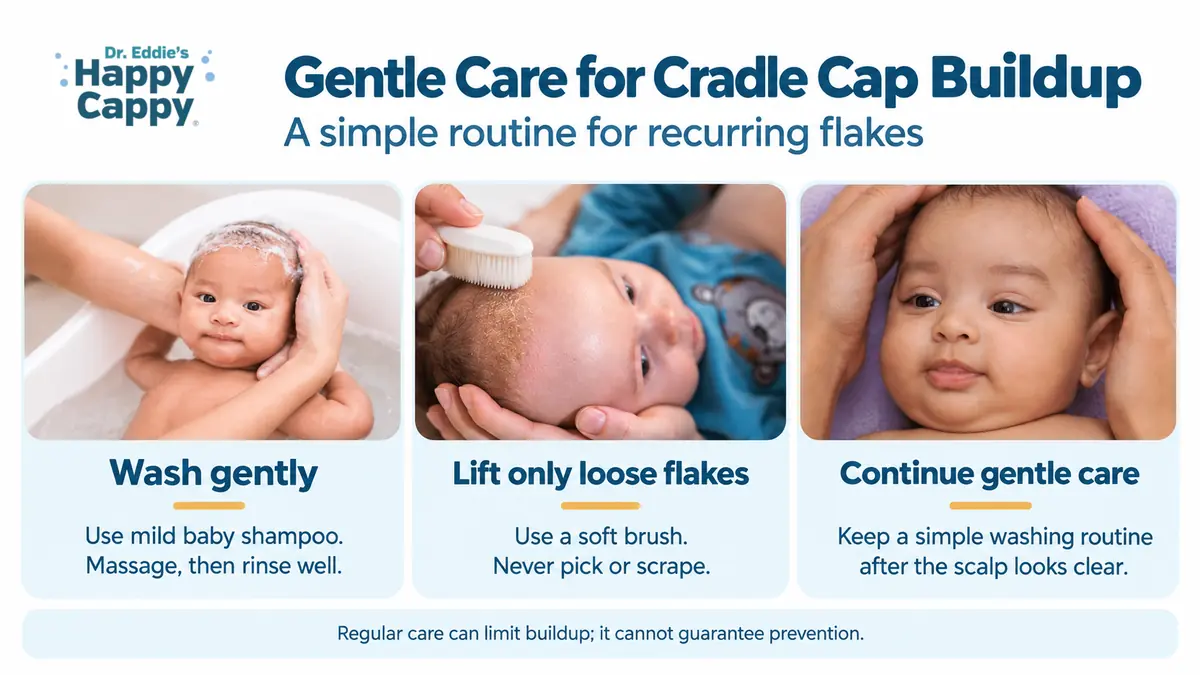
Wash regularly with a mild baby shampoo
Once the scales have cleared, washing the hair two or three times a week with a mild shampoo can help keep scale from building up again. Rinse thoroughly. This is a maintenance routine, not a promise that every baby will stay flake-free.3
For a scalp with active cradle cap, washing as often as every other day may help. Choose a fragrance-free baby shampoo and keep the scalp comfortable. If your baby also has eczema or another diagnosed skin condition, follow the washing plan for that condition.4
Use a light touch when flakes appear
During washing, gently massage with your fingertips. A soft baby brush can help move loosened flakes through the hair. Do not scrape, pick, or keep brushing a patch that does not release easily. Picking can damage the skin and raise the risk of infection.4,5
A scalp without scales does not need extra scrubbing to prevent them. Focus on comfortable, consistent cleansing rather than trying to remove every visible speck.
Keeping cradle cap from coming back
Keep a simple washing routine after the scalp looks clear instead of stopping scalp care altogether. If a few flakes return, use gentle washing and loosened-scale removal again. A return of scaling does not necessarily mean the shampoo is wrong or that stronger treatment is needed.3
Most babies improve over weeks or months, although some children have flakes for longer. See how long cradle cap lasts for the usual course and when to reassess.2
Choosing a wash for the scalp's current needs
After scales clear: A mild, nonmedicated wash supports routine cleansing and helps limit buildup.3
When flakes persist or recur: A cradle cap shampoo offers a targeted option for washing away scales and controlling seborrheic dermatitis symptoms.4,6
Daily Wash for gentle routine cleansing
Happy Cappy Daily Shampoo & Body Wash is a nonmedicated cleanser for dry, sensitive, eczema-prone skin in babies, children, and adults. It is fragrance-free and made without SLS/SLES. Glycerin and panthenol help support moisture and softness, making it an option for regular gentle cleansing.7
Use Daily Wash as needed for gentle cleansing, adjusting scalp-washing frequency to your baby's skin. Its role here is cleansing; it is not a medicated treatment for seborrheic dermatitis.
Happy Cappy Medicated is a cradle cap shampoo
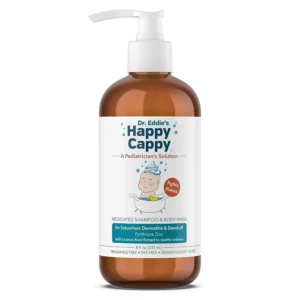
Happy Cappy Medicated Shampoo & Body Wash is a cradle cap shampoo that helps gently wash away flakes and scales while cleansing your baby’s hair and scalp. Cradle cap is the infant form of seborrheic dermatitis.
Its 0.95% pyrithione zinc helps relieve flaking, scaling, redness, and itching associated with seborrheic dermatitis and dandruff. The formula is fragrance-free and dye-free.6,8
Skip the oily mess. Happy Cappy Medicated helps wash away flakes and scales without applying oil beforehand. Gently massage with your fingertips and rinse; let attached scales loosen gradually.4,6,8
A brush is optional. If you prefer one, the Medicated Shampoo + Beanie Brush Bundle pairs the wash with a soft silicone brush. Use a light touch only on flakes that release easily. No washing routine can guarantee that cradle cap will never return.
Use as directed: Wet the hair thoroughly, gently massage onto the scalp and skin, and rinse well. For best results, use at least twice weekly or as directed by a doctor. For external use only. Avoid the eyes; rinse thoroughly with water if contact occurs. Ask a doctor before use if seborrheic dermatitis covers a large body area. Stop use and seek advice if the condition worsens or does not improve with regular use as directed.6
Natural remedies are not proven prevention
For parents who prefer a simple, nonmedicated approach, gentle washing is a reasonable starting point. Breast milk, plant oils, and humidifiers are not established ways to prevent cradle cap. Softening scales that are already present is a different goal from preventing the condition from developing.1
If an emollient or oil is used to soften stubborn scales, wash it out afterward. Leaving oily residue behind can worsen buildup. The National Health Service (NHS) advises against olive oil and peanut oil for cradle-cap care.3,5 See our breast milk and cradle cap article for a closer look at that remedy.
When recurring flakes need a closer look
Contact your pediatrician if the scalp is painful, very itchy, swollen, bleeding, or oozing, or if care has not helped after a few weeks. A severe rash beyond the scalp also deserves assessment. These findings may need a different treatment or a check for another condition.4,5
Our cradle cap itching and pain guide explains which comfort changes are unusual.