
Quick answer
Cradle cap usually clears within a few weeks to a few months. Most babies improve by 6 to 12 months of age. Visible flakes can wash away before the tendency to form new scales settles, so look for gradual improvement with gentle care. Pain, swelling, oozing, or a baby who seems unwell needs prompt assessment.1–4
Cradle cap is infantile seborrheic dermatitis of the scalp. When you are checking your baby's progress, it helps to separate two changes: the visible flakes washing away, and new scales no longer building up. The first can happen sooner. A clearer scalp after a bath is encouraging, even while the condition is still settling.2–4
The usual cradle cap timeline
Cradle cap can go away on its own. It often starts in the first few months of life and gradually settles as the baby grows. The American Academy of Dermatology describes improvement by 6 to 12 months of age.2,3
| Time frame | What it means |
|---|---|
| A few weeks to a few months | The usual course of cradle cap, including cases that clear without treatment.3 |
| By 6 to 12 months of age | Most babies are improving. This describes the baby's age, rather than a required number of months after the flakes first appear.2 |
| Beyond the first birthday | Persistent or newly appearing scale deserves a fresh look, especially if it is itchy or inflamed. Some toddlers have seborrheic dermatitis, while other scalp conditions can look similar.3,4 |
For an older child, see our toddler cradle cap guide. The infant timeline also differs from the recurring course of seborrheic dermatitis in adults.
Improvement with gentle scalp care
Loosening visible scales
Gentle shampooing can help loosen and wash away flakes while cradle cap runs its course. A soft brush is optional; your fingertips may be enough. Let firmly attached scales loosen gradually. Picking or scrubbing them off can leave raw skin and increase the chance of infection.1,2 The cradle cap care guide covers the full washing routine.
Signs of progress
Look for less buildup and scales that lift away more easily during gentle washing. For example, a patch may become thinner before it disappears completely. A few remaining flakes do not mean you need to scrub harder or clear the scalp in one bath.1–3
If flakes keep building up despite gentle washing, a shampoo formulated for cradle cap is an option. Judge its effect by the same signs of progress: less scale, easier washing, and a comfortable scalp.2
Happy Cappy Medicated is a cradle cap shampoo
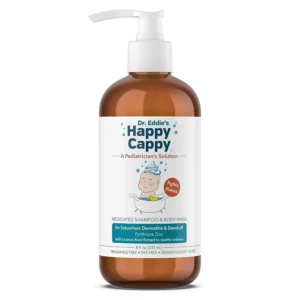
Happy Cappy Medicated Shampoo & Body Wash is a cradle cap shampoo that helps gently wash away flakes and scales while cleansing your baby’s hair and scalp. Cradle cap is the infant form of seborrheic dermatitis.
Its 0.95% pyrithione zinc helps relieve flaking, scaling, redness, and itching associated with seborrheic dermatitis and dandruff. The formula is fragrance-free and dye-free.5,6
Gently massage with your fingertips and rinse, leaving attached scales to loosen gradually. The formula is also made without SLS/SLES.2,5,6
Progress with regular use: Happy Cappy’s product guidance describes flaking and scaling easing over one to two weeks for many families using it consistently. Timing varies from baby to baby, and early improvement is different from the condition settling for good.6
Use as directed: Wet the hair thoroughly, gently massage onto the scalp and skin, and rinse well. For best results, use at least twice weekly or as directed by a doctor. For external use only. Avoid the eyes; if contact occurs, rinse thoroughly with water.5
Follow the label advice to ask a doctor before use if seborrheic dermatitis covers a large body area. Stop use and seek advice if the condition worsens or does not improve with regular use as directed.5
Cradle cap can come back
Scales can return after the scalp looks clearer. Continued production of the skin’s natural oils can contribute to renewed buildup during infancy. Recurrence does not mean that you caused the condition or failed to clean your baby's scalp properly.3,4
Keep care gentle and follow the directions for any shampoo you use. Our buildup and recurrence guide explains ongoing scalp care. A rash that returns with new itching, pain, or oozing needs reassessment.
Persistent or changing symptoms need reassessment
No improvement after a few weeks
Arrange a visit if a few weeks of gentle care have made no difference. The usual infant timeline is not a reason to wait until the first birthday when care is not helping. A clinician can check whether this is cradle cap, eczema, or another condition and adjust treatment.1,3,4
New discomfort, swelling, or leaking fluid
Seek advice sooner for pain, troublesome itching, swelling, bleeding, or fluid leaking from the scalp. Fever, poor feeding, or a baby who seems unwell also warrants prompt medical advice. These changes can indicate infection or a different rash, rather than cradle cap simply taking longer to clear.1,2,4