


Quick answer: Some toddlers still have scales that began as cradle cap in infancy. New or persistent scaling beyond the first year needs a closer look, especially with itching, inflammation, or hair loss. Gentle washing can help comfortable, intact skin, but eczema, scalp ringworm, and psoriasis need different care.1,2
This guide focuses on scalp scales in toddlers, including two- and three-year-olds. Start with when the scales began, then compare the common lookalikes. The gentle-care section and signs that need assessment explain the next steps.
Cradle cap is the infant form of scalp seborrheic dermatitis
Cradle cap is the scalp form of infantile seborrheic dermatitis. It usually produces greasy, stuck-on scales without much itching. Seborrheic dermatitis can also affect areas such as the eyebrows, behind the ears, and skin folds; the term cradle cap specifically refers to the scalp.12
It is not contagious and is not evidence that a child's scalp is dirty.3
Persistent or new scales in toddlers need a closer look
Whether your child is two, three, or four years old, the useful starting point is when the scales began and whether the scalp has ever cleared.
Scales that have continued from infancy
Some children continue to have flaky buildup that began in infancy. Persistent cradle-cap-like scales are possible, but scaling beyond the first year is a reason to check the diagnosis.1,2 Our cradle cap duration guide explains the usual infant timeline.
New scales after a clear scalp
Scales that appear after the scalp was clear deserve a fresh look, especially if itching, inflammation, or hair loss appears with them. Eczema, scalp ringworm, and psoriasis can resemble cradle cap and need different care.2
When describing the changes to your pediatrician, mention when they started, whether the scales ever went away, and whether your child scratches or has hair loss. Those details help put the scalp signs below into context.
The cause of cradle cap is not fully understood
The exact cause is uncertain. Oil-gland activity and the skin's response to Malassezia, a yeast normally found on skin, may contribute. These possible mechanisms do not prove that an older child's flakes come from excess oil or yeast overgrowth.2
Cradle cap is not caused by poor hygiene, and having it as a baby does not mean a child will necessarily develop dandruff later.3
Scalp lookalikes in toddlers
Typical cradle cap has waxy or greasy yellowish scales attached to the scalp. A child with uncomplicated cradle cap is generally comfortable. Marked itching or inflamed skin warrants reassessment.3
| Possible condition | Clues to discuss with your pediatrician |
|---|---|
| Eczema | Dry, itchy, inflamed skin, often with eczema elsewhere. Scratching and disturbed sleep can be more prominent than with uncomplicated cradle cap.4 |
| Scalp ringworm (tinea capitis) | Scaly areas with broken hairs, black dots, or patches of hair loss. Sometimes it resembles ordinary dandruff. It requires medical treatment, usually an oral antifungal; shampoo alone does not cure it.5 |
| Scalp psoriasis | Thicker, clearly outlined scaly patches that may extend beyond the hairline. Inflammation can look purple or dark brown on darker skin rather than bright red.6 |
These clues help you describe the rash; they do not replace an examination. See our eczema guide for more about dry, itchy skin.
Gentle care for a toddler’s flaky scalp
For mild, comfortable scaling, begin with gentle care while arranging advice if the diagnosis is uncertain.
Gentle washing and loose-scale removal
Use a mild, fragrance-free shampoo. Work gently through the hair to the scalp, then rinse. A soft brush or comb can help lift scales that are already loosening. Stop if brushing hurts or makes the skin bleed. Adjust washing frequency with your child's clinician if eczema or dryness is also present.7
Firmly attached scales need time to loosen
There is no need to remove every scale in one bath. Let washing loosen the buildup gradually and stop if the scalp becomes sore. Avoid picking, scratching, or forcing a comb under attached scales.7,8 The cradle-cap guide explains the broader scale-care routine.
Happy Cappy Medicated is a cradle cap shampoo
When the scaling is due to seborrheic dermatitis and gentle shampoo alone is not enough, a wash formulated for that condition can help. Treatment for a different diagnosis, such as scalp ringworm, follows a different plan.5,7
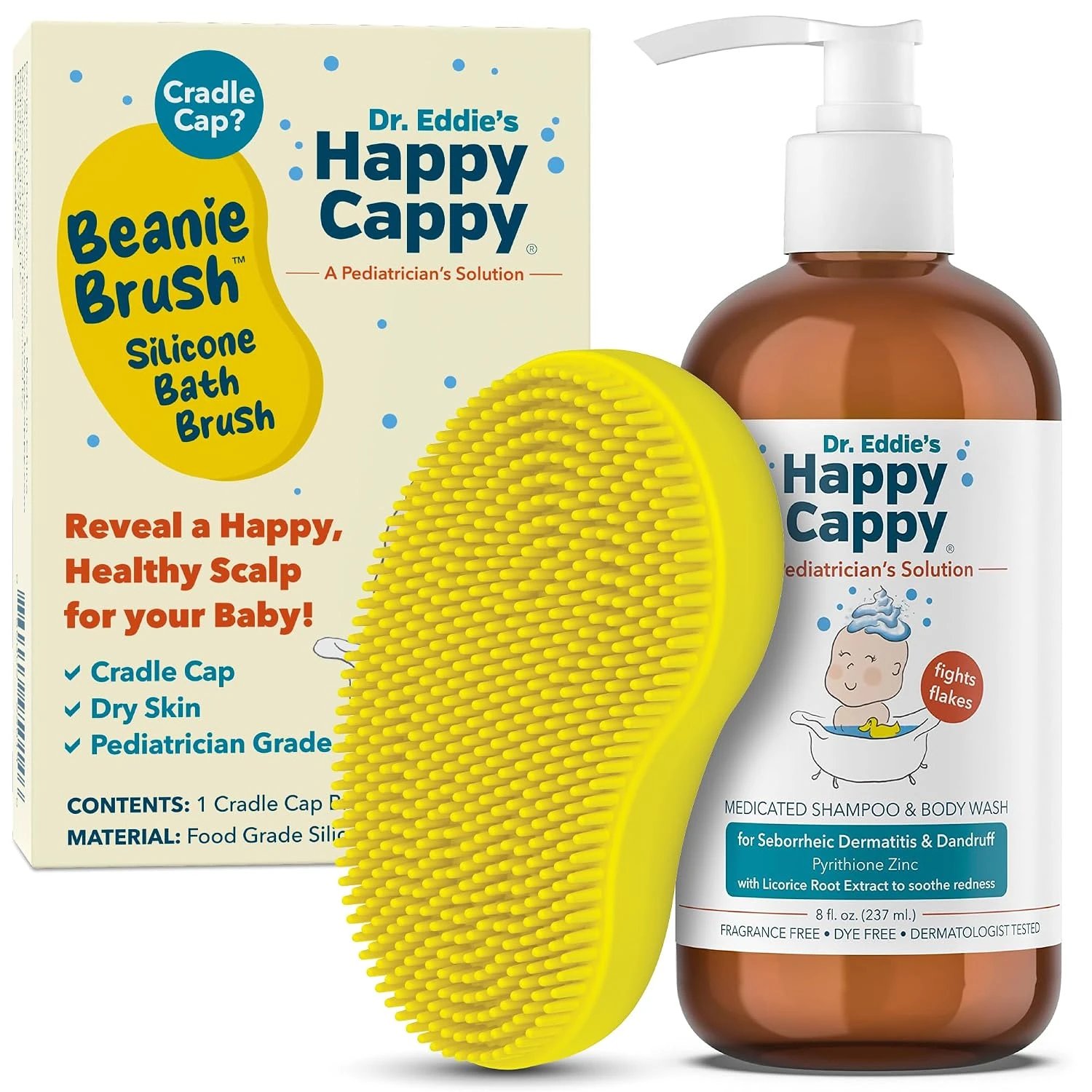
Happy Cappy Medicated Shampoo & Body Wash is a cradle cap shampoo that helps gently wash away flakes and scales while cleansing your child’s hair and scalp. Cradle cap is the infant form of seborrheic dermatitis.1,9
Its 0.95% pyrithione zinc helps relieve flaking, scaling, redness, and itching associated with seborrheic dermatitis and dandruff. The formula is fragrance-free and dye-free.9
The Happy Cappy Medicated Shampoo + Beanie Brush Bundle pairs an 8 oz wash with a soft silicone brush.
Wet the hair thoroughly, massage the wash gently onto the scalp, and rinse well. The label directs use at least twice weekly or as directed by a doctor. Keep it out of the eyes; stop use and ask a doctor if the condition worsens or does not improve with regular use. Ask a doctor before use for seborrheic dermatitis covering a large body area.9
Skip the oily mess. The brush is optional; use it with a light touch only on scales that release easily. If you already have a suitable soft brush or prefer fingertip washing, choose Medicated Shampoo on its own.
Picking and irritating products can worsen scalp discomfort
- Picking crusts or scraping off firmly attached scales.
- Using fragranced products that irritate the scalp.
- Continuing a home routine for weeks when the rash is worsening or not improving.
If the rash is worsening or the cause is uncertain, have the scalp examined instead of repeatedly changing products.8
Scalp changes that need medical assessment
Arrange an assessment for persistent or newly appearing scales beyond infancy, especially if the cause is unclear. Seek prompt advice for pain, pronounced itching, hair loss, an unpleasant odor, or a rash spreading beyond the scalp.27