


Quick answer: Genes contribute to atopic dermatitis, the most common type of eczema, but most cases do not follow a simple, single-gene inheritance pattern. People usually inherit increased susceptibility rather than a guarantee of disease. Skin-barrier differences, immune activity and environmental exposures also shape whether eczema develops.
Part of the Eczema Resource Center.
Genes influence atopic eczema risk
Genes are inherited DNA instructions that help the body develop and function. Genetic susceptibility means a greater chance of developing a condition. Atopic eczema is usually multifactorial: several genetic and environmental influences contribute, rather than one gene determining the outcome.1
This article focuses on atopic dermatitis, also called atopic eczema. The word eczema includes several conditions with different causes. The guide to eczema types explains those distinctions.
Filaggrin helps explain the genetic link
Filaggrin supports the skin barrier
The FLG gene provides instructions for making a protein that is processed into filaggrin. Filaggrin helps organize structural proteins in the outer skin cells. Its breakdown products also contribute to the skin's natural moisturizing factor, a mixture that helps retain water.2
Some FLG variants, meaning differences in the gene's DNA sequence, reduce functional filaggrin. This can weaken the outer skin barrier, allowing more moisture to escape and making it easier for outside substances to enter. These variants can increase eczema risk.2
Ichthyosis vulgaris shares the filaggrin connection
Ichthyosis vulgaris is an inherited condition that causes persistently dry skin with fine, fish-scale-like scaling, often on the legs. It is one of the more common inherited skin disorders and can occur alongside atopic eczema. FLG variants that reduce working filaggrin can cause ichthyosis vulgaris while also increasing eczema susceptibility. Sharing a barrier defect does not make the two diagnoses interchangeable.28
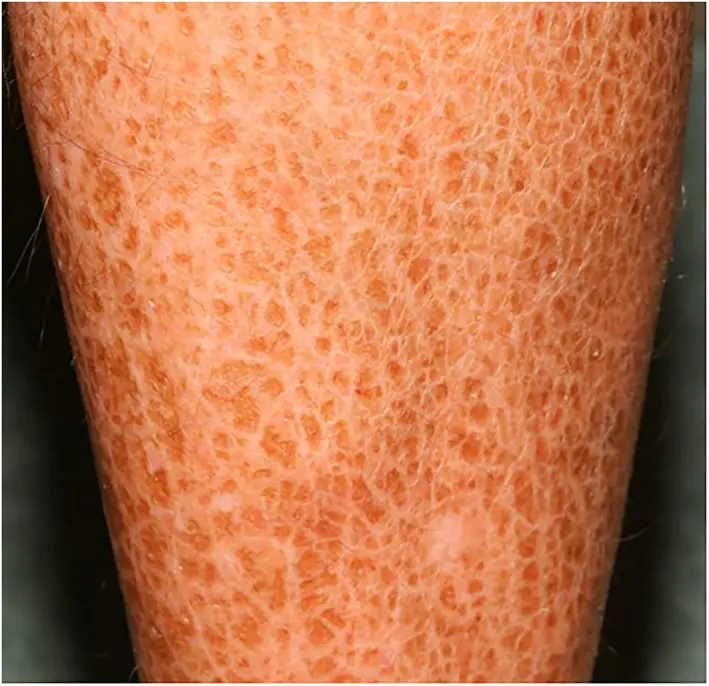
Several genes contribute to risk
FLG is one part of the explanation. Genes involved in immune regulation also contribute. Many people with eczema do not have a known FLG risk variant, and some people who carry one never develop eczema.15 The eczema and immune-system article explains how immune activity and the barrier interact.
Family history raises risk without predicting the outcome
History from either parent is relevant
A family history of eczema, asthma or hay fever can indicate inherited susceptibility. A prospective birth-cohort study found associations between childhood eczema and a history of eczema or asthma in either parent. It did not establish that one parent's history determines a child's outcome.34
A birth cohort measured eczema risk through age four
Böhme and colleagues studied 4,089 children in a Swedish birth cohort, using annual questionnaires to track eczema through age four. Their 2003 paper reported these proportions of children developing atopic dermatitis.7
| Parental atopic history | Eczema by age four |
|---|---|
| Neither parent | 27.1% |
| One parent | 37.9% |
| Both parents | 50.0% |
Study estimates are not personal predictions
These are study-specific childhood risks, not universal inheritance percentages. Atopic history included eczema or allergic respiratory disease; parents did not need all three conditions in the allergic triad of eczema, asthma and hay fever.7
Risk estimates depend on the population studied, the child's age and how eczema is defined. Family history helps describe risk, but cannot predict an individual child's outcome or disease severity.35
Environment and inflammation also shape eczema
Eczema develops through interactions among inherited susceptibility, the skin barrier, immune activity and environmental exposures. It is too simple to describe an eczema gene as lying dormant until one irritant switches it on. Inflammation can further disrupt the barrier, while barrier problems can increase exposure to irritating substances.4
Dry air, irritating cleansers and fragrances can worsen symptoms in susceptible skin, but triggers vary between people. A flare does not prove that someone inherited a particular gene variant. The atopic dermatitis guide covers the broader condition and its care.4
Typical eczema is diagnosed clinically
History and examination guide the diagnosis
Clinicians usually diagnose atopic eczema from the rash, symptoms, pattern over time and medical history. Routine genetic testing is not needed to confirm typical eczema. A negative FLG result would not rule it out, and a risk variant by itself would not establish the diagnosis.56
A collodion membrane points to other inherited barrier disorders
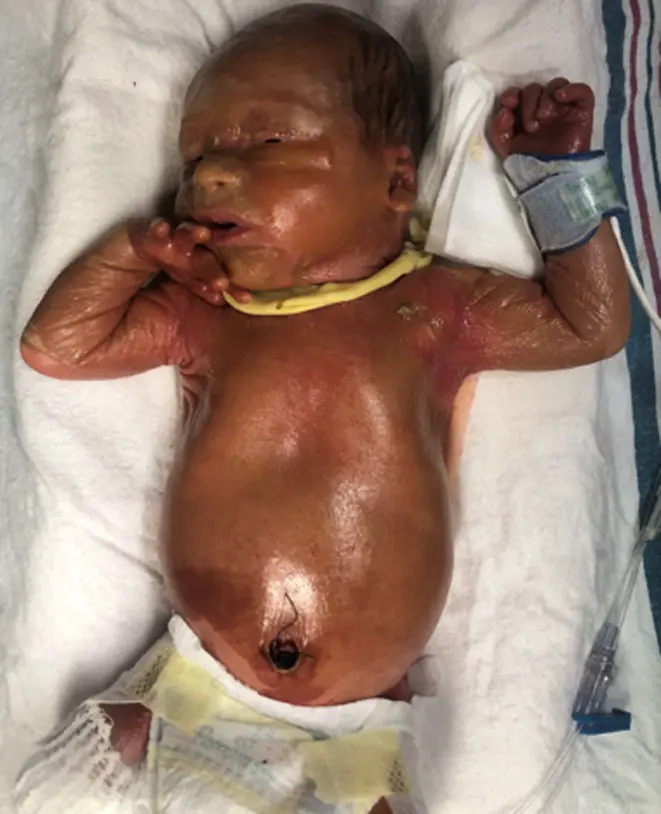
Collodion baby describes a newborn covered by a tight, shiny membrane at birth. It is a presentation, not a single diagnosis. It can occur in rare congenital ichthyoses, including lamellar ichthyosis, which often involves TGM1. This gene makes transglutaminase-1, an enzyme that helps assemble the protective outer skin barrier. Affected newborns need specialist care because the impaired barrier can allow excessive water loss and infection.9
Typical FLG-related ichthyosis vulgaris usually appears after the newborn period rather than causing a collodion membrane. Rare overlap has been reported, including a newborn with both TGM1 and FLG variants. That does not make filaggrin deficiency the usual explanation for a collodion membrane.10
Specialist testing answers a different question
Rare disorders caused by changes in a single gene can include eczema or an eczema-like rash. If the overall clinical picture suggests an unusual inherited condition, a specialist may recommend targeted testing. That investigation is different from testing an otherwise typical eczema case to calculate its future course.15
Daily care supports the barrier
Gentle cleansing and regular moisturizing support eczema-prone skin, while prescribed treatment addresses active inflammation when needed. Daily care cannot change inherited DNA, and persistent eczema does not mean a family has failed to care for the skin.6
Daily Wash and Cream support cleansing and moisture
Happy Cappy Daily Shampoo & Body Wash gently cleanses dry, sensitive, eczema-prone skin without added fragrance. Happy Cappy Moisturizing Cream helps reduce moisture loss with petrolatum, while licorice root extract helps calm the look of redness. Their role is everyday skin care, alongside any treatment your clinician recommends.
Choose Daily Wash with either the cream tube or jar for a simple wash-and-moisturize routine. Explore the Daily Wash and Moisturizing Cream routine.
References
- MedlinePlus Genetics: Atopic dermatitis and inheritance
- MedlinePlus Genetics: The FLG gene and filaggrin
- O'Connor and colleagues: Parental atopy and childhood atopic dermatitis in the BASELINE birth cohort (2022)
- NIAMS: Atopic dermatitis, causes and risk factors
- American Academy of Dermatology: Guidelines on diagnosis and assessment of atopic dermatitis (2014)
- NIAMS: Atopic dermatitis diagnosis, treatment and daily care
- Böhme and colleagues: Family history and risk of atopic dermatitis in children up to 4 years. Clinical & Experimental Allergy. 2003;33:1226–1231.
- Smith and colleagues: Loss-of-function mutations in the gene encoding filaggrin cause ichthyosis vulgaris (2006)
- MedlinePlus Genetics: Lamellar ichthyosis and the collodion membrane
- Shearer and colleagues: Coexisting TGM1 and FLG variants in a newborn with congenital ichthyosis (2023 case report)