Quick answer: Eczema can begin in adulthood, but a sudden itchy rash is not automatically atopic dermatitis. Contact dermatitis and other conditions can look similar. A persistent or unusual new rash deserves an examination.1, 2
Adult-onset and returning childhood eczema
Yes. Atopic dermatitis can begin in adulthood, even if you never had it as a child. A return of childhood eczema after years of clear skin is different from a first episode of adult-onset atopic dermatitis. Both deserve an accurate diagnosis.1
An unfamiliar itchy rash can also be another kind of eczema or a different skin condition. The word “eczema” describes a group of inflammatory skin conditions; it does not establish the cause of every dry, scaly patch.
Diagnosis of a new adult rash
Arrange an examination for a new rash that persists, spreads, repeatedly returns, or disrupts sleep. Tell the clinician when it began, where it started, what you have applied, and whether you had childhood eczema, asthma, or hay fever. Photos taken before treatment can help document changes.2
- Atopic dermatitis: an itchy, relapsing condition that often involves dry skin and may affect the face, neck, hands, or skin folds.
- Contact dermatitis: inflammation from irritation or a delayed allergy to something touching the skin. A new product is a clue, but an allergy can develop after previously tolerated exposures.
- Other possibilities: fungal infections and psoriasis can resemble eczema. A clinician may use additional testing when the appearance or response to treatment is unusual.
If contact allergy is suspected, patch testing for allergic contact dermatitis may help identify relevant allergens. It is different from skin-prick testing.3, 4
Causes and exposure changes
Atopic dermatitis involves interacting changes in the skin barrier, immune activity, and inherited susceptibility. It is not simply a vitamin deficiency or proof that you have developed a food allergy. The same symptoms can arise through different combinations of these factors. Avoid starting restrictive diets or allergy tests without discussing your symptoms and history with a clinician.5
Recent changes in skin exposure
Look for changes in exposures rather than assuming there must be one hidden cause: a new job, more frequent handwashing, cleaning products, cosmetics, hair dye, or protective gloves. Repeated water and detergent exposure can irritate skin without an allergy.3
For broader burning, stinging, or product intolerance, see why skin can become suddenly sensitive. Those symptoms do not by themselves confirm atopic dermatitis.
Skin care while arranging an assessment
- Keep washing gentle. Use lukewarm water and a fragrance-free cleanser where needed, then pat dry.
- Apply a fragrance-free cream or ointment after washing and whenever skin feels dry.
- Pause recently introduced, nonessential products that seem to worsen the rash. Keep a simple record of exposures and symptoms.
- Ask which treatment is appropriate for the location. Medicines for the hands or body may be unsuitable for eyelids or other delicate areas.
If atopic dermatitis is confirmed, a clinician may prescribe a topical anti-inflammatory medicine. More extensive or persistent disease may need other treatment. Moisturizing supports the skin barrier, but it may not control an active flare on its own.2, 6
Stress can worsen symptoms without explaining every rash
Stress and itching can reinforce one another, especially when sleep suffers. A manageable sleep routine and ways to reduce stress can complement skin treatment. They should not replace an assessment or make you feel responsible for developing eczema. For hand-specific symptoms, see stress-related eczema on hands.7
Signs that need prompt medical care
Seek prompt care for increasing pain, warmth, swelling, pus, spreading inflammation, or fever. Rapidly spreading painful blisters or open sores, especially near the eyes, need urgent assessment. Trouble breathing or swelling of the lips or tongue is an emergency.7
A simple routine for dry, eczema-prone skin
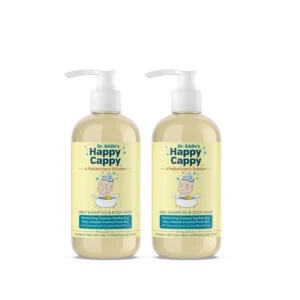
Happy Cappy Daily Shampoo & Body Wash provides fragrance-free cleansing without SLS/SLES. Glycerin and hyaluronic acid help attract moisture, and panthenol helps keep dry skin feeling soft.
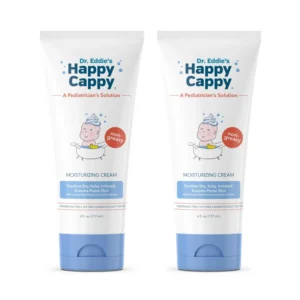
Happy Cappy Moisturizing Cream uses glycerin to attract moisture and petrolatum to help retain it. Licorice root extract helps calm the look of redness. The cream absorbs quickly without a greasy feel. These daily care steps support dry, eczema-prone skin alongside any prescribed treatment. Our adult eczema guide covers ongoing care once the diagnosis is established.