

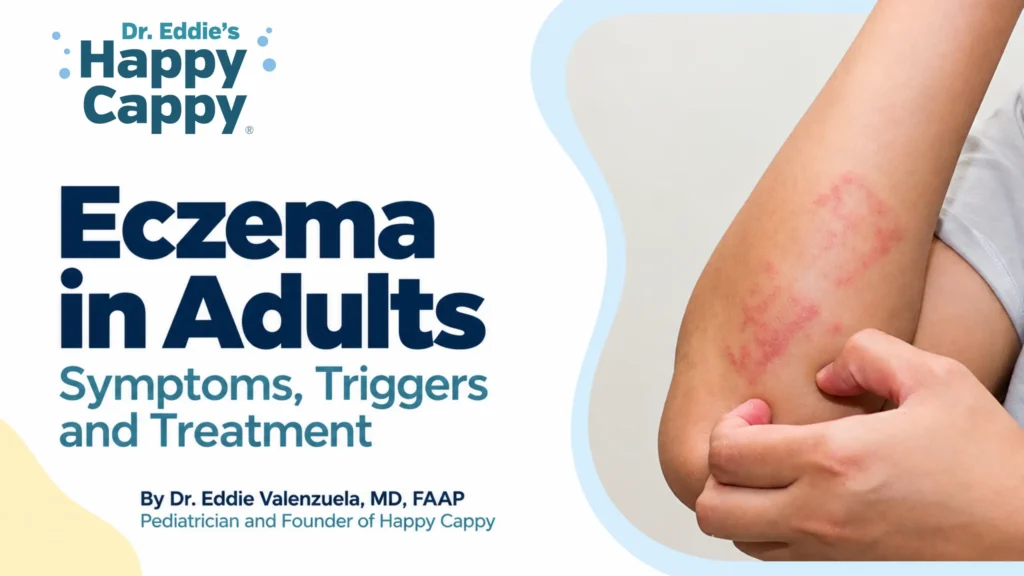
Quick answer: Adult eczema may persist from childhood, return after years of quiet skin, or begin in adulthood. Care combines a workable moisturizing routine, attention to relevant triggers and treatment for inflammation. Persistent symptoms, disrupted sleep or an unfamiliar rash deserve a review of the diagnosis and treatment.
Adult eczema can persist, return or begin for the first time
Atopic dermatitis is a recurring inflammatory skin condition involving the skin barrier and immune activity. Some adults have had it since childhood. Others have long quiet periods before symptoms return, and some first develop it as adults. There is no single age by which everyone outgrows it.1
Dryness and itch may be accompanied by rough patches, cracking, scale or thickened skin. Inflammation can look pink or red on light skin and purple, gray or darker brown on deeper skin tones. A flat color change can remain after the active flare settles.
For a rash that has appeared unexpectedly, read Sudden Eczema in Adults. That guide focuses on evaluating new onset rather than the ongoing care covered here.
The pattern helps guide the diagnosis
Eczema is a group of conditions. Hands, eyelids, neck folds and the bends of the elbows or knees are common trouble spots in adults, but location alone does not identify the cause. Contact allergy or irritation can occur alongside atopic dermatitis.15
| Pattern or situation | Guide with more detail |
|---|---|
| Dry, cracked hands with frequent washing or wet work | Hand eczema |
| A rash where jewelry, cosmetics, adhesives or work materials touch | Contact dermatitis |
| Coin-shaped itchy patches | Nummular eczema |
| Very dry shins with fine cracks | Asteatotic eczema |
| Lower-leg eczema with swelling or ankle discoloration | Stasis dermatitis |
A clinician reviews the history and examines the skin. Persistent or unusual rashes may need patch testing, a skin scraping or occasionally a biopsy. A routine appearance check does not settle every case.23
Treatment has a daily-care plan and a flare plan
Daily cleansing and moisture
Use brief, comfortably warm baths or showers, gentle cleansing and a fragrance-free moisturizer. Apply cream or ointment after washing and whenever skin feels dry. Pick a texture that suits the area and that you can use consistently. A richer ointment may suit very dry patches; a cream may be more practical during the day.26
Medicine for active inflammation
Topical corticosteroids are one option. Nonsteroid medicines include calcineurin inhibitors and other prescription creams with different mechanisms. Choice depends on severity, body area, previous response and other health factors. Ask which medicine goes where, how much to use and when to reassess.3
Further treatment when the plan is insufficient
For persistent or more extensive atopic dermatitis, a dermatologist may discuss phototherapy, injectable biologic medicines or oral treatments such as JAK inhibitors. These need an individualized benefit-and-risk review. Repeated oral steroid courses are generally discouraged because of adverse effects and the risk of rebound flares.3
The daily care and treatment guide explains how these parts fit together. Ongoing sleep loss or difficulty working is a reason to revisit treatment, even when the affected area looks small.
Make the routine workable at home and at work
Focus on a repeatable exposure pattern
Record what touches the affected skin: cleaning agents, gloves, fragrances, hair products, clothing or repeated water exposure. Change one nonessential product at a time when practical. If the pattern follows work tasks, bring product labels or safety information to your appointment.5
Include sleep and emotional strain in the visit
Itching can interrupt sleep, concentration and relationships. Tell your clinician how the condition affects your day, as well as how the skin looks. Stress-management tools and support can help you cope, while treatment still needs to address the inflammation.2
A flare does not mean you failed at skin care. Agree on a practical plan and a follow-up point so you know when to ask for a change.
A cleansing and moisturizing routine for adults
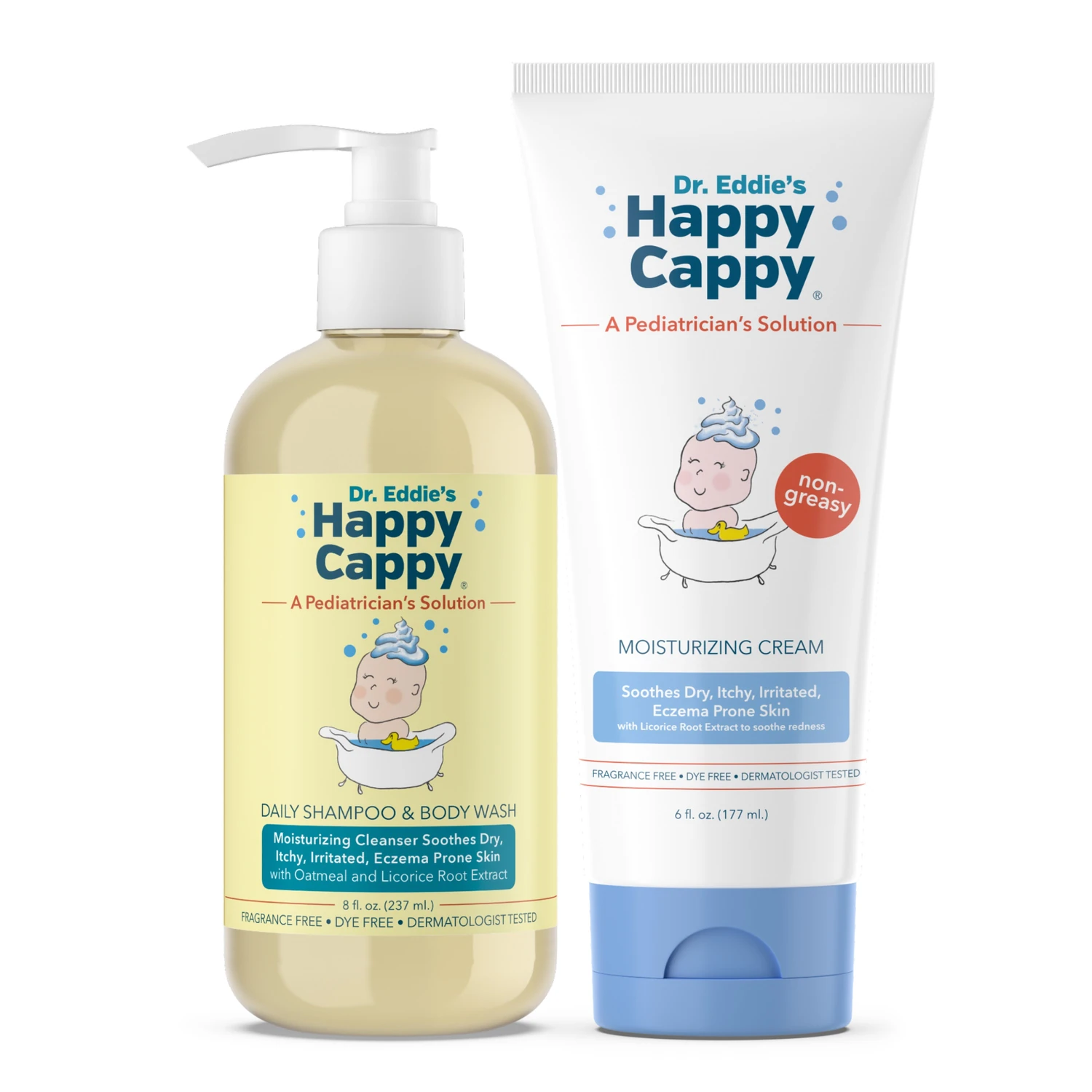
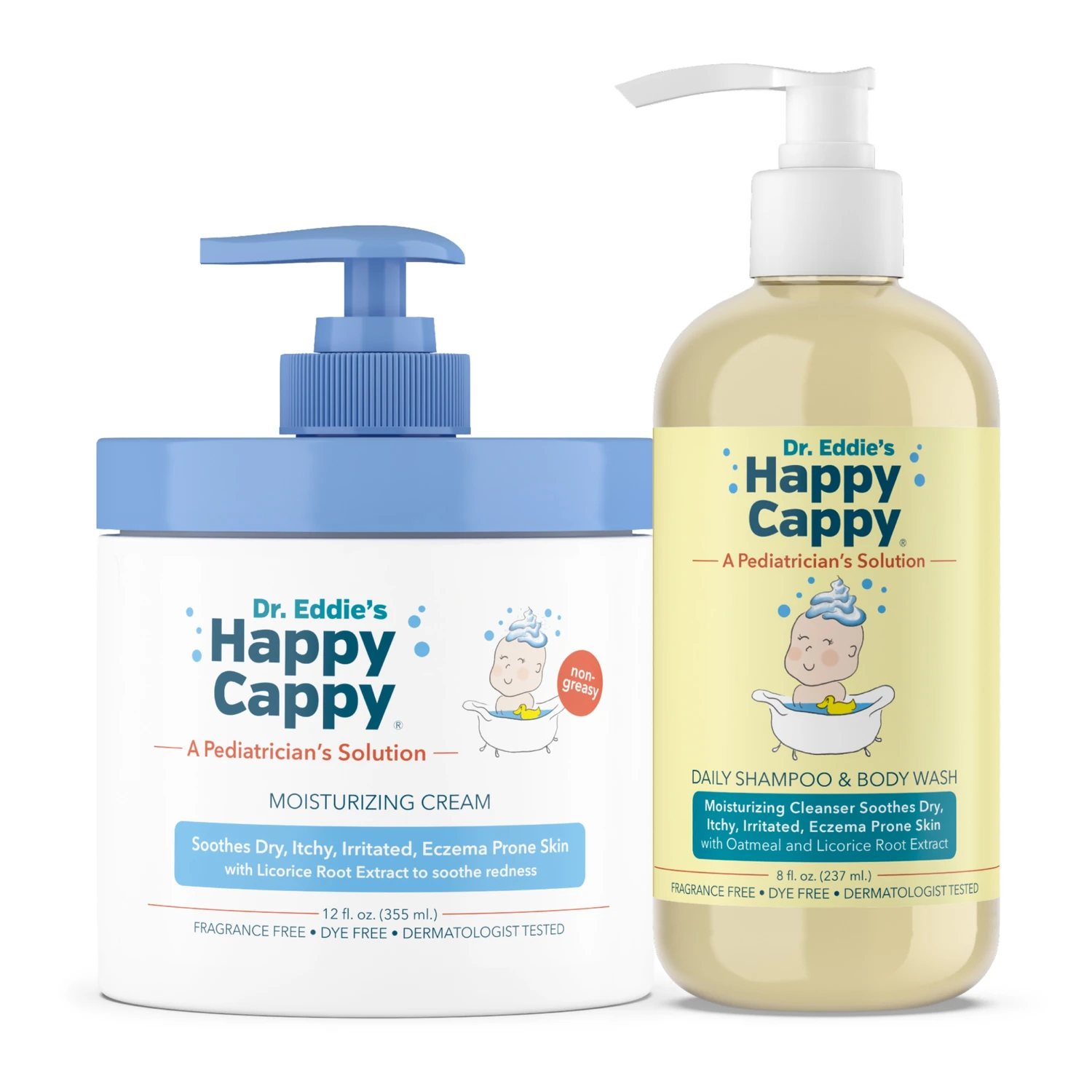
Happy Cappy Daily Shampoo & Body Wash and Moisturizing Cream can be used by adults with dry, sensitive, eczema-prone skin. Daily Wash provides fragrance-free cleansing without SLS/SLES. The Cream combines glycerin to attract moisture with petrolatum to help retain it, in a fast-absorbing, non-greasy formula. Licorice root extract helps calm the look of redness.
Choose one 8 oz Daily Wash with one 6 oz Cream tube or one 12 oz Cream pump jar. These are everyday skin-care products; use prescribed medicine as directed when inflammation needs treatment.
When the diagnosis or treatment needs another look
Book a review when symptoms keep returning quickly, the plan is difficult to follow, or a new rash behaves differently from earlier flares. Mention every product and medicine used, including nonprescription treatments.
Seek urgent medical advice for rapidly worsening painful skin, spreading warmth or swelling, pus, fever, or new clusters of painful blisters. Infection can complicate eczema and may require a different treatment.4
Explore the Eczema Resource Center and types of eczema guide for the conditions and body areas relevant to you.