

Part of the Eczema Resource Center.
Quick answer: Facial eczema can cause dry, itchy, inflamed patches on the cheeks, forehead, eyelids or around the mouth. Gentle cleansing and moisturizing support the skin barrier; active inflammation may need medicine chosen for facial skin.
Atopic dermatitis is one type of eczema, and other conditions can cause a similar facial rash. For drool, feeding and infant-specific care, see baby eczema on the face.
Facial eczema appearance

Facial atopic dermatitis often affects the cheeks in young children. In older children and adults, it may involve the forehead, cheeks, eyelids, skin around the mouth or areas behind the ears. Patches can look pink or red on lighter skin, or darker brown, purple or gray on darker skin. Texture and itch can be more noticeable than redness.
- Dry, rough or flaky patches.
- Itching that encourages rubbing or scratching and may disturb sleep.
- Stinging, soreness or cracks when the skin barrier is irritated.
- Thickened skin after repeated scratching.
Color changes may remain after a flare settles. New oozing, yellow crusts, increasing pain or blisters need assessment rather than being treated as routine dryness.
A flare’s duration varies with its cause, severity and treatment. Skin-color changes can last longer than the itch. Persistent or worsening symptoms deserve review.
Other causes of a facial rash
“Facial eczema” describes a location, not one definite diagnosis. These patterns can help explain why the treatment may differ:
| Condition | Clues worth discussing with your clinician |
|---|---|
| Atopic dermatitis | Recurrent itchy, dry patches; eczema elsewhere or a personal/family history of asthma or hay fever may accompany it. |
| Contact dermatitis | Irritation or allergy related to skin care, makeup, hair products or something transferred from the hands. A familiar product can become a problem too. |
| Seborrheic dermatitis | Flaking around the eyebrows, sides of the nose or hairline, often with scalp dandruff. |
Rosacea, periorificial dermatitis and infections can also resemble eczema. A new or persistent facial rash should be examined before repeatedly applying steroid or antifungal creams. DermNet’s guide to facial rashes1 explains the overlapping appearances.
Skin barrier changes and facial triggers
Atopic dermatitis involves changes in the skin barrier and inflammation. Facial skin may react to irritating skin-care products, rubbing, sweat or dry weather. A face-limited rash can also involve contact allergy. The eczema causes guide explains the underlying biology.
Daily care for facial eczema
Keep the routine simple enough to repeat. Gentle skin care supports the barrier between flares and works alongside any prescribed treatment. Facial skin, especially the eyelids, needs a different medication plan from thicker areas such as the hands or feet.
Products the skin tolerates
Start with fragrance-free products and avoid ingredients you already know cause a reaction. During a flare, pause scrubs, exfoliating acids, retinoids and products that sting. “Natural” and “hypoallergenic” do not guarantee that a product will suit every person.
An unfamiliar ingredient name is not automatically a warning sign. For example, cetyl and stearyl alcohol are moisturizing fatty alcohols. Preservatives help protect water-containing products from contamination. Our eczema moisturizer guide explains ingredients and how to compare formulas.
Individual facial triggers
Look for a repeatable connection with a cleanser, makeup, hair product, sweat, cold dry air or frequent rubbing. Change one suspected product at a time and keep a brief record. Stress management, regular sleep and a calming routine may help interrupt habitual scratching, but eczema is not your fault.
Food allergy and eczema can occur together, particularly in children, but a facial flare does not identify a food allergy. Do not remove milk, eggs or other major foods without advice. The AAD explains why elimination diets rarely solve eczema2 and can create nutritional problems.
Gentle washing and regular moisturizing
Use lukewarm water and a gentle, fragrance-free non-soap cleanser when needed. Wash with your fingertips, rinse and pat dry without scrubbing. Keep baths or showers short, about 5–10 minutes. Repeated washing simply because you have been outdoors can add irritation.
Apply a fragrance-free cream or ointment while skin is slightly damp, then reapply at least twice daily and whenever the skin feels dry. A cream may feel more comfortable during the day; plain petrolatum can help protect very dry areas. Avoid repeatedly applying a product that causes persistent burning or a worsening rash. The AAD’s eczema skin-care guidance3 supports gentle washing and consistent moisturizing.
Makeup during and after a flare
Pause makeup on actively inflamed, cracked or weeping skin, especially around the eyes. When the skin settles, introduce tolerated products gradually and remove them gently. Stop a product that repeatedly causes stinging, swelling or a worsening rash.
Medicines for facial skin
Topical corticosteroids for the face
Moisturizer helps dryness, but inflamed eczema may also need an anti-inflammatory medicine. A clinician may recommend a low-potency topical steroid, such as hydrocortisone, for a defined course. The strength, amount and duration depend on the person’s age, the exact location and the severity. A stronger steroid prescribed for another body area should not automatically be used on the face.
Used correctly, topical steroids are effective treatments; the goal is appropriate use rather than undertreating a flare. Ask for specific instructions before using one on a child’s face or around the eyes. The AAP’s treatment guidance4 distinguishes facial treatment from treatment of thicker skin.
Nonsteroidal prescription options
Nonsteroidal prescription options include tacrolimus ointment and pimecrolimus cream. These can be useful on sensitive areas, including eyelids, and do not cause steroid-related skin thinning. Suitability depends on age and diagnosis, and temporary stinging can occur. See the AAD’s explanation of topical calcineurin inhibitors5. Persistent disease may need other prescription options or a dermatologist’s review.
The connection with eyelid eczema
Eyelid skin is thin and readily irritated. Atopic dermatitis, contact irritation and contact allergy can all affect it. Avoid rubbing and pause eye makeup during a flare; keep cleansers and creams out of the eyes.
The eyelid dermatitis guide covers contact triggers, testing and treatment precautions in detail. Ask for a specific medication plan for this area. Eye pain, light sensitivity or a change in vision needs urgent assessment.
A two-step Happy Cappy facial routine
Happy Cappy Daily Shampoo & Body Wash and Moisturizing Cream provide a two-step facial routine for dry, sensitive, eczema-prone skin. The wash cleanses and rinses away; the cream stays on to help retain moisture. Use them alongside any medicine prescribed for an active flare.
Daily Wash provides fragrance-free cleansing without SLS/SLES. Glycerin, panthenol and hyaluronic acid attract water, while oat and aloe help condition the skin. The Cream combines glycerin to attract moisture with petrolatum to help retain it, in a lightweight, non-greasy formula.
Choose one two-item bundle: one 8 oz Daily Wash plus one Cream tube or one Cream pump jar.
Tube bundle
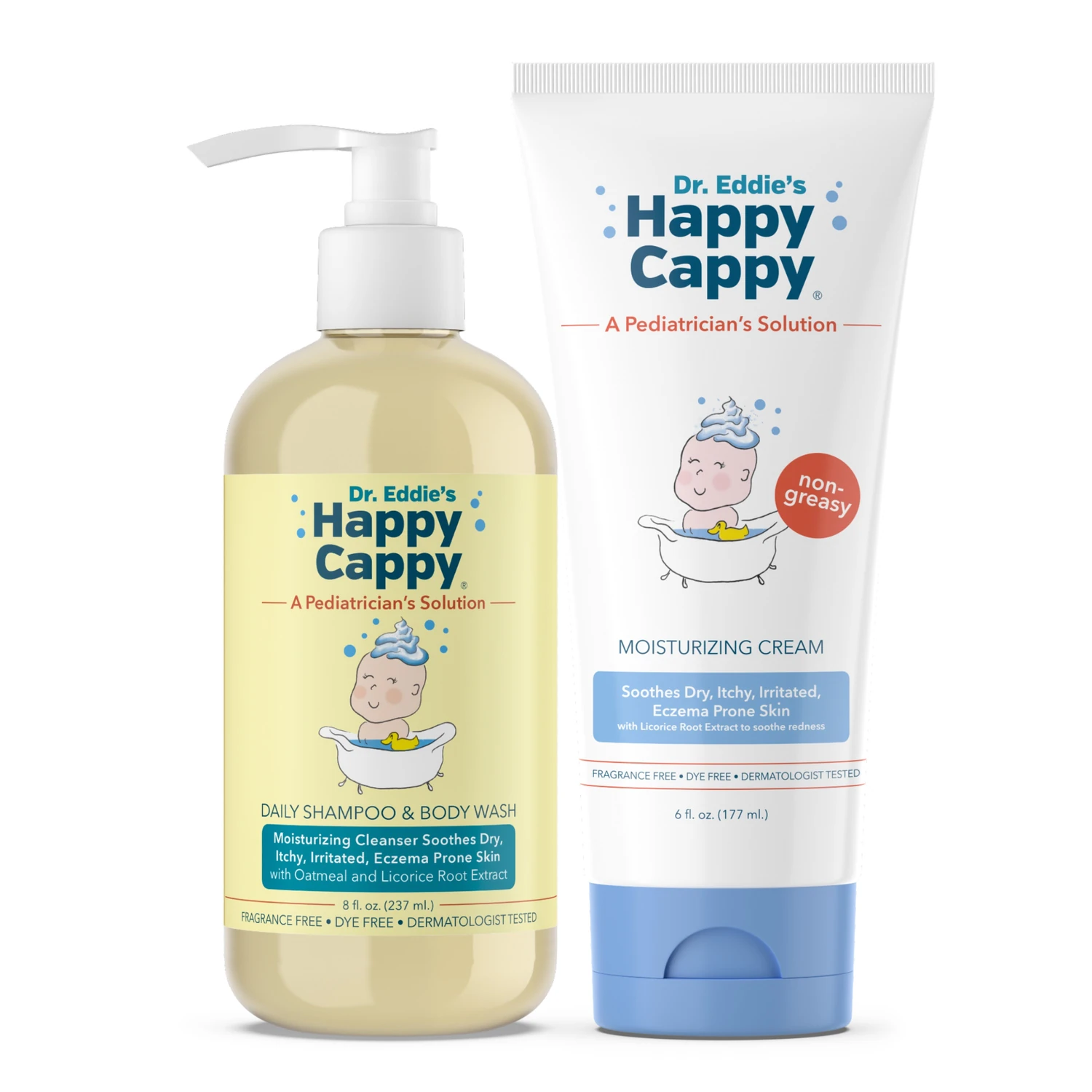
Daily Wash + Cream Tube
- One 8 oz Daily Wash. Gentle cleansing for dry, sensitive, eczema-prone skin.
- One 6 oz Moisturizing Cream. Leave-on moisture in a squeeze tube.
- Choose your format. A compact squeeze tube for everyday moisturizing.
Pump-jar bundle
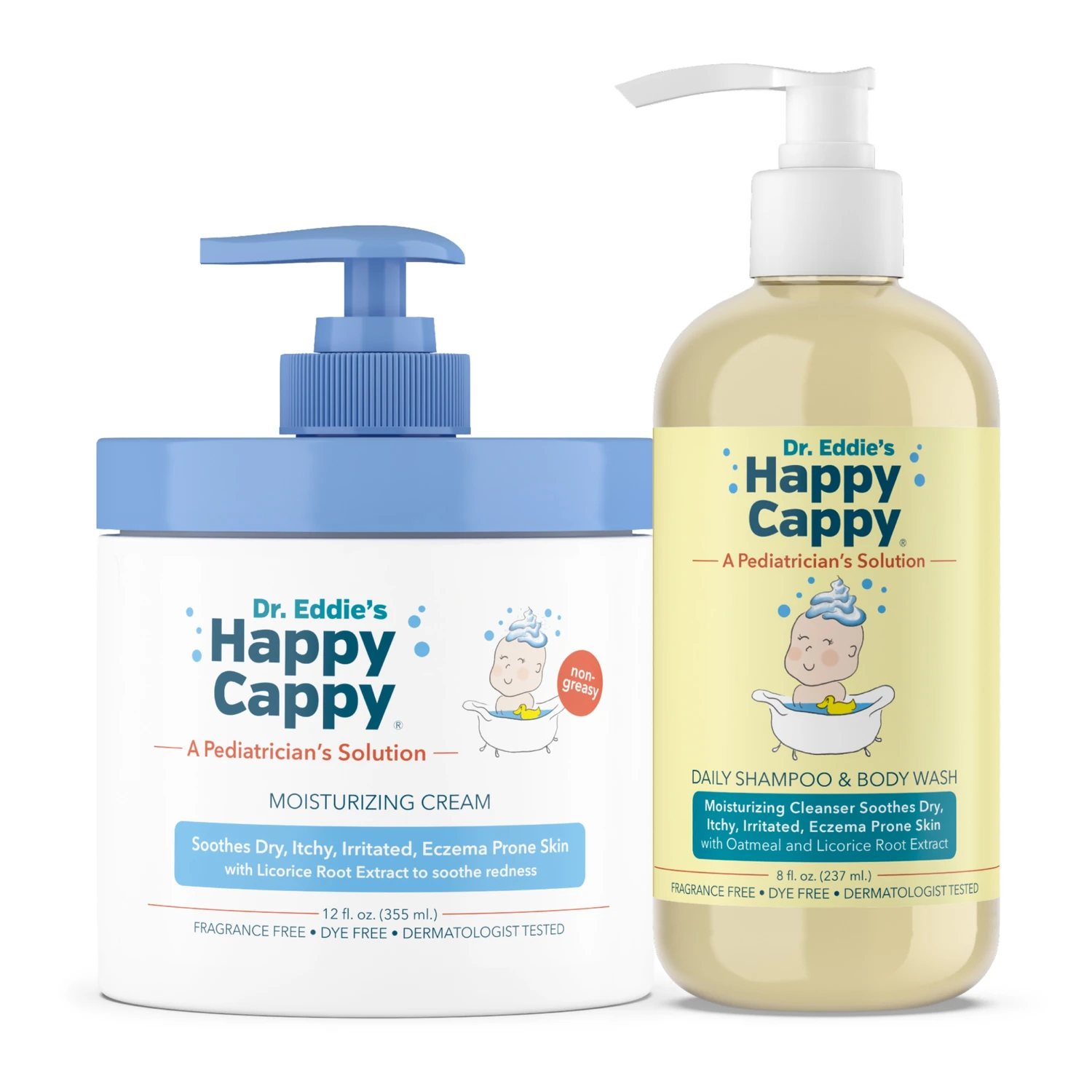
Daily Wash + Cream Jar
- One 8 oz Daily Wash. Gentle cleansing for dry, sensitive, eczema-prone skin.
- One 12 oz Moisturizing Cream. Leave-on moisture in a pump jar.
- Choose your format. A larger pump jar for a regular home routine.
Use the two-step routine: Use Daily Wash daily or as often as needed, lather gently and rinse well. Apply Cream after washing and at least twice daily while skin is still slightly damp. Keep both products out of the eyes.
Signs that need medical assessment
Arrange a review if the diagnosis is uncertain, the rash keeps returning, treatment is not helping, or itching affects sleep and daily life. Tell your clinician if visible flares are affecting confidence or mood; support is part of eczema care.
Seek prompt medical care for rapidly worsening redness, swelling, warmth, pus, yellow crusting, fever or new painful blisters. These may indicate infection, including eczema herpeticum. Eye pain, light sensitivity or a change in vision needs urgent assessment. The NHS lists warning signs of infected eczema6.
For broader flare management, see what to do when eczema flares up.