
Quick answer: Stress can worsen hand eczema, but frequent washing, detergents, contact allergies, and an underlying tendency to eczema also matter. Protect your hands, moisturize after washing, and treat active inflammation when needed. A flare is not a sign that you have failed to manage stress.1,2
If your hands become itchy and cracked during a difficult week, stress may be contributing. The most useful next question is also a practical one: what have your hands been touching, and how often have they been wet?
The connection between stress and hand eczema
“Stress-related eczema on hands” describes a possible trigger, not a separate diagnosis. In a study of people with occupational hand eczema, researchers found an association between greater stress and more severe eczema. Because the study was cross-sectional, it could not show that stress caused the rash.1
The relationship can run both ways: sore hands can make work, sleep, and daily tasks harder, adding to distress. Stress care belongs alongside skin care and treatment, without making the person responsible for every flare.1
Hand exposures that can contribute to flares
- Wet work and irritants: Repeated contact with water, soaps, cleaning products, or detergents can damage the skin barrier. This exposure can cause irritant contact dermatitis even when you feel emotionally calm.2
- Contact allergy: A sensitized person may react to an ingredient in a personal-care product, a metal, or a glove material. A rash that keeps returning after similar exposures deserves investigation. Read more about allergic contact dermatitis.2
- An eczema-prone skin barrier: A history of atopic dermatitis can make hands more vulnerable. Several causes may overlap in the same person.2
- Sweat and prolonged glove wear: Hot, damp conditions can make irritated hands less comfortable. Choose protection that suits the task and change gloves or liners when damp.3,4
Workplace exposure and workplace stress are different issues. A nurse, cleaner, cook, or hairdresser may need changes to hand protection as well as help with stress.
Pictures cannot identify stress as the cause
Stress does not produce one recognizable hand-eczema appearance. Cracks, peeling, itching, and blisters can occur with several causes. A rash that appears during a stressful period still needs the same attention to skin exposures and diagnosis.2
Our hand eczema guide with clinical pictures explains the symptoms, eczema types, lookalikes, patch testing, and treatment options. This page focuses on how stress may fit into that wider picture.
A practical plan for stressful days
1. Track stress and skin exposures separately
For one or two weeks, make a brief note of your stress level, sleep, itch, wet work, glove use, products, and treatment. Look for repeated patterns rather than treating one difficult day as proof. A busy shift may involve more handwashing, sweating, and missed moisturizer applications as well as emotional stress.
Bring the record to an appointment. It can help you discuss which exposures need investigation, while avoiding the assumption that every flare is “just stress.”12
2. Make your usual care easier to keep up
Keep moisturizer where you wash your hands and where you work. Use a reminder for any prescribed treatment if busy days make it easy to forget. Keep following necessary hand-hygiene rules and use gloves appropriate to the task. Stress support works alongside treatment and protection from irritants.34
For detailed washing, glove, and medicine guidance, see how hand eczema is treated.
3. Notice the itch–scratch cycle
Stress may make itch harder to ignore, and scratching can further damage inflamed skin. Notice situations when you rub or scratch automatically, such as during a difficult call or while trying to fall asleep. Pause, relax your hands, and use your agreed itch and flare plan. Persistent itch is a reason to review treatment, not a test of willpower.4
4. Choose manageable stress support
Try a short breathing break, regular sleep timing, movement you enjoy, or talking with someone supportive. Pick one change you can repeat. If anxiety, compulsive washing, or the emotional burden of eczema is interfering with life, ask a clinician about additional support. Do not delay eczema treatment while waiting for stress to settle.4
When to see a clinician
Arrange an appointment if symptoms keep returning, crack or bleed, interfere with work or sleep, or fail to improve with careful skin care. A clinician may prescribe an anti-inflammatory cream or ointment and adjust its strength and duration for the area being treated.5
If contact allergy is suspected, ask whether patch testing would help. It checks for delayed skin allergy and can guide which ingredients or materials to avoid. Bring a list or photos of your hand products and workplace exposures.5,7
Seek prompt care for spreading redness, warmth, swelling, pus, rapidly worsening pain, fever, or painful clusters of blisters. These can signal infection and need more than moisturizer.2,8
Daily cleansing and moisture for busy hands
Gentle cleansing for sensitive hands
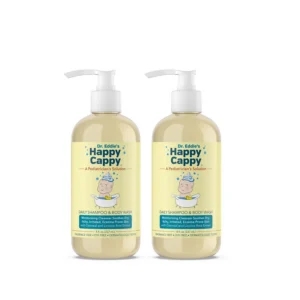
Happy Cappy Daily Shampoo & Body Wash is a dermatologist-tested, fragrance-free cleanser made without dyes, SLS, or SLES. It gently cleanses dry, sensitive, eczema-prone skin; glycerin, panthenol, and hyaluronic acid support moisture.
Fast-absorbing moisture for busy hands
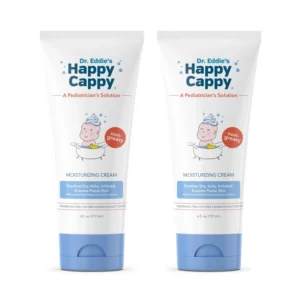
Happy Cappy Moisturizing Cream uses glycerin to attract moisture, petrolatum to help retain it, and licorice root extract to help calm the look of redness.
Happy Cappy Moisturizing Cream absorbs quickly and leaves a non-greasy feel. That makes it a practical choice for reapplying after handwashing before returning to typing, work, or other everyday tasks.
The cream has earned a 100% SkinSAFE rating. SkinSAFE bases this rating on a formula being free of the top common allergens covered by its screening criteria.9 For sensitive, eczema-prone hands, both ingredient selection and a comfortable feel matter when choosing a moisturizer you will use throughout the day.
These two daily skin-care steps can support comfort alongside a clinician's treatment plan. They do not replace treatment for active inflammation, allergy, or infection.