


Quick answer: A gentle, fragrance-free cream or ointment can help moisturize dry eyelid skin. Happy Cappy Moisturizing Cream can be used on the eyelids; apply a small amount and avoid direct contact with the eyes. An active eczema flare may also need a clinician-directed anti-inflammatory treatment.
Choosing a cream for eczema on the eyelids

An eyelid moisturizer helps relieve dryness and supports the skin barrier. Choose a product that feels comfortable without fragrance or unnecessary cosmetic actives. Eyelid skin does not need an elaborate routine, and a product does not have to be marketed as an “eye cream” to be useful there.
A cream may feel lighter during the day. A simple ointment, such as plain petroleum jelly, can be helpful when the skin is very dry, though it feels greasier. Keep either on the external skin and out of the eye. What matters is a product you tolerate and can apply consistently.1
If you are uncertain why the eyelids are inflamed, start with our eyelid dermatitis guide. Contact allergy, irritation, and atopic eczema can look similar but may need different approaches.
Happy Cappy Moisturizing Cream for eyelid skin
Happy Cappy Moisturizing Cream is a fragrance-free moisturizer for dry, itchy, eczema-prone skin. Glycerin attracts moisture and petrolatum helps hold it in, while licorice root extract helps calm the look of redness. The fast-absorbing, non-greasy formula is convenient for everyday face and body care.
The Cream can be applied to external eyelid skin if tolerated. Use a small amount, keep it out of the eyes, and check the current ingredients against any known contact allergies. Moisturizer supports care during and between flares; follow the clinician’s plan for medicine needed to control active inflammation.
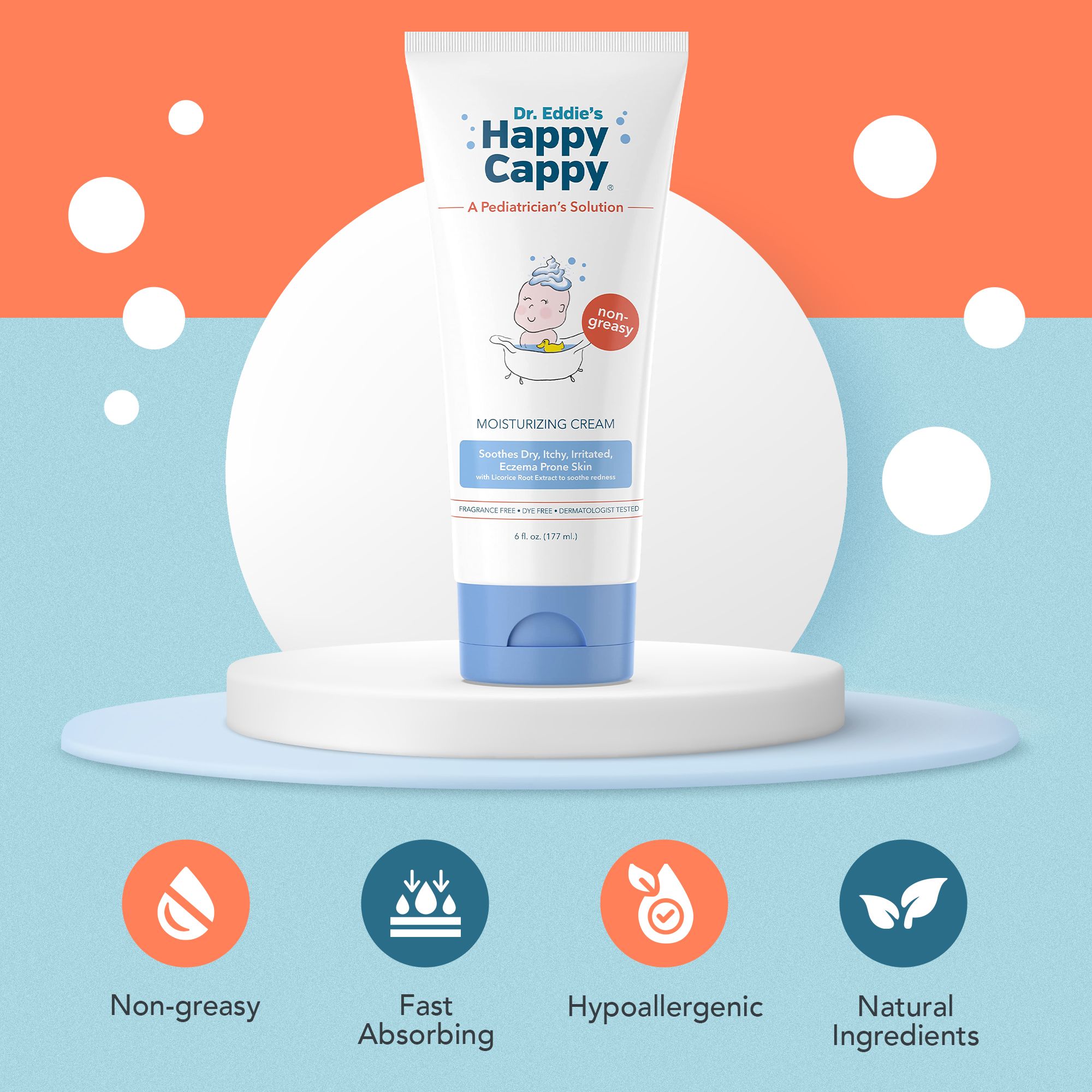
Moisturizing care for eyelid skin
Apply Happy Cappy Moisturizing Cream gently with clean hands, keeping it out of the eyes.
Applying moisturizer to the eyelids
- Wash your hands. This helps avoid transferring makeup, nail products, or other substances to the area.
- Clean gently. Remove any product residue without scrubbing. Follow the clinician’s advice for cleansing inflamed eyelids.
- Use a small amount. With eyes closed, gently smooth the moisturizer onto the affected external skin. Avoid placing it inside the lid or directly into the eye.
- Repeat as needed for dryness. Morning, evening, and after washing are useful times to check whether the skin needs moisture.
- Keep medicine instructions separate. If you have a prescription cream or ointment, follow its directions and do not premix it with moisturizer.
If a product causes persistent burning, new swelling, or a worsening rash, stop using it and contact the clinician. Repeatedly switching among many products can make the cause harder to identify.
Medicines for eyelid eczema
Moisturizing helps dryness, but visibly inflamed, persistently itchy eyelids may need additional treatment. A clinician can decide which medicine suits the diagnosis and your age. A nonsteroid product is not automatically the best choice for every eyelid rash; tolerability and the treatment needed also matter.
| Product type | Role in care |
|---|---|
| Moisturizing cream or ointment | Everyday moisture and support for the skin barrier, including between flares. |
| Mild topical corticosteroid | A clinician may recommend a brief course to calm a flare, with specific eyelid instructions. |
| Nonsteroid prescription medicine | Options include tacrolimus, pimecrolimus, Eucrisa (crisaborole), and Vtama (tapinarof). The clinician selects a treatment based on age, diagnosis, and tolerability. |
Hydrocortisone on eyelid skin
A clinician may recommend a brief course of mild hydrocortisone for eyelid inflammation. Get specific instructions before starting, since strength and duration matter on thin eyelid skin. Do not use a stronger body steroid there or keep repeating a course without advice. Excessive use over weeks to months can increase the risk of glaucoma or cataracts; this is why a prescribed short course needs a clear stopping point.4, 1
Nonsteroid prescription treatments for eyelid eczema
Clinicians may prescribe several nonsteroid medicines for atopic eczema on the external eyelid skin. Options include calcineurin inhibitors, Eucrisa, and Vtama. The choice depends on age, diagnosis, and how well the skin tolerates the product. Apply only as directed for the eyelids and keep the medicine out of the eyes.
Calcineurin inhibitors: tacrolimus and pimecrolimus
Topical calcineurin inhibitors reduce eczema inflammation without the skin-thinning effect of topical corticosteroids. They may sting or burn at first. The prescriber should explain where to apply them, how long to use them, and whether a maintenance schedule is appropriate. These medicines still require age-appropriate prescribing and directions.2, 3
Eucrisa (crisaborole) ointment
Eucrisa 2% ointment is a nonsteroid prescription medicine approved for mild to moderate atopic dermatitis in adults and children 3 months of age and older. It is usually applied twice daily; after improvement, the prescriber may reduce use to once daily. Burning or stinging at the application site is its most common side effect. Tell the prescriber if this is persistent or makes eyelid application difficult.6
Vtama (tapinarof) cream
Vtama 1% cream is a nonsteroid prescription medicine approved for atopic dermatitis in adults and children 2 years of age and older. It is applied in a thin layer once daily. Possible skin side effects include folliculitis, which causes inflamed bumps around hair follicles. Follow the prescriber’s instructions for use on the eyelid skin.7
External skin only: Neither Eucrisa nor Vtama is an eye medicine. Avoid getting either inside the eye or on the inner surface of the eyelid. These approvals are for atopic dermatitis; an eyelid rash caused by contact allergy still needs its trigger identified and addressed.67
Skin care during an eyelid eczema flare
Keep the routine simple and pause eye makeup or any product suspected of triggering the flare. Avoid rubbing and ask for advice if a prescribed eye drop appears to be irritating the skin; do not stop a necessary eye medicine without a replacement plan.
Use shade, a brimmed hat, and sunglasses for sun protection. If a sunscreen irritates the area, discuss a better-tolerated option with the clinician. A general ban on all sunscreen is not necessary. Follow any additional sun precautions given with a prescription medicine.2
Persistent eyelid eczema may need an exposure review or patch testing. Adding another moisturizer will not solve an ongoing contact allergy by itself.
Eyelid symptoms needing medical care
Arrange a review if the skin keeps flaring, the rash is not improving with the agreed plan, or you need repeated medicine courses. Seek prompt assessment for eye pain, light sensitivity, changed vision, or rapidly worsening swelling. These symptoms need more than a skin-care adjustment.5
References
- National Eczema Society. Eczema around the eyes.
- American Academy of Dermatology. Eczema treatment: Topical calcineurin inhibitors.
- DermNet. Tacrolimus.
- NHS. Hydrocortisone for skin.
- American Academy of Dermatology. Adults with eczema should watch for eye problems.
- Pfizer Medical. Eucrisa (crisaborole) ointment: U.S. prescribing information.
- DailyMed, U.S. National Library of Medicine. Vtama (tapinarof) cream: U.S. prescribing information.