


Quick answer: A pimple on the breast can be acne or another superficial skin problem, but a new breast lump or nipple change needs its own assessment. Rapid swelling, spreading redness, skin dimpling, a newly inverted nipple or persistent nipple crusting should not be managed as ordinary acne.
Finding a spot on your breast can be unsettling. The useful first distinction is between a bump that seems to arise in the skin and a change involving the nipple or the breast beneath it. You may not be able to tell the difference yourself, and it is reasonable to ask for an examination when a change is new or unclear.
This article focuses on pimples and other changes on breast skin. It explains common causes, gentle care and the signs that deserve medical attention, without trying to diagnose a breast problem from a photograph.
Acne on the skin of the breast
The chest has hair follicles and oil glands, so acne can develop on breast skin as it does on other parts of the upper body. A breakout may include blackheads, closed comedones, red bumps and pustules. Closed comedones are plugged pores; pustules contain visible pus. Those are different lesions even though both may be called “whiteheads.”1, 2
Acne can be mild or involve deeper, painful skin lesions. A lump that seems to sit within the breast, however, should not be labeled acne without an examination. Many breast lumps have benign causes, but that cannot be established by how reassuring a spot looks on the surface.4
These skin problems can affect people of different sexes. The same principle applies to anyone: new changes in the breast or nipple deserve attention, including when a separate acne breakout is also present.
Why breast skin can break out
Acne develops through a combination of blocked follicles, oil production and inflammation. Hormonal changes can influence it, while some skin or hair products can contribute to clogged pores. Having a few pimples does not by itself establish a hormone disorder or mean that you are not washing well enough.1
Friction and trapped heat under a bra, sports top or other close-fitting clothing can aggravate acne-prone skin. Notice whether bumps appear where a seam rubs or after long periods in sweaty clothing. A comfortable fit, clean exercise clothing and a gentle shower afterward can reduce added irritation.8
A medication history can also be relevant. If a breakout follows a new prescription, discuss the timing with the prescriber. Do not stop a necessary medicine on your own or expect every medication-related eruption to disappear immediately.
Pictures and their limits
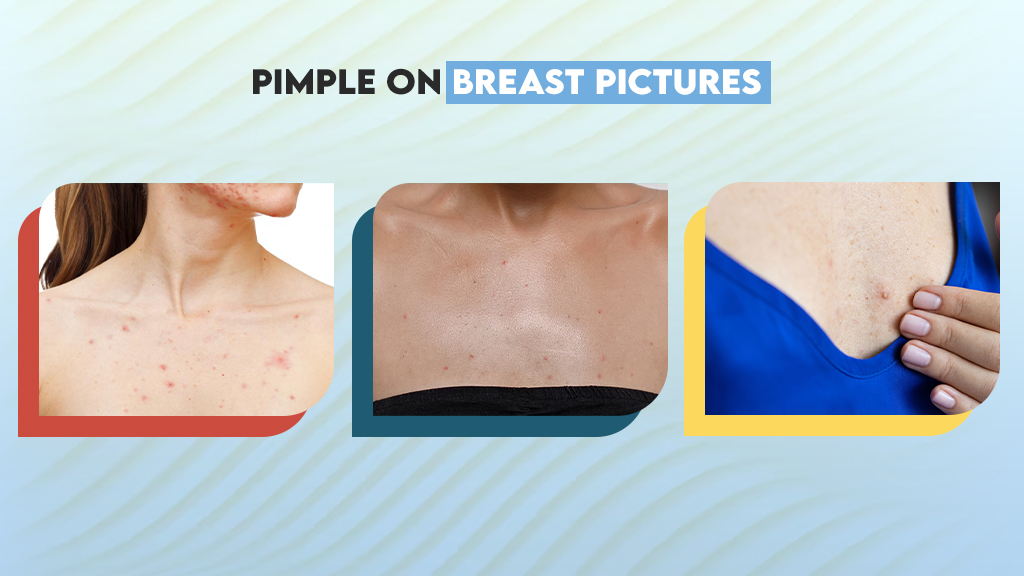
Compare the overall pattern, not just the color of one spot. A photograph cannot show how deep a lump feels, whether there is warmth, or whether a nipple change is new. On darker skin, inflammation may appear purple or brown rather than bright red. Texture, swelling and symptoms matter too.
Other conditions that can resemble a pimple
Folliculitis
Folliculitis is inflammation around a hair follicle and may produce a crop of small bumps or pustules. Bacteria, yeast, shaving and irritation can be involved; it is not always a fungal infection. Similar-looking itchy bumps on the chest can be Malassezia folliculitis, sometimes called fungal acne, but itching alone does not confirm that diagnosis.3
The treatment depends on the cause. An antifungal product will not address every folliculitis, and repeated antibiotic treatment may be unhelpful when yeast is involved. Persistent, painful or recurring bumps are a reason to identify the cause rather than keep switching washes.
Irritation, eczema and rashes in the fold
A broader itchy, flaky or sore patch suggests a rash rather than an isolated blocked pore. Clothing, skin products and moisture in the fold beneath the breast can contribute to irritation. If the nipple or areola is affected, see our nipple eczema and breastfeeding care guide for that specific topic.
A new, persistent change affecting one nipple still needs an examination, even if it resembles eczema. Adding moisturizer repeatedly is not a substitute for investigating a rash that does not settle.6
A painful lump or inflamed breast
A hot, increasingly painful swelling, particularly with fever or feeling unwell, needs prompt medical advice. Mastitis and other infections can affect the breast and require a different plan from acne. Mastitis is common during breastfeeding but can occur outside it as well.7
Do not squeeze a deep lump or try to drain it at home. Recurrent painful lumps under the breasts, especially those that drain or leave scars, also deserve a clinician’s assessment.
Breast changes that need prompt assessment
A pimple-like appearance cannot reliably distinguish a harmless spot from every important breast condition. Contact a clinician promptly for a new breast or underarm lump, rapid swelling, persistent skin thickening or dimpling, a nipple that has newly turned inward, or unexplained nipple discharge.4, 5
Inflammatory breast cancer can cause rapidly developing swelling and red, purple or bruised-looking skin, sometimes with an orange-peel texture. It may occur without a distinct lump. It is uncommon, accounting for about 1–5% of breast cancers in the United States; that figure is a proportion of breast cancer diagnoses, not a percentage of all women.5
Paget disease of the breast can cause persistent redness, itching, crusting or scaling of the nipple and areola, sometimes with discharge or a flattened nipple. These changes can resemble eczema. A clinician may need imaging or a biopsy to determine the cause.6
These warning signs do not mean that every breast rash is cancer. They explain why a new or persistent breast change should be examined and why a home “acne versus cancer” checklist cannot provide reassurance on its own.
Care for a mild, clearly superficial breakout
Once the problem appears to be mild acne on the external skin, keep care simple. Cleanse gently, rinse well, and avoid picking or scrubbing. Change out of sweaty clothing when practical and choose skin products labeled noncomedogenic. A moisturizer can help if acne treatment leaves the skin dry.8
Acne medicines such as benzoyl peroxide or a topical retinoid may help an appropriate acne breakout, but they can irritate skin and are not treatments for an unexplained breast lump. A pharmacist or clinician can help choose an option for the actual location and severity. Keep acne products away from the nipple, damaged skin and areas that could contact a nursing infant unless a clinician has provided specific instructions.9
If you are pregnant, planning pregnancy or breastfeeding, review treatment choices with your clinician before starting. Retinoids are generally avoided during pregnancy, and care on the breast also has to account for infant skin and mouth contact.10
A gentle wash supports cleansing; it does not replace a needed acne medicine. Happy Cappy Daily Shampoo & Body Wash is an option for cleansing dry, sensitive skin if tolerated. Choose a treatment based on the diagnosis rather than assuming that a medicated dandruff wash treats every chest breakout.
Habits that support recovery
Avoid rough exfoliation, squeezing and layering several new active products at once. Irritation can make a small breakout look and feel worse, and using many products makes it harder to identify the cause of a reaction. Comfortable clothing and consistent gentle care are more useful than trying to scrub the pores clean.
There is no reliable promise that every breast pimple clears in a set number of days. The cause, depth and treatment matter. Take note of whether new spots are still appearing and whether a particular lesion is healing, rather than using a fixed waiting period for every type of breast change.
When to arrange follow-up
Get prompt advice for a hot, painful or rapidly swollen breast, fever, spreading redness, a new deeper lump or the nipple and skin changes described above. Do not wait through an acne treatment trial when those signs are present.
For a mild superficial breakout, arrange a review if it persists, keeps returning, leaves scars or does not respond to an appropriate plan. Bring a list of products and medicines, note any relationship to clothing or sweating, and mention pregnancy or breastfeeding. Those details help the clinician choose care for the actual problem.
Choosing the right next step
Many superficial breast spots can be managed as skin problems once their cause is clear. The priority is to separate that care from assessment of a new breast lump, persistent nipple rash or rapid change in the breast. Gentle cleansing can support the skin while you get the appropriate advice.