
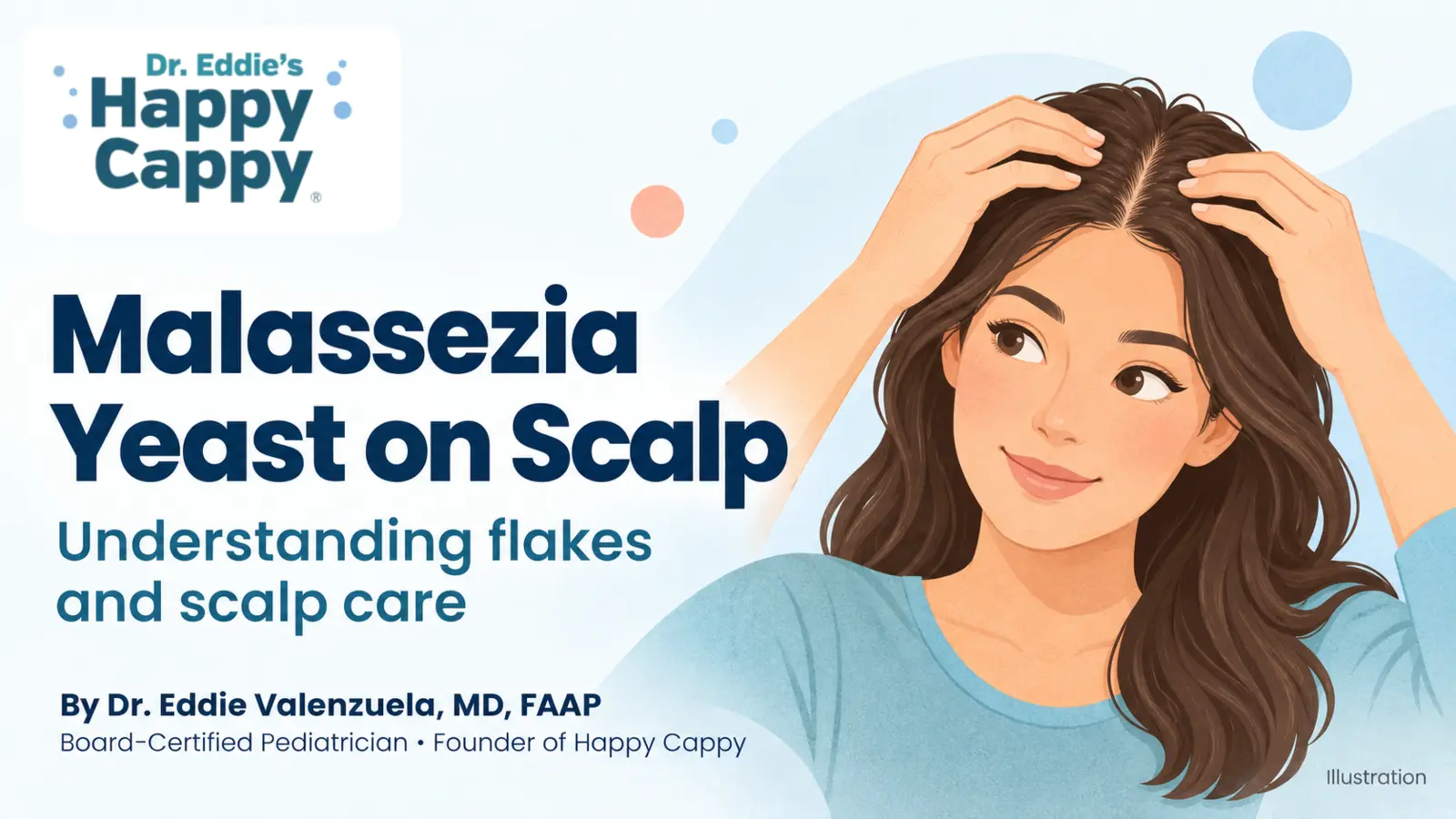
Quick answer: Malassezia is a yeast that normally lives on the scalp. In susceptible people, its interaction with skin oils, the skin barrier, and inflammation contributes to dandruff and seborrheic dermatitis. Treatment aims to control symptoms, not permanently sterilize the scalp. Pustules, pain, or patchy hair loss need a separate assessment.
Malassezia on a healthy and an inflamed scalp
Finding Malassezia on the scalp does not, by itself, mean there is an infection. These yeasts are part of the normal skin microbiome. The reason one person develops flakes and another does not involves more than simply the presence of yeast.1
For background on the organism and conditions elsewhere on the body, see Malassezia yeast. This article focuses on scalp symptoms and care.
Malassezia scalp pictures

Photo: CDC/Susan Lindsley (1973), PHIL 4006. Public-domain image available free from CDC. Use does not imply endorsement of Happy Cappy or its products by CDC or the U.S. Government.
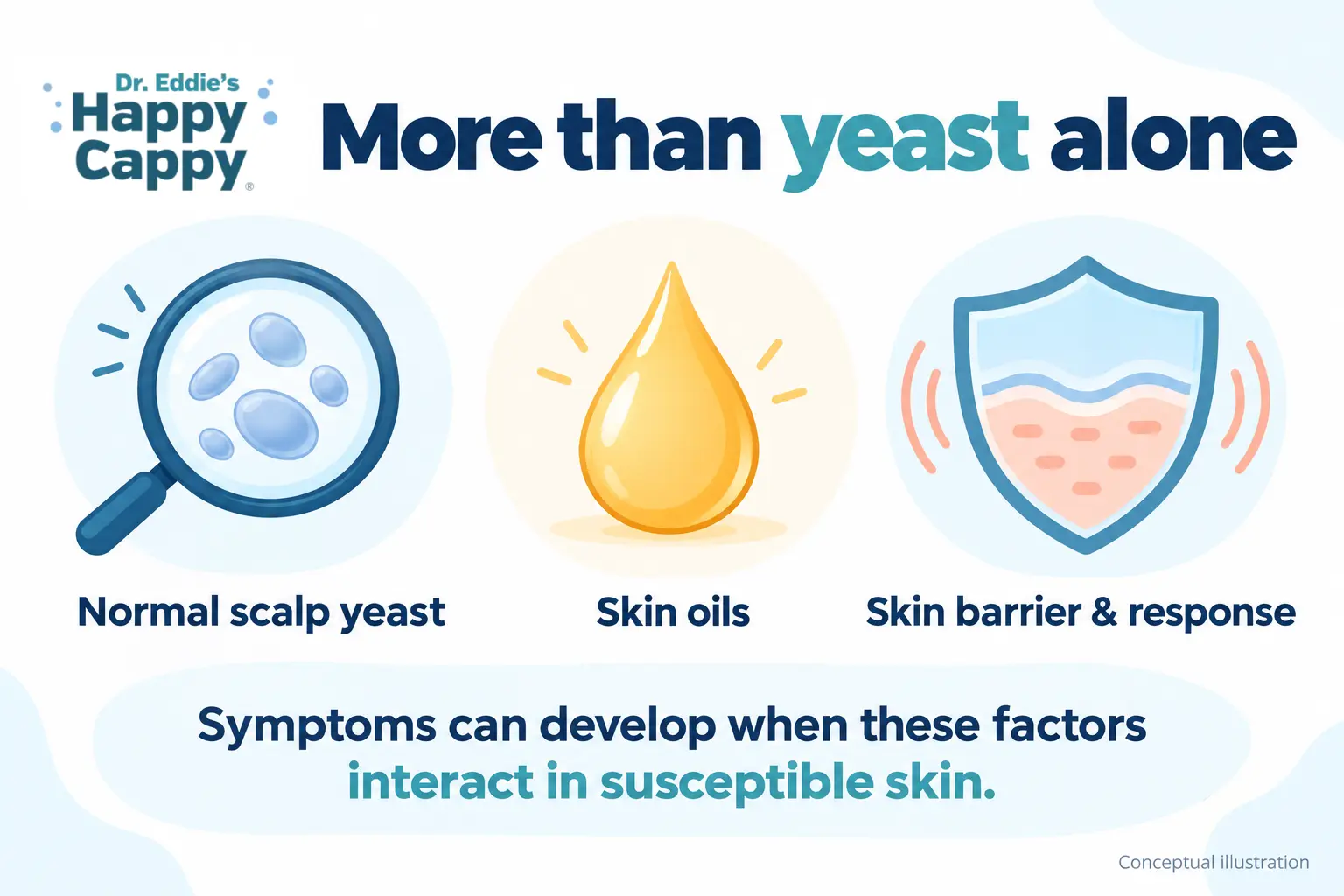
Factors in yeast-related scalp symptoms
Yeast, skin oils, and the skin response
Malassezia uses lipids on the skin. Its activity and the substances produced as it processes those lipids can interact with a susceptible skin barrier. The skin's inflammatory response also matters. Dandruff is therefore not explained by poor hygiene or by a single yeast count.12
Individual symptom triggers
Heat, sweating, oily or occlusive products, and other individual triggers may aggravate symptoms. A trigger list does not prove yeast overgrowth in every person.
Notice what reliably worsens your own symptoms. Heavy products that sit on the scalp, irritation from a cleanser, and changes in your routine may matter. Blanket rules such as avoiding every oil or washing every day do not suit every scalp.
Symptoms associated with Malassezia on the scalp
Flaking, itching, and inflammation are symptoms shared by several scalp conditions. Painful pustules should not be assumed to be severe dandruff.
The most useful distinction is between diffuse flakes or scaly patches and individual bumps centered around hair follicles. Both can itch, but their treatment may differ. A clinician also considers psoriasis, contact dermatitis, and other explanations before assigning the symptoms to yeast.
Dandruff, seborrheic dermatitis, and folliculitis
These conditions involve different patterns of inflammation. Having one does not mean that every new scalp symptom has the same cause.
| Condition | Typical pattern | Care focus |
|---|---|---|
| Dandruff | Loose scalp flakes, sometimes with itch, without marked inflammation | Regular cleansing and an appropriate dandruff shampoo |
| Seborrheic dermatitis | Inflamed areas with white or greasy scale; the ears or face may also be affected | Control flaking and inflammation, with maintenance when needed |
| Malassezia folliculitis | Small, similar-looking itchy bumps or pustules around follicles | Confirm the cause; antifungal treatment may differ from a dandruff routine |
Dandruff and seborrheic dermatitis are related, but folliculitis is a different pattern. Malassezia folliculitis usually lacks the blackheads and whiteheads of acne. Other forms of folliculitis can look similar, so bumps alone do not identify the organism.34
Reducing Malassezia-related scalp symptoms
Choose a shampoo for the condition
For dandruff or scalp seborrheic dermatitis, treatment may include a shampoo with an antifungal active such as ketoconazole, ciclopirox, selenium sulfide, or pyrithione zinc. Availability and prescription status vary. Salicylic acid can help loosen scale; it has a different role from an antifungal.3
Follow the directions for the chosen shampoo and its age precautions. A clinician can help select a formula if the scalp is very inflamed or several products have failed.6
Keep the rest of the routine comfortable
Use gentle cleansing between medicated washes if needed. Avoid scraping off scale or repeatedly applying a product that burns. Daily washing is not necessary for everyone. Adjust washing to oiliness, hair texture, sweating, and dryness instead of assuming that more washing removes the problem faster.
Plan for recurring symptoms
Seborrheic dermatitis often improves and then returns. Some people need intermittent maintenance treatment. If shampoo does not control inflammation, a dermatologist may add a short course of an appropriate anti-inflammatory scalp treatment. Do not keep using a steroid indefinitely without guidance.5
Get pustules and hair loss assessed
Suspected Malassezia folliculitis may need testing and prescription treatment. Antibiotics are not a treatment for yeast, and unnecessary treatment can complicate the picture. Persistent scalp bumps deserve a diagnosis.4
Scalp ringworm is caused by a different group of fungi and may produce broken hairs or patchy hair loss. It requires oral antifungal treatment. A dandruff shampoo cannot substitute for that treatment.7
Scalp scale in babies and children
Malassezia can be part of the normal skin microbiome in children. Care depends on age and the diagnosis. The cradle cap guide explains infant scalp scale; broken hairs or patchy hair loss need assessment for scalp ringworm.37
Happy Cappy for dandruff and seborrheic dermatitis symptoms
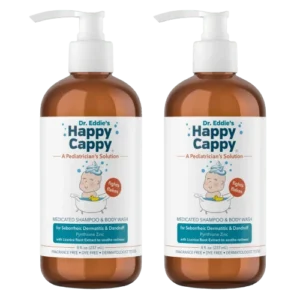
Happy Cappy Medicated Shampoo & Body Wash contains pyrithione zinc 0.95%. It is a fragrance-free option for relieving flaking, scaling, and itching associated with dandruff and seborrheic dermatitis. Follow the label and ask a clinician about symptoms that persist or worsen.
Its role here is relief of dandruff and seborrheic dermatitis symptoms. Scalp ringworm or suspected folliculitis requires care for that specific diagnosis.
Control symptoms while protecting the scalp
Normal yeast does not need to be eradicated from a symptom-free scalp. When flakes or inflammation develop, choose care for the actual condition and reassess if the pattern includes pain, pustules, or hair loss.