

Quick answer: Pimples on the scalp may be acne, inflamed hair follicles, or another kind of bump. Whiteheads and blackheads suggest acne; itchy or tender pustules around hairs may be folliculitis. A firm lump under the skin may be a pilar cyst. Pain, pus, spreading redness, or hair loss calls for medical assessment.
First steps for painful scalp pimples
A sore scalp pimple may be an inflamed follicle, acne or another kind of bump. The cause determines the treatment, but a few gentle steps can limit irritation.
- Leave the bump alone. Avoid squeezing, scratching or close shaving over it. A clean, comfortably warm compress may ease a small tender spot.7
- Review friction and hair products. Pause a suspected irritating product and avoid headwear that rubs. See the scalp-pimple care steps and treatment options.
- Check the warning signs. Increasing pain, spreading redness, fever, drainage, hair loss or recurring lumps deserve assessment. Read when painful scalp bumps need care.
Scalp acne and other scalp bumps
The scalp has hair follicles and oil glands, so acne can occur there. Acne develops when follicles become blocked with oil and dead skin cells. But the word “pimple” describes what a bump looks like, not necessarily its cause.1
Before choosing a treatment, consider whether you have a few surface spots, many similar itchy bumps, a deep painful lump, or scaling with broken hairs. These patterns can require very different care.
Pictures of pimples on the scalp
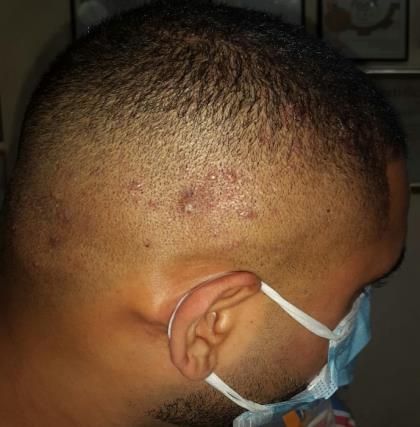
Photo: © 2022 Khalifa E. Sharquie and Raed I. Jabbar, Figure 1, Journal of Pakistan Association of Dermatologists. Used under CC BY 4.0; photograph reproduced without alteration. The authors and journal do not endorse Happy Cappy.
Common causes of scalp pimples
Scalp acne and folliculitis can look similar. Treatment depends on which condition is present.
Scalp acne and hair-product breakouts
Acne may include whiteheads, blackheads, and inflamed pimples. Oily or waxy hair products can contribute to clogged pores, especially along the hairline. If breakouts follow a product, stop that product and choose products labeled oil-free or noncomedogenic when appropriate. Clean product residue from pillowcases and headwear.3
Scalp folliculitis
Folliculitis means inflammation around hair follicles. Small pustules may itch, hurt, or develop a crust. Bacteria, yeast, and irritation are possible contributors; not all folliculitis is an infection, and not all of it is “fungal acne.” Recurrent or widespread bumps may need an examination and testing.2
Malassezia-related folliculitis is one possibility when small, similar-looking itchy bumps occur. Unlike acne, it does not typically produce blackheads or whiteheads. Its appearance overlaps with other conditions, so an antifungal shampoo is not a reliable diagnostic test.9
Other conditions that can look like scalp pimples
A scaly patch, a lump beneath the skin, and a pustule are different findings even when each feels like a bump.
| Pattern | Possible explanation | Useful next step |
|---|---|---|
| Firm, movable lump beneath the skin | Pilar cyst | Have a new or changing lump checked; do not squeeze it. |
| Firm recurring bumps on the back of the scalp or neck | Acne keloidalis nuchae | Seek care before inflammation leads to scarring. |
| Scale with broken hairs or a patch of hair loss | Scalp ringworm | Get assessed for prescription oral treatment. |
| Broad flaky or thick scaly areas | Seborrheic dermatitis or psoriasis | Ask about the rash itself; separate pustules may have another cause. |
| A spot that grows, repeatedly bleeds, or never heals | A persistent skin lesion | Arrange a skin examination rather than treating it as acne. |
Pilar cysts
Pilar cysts are keratin-filled cysts commonly found on the scalp. They can remain for a long time and do not reliably disappear on their own. A clinician may observe an uncomplicated cyst or remove one that is symptomatic.4
View clinical photos of pilar cysts on DermNet.
Acne keloidalis nuchae
Acne keloidalis nuchae can begin with small bumps and progress to raised scars and hair loss. Despite its name, it is not ordinary acne. Early diagnosis matters.5
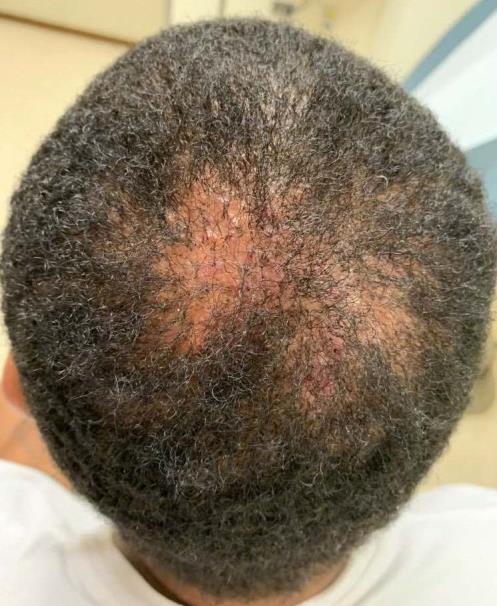
Photo: © 2022 Marushchak et al., Figure 1, SKIN: The Journal of Cutaneous Medicine. Used under CC BY 4.0; photograph reproduced without alteration. The authors and journal do not endorse Happy Cappy.
Scalp ringworm
Scalp ringworm can sometimes form a painful, swollen, draining area called a kerion. Shampoo alone is not sufficient treatment. Seek prompt care, particularly when a child has scaling and patchy hair loss.6
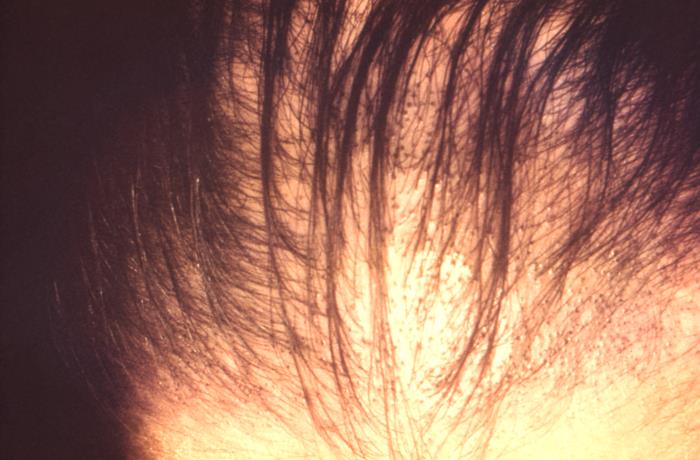
Photo: CDC, PHIL 18991. Public-domain image available free from CDC. Use does not imply endorsement of Happy Cappy or its products by CDC or the U.S. Government.
Care for pimples on the scalp
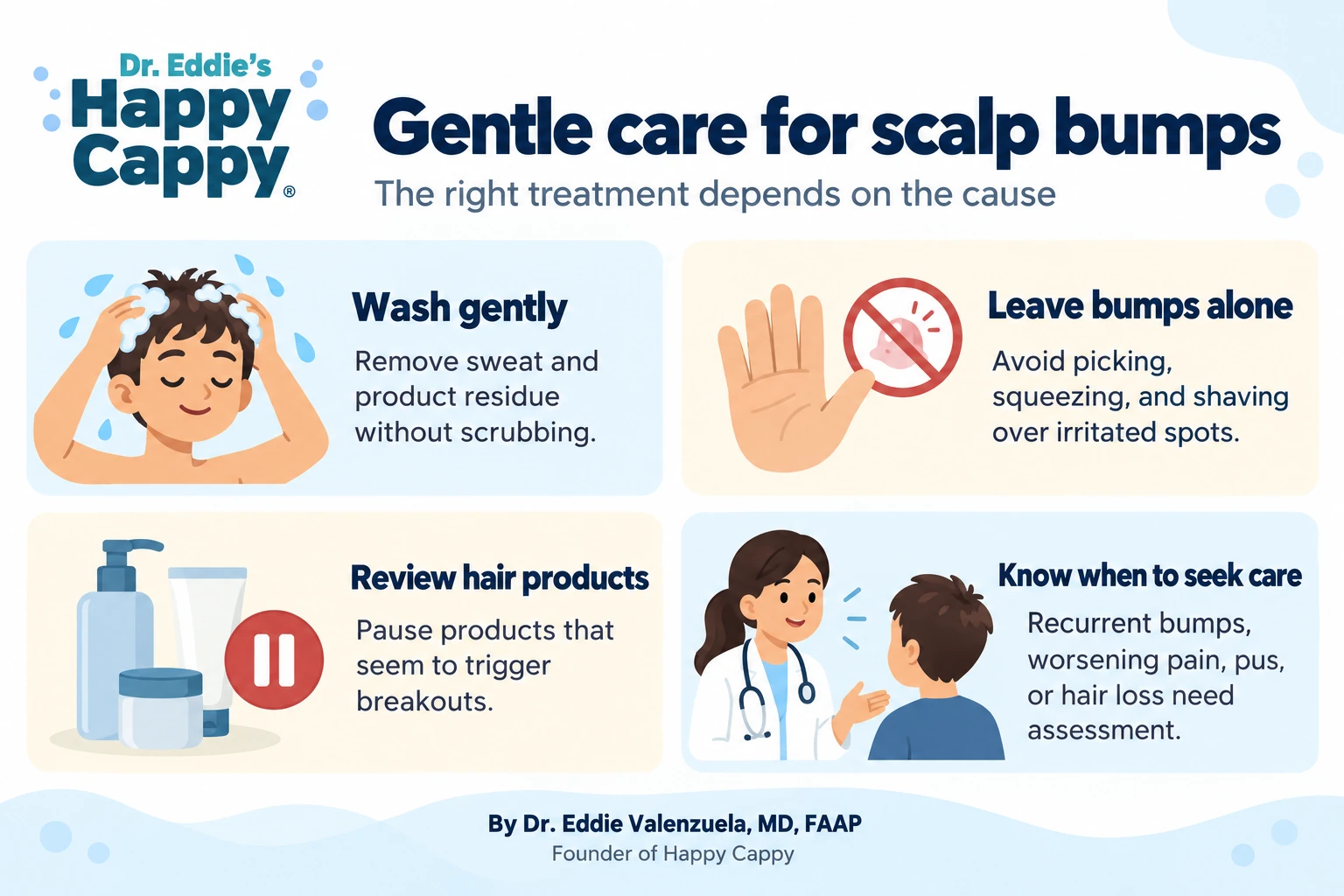
- Avoid picking and squeezing. This can worsen inflammation and increase the risk of scarring.
- Reduce friction. Pause close shaving over active bumps and avoid headwear that repeatedly rubs the area.
- Review hair products. Stop a suspected trigger and gently wash away sweat and residue without abrasive scrubbing.
- Use a warm, not hot, compress for a small tender spot. A clean damp cloth may ease discomfort. Do not try to drain a deep lump yourself.
- Get a diagnosis when bumps recur. A clinician may recommend acne medicine, an antibacterial treatment, an antifungal, or another approach based on the cause.
Care for mild scalp bumps
Warm compresses and removing a trigger can help some mild folliculitis or small pimples. They are not a substitute for assessment of a large, worsening, or very painful lump.78
Shampoo and treatment selection
There is no single shampoo for every type of scalp folliculitis. Antifungal shampoos may help selected yeast-related cases; bacterial folliculitis and other disorders may need different treatment. Persistent pustules need their cause identified.29
Persistent or recurring scalp bumps
Scalp bumps do not follow one recovery timeline. A small superficial spot may settle, while recurring folliculitis, acne, or a pilar cyst can persist. A lump that repeatedly returns in one place deserves an examination.24
Painful scalp bumps: when to seek care
Get prompt medical attention for increasing pain, a hot swollen lump, spreading redness, significant drainage, fever, or feeling unwell. Arrange an appointment for recurrent bumps, new hair loss, scarring, or a spot that does not heal. These signs should not be managed by repeatedly switching dandruff shampoos.
Note when the bumps started, whether they follow haircuts or new products, and whether they recur in exactly the same area. This history helps your clinician decide whether a swab, fungal test, or other assessment is useful.
Scalp pimples and hair loss
A small superficial pimple does not automatically lead to permanent hair loss. However, deeper or scarring follicular inflammation can damage follicles. Bumps accompanied by a growing bald patch, smooth scarred skin, or repeated drainage need timely dermatology care.25
Happy Cappy's role when flakes accompany bumps
Medicated wash for accompanying flakes
If you also have seborrheic dermatitis, Happy Cappy Medicated Shampoo & Body Wash contains pyrithione zinc 0.95% for its associated flaking, scaling, and itching. Improvement in flakes does not establish the cause of a separate painful bump.
Daily wash for gentle cleansing
Happy Cappy Daily Shampoo & Body Wash is a fragrance-free cleanser for dry, sensitive, eczema-prone skin. Gentle cleansing can support a comfortable routine, but this product is not an acne or infection medicine. See baby acne guidance for infants rather than applying adult scalp-acne treatments.
The cause determines the treatment
Use the type of bump and its symptoms to guide the next step. Gentle cleansing and avoiding triggers may help mild irritation, while painful, recurrent, or scarring bumps deserve a diagnosis.