


Cover: AI-generated editorial illustration of everyday skin care. Clinical examples appear below.
Quick answer: Eczema can cause dry, itchy, inflamed patches on the shoulders and back. Sweat, rubbing, and products that touch or run over the skin may worsen it. Gentle cleansing, moisturizer, and treatment matched to the cause can help. A painful blistering rash on one side, spreading warmth, or fever needs prompt assessment.
Signs of eczema on the shoulders and back
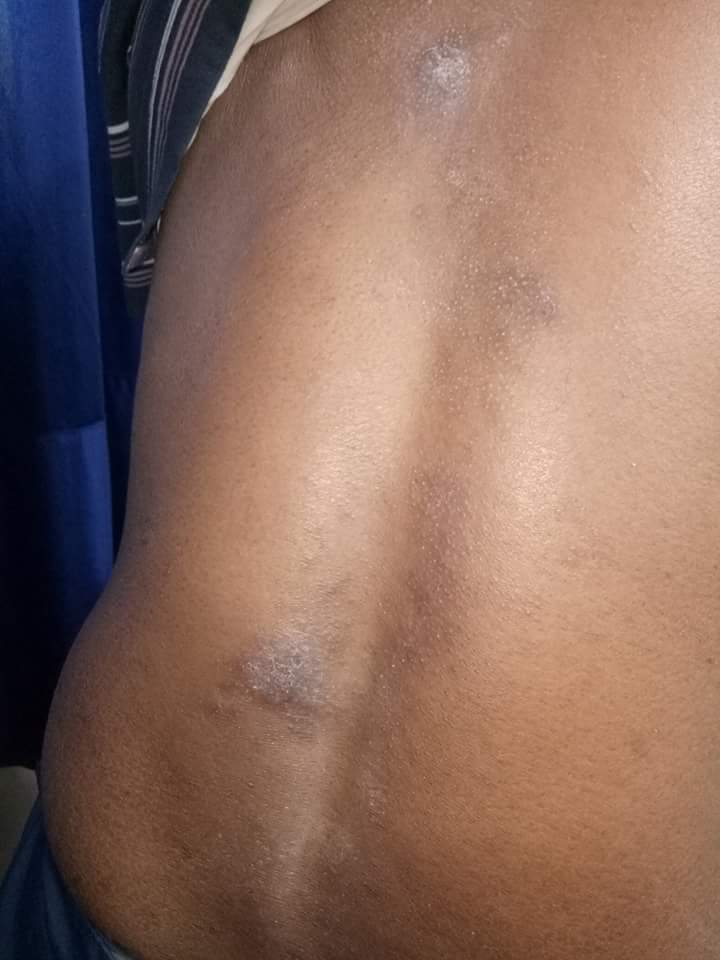
Eczema describes a group of inflammatory skin conditions. On the back or shoulders, it may cause itchy, rough, flaky patches, scratch marks, and skin that becomes thicker from repeated rubbing. Some flares weep or crust. Inflammation may appear pink or red on lighter skin and darker brown, purple, or gray on deeper skin tones.
Color changes can remain after a flare settles. Look at texture, itch, tenderness, and changes over time as well as color. The location alone cannot tell you which type of eczema you have. Atopic dermatitis and contact dermatitis can both affect this area. Eczema itself is not contagious, although some infections can resemble it.1
View an additional clinical example of shoulder and upper-back inflammation. A photograph alone cannot establish the cause of a rash.

Triggers on the shoulders and back
A history of atopic dermatitis can make the skin more vulnerable to irritation. Contact dermatitis can also develop when an irritant damages the skin or when a substance causes a delayed allergic reaction. These processes may overlap.
- Heat and sweat: notice whether a flare follows exercise, hot weather, or sleeping under heavy bedding.
- Friction: backpack straps, sports equipment, tight seams, and rough clothing can repeatedly rub the same area.
- Hair and body products: shampoo, conditioner, fragrance, or styling-product residue may touch the neck, shoulders, and upper back.
- Repeated washing or scrubbing: hot water, abrasive brushes, and vigorous towel drying may leave sensitive skin more irritated.
A product is not automatically the cause because it is new, and an old favorite is not automatically safe: contact allergy can appear after earlier use without trouble. Note the pattern and bring ingredient lists to an appointment if the rash keeps returning.2, 3
Other causes of an itchy back rash
An itchy back rash can have several causes. A clinician may need to examine the skin or do a test before choosing treatment. The clues below can help you describe the problem, but they cannot confirm a diagnosis.
| Possible cause | Clues worth reporting |
|---|---|
| Contact dermatitis | A rash follows the area touched by a product, strap, adhesive, or clothing. |
| Folliculitis or acne | Separate bumps, pustules, or spots centered on hair follicles rather than only broad dry patches. |
| Ringworm | An expanding, scaly patch, sometimes with a more active edge or partial central clearing. |
| Shingles | Pain, burning, or tingling followed by grouped blisters, usually in a band on one side. |
| Notalgia paresthetica | Persistent itch or altered sensation near one shoulder blade, sometimes without an initial rash; scratching can later leave a darker or thickened patch. |
A steroid cream can change the appearance of a fungal rash without clearing the infection. Avoid repeatedly treating an unexplained patch as eczema when it is growing or not improving.4, 5, 6, 7
Care for eczema on the shoulders and back
- Cleanse gently. Use lukewarm water and a mild, fragrance-free cleanser where needed. Rinse hair products off thoroughly, including residue on the shoulders and back. Pat dry instead of scrubbing.
- Moisturize consistently. Apply a fragrance-free cream or ointment after bathing while skin is still slightly damp, and again when it feels dry. See the back-application tips below for reaching difficult areas.
- Reduce rubbing and overheating. Choose comfortable clothing and adjust straps or equipment that irritate the same spot. Change out of sweaty clothing and gently rinse off sweat when practical.
- Follow the flare plan. Use prescribed medicine on the areas and for the duration your clinician recommends. Moisturizer supports the skin barrier but may not control active inflammation by itself.
Treatment may include a topical corticosteroid or a nonsteroid prescription medicine. Widespread or persistent atopic dermatitis may need additional treatment from a dermatologist. Antibiotics are used when an infection warrants them, not routinely for every eczema flare.8
Daily cleansing and moisturizing
Happy Cappy Moisturizing Cream is a fragrance-free, fast-absorbing, non-greasy option for moisturizing dry, sensitive, eczema-prone body skin. Happy Cappy Daily Shampoo & Body Wash provides fragrance-free cleansing and is made without SLS or SLES. Use it daily or as needed according to the label and your skin’s tolerance. These products support everyday skin care; an active eczema flare may also need prescribed anti-inflammatory treatment.
Applying moisturizer and treatment to your back
The middle of the back can be difficult to reach, even when the treatment plan is straightforward. Set up a mirror and choose an approach that lets you smooth product onto the skin without twisting painfully.
Three ways to reach the area
- Use the back of your hand or forearm for moisturizer. Put some moisturizer on a clean hand or forearm and gently spread it over the areas you can comfortably reach. This can help with the lower back or sides. Stop if your shoulder or back hurts.
- Try a long-handled lotion applicator. Choose a smooth, washable head intended for spreading lotion. Add product to the head, reach over a shoulder or around the waist, and make gentle passes. Avoid bristles, scrubbing pads, and vigorous rubbing. Clean and dry the applicator according to its instructions after each use.
- Ask a trusted person to help. A helper can cover patches between the shoulder blades and check for missed areas. Have them wash their hands before and after application and use gentle strokes. A mirror or a photograph you choose to take can help you show them the exact area.
Using the forearm or a lotion applicator is also suggested in practical eczema-care guidance.10, 11
Prescription medicine and everyday moisturizer
Moisturizer can be spread over dry, eczema-prone skin, including areas between patches. Apply it after bathing and again as needed. With a tub, remove product with a clean spoon or spatula rather than returning a used applicator to the container.12
Prescription creams or ointments have specific directions for the amount, body sites, frequency, and length of the course. Ask your clinician or pharmacist to demonstrate the amount for the actual area on your back and whether an applicator suits that medicine. A helper may make small or scattered patches easier to treat accurately. Do not mix the medicine into your moisturizer or add extra simply because you cannot see the area.8, 11
If limited movement or pain makes the plan impractical, tell your clinician. A treatment you cannot reliably apply needs an application plan as well as a prescription.
Symptoms that need medical assessment
Book an assessment if this is a new unexplained rash, if it keeps returning in the same place, or if itch affects sleep or daily activities. Persistent contact-pattern eczema may warrant patch testing for delayed allergies.2
Get prompt medical advice for worsening pain, spreading warmth or swelling, pus, fever, or rapidly developing painful blisters. Seek early advice for a painful blistering band on one side of the back because shingles treatment is time-sensitive.6, 9
If you cannot see the area well, a clear photo taken by someone you trust can help track changes and prepare for the visit. It does not replace examination when symptoms are concerning.
A routine matched to the cause
Back eczema is easier to manage when the diagnosis and daily routine fit the pattern. Make moisturizer reachable, reduce repeated friction, review products that run over the shoulders, and ask for treatment if inflammation persists.
Explore the Eczema Resource Center, the eczema symptoms and pictures guide, and the guide to eczema types.
For nearby skin, read about eczema on the neck.
References
- DermNet. Atopic dermatitis.
- DermNet. Allergic contact dermatitis.
- DermNet. Shampoo.
- DermNet. Folliculitis.
- DermNet. Tinea corporis.
- NHS. Shingles.
- DermNet. Notalgia paraesthetica.
- American Academy of Dermatology. Atopic dermatitis: Diagnosis and treatment.
- NHS. Atopic eczema.
- Eczema UK. Children & eczema: Applying emollients to hard-to-reach areas.
- DermNet. Topical formulations.
- National Eczema Association. Moisturizing for eczema.
This guide provides general information. A clinician can diagnose a rash and recommend treatment for your age, symptoms, and medical history.