


Quick answer: Itchy bumps can come from hives, eczema, insect bites, irritated hair follicles, heat rash or an infection. Their shape, location and duration help distinguish them. A raised patch that disappears within a day suggests a different process from a blister, a rough follicular bump or a spot that stays for a week. Trouble breathing or swelling of the tongue or throat requires emergency care.
Appearance and timing help narrow the cause
An itchy bump is a description, not a diagnosis. Skin can rise because of temporary swelling, inflammation around a hair follicle, fluid beneath the surface or thickened skin. Those differences matter because an itch-relief routine cannot address every underlying cause.
A small solid bump is called a papule. A small fluid-filled blister is a vesicle, and a bump containing pus is a pustule. A wheal is the smooth, swollen bump or patch seen with hives. You do not need to name the lesion correctly before seeking help. Describing whether it is solid, watery, scaly or short-lived is useful.
Watch one spot as well as the whole rash. Does that same bump disappear within hours, or remain in place for days? Are the bumps centered on hairs, clustered on exposed skin, limited to the hands or appearing under sweaty clothing? Photographs taken as the eruption changes can help, especially if the skin looks different by the appointment. Color alone is less reliable: inflammation may look pink, purple, brown or subtle against the surrounding skin.
If itching occurs without new bumps or a visible rash, the itchy-skin guide covers that broader symptom. Here, the useful starting point is the raised lesion itself.
Common patterns and causes of itchy bumps
The clinical photographs below show several different patterns. Select a photo to enlarge it. Appearance is one clue; timing, symptoms and examination help establish the cause.
Smooth welts that come and go: hives
Hives often appear suddenly as smooth, itchy swellings that can join into larger patches. An individual hive usually fades within 24 hours, although new ones may continue to appear elsewhere. This changing pattern helps distinguish hives from bites or eczema that remain in the same place.1
Hives are not always caused by an allergy. Infections, heat, cold, pressure and other triggers can play a role, and sometimes no trigger is found. Hives recurring for more than six weeks are considered chronic and deserve assessment rather than repeated guesses about food allergies. A spot that stays fixed, becomes painful or leaves bruising also warrants a closer look.2

Persistent bumps with dry or scaly skin: eczema
Eczema can form small, closely grouped itchy bumps, often with dryness, roughness or scratch marks. The bumps remain longer than a typical hive, and the skin may thicken with repeated rubbing. Eczema is not contagious, but an itchy papule by itself does not establish the diagnosis.
When eczema is the likely explanation, the papular-eczema guide provides clinical photographs and explains that particular pattern. Treatment depends on the type and severity of eczema; moisturizer supports the skin barrier, while active inflammation may need additional treatment.
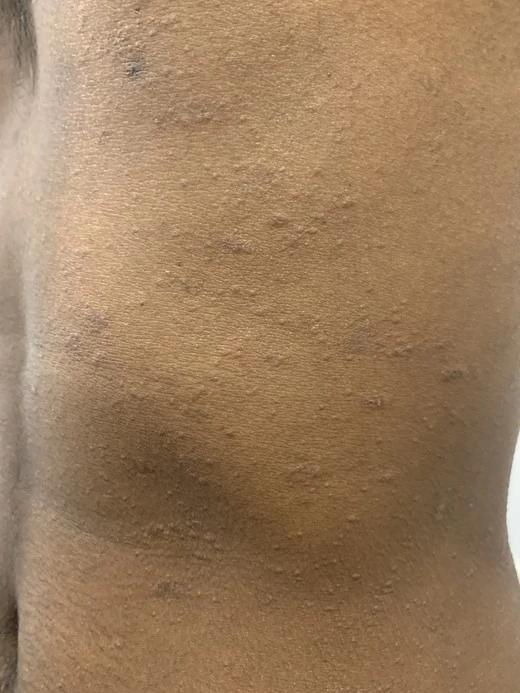
Bumps in an area of exposure: contact dermatitis
A new rash where a product, plant, adhesive or piece of jewelry touched the skin may be contact dermatitis. It can itch, burn, scale or blister. Irritant dermatitis results from damage to the skin barrier; allergic contact dermatitis is a delayed immune reaction to a substance. A product can cause an allergy even after earlier trouble-free use.
The outline and timing of the rash can be useful clues, but they do not identify the responsible ingredient on their own. Stop a suspected new product and keep its ingredient list for the appointment. The contact-dermatitis guide explains assessment and patch testing.
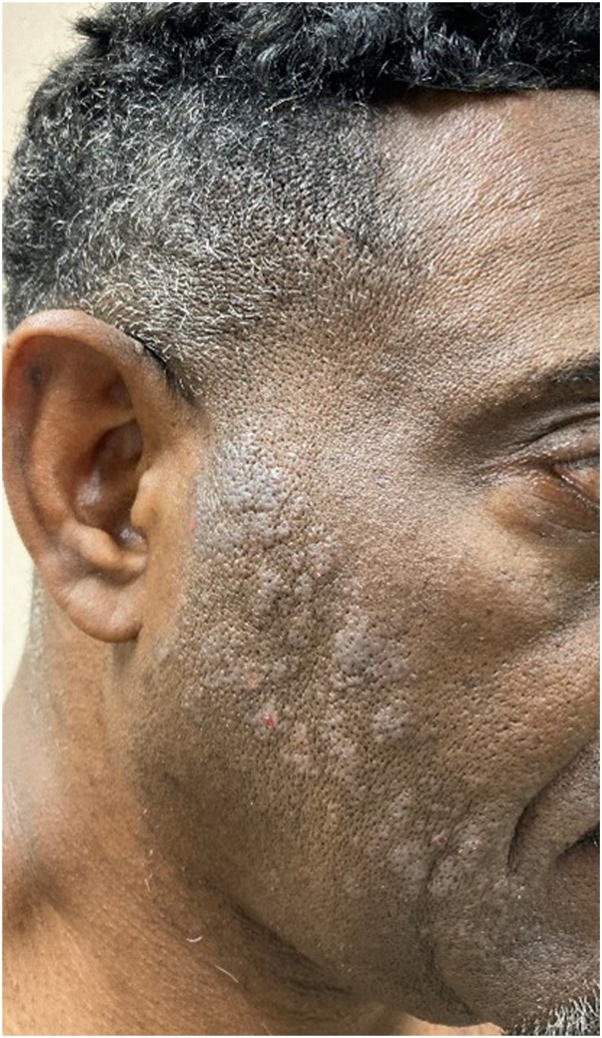
Clusters on exposed skin: insect-bite reactions
Fleas, mosquitoes and other biting insects can leave itchy bumps, sometimes with a central punctum. Some people, especially children, develop persistent clusters called papular urticaria. Despite that name, these bumps can remain for days or weeks rather than disappearing like an individual hive. New bites may appear while older spots are fading.3
Exposure history matters more than a photograph alone. Consider outdoor activity, travel and pets without assuming that every cluster is a particular insect bite. The skin reaction is not itself contagious. Preventing further bites and addressing the source of exposure are separate from soothing the irritated skin.
Nighttime itching and affected close contacts: scabies
Scabies is an infestation with the human itch mite. It can cause intense nighttime itching and small bumps or burrows, often between the fingers, at the wrists or around the waist. Infants can have a different distribution, including the head, palms and soles. Similar symptoms in household members are a useful clue, though symptoms may take time to appear.4
Suspected scabies needs medical assessment and an appropriate prescription treatment. A moisturizer or ordinary anti-itch cream does not kill the mites. Household members and close contacts may need treatment at the same time, together with instructions for clothing and bedding, to prevent reinfestation. Itching can continue for several weeks after successful treatment.5

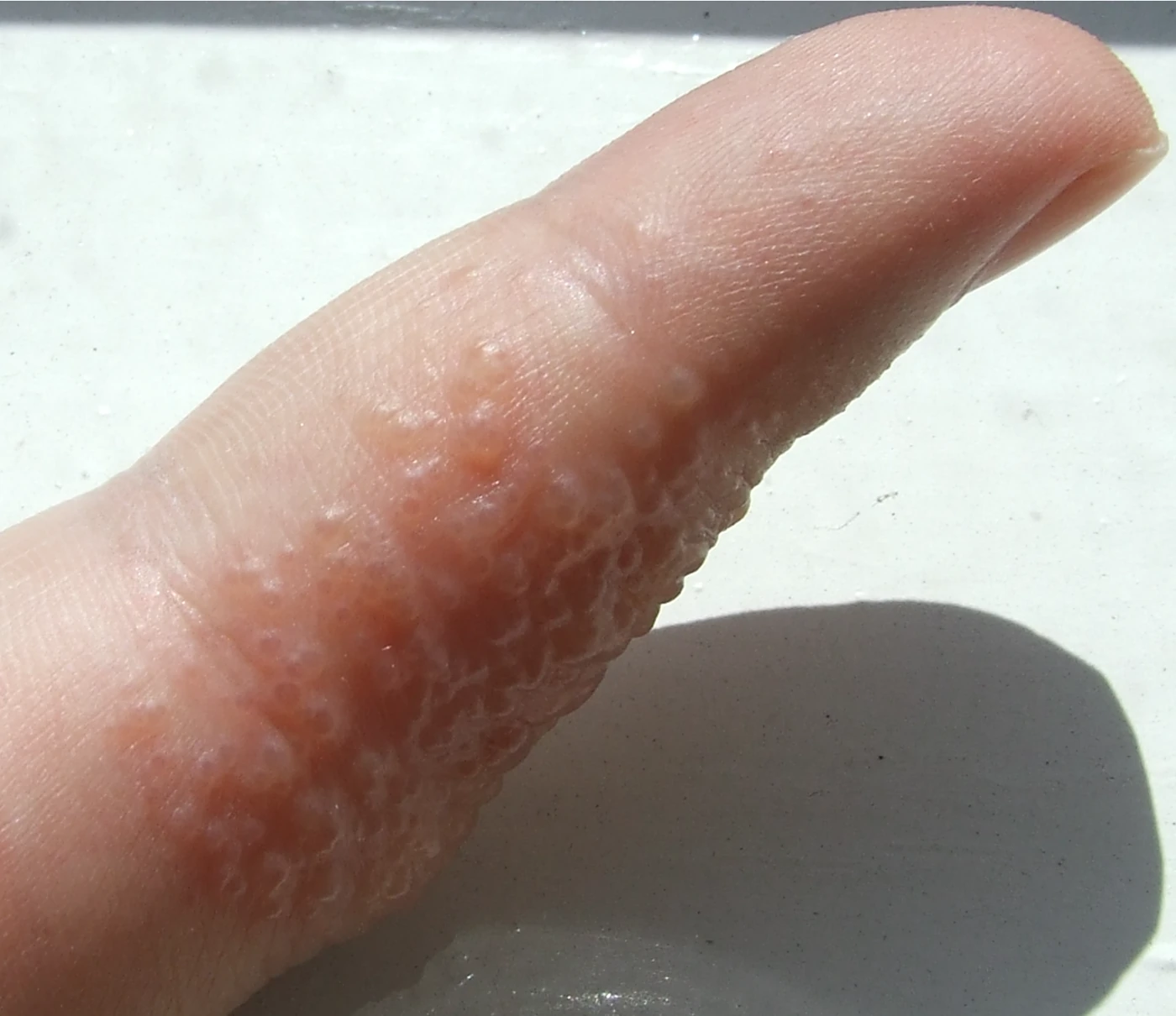
Small blisters on fingers, palms or soles: dyshidrotic eczema
Dyshidrotic eczema produces intensely itchy, deep-seated little blisters, especially along the sides of the fingers and on the palms or soles. Peeling may follow as the blisters settle. It is one form of hand or foot eczema, not another name for every rash in those locations. A fungal infection or contact reaction can look similar, so persistent or one-sided symptoms deserve assessment.6
Bumps centered on hairs: folliculitis
Folliculitis is inflammation of hair follicles. The spots may look like small pimples or pustules and can itch or feel tender. Shaving, friction, blockage and infection are among the possible causes. Bacteria are not the only explanation; yeast and noninfectious irritation can also be involved. That is why an antibiotic is not the right treatment for every follicular eruption.7
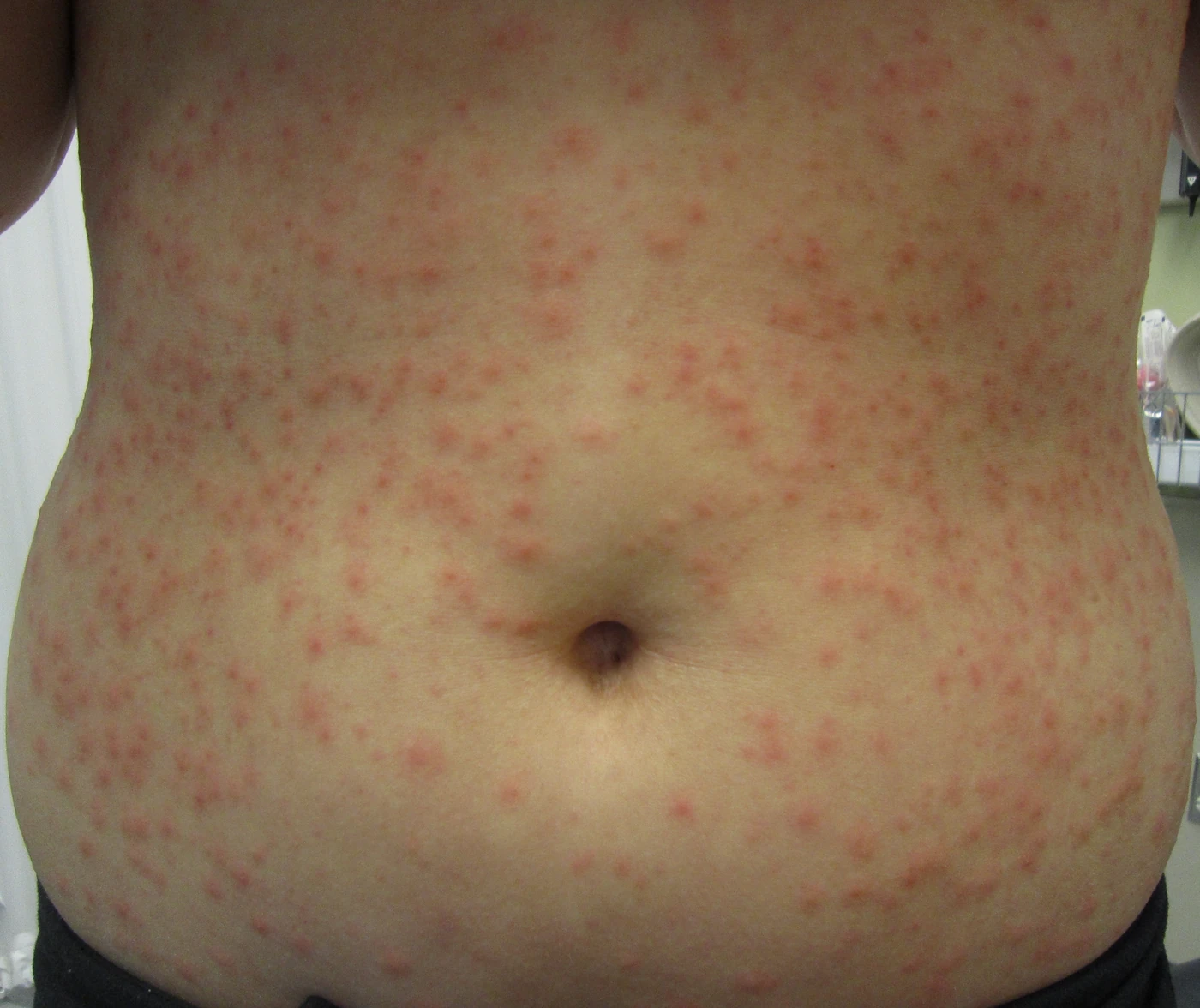
Prickly bumps after sweating: heat rash
Heat rash develops when sweat ducts become blocked or inflamed. The itchy form often produces small bumps under clothing or in warm skin folds. Moving to a cooler environment, reducing sweating and wearing breathable clothing can help. Heavy, occlusive products can worsen the conditions that favor this rash, so a thick moisturizer is not the default answer to every bumpy eruption.8
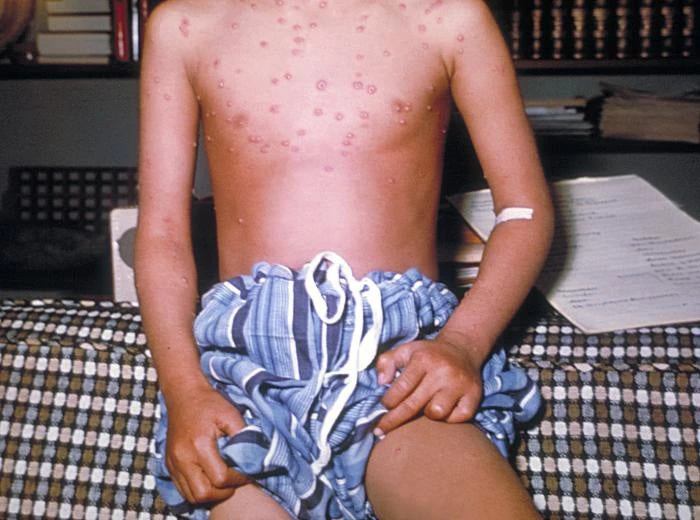
A spreading blistering illness: chickenpox
Chickenpox is caused by the varicella-zoster virus and typically causes itchy spots that become blisters and then scabs. Fever or feeling unwell may accompany the rash. Vaccinated people can still develop chickenpox, sometimes with fewer spots and few or no blisters, so appearance alone cannot reliably exclude it.9
If chickenpox is possible, contact a clinician and tell the office before arriving because it is highly contagious. Prompt advice is particularly important for infants, pregnant people and anyone with a weakened immune system. A general skin-care routine cannot replace assessment of a contagious blistering illness.
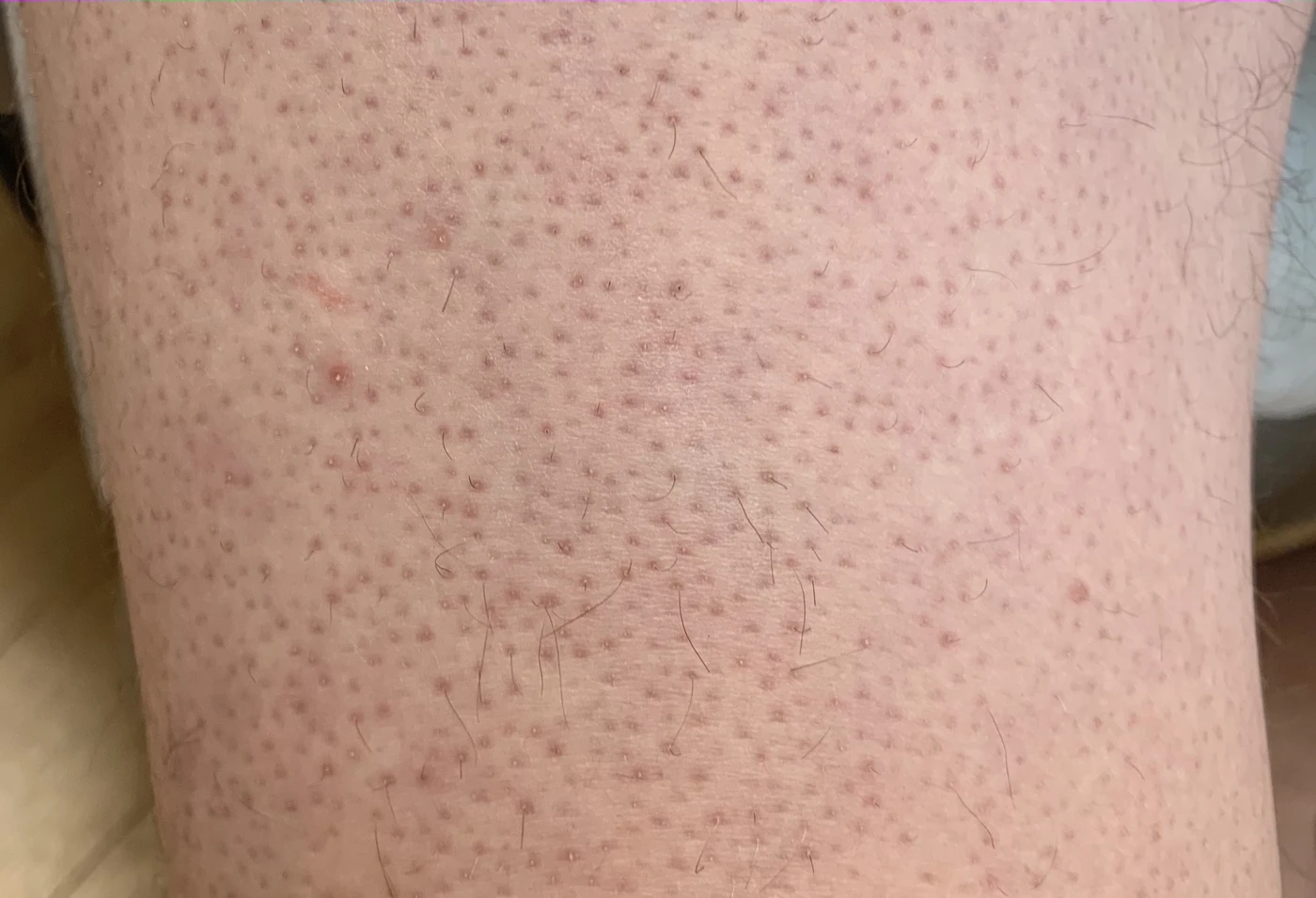
Longstanding rough follicular bumps: keratosis pilaris
Keratosis pilaris often feels like tiny rough plugs on the upper arms or thighs. It is a harmless, noncontagious follicular condition and is not usually intensely itchy, though dryness can make it uncomfortable. Moisturizing may improve texture and dryness, but it does not guarantee permanent removal of the bumps. A sudden, very itchy eruption should not automatically be attributed to existing keratosis pilaris.10
Location can also point toward another diagnosis. For example, recurring central facial bumps with flushing or burning may need assessment for rosacea. That pattern belongs in a facial-skin evaluation rather than being treated as a general allergy.
Symptoms that need medical assessment
Call emergency services for trouble breathing, faintness, or swelling of the tongue or throat with a rash. New swelling of the face or mouth also needs immediate medical attention. Do not wait to see whether a skin cream helps.1
Seek prompt care for a rapidly worsening or painful eruption, spreading warmth and swelling, pus, fever, widespread blisters, or sores involving the eyes or mouth. A new rash after starting a medicine should be discussed promptly with the prescriber, especially if you feel unwell. Babies with fever or unusual sleepiness need prompt assessment.
Arrange an appointment when itching disrupts sleep, the bumps persist or repeatedly return, close contacts are also itchy, or the diagnosis is uncertain. Bring the timing, photographs, recent medicines and products, and relevant exposures. Depending on the pattern, examination may be enough, or the clinician may recommend a scraping, swab or allergy assessment. These tests answer different questions; there is no single test for every itchy bump.
Care while the cause is clarified
Keep the routine simple. A cool compress, gentle washing and avoiding scratching can reduce additional irritation. Pause a new product that seems to worsen the rash. Do not squeeze pustules or open blisters, and avoid layering multiple medicines onto an unexplained eruption.
For dry, intact, eczema-prone skin, a tolerated fragrance-free moisturizer can reduce moisture loss. Happy Cappy Daily Shampoo & Body Wash and Moisturizing Cream can support gentle cleansing and moisturizing in that setting. They do not treat scabies, chickenpox, hives or an infected hair follicle, and the cream is not a universal choice for heat rash.
Once the cause is established, follow the treatment for that condition. The useful goal is to stop new lesions and let the skin recover, rather than repeatedly suppressing the itch while the cause remains active.
References
- American Academy of Dermatology: Hives signs and symptoms
- American Academy of Dermatology: Hives causes
- DermNet: Papular urticaria
- CDC: About scabies
- CDC: Scabies treatment
- DermNet: Dyshidrotic eczema
- DermNet: Folliculitis
- DermNet: Heat rash
- CDC: Chickenpox symptoms and complications
- DermNet: Keratosis pilaris