

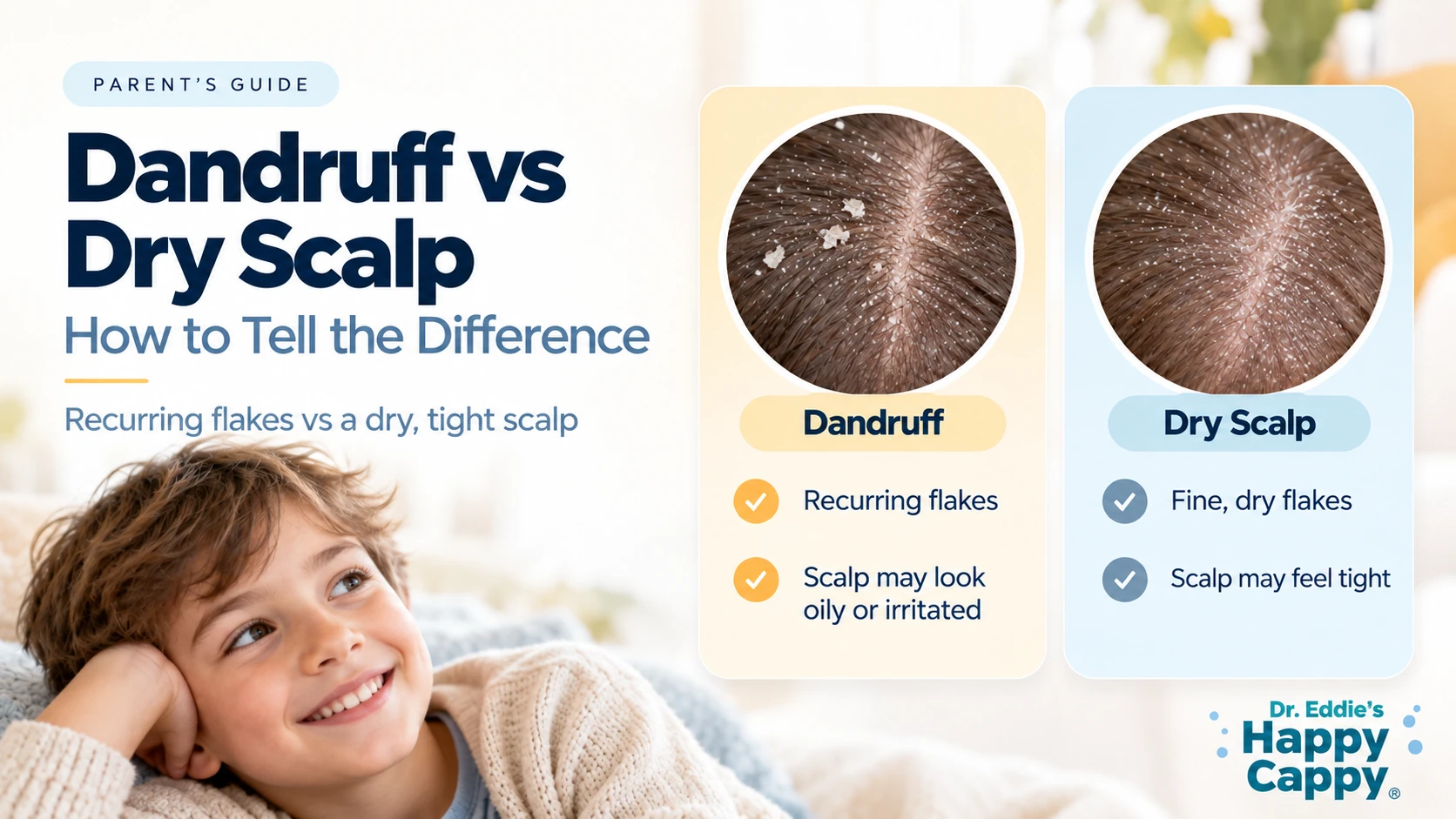
Quick answer: Dandruff and dry scalp can both cause flakes and itching, but they are not the same. Dandruff is commonly associated with seborrheic dermatitis and often appears with an oily or irritated scalp and larger white or yellowish flakes. Dry scalp happens when the scalp loses moisture and tends to cause smaller, drier flakes and a tight or dry feeling. If the flaky scalp is on a baby, especially with greasy, adherent scales, see our cradle cap vs dry skin guide.
| Clue | Dandruff | Dry Scalp |
| Typical scalp feel | Often oily, irritated, or normal | Dry, tight, or rough |
| Flakes | Often larger; white to yellowish | Usually smaller, dry, white flakes |
| Itching | Common | Common |
| What is driving it? | Often related to seborrheic dermatitis, sebum, and the skin’s response to Malassezia yeast | Loss of moisture from the scalp; weather, washing habits, or irritating products may contribute |
| Best first step | Gentle cleansing; an anti-dandruff active may be needed | Gentle cleansing, less irritation, and restoring moisture |
Oiliness, flake size, irritation and triggers can help distinguish dandruff from a dry scalp. These clues guide the choice between dandruff treatment and gentler care for moisture loss.
Dandruff vs Dry Scalp: Key Differences
Dry scalp flakes vs dandruff symptoms are not one and the same.
The most useful difference is not simply "medical condition versus hydration." Dandruff is commonly considered a mild form of seborrheic dermatitis, while dry scalp describes moisture loss from the scalp. Because both can itch and flake, the pattern of oiliness, scale, redness, and triggers matters more than flakes alone.
The Mayo Clinic describes dandruff as a mild form of seborrheic dermatitis. Cleveland Clinic notes that dry scalp occurs when the scalp loses too much moisture. That distinction is helpful, but the two can overlap in appearance.
Dandruff commonly causes scalp flakes and itching. The scalp may also look oily or irritated. Seborrheic dermatitis is associated with sebum and the skin’s response to Malassezia, a yeast that normally lives on the skin; stress and seasonal changes can worsen symptoms in some people.
Dry scalp happens when the scalp loses too much moisture. Cold or low-humidity weather, frequent washing, hot water, and irritating or overly cleansing hair products can contribute. Some people with dry scalp also notice dryness elsewhere on the body.
Surfactants are cleansing ingredients that help water lift oil and debris from the scalp and hair. Some cleansing systems are stronger than others, which is why the overall formula matters when a scalp is already dry or sensitive.
SLS and SLES are two common sulfate surfactants. Sulfates are not automatically a problem for everyone, but a strong cleansing formula can leave a sensitive or already-dry scalp feeling tighter or more irritated. If dryness is the main issue, favor gentle cleansing and avoid over-washing or very hot water.
Dandruff vs Dry Scalp vs Psoriasis, Eczema, and Cradle Cap
Flaking alone is not enough to identify the cause. When comparing dandruff with dry scalp, psoriasis, eczema, or cradle cap, look at the age of the person, whether the scalp is oily or dry, how thick the scale is, how much inflammation or itching is present, and whether similar patches appear elsewhere on the body.
- Psoriasis: Scalp psoriasis is a chronic inflammatory condition that often causes thicker, more clearly defined plaques with silvery scale. It can extend beyond the hairline and may also appear on other parts of the body.
- Eczema: Eczema can make the scalp dry, itchy, and inflamed, and it often appears with eczema-prone skin elsewhere. Contact dermatitis from a hair product can also mimic a dry, flaky scalp.
- Cradle cap: Cradle cap is infantile seborrheic dermatitis, not simply "severe dandruff." It typically causes thicker, more adherent white or yellow scales and is often not very itchy. If you are comparing a baby’s flaky scalp with simple dryness, see our dedicated cradle cap vs dry skin guide.
Dry Scalp and Cradle Cap in Babies and Toddlers
Dry scalp in a newborn or toddler is not automatically cradle cap. Simple dryness tends to cause fine flakes and dry-feeling skin. Cradle cap typically causes attached, greasy white or yellow scales and usually causes little discomfort. Dry, itchy, inflamed patches may instead reflect eczema or a reaction to a product.
For babies, see our cradle cap vs dry skin comparison. If your toddler has persistent scalp flakes, our toddler cradle cap guide explains the possibilities and when to ask a pediatrician for an assessment.
Care for Dandruff and Dry Scalp
Treatment depends on which problem you are treating. If dryness is the main issue, focus on gentle cleansing and restoring moisture. If dandruff or seborrheic dermatitis is driving the flakes, an anti-dandruff active may be needed. Fragrance can irritate a sensitive scalp or trigger contact dermatitis in some people.
Potential irritants and contact allergens vary from person to person. Fragrance, MCI/MI preservatives, certain topical antibiotics, lanolin, and balsam of Peru are among the ingredients that can trigger contact dermatitis in susceptible people.
No single product is right for every flaky scalp. The goal is to match the routine to the cause: treat dandruff or seborrheic dermatitis with an appropriate anti-dandruff active, while a truly dry scalp needs gentle cleansing and moisture support.
For dandruff or seborrheic dermatitis, Happy Cappy Medicated Shampoo & Body Wash contains pyrithione zinc 0.95% for relief of associated flaking, scaling and itching. Use it according to the Drug Facts label. For simple dryness, Daily Shampoo & Body Wash provides gentle, nonmedicated cleansing; Moisturizing Cream supports dry skin where it can be applied comfortably.
If you are trying to identify a flaky scalp in a baby, use our Cradle Cap vs Dry Skin guide for the baby-specific comparison. For product options matched to dandruff, seborrheic dermatitis, or simple dryness, you can also shop Happy Cappy.