

Baby skin care does not need a long list of products. A few gentle habits can handle everyday messes while helping dry or sensitive skin stay comfortable.
Quick answer: Clean your baby gently, moisturize dry skin, change diapers promptly, and protect them from sun and overheating. Most newborns need only two or three baths a week. A baby with eczema may need a more specific bathing and moisturizing plan from their clinician.1,2,3
A simple baby skin care routine
Start with what your baby's skin needs today. A little milk on the chin calls for gentle cleanup. A dry patch may need moisturizer. A rash that hurts, spreads, or keeps returning needs a closer look.
Gentle, brief baths
For a newborn, two or three baths a week are usually enough when the diaper area is cleaned at each change. Use sponge baths until the umbilical cord stump has fallen off and the area has healed. Choose lukewarm water and a mild, fragrance-free cleanser, and avoid scrubbing.1
Gather supplies before you start and keep a hand on your baby. Never leave a baby alone in the bath, even briefly. Between baths, gently clean areas that get dirty, including skin folds where milk or drool collects.1
If your baby has eczema, follow their care plan. Keep baths short, generally five to ten minutes, and moisturize afterward. Bathing frequency can be adjusted to the baby's skin and the clinician's advice.2
Moisturizing dry areas after bathing
Pat the skin gently and apply a fragrance-free cream or ointment while it is still slightly damp. For eczema-prone skin, moisturizing twice daily, or more often when needed, helps relieve dryness. Moisturizer supports skin care but may not control an inflamed eczema flare by itself.2
You do not need to coat every bump with cream. Newborn acne needs different care from a rough, dry patch. If pimples and dryness overlap, ask your pediatrician which areas need moisturizer. Heavy or oily products can worsen some baby breakouts.5
Protection for the diaper area
Change wet or soiled diapers promptly. Clean gently with water and a soft cloth, then pat dry. Avoid repeated wiping or scrubbing, especially when the skin is already irritated.3
“I never recommend zinc oxide creams for newborns. They can be so sticky that parents may rub repeatedly to remove all the white residue. That friction can strip the delicate outer layer of skin, damage the skin barrier, and lead to erosions, or raw areas. Repeated wiping can worsen the damage.”
Dr. Eddie Valenzuela, MD, FAAP
For newborns, Dr. Eddie recommends a layer of plain, unscented 100% petroleum jelly to help protect the diaper area.
Avoid baby powder, which can be inhaled.3
Comfortable everyday contact
Choose soft clothing that does not rub irritated areas. For babies with eczema, fragrance-free laundry detergent and comfortable temperatures can help reduce irritation. Keep fingernails short and smooth so scratching does less damage.8,9
Sun and heat protection for baby skin
Shade, lightweight protective clothing, and a brimmed hat are your first tools. Keep babies younger than six months out of direct sunlight. If shade and clothing cannot protect a small exposed area, the American Academy of Pediatrics allows a small amount of sunscreen there.6
For older babies, use broad-spectrum sunscreen on exposed skin and reapply every two hours and after swimming, sweating, or towel drying. Choose SPF 30 or higher. Sunscreen works alongside shade and clothing; it does not make prolonged heat or sun exposure safe.6,10
Choosing baby skin care products
A practical starting kit is a gentle cleanser, a moisturizer for dry skin, and a diaper barrier. Add other products for a specific need instead of treating every change in the skin with something new.
- Choose fragrance-free products. This is especially helpful when caring for eczema-prone skin.2
- Match the product to its job. A body moisturizer, diaper paste, sunscreen, and medicated wash serve different purposes.
- Read beyond front-label claims. “Natural,” “organic,” and “hypoallergenic” do not guarantee that a product will suit your baby. The FDA advises consumers not to assume a hypoallergenic cosmetic cannot cause an allergic reaction.4
- Watch how the skin responds. Stop a product that seems to worsen a rash and ask your pediatrician about the next step.
Care when a rash is already present
Everyday care is a foundation, but different rashes need different decisions. These guides can help you understand the next step:
- Small newborn pimples: Our baby acne guide explains gentle care. Most newborn acne settles on its own. Do not add acne medicine or an antifungal wash routinely without your clinician's advice. New acne starting after six weeks deserves an assessment.5
- Dry, itchy patches: See the eczema guide for care beyond moisturizing. The baby acne vs. eczema comparison explains why the distinction matters.2,5
- Scalp scales: The cradle cap guide covers scalp-specific care. Avoid picking at scales.
Skin changes that need your pediatrician
Call if a rash is painful, blistering, oozing, crusting, spreading, or making your baby uncomfortable. A diaper rash that worsens or does not improve after two or three days also needs advice. Seek prompt medical care for a rash with fever or a baby who seems unwell, especially a young infant.3,7
Breathing difficulty, sudden swelling of the lips or tongue, or a baby who is unusually drowsy or hard to wake requires emergency care.7
A gentle cleansing and moisturizing routine
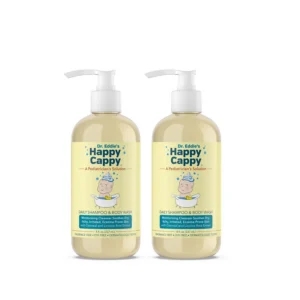
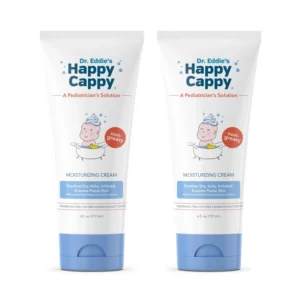
Happy Cappy Daily Shampoo & Body Wash provides fragrance-free cleansing for dry, sensitive, eczema-prone skin. Happy Cappy Moisturizing Cream moisturizes dry skin and helps reduce moisture loss.
Use each where it fits your baby's needs. These daily skin care steps can sit alongside a pediatrician's treatment plan when a rash needs medical care.