

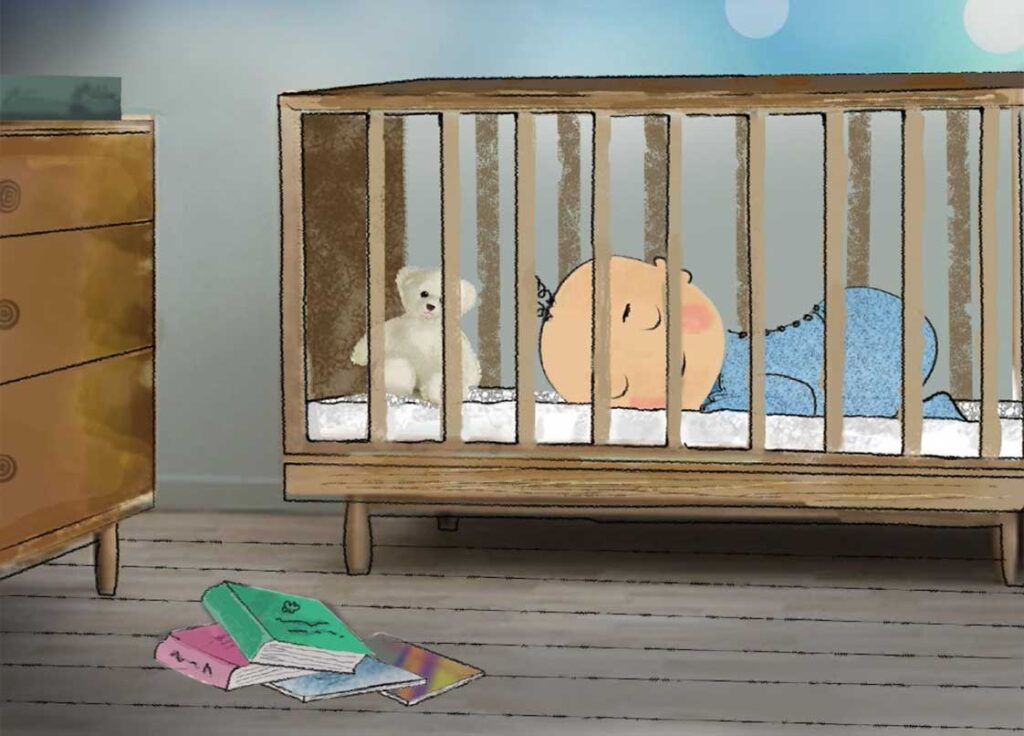
The myth: Once a baby sleeps well, every difficult night means a parent has undone the progress.
A little reassurance: Sleep can change as babies grow or their circumstances change. Check your baby's needs and return to manageable routines without treating a rough night as a failure.
In this story
Sleep regression describes a change in sleep
Parents often use “sleep regression” for a period of more waking, harder settling, or disrupted naps after sleep had become easier. It describes a pattern; it does not explain the cause by itself.
There is no calendar that every baby follows, and no guarantee that a rough patch ends on a particular day. Feeding needs, illness, discomfort, separation, travel, and changes in the daily routine can all deserve a look.
Sleep changes around four months
There is no fixed number of days or weeks that applies to every baby. The American Academy of Pediatrics explains that sleep cycles become more regular around four months, but sleep needs and patterns vary. A rough patch may settle gradually, and disrupted nights can recur. Keep a manageable bedtime routine and respond to feeding and comfort needs. If sleep changes persist, worsen, or come with poor feeding, pain or illness, talk with your pediatrician instead of waiting for a promised end date.
Check what has changed
Before assuming this is a phase to wait out, consider whether your baby seems unwell, is feeding differently, or is uncomfortable. A new sleep problem accompanied by other symptoms deserves attention.
Think about practical changes, too: a later nap, a different caregiver, or a busy week. It can help to write down a few days of sleep and feeding to discuss with your pediatrician. Keep it useful; you do not need to become your household's overnight statistician.
Choose a response that fits your baby
Young babies need responsive care and often need night feeds. An older baby who briefly stirs may sometimes settle again, but hunger, pain, illness, and distress still need a response.
For an older infant, your pediatrician can help you decide whether gradual changes to settling make sense. Discuss feeding and growth before dropping feeds. Structured sleep approaches are options, not a requirement for every family, and a timed crying schedule does not belong in generic advice for babies of all ages.
Comforting your child is not automatically a mistake. The goal is a plan that suits your child's needs and that you can carry out consistently.
Keep the familiar parts simple
Return to a calm bedtime sequence, keep overnight care quiet, and make space for daytime play and rest. Adjust as needed rather than adding more and more steps in search of a guaranteed result.
Use a separate, firm, flat sleep space. Place your baby down on their back, with the crib clear of pillows, toys, and loose bedding. If you are getting drowsy while holding your baby, move them to that space.
Sleep changes that need medical assessment
Ask for help with persistent or worsening changes, poor feeding or growth, signs of pain, or frequent loud snoring. Breathing pauses or difficulty breathing need urgent assessment. Seek prompt medical care for fever in a baby younger than 3 months.
Also call when your own exhaustion is making it hard to cope safely. You and your baby both deserve support.
A small thing to try tonight
Agree on a realistic plan with anyone sharing the care: who responds first, what your baby may need, and how each adult gets some rest. Keep the plan flexible enough to respond to the night you actually have.