


Quick Answer
Dry skin on the face often improves with gentle washing, a fragrance-free moisturizer and a break from irritating products. Apply moisturizer after washing and when the skin feels dry. A recurring, painful or spreading rash may be eczema, contact dermatitis or another condition that needs its own treatment.
Part of the Dry Skin guide.
Dryness on facial skin
Dry skin on the face can feel tight after washing, look flaky around the cheeks or mouth, and sting when a familiar product touches it. The surface may feel rough before much is visible. On darker skin, fine scaling can look gray or ashy; inflamed areas may look darker, purple or gray rather than bright red.
Dry skin, also called xerosis, develops when the outer skin layer does not retain enough water. Facial dryness can be temporary, but a persistent itchy, painful or spreading rash may have another cause. Moisturizing is useful support, while the pattern of the rash helps determine whether something more is needed.1
Common reasons the face becomes dry
Cold weather, low indoor humidity, hot water and repeated washing can leave the face feeling tight. Skin may also become drier with age. Think about what has changed recently: a new cleanser, a more frequent washing routine, an acne treatment or a product that repeatedly stings can be a useful clue.2
Irritation from skin-care products
Retinoids, benzoyl peroxide and exfoliating acids can irritate or dry the skin, especially when several are used together. Fragrances and other ingredients can also cause a reaction. If a nonprescription cosmetic consistently worsens the skin, stop using it. If you suspect a prescribed medicine, contact the prescriber about adjusting the routine rather than stopping the medicine on your own.
A recurring rash needs its own explanation
Eczema can cause itchy, inflamed facial patches. Contact dermatitis may follow exposure to a cleanser, cosmetic or another substance touching the skin. Scaling around the eyebrows, nose or ears can occur with seborrheic dermatitis, including on skin that feels oily. These conditions can overlap in appearance, so location alone does not establish a diagnosis.3, 4
Some medical conditions and medicines contribute to persistent dryness. A dry face by itself does not identify thyroid disease, kidney disease or a nutrient deficiency. Bring accompanying symptoms and medication changes to a clinician's attention instead of assuming that supplements or extra water will resolve the problem.
Oily and combination skin can also need moisture
An oily forehead and dry cheeks can occur together. Oil on the surface does not mean every part of the face is comfortably hydrated, and acne treatment can leave oily skin feeling dry or sensitive. Choose a moisturizer according to how your skin responds. If you are prone to clogged pores, look for a product labeled noncomedogenic or oil-free, and avoid adding a heavy layer over the entire face simply because one area feels dry.5
A gentle routine for a dry face
A useful routine removes everyday dirt and makeup, replaces lost moisture and avoids adding more irritation. It can be simple enough to repeat even when the skin is uncomfortable.
Wash without scrubbing
Use lukewarm water, your fingertips and a gentle, fragrance-free cleanser. Rinse well and pat with a soft towel. Avoid scrubbing brushes, rough washcloths and extra washes just to remove visible flakes. The American Academy of Dermatology advises limiting face washing to twice daily and after heavy sweating; adjust the cleanser and routine if washing leaves persistent tightness.6
Apply moisturizer while skin is slightly damp
Smooth on a fragrance-free cream after washing and reapply when the skin feels dry. Creams and ointments often provide more lasting moisture protection than a thin lotion, although the texture should suit the area and your preferences. A small amount of plain petroleum jelly can protect dry lips. Keep products out of the eyes and use a light touch around them.7
Moisturizing damp skin helps retain water already at the surface. You do not need several serums or a complicated “skin flooding” routine to do this. The moisturizer guide explains the different textures and the roles of ingredients such as glycerin, petrolatum and ceramides.
Give irritated skin a break from exfoliation
Flaking is not a reason to scrub harder. Exfoliation can worsen dryness and irritation, especially alongside retinoids or acne medicines. Avoid exfoliating inflamed, cracked or broken skin. There is no twice-weekly schedule that every dry face needs; let the skin settle and ask a dermatologist if you are unsure whether exfoliation belongs in your routine.8
Choose products by tolerance and function
Fragrance-free is a useful starting point. A “natural,” “hypoallergenic” or long free-from label cannot guarantee that a formula will suit you. Preservatives are not automatically harmful, and removing every ingredient category can make shopping harder without solving the reaction. Stop a cosmetic that repeatedly burns or worsens the rash and seek advice if the problem persists.9
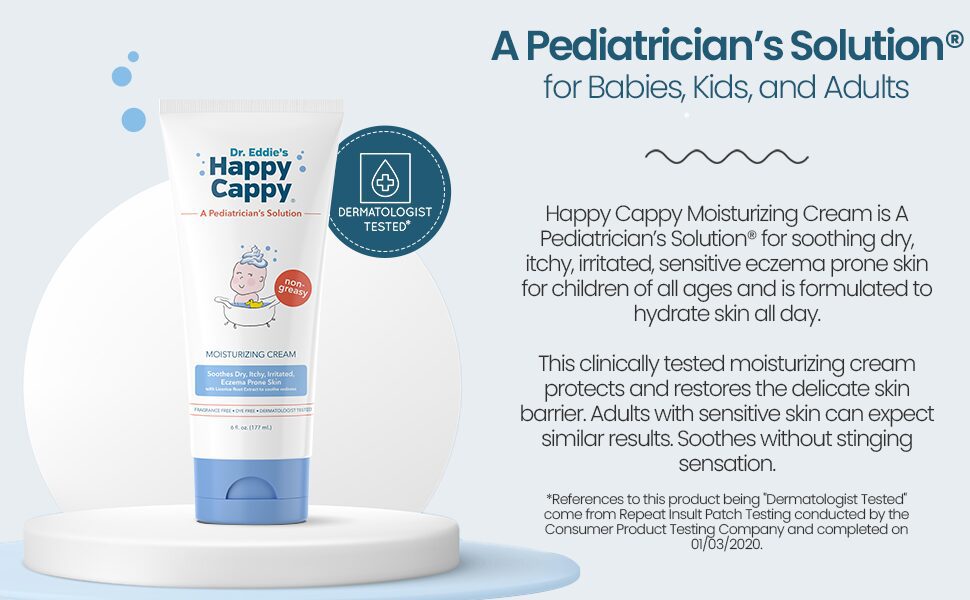
Happy Cappy Daily Shampoo & Body Wash provides fragrance-free cleansing for dry, sensitive skin. Follow rinsing with Happy Cappy Moisturizing Cream: glycerin attracts moisture and petrolatum helps limit water loss. Use the cream after washing and as needed. These products support daily skin care; a recurring facial rash may also need treatment for its cause.
Protecting the face between washes
Seek shade and use sun-protective clothing. Adults and older children can add a tolerated broad-spectrum, water-resistant sunscreen with SPF 30 or higher. In dry indoor air, a properly cleaned humidifier may help with comfort. Keep moisturizing when the skin improves rather than waiting for tightness to return.7
Makeup is not automatically off-limits on intact dry skin, but do not use it to cover a worsening rash. Let moisturizer absorb before applying a tolerated cosmetic, remove it gently, and pause products on cracked, weeping or actively irritated areas. Avoid experimenting with strong acids, essential oils or adult anti-aging products on a baby's face.
Facial symptoms that need medical advice
Arrange an assessment if a consistent gentle routine is not helping, products repeatedly sting, or the skin is persistently inflamed, cracked or intensely itchy. A rash around the eyes deserves particular care. Do not start a facial steroid simply because the skin looks dry; the diagnosis, strength and duration matter.
Seek prompt care for increasing pain, warmth, swelling, pus, fever or a rapidly worsening rash. A spot that repeatedly crusts, bleeds or fails to heal should also be examined. Bring a list of products and medicines, and describe where the dryness began and what makes it better or worse. Those details are more useful than repeatedly switching to a stronger moisturizer.