

Quick answer: Irritated skin around the eyes often comes from a product reaction, rubbing or eczema. Start with a simpler skin-care routine, gentle cleansing and a small amount of a tolerated fragrance-free moisturizer on the external skin. Eye pain, light sensitivity, vision changes or a hot, painful swollen eyelid need prompt medical assessment.
Skin irritation and eye symptoms need different care
Skin irritation around the eyes can cause dryness, itching, burning, flaking or puffiness. Because eyelid skin is thin, an exposure that barely bothers the rest of the face may make this area uncomfortable. The first useful distinction is whether the problem is in the surrounding skin, the edge of the eyelid or the eye itself.1
Your symptoms guide the next step
Redness can be less obvious on darker skin, where swelling, scale and a change from the usual skin color may be easier to notice.
This guide covers the initial response to irritation around the eyes. A persistent eyelid rash belongs in the more detailed eyelid dermatitis guide, while discrete bumps have their own bumps under the eyes guide.
Symptoms that need prompt assessment
Seek urgent care for eye pain, a change in vision, sensitivity to light, difficulty opening the eye or an eyelid that becomes hot, painful and swollen. Fever, feeling unwell or rapidly worsening swelling adds to the concern. These symptoms should not be managed as simple dry skin.2,3
A red eye in someone who wears contact lenses also needs urgent assessment. Remove the lenses and leave them out until an eye professional advises otherwise. Sudden swelling with trouble breathing or swelling of the lips or tongue is an emergency.4
Common causes of irritation around the eyes
Contact dermatitis from products or transferred ingredients
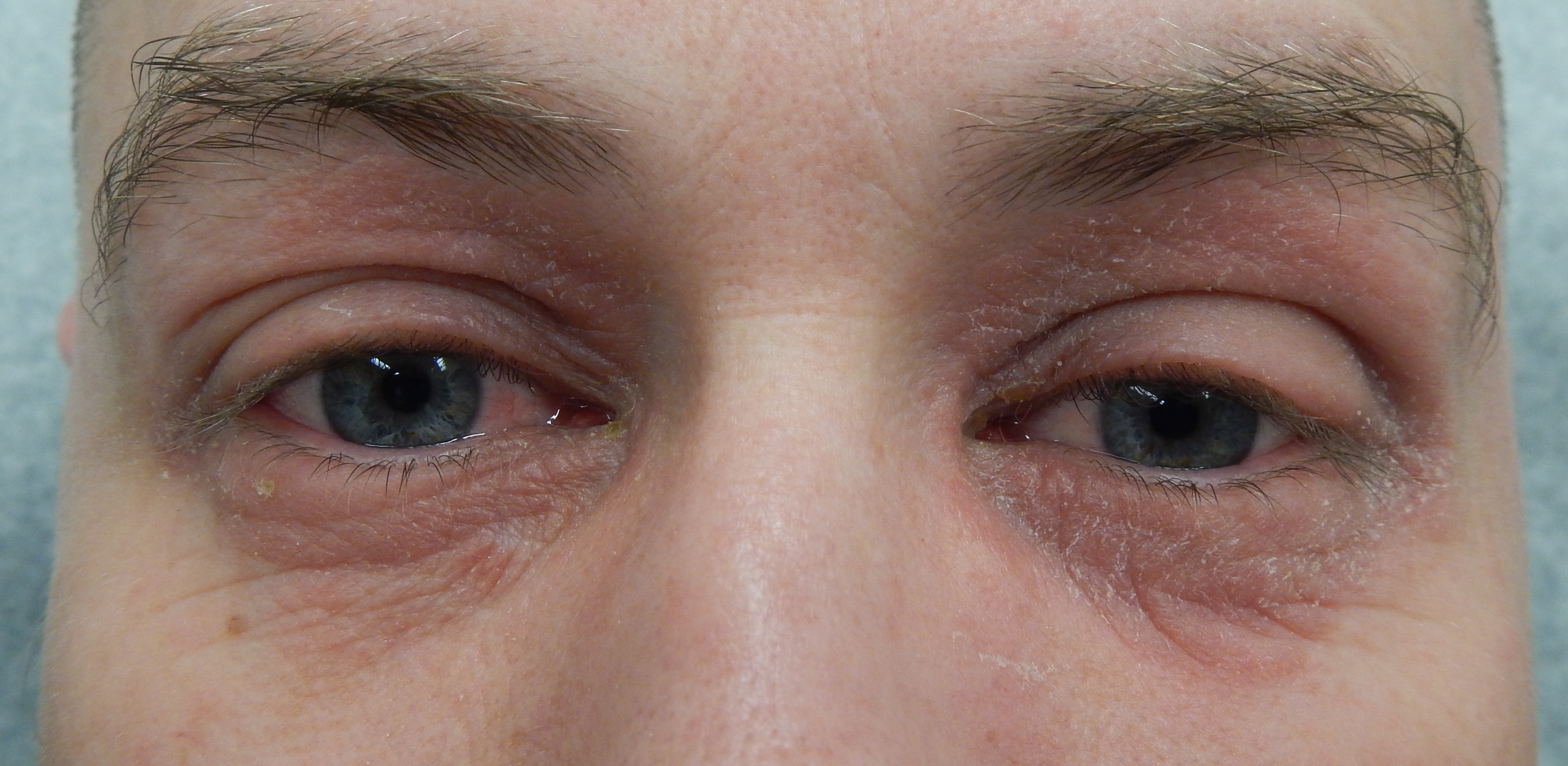
Irritant contact dermatitis occurs when an exposure damages the skin barrier. Cleansers, repeated rubbing and products that sting can contribute. Allergic contact dermatitis is different: the immune system reacts to a particular ingredient, sometimes after a product has been used for months without trouble.1
The trigger does not have to be an eye cream. Nail products, hair dye, fragrance and other substances can reach the eyelids from the hands or hair. A delayed reaction can make the connection difficult to spot. Keep a short record of products and timing, and bring the ingredient lists to an appointment if the rash returns. Patch testing can help identify a suspected contact allergy.1
View larger photograph
Eczema and a vulnerable skin barrier
Atopic dermatitis can affect the skin around the eyes, especially in someone who also has itchy, dry patches elsewhere. Moisturizing helps the skin barrier, but an active flare may need prescription treatment. Eczema around the eyes can also occur alongside an eye problem, so pain or vision symptoms deserve their own assessment.3,5
For a baby or toddler, avoid assuming that every periocular rash is eczema. A persistent rash, crusting, discharge or noticeable swelling should be checked. The aim is to identify the problem before adding medicines to an especially sensitive area.
Inflammation at the eyelid margin
Blepharitis affects the eyelid edges and can cause crusting around the lashes, irritation and gritty or burning eyes. A stye more often appears as a localized tender lump. These patterns need different care from a dry patch below the eye, even though all may be described as “eyelid irritation.”6
A clinician may recommend warm compresses and eyelid hygiene for blepharitis or a stye. That does not make heat the right treatment for every swollen or itchy eyelid. A cool compress may feel better on irritated skin, while a hot, painful swelling needs assessment rather than repeated home treatment.
For a closer comparison of localized eyelid lumps, see the clinical stye photograph and other eyelid-bump examples.
Gentle steps that can soothe irritated skin
A simpler routine reduces exposure to likely triggers
Pause new or irritating nonprescription cosmetics and skin-care products around the affected area. Leave off eye makeup while the skin is inflamed, and avoid scrubs, exfoliating acids, retinoids and essential oils there. More products make it harder to identify a trigger and create more opportunities for stinging.1
Do not stop prescribed eye drops on your own. If a prescription product seems connected to the reaction, contact its prescriber for advice about a suitable alternative. A product labeled “natural” or “hypoallergenic” can still irritate or cause an allergy; your own response matters more than that wording.
Gentle cleansing avoids further irritation
Use clean hands and lukewarm water. If a cleanser is needed, choose a mild fragrance-free product that you already tolerate and rinse it away carefully. Pat the skin dry instead of rubbing. There is no need to scrub away every flake, and pulling at attached skin can make the area sore.1
A clean, cool damp cloth held lightly against closed eyelids may help an itchy or irritated patch feel more comfortable. Keep the compress comfortably cool, not icy, and stop if it worsens symptoms. Use a fresh cloth and avoid sharing eye makeup or towels when an infection is possible.
Moisturizer supports dry external skin
Apply a small amount of a bland, fragrance-free moisturizer to the dry external skin, keeping it away from the eye surface and lash margin. A simple ointment, such as plain petrolatum, is one option for some people. Stop a product that stings or makes the rash worse. Moisturizer supports the barrier; it does not treat every cause of eyelid swelling.5
Happy Cappy Moisturizing Cream is a fragrance-free option for dry, sensitive skin. Glycerin attracts moisture and petrolatum helps retain it. Its role here is to moisturize the external skin around the eyes, if tolerated; it does not treat an eye infection or replace prescribed treatment for an active rash. The eyelid cream guide explains moisturizer selection and application in more detail.
Less rubbing helps irritated skin recover
Avoid rubbing, even when the skin itches. Sunglasses and a hat can reduce exposure to wind and sun, and a tolerated sunscreen on exposed surrounding skin can help with sun protection. Keep sunscreen out of the eyes and follow its directions. Normal hydration and sleep support general well-being, but extra water, “detox” routines or a fixed eight-glass target do not replace treatment of dermatitis.
Persistent irritation needs a cause-specific plan
Arrange an appointment when symptoms keep returning, interfere with daily activities or do not improve after removing suspected triggers and simplifying care. Bring your cosmetics, skin-care products and eye-drop list. An examination can distinguish dermatitis from eyelid-margin inflammation, infection and other conditions that need different treatment.1,2,6
For a diagnosed eyelid dermatitis flare, a clinician may prescribe a brief course of a mild topical steroid or a nonsteroid medicine such as a topical calcineurin inhibitor. The choice, location and duration matter. Do not borrow a strong eczema cream or use steroid cream around the eyes without instructions for that area. Our eyelid dermatitis treatment guide explains these choices in more detail.1
The most useful first step is often a smaller, more consistent routine. Gentle care can make irritated skin more comfortable while you identify its trigger, and paying attention to eye symptoms helps you recognize when skin care alone is not enough.