
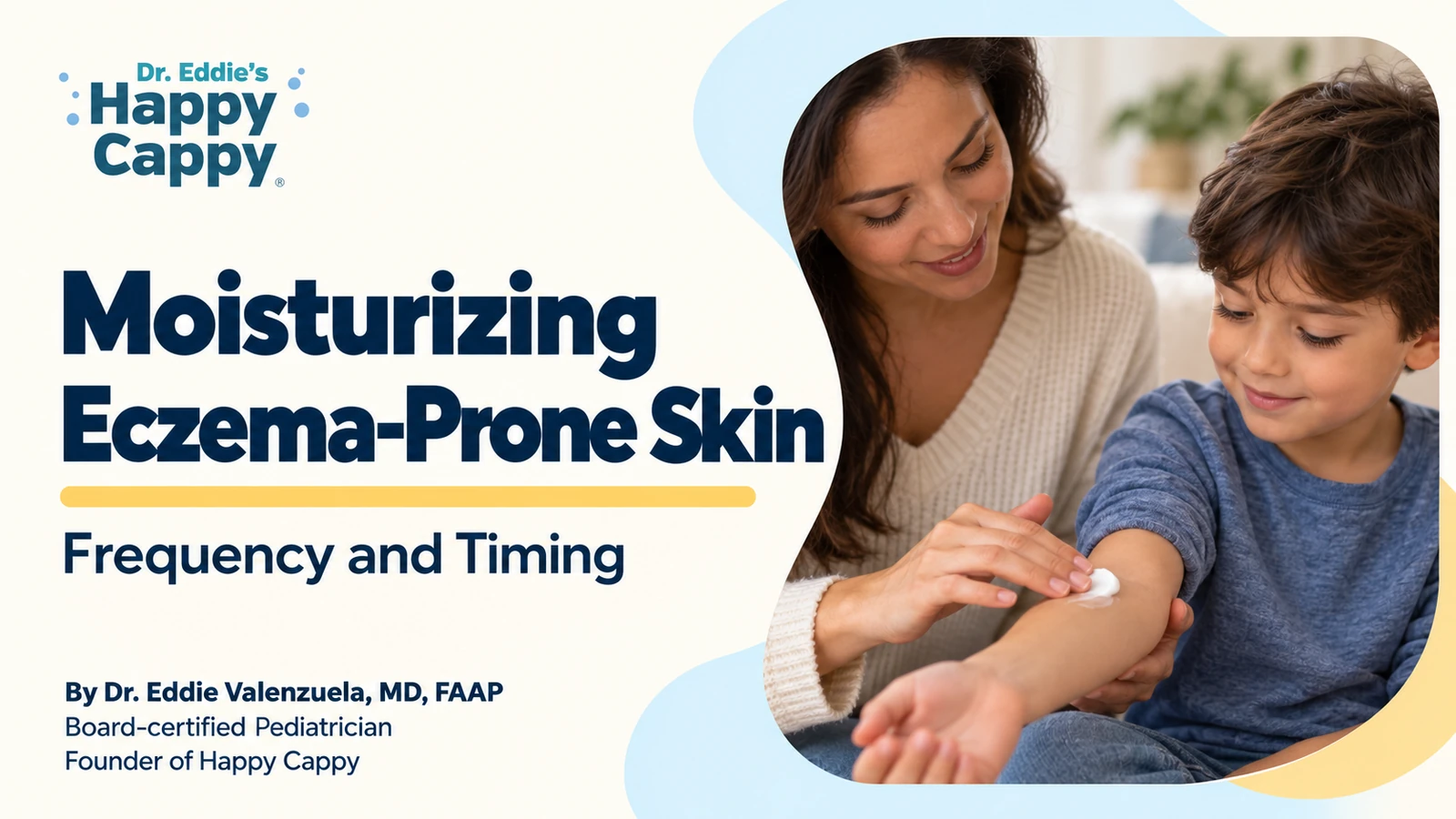
Quick answer: Moisturize eczema-prone skin at least twice a day, including after bathing, and reapply when it feels dry or tight. Hands may need moisturizer after each wash. Keep up the routine when eczema looks better and during warm weather.1,2,3
Morning and evening are useful reminders, but your skin does not run on a fixed schedule. Washing, dry air, and irritation can create a need for extra applications between those two daily steps.
Moisturize at least twice daily and reapply as needed
Think of twice a day as a starting point, rather than a limit. The NHS recommends continuing regular moisturizing even when eczema improves. Its emollient guidance notes that some people benefit from three or four applications daily.2,3
- Morning: Moisturize as part of getting dressed, especially areas that tend to become dry.
- After a bath or shower: Gently pat dry and moisturize while the skin is still damp.1
- After handwashing: Reapply to your hands once they are gently dried.3
- Evening: Check the skin again and moisturize before bed.
- Between these times: Add moisturizer when skin feels dry or tight. A flare may require both extra skin care and medication from your treatment plan.2,3
If your evening bath already includes moisturizer, that can be your evening application. There is no need to repeat the same step immediately just to satisfy a schedule.
For babies with eczema, regular moisturizing also belongs in the daily routine. Smooth a fragrance-free cream or ointment onto dry areas after bathing and reapply as needed. Follow the child’s treatment plan for any medicated products.1
Moisturizer goes on promptly after bathing
- Use lukewarm water and keep baths or showers brief. Choose a mild, fragrance-free cleanser where needed, and avoid scrubbing.1
- Pat the skin gently, leaving it slightly damp.
- Apply moisturizer promptly, ideally within about three minutes, to help hold that water in the skin.4
- Smooth it over the areas that need it rather than rubbing vigorously. Follow your clinician's directions for any prescription treatment, including application order and spacing. Do not mix prescription medicine into moisturizer unless instructed.3
Keep the moisturizer within reach before bathing. For a child's routine, having it ready alongside pajamas can make the step easier to remember.
A comfortable formula supports consistent use
Choose a fragrance-free cream or ointment that you can use consistently. Our guide to choosing an eczema moisturizer compares textures and ingredients.1,3
Comfort matters because it affects whether you keep using the product. Dr. Eddie Valenzuela, a pediatrician in Houston, has described the practical problem this way:
“I hate greasy creams myself. When I can’t twist a knob on my lamp or open a door handle without having it slip in my hands, or find myself hesitating to put clothes on over moisturized skin, that’s a problem.”
A moisturizer does not have to leave you feeling slippery all day to have a place in your routine. Choose a formula that keeps your skin comfortable and that you can apply consistently. You may prefer different textures at different times.
If a product repeatedly burns, stings, causes bumps, or makes the rash worse, stop using it and ask a clinician or pharmacist for an alternative. Applying more of an irritating product is not the answer.3
Moisturizing continues in summer and after swimming
Humid weather and sweat do not replace moisturizer. Heat and perspiration can also trigger itching, so pay attention to how the skin feels rather than assuming summer means it needs less care.5
Dr. Eddie's advice remains straightforward: “If you have eczema, your skin will still need to be moisturized at least twice a day.”
After sweating or swimming, rinse gently, pat dry, and reapply moisturizer. Keep cool and use comfortable, loose clothing. If a heavy ointment feels unpleasant in the heat, a fragrance-free cream may make the routine easier to maintain.3,5
Keep regular moisturizing and sun protection in your routine: sunscreen has the separate job of protecting against UV exposure. Our guide to eczema and sun exposure covers sun protection in more detail.6
When moisturizer is not enough
Moisturizer helps dryness, but active eczema can need treatment for inflammation as well. Keep using prescribed medication as directed rather than replacing it with extra cream. Contact your clinician if itching keeps you awake, the skin remains inflamed, or your usual plan is no longer helping.1,2
Get prompt medical advice for rapidly worsening eczema, painful or hot skin, blisters, pus, crusting, fever, or feeling unwell. These can be signs of infection.2
For a broader look at triggers and treatment, visit our eczema guide.
Daily cleansing and moisturizing have complementary roles
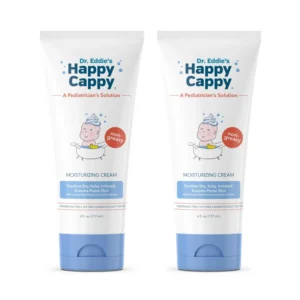
Happy Cappy Moisturizing Cream supports daily moisturizing with glycerin to attract water and petrolatum to help retain it. Licorice root extract helps calm the look of redness. The fragrance-free, fast-absorbing, non-greasy formula is designed for dry, sensitive, eczema-prone skin.
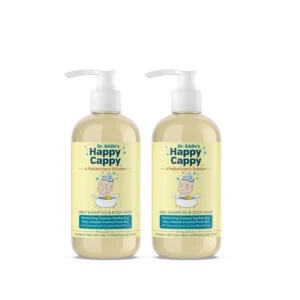
Happy Cappy Daily Shampoo & Body Wash provides gentle, fragrance-free, soap-free cleansing without SLS or SLES. Glycerin, panthenol, and hyaluronic acid help support moisture during cleansing. Follow washing with your leave-on moisturizer.
Use moisturizer regularly, adjust to your skin's needs, and keep medical treatment in the plan when a flare needs more help.