

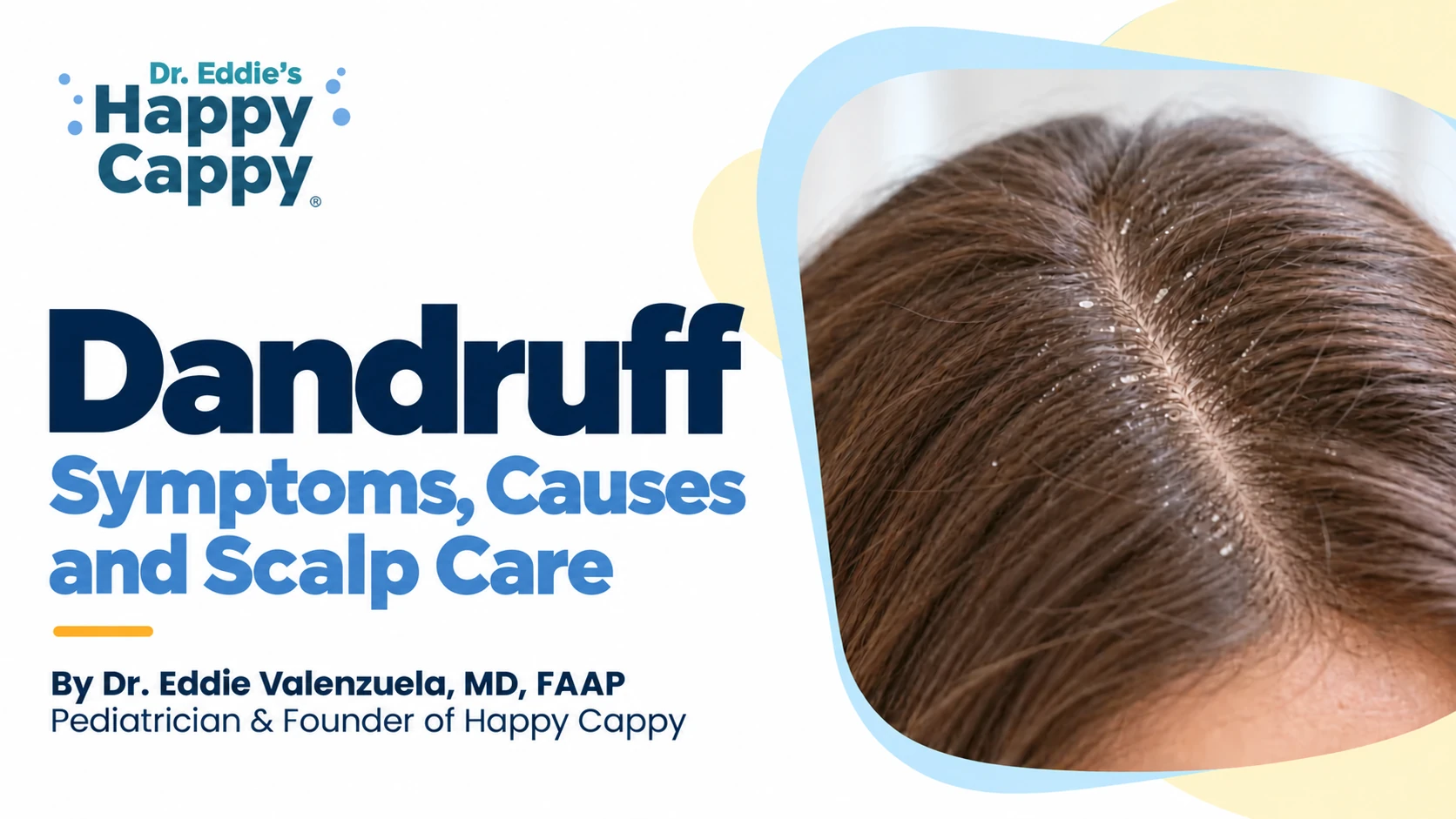
Quick answer: Dandruff is common scalp flaking, sometimes with itching. It is linked to the way your scalp responds to natural oils and Malassezia yeast, and it is not contagious. A medicated dandruff shampoo, used as directed, can control symptoms. Persistent pain, marked inflammation, swelling or patchy hair loss needs medical assessment.1, 2
White flakes on your clothes can be frustrating, but dandruff is manageable. This guide explains what it is, what the flakes can look like, and how to choose a scalp-care routine for adults, teenagers and children. It also explains when flaking may be caused by something else, so you can recognize when a different approach is needed.
Dandruff Explained
Dandruff, also called pityriasis capitis, is shedding of visible skin flakes from the scalp. In dermatology it is generally considered the mild, relatively uninflamed end of the seborrheic dermatitis spectrum. It may itch even when the scalp does not look red.1
People also use “dandruff” loosely for almost any flaky scalp. Dry skin, contact dermatitis, psoriasis and other conditions can look similar, so flakes alone do not establish the cause. Recognizing the pattern helps you choose care that addresses the problem instead of repeatedly treating the wrong condition.
Dandruff is not a sign that you are dirty, and you cannot catch it from someone else. Regular care can control it, although symptoms may return.2 That can be reassuring when someone in the household develops flakes. The dandruff and contagion guide explains why ordinary contact does not spread dandruff and which lookalikes deserve a different approach.
Dandruff Signs and Appearance
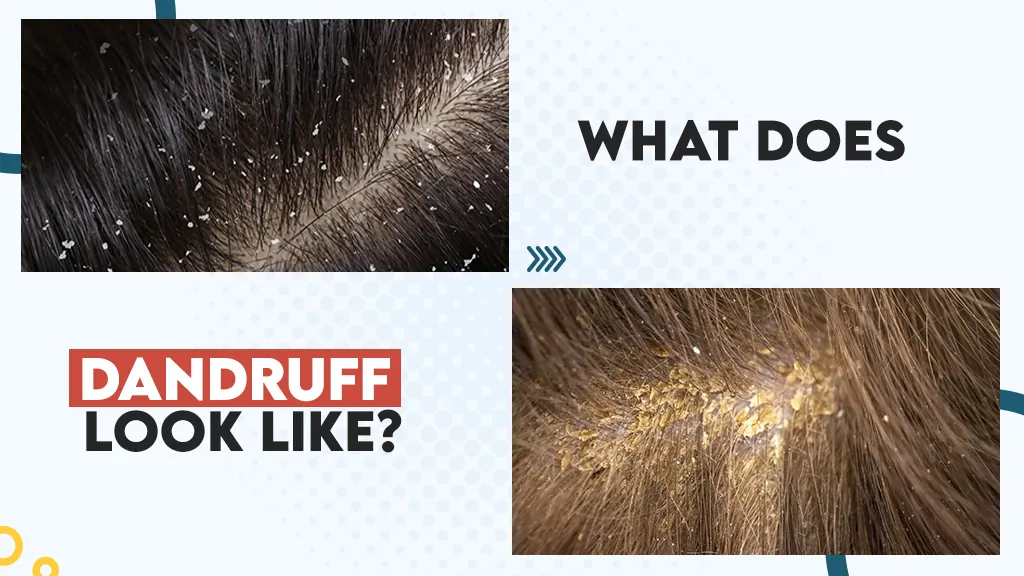
Dandruff flakes are commonly white or off-white; oilier scale may look yellowish. They may be fine and loose or collect in larger flakes, appearing in your hair or on your clothing. Some people have an itchy scalp that feels oily, while others describe a dry feeling. Color and flake size vary, so neither reliably separates dandruff from every other scalp condition.1, 2
Marked inflammation, thick crusting or soreness is less typical of simple dandruff. Inflammation can be harder to recognize as redness on darker skin, and seborrheic dermatitis may leave lighter or darker patches. Flaking around the eyebrows, nose or beard can also suggest seborrheic dermatitis rather than a problem confined to the scalp.1
Oily Flakes and Dry-Looking Flakes
“Oily dandruff” and “dry dandruff” describe how flakes look, but they are not dependable diagnoses. Fine white flakes can occur with dandruff or a dry scalp. A tight, dry feeling after washing may point toward moisture loss or irritation, while greasy white or yellow scale with inflammation fits more closely with seborrheic dermatitis.
Compare the whole pattern: itch, inflammation, products used and response to treatment. Our oily versus dry-looking dandruff comparison develops those clues without treating appearance as a diagnosis.
Scalp Odor and Other Changes
Dandruff flakes do not necessarily have an odor. Oil, sweat and product buildup can accompany a smelly scalp, but odor alone does not diagnose dandruff. A persistent strong smell, especially with pain, oozing or sores, deserves an examination.
A clinician usually assesses the scalp directly. A home microscope cannot reliably identify the cause of flaking, and finding ordinary skin yeast does not establish a diagnosis.1 For a closer visual explanation, see dandruff flakes under a microscope. Bumps or pimples are another reason to look beyond the flakes; our dandruff and acne article explains why the two can coexist without flakes directly causing ordinary acne.
Causes of Dandruff
Dandruff involves scalp oils, normally present yeast and individual skin sensitivity. The exact balance differs from person to person; it is not simply a matter of having too much oil or too little moisture.
Scalp Oil and Personal Triggers
Sebum is the natural oil produced by your skin. It helps create the environment in which dandruff develops, but an oily scalp does not guarantee dandruff. Factors that can influence symptoms include:
- Hormonal changes around puberty and young adulthood.
- An oily scalp and buildup between washes.
- Stress, which can worsen symptoms in some people.
- Cold, dry weather or other personal seasonal triggers.
- Certain health conditions that increase susceptibility, although most people with seborrheic dermatitis are otherwise healthy.
Dryness and reactions to hair products may cause additional flaking or a different rash. A new itchy, burning reaction after a product should not automatically be labeled dandruff.
If your flakes seem to worsen during demanding periods, the stress and dandruff guide explains how stress can fit into the pattern without being the only explanation.
Malassezia Yeast
Malassezia is a group of yeasts that normally live on skin. Their interaction with scalp oils and a susceptible skin barrier contributes to dandruff and seborrheic dermatitis.
This does not mean the scalp is contaminated. Malassezia is found on healthy skin too; its presence alone is not a diagnosis.
The Malassezia scalp guide follows that interaction from normal skin yeast to the symptoms it can help produce, with a separate explanation of scalp ringworm.
Scalp Sensitivity and Skin-Cell Shedding
As yeast breaks down skin oils, fatty acids such as oleic acid can contribute to irritation in susceptible skin. Changes in the skin barrier and cell shedding help produce visible flakes.3
This helps explain why simply stripping away all scalp oil is not the goal. The skin’s response matters, and an overly aggressive routine may add irritation to the original flaking.1, 3
Dandruff in Children, Teenagers and Babies
Puberty can make dandruff more noticeable as hormonal changes increase scalp oil production. Older children and teenagers may develop the same white flakes and itch seen in adults.
Infants more often have cradle cap, the infant form of seborrheic dermatitis. This typically produces adherent greasy scales and is often not itchy. It should not be confused with every dry or itchy baby scalp.
Cradle cap is usually harmless and is not contagious. Gentle washing and careful loosening of softened scales can help; do not pick or scrape them. NHS cradle-cap guidance explains age-appropriate care.7
In a child with patchy hair loss, broken hairs, pain or a spreading rash, ask a pediatrician to check for another cause, including scalp ringworm, before continuing to treat it as dandruff. Scalp ringworm generally needs prescription antifungal medicine taken by mouth; dandruff shampoo alone is not sufficient.10
For a baby-specific routine, see the cradle cap guide. For older children and teenagers, the shampoo guidance below applies with attention to the product label and their scalp’s tolerance.
Dandruff Care Principles
Dandruff care aims to control flakes and itch, then maintain improvement. A wash can lift loose flakes before the recurring scalp problem is controlled. A cleaner-looking scalp after one shower does not mean the tendency to flake has disappeared. Match the routine to the cause of the flaking, your hair type and the product’s directions.
Choosing a Medicated Shampoo
Common active ingredients include pyrithione zinc, ketoconazole, selenium sulfide, salicylic acid, coal tar and sulfur. They do different jobs, so two products labeled “dandruff shampoo” may not work in quite the same way. The active ingredient, the complete formula and how comfortably you can use it all matter.1, 4
| Active ingredient | Main role in scalp care |
|---|---|
| Pyrithione zinc, ketoconazole and selenium sulfide | Help control the yeast-related component of dandruff. Directions, strengths and age suitability vary by product. |
| Salicylic acid and sulfur | Help loosen or remove scale. Some formulations combine ingredients with different roles. |
| Coal tar | Helps reduce excessive scaling. It can discolor light or treated hair and increase sun sensitivity. |
Follow the bottle’s instructions for how much to use, how often to wash and whether to leave the lather on before rinsing. A contact time listed for one shampoo should not be carried over to another. If a suitable product is not helping, a pharmacist or clinician can help choose a different active or check whether the diagnosis needs revisiting.4
Gentle Washing and Scale Removal
Massage with your fingertips, rinse well and avoid picking attached scales. A brush is optional; the Beanie Brush has short silicone bristles better suited to a baby’s scalp or short hair than to longer, thicker hair. It should lift loose flakes without scraping or hurting the skin.
A Routine That Fits Your Hair
An oily scalp with fine or straight hair may need more frequent washing. Curly, coily or coarse hair may need a less frequent schedule and attention to dryness. Apply dandruff treatment to the scalp and use conditioner as needed for the hair lengths. Follow the particular product’s treatment schedule rather than assuming that every wash needs medication.4
Our washing-frequency guide explains how those decisions fit together. If your scalp improves but symptoms return when treatment stops, maintenance care may be useful. Consistent control is a more realistic goal than a guaranteed permanent cure.
Reducing Irritation and Checking Progress
Use lukewarm water, keep styling products light and favor fragrance-free products if fragrance bothers your skin. Hot water is not the sole cause of dandruff, but it can dry or irritate the scalp. Changing one part of the routine at a time makes it easier to identify what helps.5
Give the chosen treatment a fair trial according to its directions. If symptoms persist despite consistent use, seek an assessment; worsening symptoms call for earlier advice. For practical checkpoints, read Dandruff Shampoo Results: A Realistic Timeline. Our coconut-oil review addresses that specific remedy.
Happy Cappy Medicated Shampoo for Dandruff
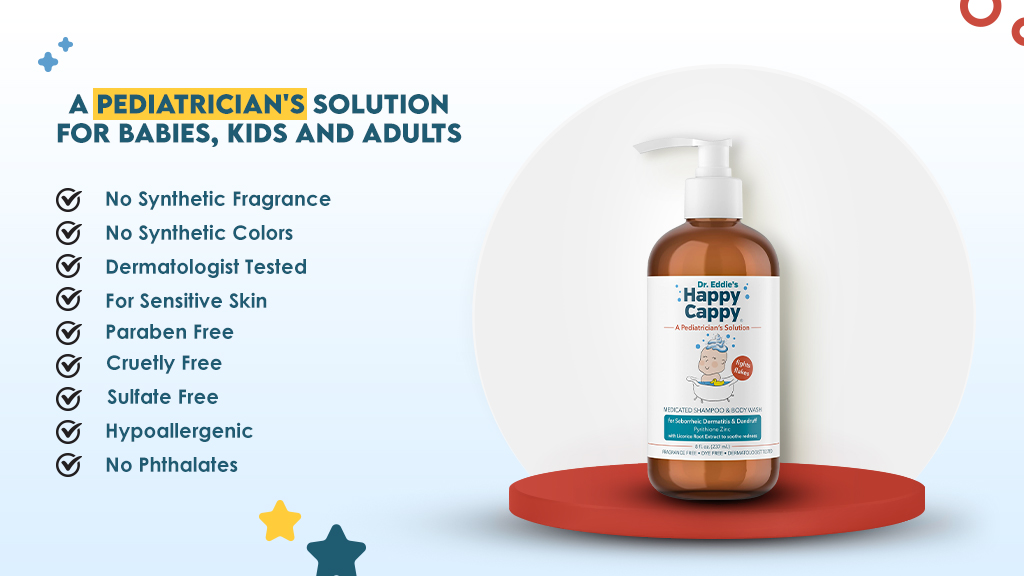
Happy Cappy Medicated Shampoo & Body Wash is a medicated cleanser for flaking, scaling and itching associated with dandruff and seborrheic dermatitis. It combines 0.95% pyrithione zinc with a gentle, fragrance-free, dye-free formula designed for sensitive skin.6
Its ingredients serve complementary roles. Glycerin and panthenol, also called provitamin B5, help hold moisture; apple fruit extract helps condition the skin and hair; and licorice-derived dipotassium glycyrrhizate helps soothe the appearance of redness. These support comfortable cleansing while pyrithione zinc supplies the dandruff treatment.
The dermatologist-tested, hypoallergenic formula is made without SLS/SLES, fragrance, dyes, parabens or phthalates. It uses mild non-soap cleansing ingredients instead of SLS/SLES. The pyrithione zinc ingredient guide explains how the active and the rest of the formula work together.
For gentle cleansing between medicated washes when needed, Happy Cappy Daily Shampoo & Body Wash is another option. It does not contain the medicated dandruff active and does not replace dandruff treatment.
Using Happy Cappy Medicated Shampoo
Use these directions for Happy Cappy Medicated Shampoo & Body Wash. A soft brush is optional for lifting scales that are already loose:
- Wet the hair and scalp thoroughly.
- Gently massage the wash onto the scalp and affected skin with your fingertips.
- Rinse thoroughly.
For best results, use at least twice a week or as directed by a doctor. Keep it away from the eyes; rinse the eyes with water if contact occurs. Stop use and seek advice if the condition worsens or does not improve with regular use as directed. Ask a doctor before using it for seborrheic dermatitis that covers a large area of the body.6
Choosing a Dandruff Shampoo for Kids
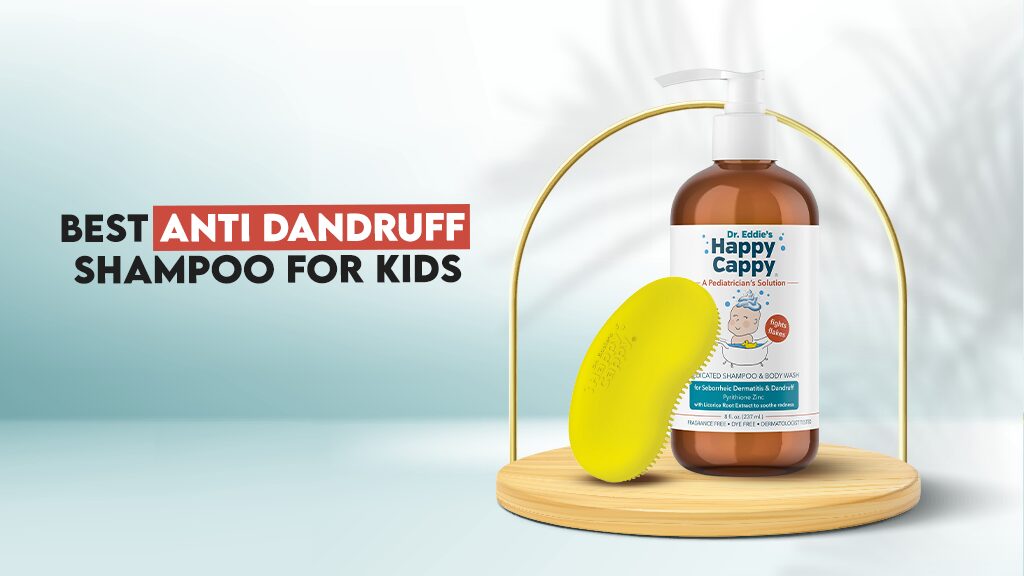
For children, look for a medicated active that treats dandruff, clear use directions and a formula they tolerate. Strong fragrance and an uncomfortable wash can make a consistent routine harder to maintain.
Dr. Eddie developed Happy Cappy to pair effective dandruff care with a gentle wash for young, sensitive scalps. The same Medicated formula can be used by older children, teenagers and adults.
An adult-branded shampoo is not automatically harmful, and “natural” is not a guarantee of suitability. Compare the actual formula and label rather than relying on the front-of-bottle wording.
Keep shampoo out of the eyes, rinse well, and ask a pediatrician about persistent flaking or an uncertain diagnosis. Choose the Medicated wash for dandruff or seborrheic dermatitis; the Daily wash serves a different cleansing role.
Related Scalp and Skin Concerns
Flaking in the Beard and Eyebrows
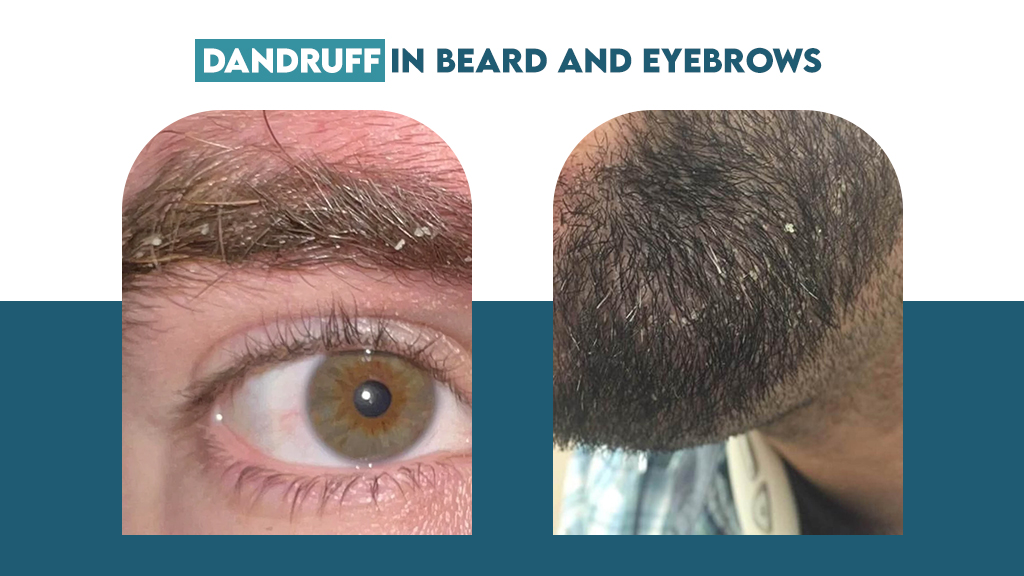
Flakes in the beard, eyebrows or around the nose are often described as facial dandruff. Seborrheic dermatitis can affect these oil-rich areas, although dry skin and contact dermatitis are other possibilities. Having both scalp and facial symptoms does not mean dandruff is spreading as a contagious infection.1, 5
Happy Cappy Medicated can also be used as a face and body wash according to its directions. Keep it out of the eyes and do not apply it to the eyelid margin. Persistent eyelid symptoms need specific advice. See dandruff on eyebrows for more detail.
Dandruff and Hair Loss
Simple dandruff does not usually cause permanent hair loss. Repeated scratching can damage skin and hair, but visible thinning should not automatically be blamed on flakes.
Bald patches, broken hairs or significant shedding need assessment for another cause. Our dandruff and hair loss guide explains the distinction.
Dandruff on a Bald Scalp
Dandruff develops in scalp skin, so it can occur even when someone has little or no hair. Shaving removes hair above the skin but leaves the oil glands and scalp underneath. A bald or shaved scalp can therefore still develop flakes or seborrheic dermatitis.
See Dandruff on Bald and Shaved Scalps for care considerations.
Dandruff and an Itchy Scalp
Itch can accompany dandruff, but itching without flakes may have another explanation. Treatment works best when it addresses the cause.
Other possibilities include:
- Contact irritation or allergy.
- Eczema.
- Head lice.
- Scalp ringworm.
- Scalp psoriasis.
If itching continues, see the itchy scalp guide and arrange an assessment.
Dandruff and Scalp Lookalikes
Several conditions can cause scalp flakes, and they sometimes overlap. The patterns below help explain why a treatment that works for one person may not suit another. An examination is useful when the symptoms do not fit simple dandruff.
Seborrheic Dermatitis vs Dandruff
Dandruff is the relatively uninflamed scalp form; seborrheic dermatitis may involve more obvious inflammation and other oil-rich areas. Features can include:
- Greasy patches of white or yellow scale.
- Redness or other color changes, with variable itching.
The eyebrows, sides of the nose, beard, ears and chest may be involved. Treatment depends on the location and severity; a scalp product should not automatically be used around the eyes.
The seborrheic dermatitis guide covers the broader condition, including prescription care when inflammation or symptoms beyond the scalp require it.1
Dandruff vs Dry Scalp
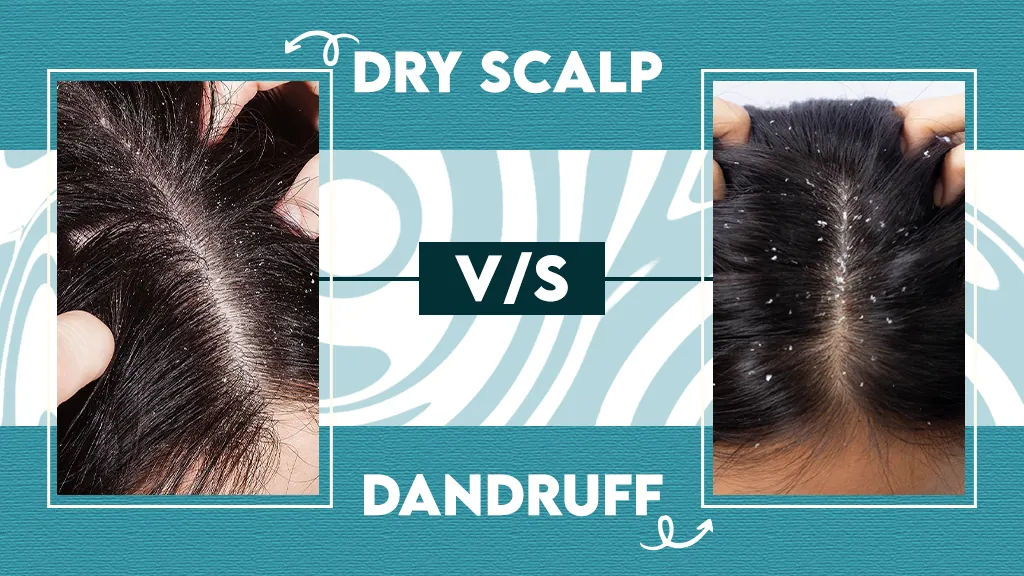
Dandruff and dry scalp can overlap. These clues help explain the distinction, but flake size and color alone cannot diagnose either one.
| Feature | Dandruff | Dry Scalp |
|---|---|---|
| Cause | Interaction of Malassezia, scalp oils and skin susceptibility. | Reduced moisture and an irritated or disrupted skin barrier. |
| Flakes | White or yellowish; fine and loose or greasy and adherent. | Often fine and dry-looking; appearance can overlap with dandruff. |
| Common Triggers | Puberty, oily scalp, stress and seasonal changes may contribute. | Dry air, over-washing or irritating products may contribute. |
| Treatment | Medicated dandruff shampoo used as directed. | Gentle cleansing, avoiding irritants and adjusting moisture care. |
Dandruff vs Lice
Loose dandruff flakes can resemble lice eggs, but nits are firmly attached to hair shafts. Finding a live crawling louse is the best evidence of an active infestation.
Head lice spread mainly through direct hair-to-hair contact. Dandruff does not. The CDC’s head-lice guide and our lice eggs versus dandruff comparison explain what to look for.8
| Feature | Dandruff | Lice |
|---|---|---|
| Cause | Interaction of Malassezia, scalp oils and skin susceptibility. | Infestation by a small parasite insect (head lice) |
| Appearance | Loose white or yellowish skin flakes. | Firmly attached eggs; live lice are small crawling insects. |
| Itching | Variable; sometimes little itch. | Variable; itching may be absent early on. |
| Location | Scalp skin and flakes in hair or on clothing. | Scalp and hair shafts, often behind the ears or near the neck. |
| Contagious | No | Yes |
| Treatment | Regular use of medicated anti-dandruff shampoo | An age-appropriate lice treatment, used as directed, with combing when advised. |
Dandruff vs Scalp Psoriasis
Scalp psoriasis and dandruff can both flake and itch. Psoriasis more often forms well-defined, thickened patches that may extend beyond the hairline.
Psoriasis is an immune-mediated condition. The scalp pattern and findings elsewhere on the body help a clinician distinguish it from seborrheic dermatitis; sometimes features overlap.9
The comparison below is a guide, not a diagnosis:
| Feature | Dandruff | Psoriasis |
|---|---|---|
| Cause | Interaction of Malassezia, scalp oils and skin susceptibility. | An immune-mediated condition with faster skin-cell turnover. |
| Flakes | White or yellowish flakes of varying size. | Thicker scale over defined patches; often silvery on lighter skin. |
| Associated symptoms | Itching, flaking, and irritation | Itching, burning sensation, and soreness |
| Treatment | Use of an anti-dandruff shampoo | Treatment chosen for severity, such as medicated scalp products or prescription anti-inflammatory medicines. |
Common Dandruff Myths
Everyday advice about dandruff often mixes helpful habits with claims that go beyond the evidence. Keep the purpose of each step clear: gentle washing removes buildup, while a suitable medicated product treats the recurring problem.
| Myth | Fact |
|---|---|
| Every flaky scalp is dandruff. | Dryness, contact dermatitis, psoriasis and other conditions can also cause flakes. |
| Oil is a proven dandruff cure. | Oil may soften scale, but it does not replace established dandruff treatment. Its effect varies. |
| Everyone with dandruff should wash less. | A suitable washing routine reduces buildup; frequency depends on the product, scalp and hair type. |
| Dandruff only worsens in winter. | Cold, dry weather can contribute, but personal triggers and seasonal patterns differ. |
| Dandruff means poor hygiene. | It is not caused by being dirty. Regular washing can still make flakes less noticeable. |
| Drinking extra water treats dandruff. | Hydration supports general health, but extra water is not an established dandruff treatment and does not replace appropriate scalp care. |
When Scalp Flaking Needs Medical Assessment
Mild dandruff is usually harmless, but persistent symptoms deserve a closer look. Arrange an assessment if appropriate dandruff care is not helping, the itch is severe, or the rash involves your face or other areas. A clinician can check for seborrheic dermatitis, contact dermatitis, psoriasis or an infection and choose treatment for the actual cause.2, 4
Seek earlier care for pain, swelling, pus, oozing, bleeding, broken hairs or patchy hair loss, especially in a child. Do not keep treating an increasingly inflamed or painful scalp as routine dandruff. Scalp ringworm, for example, needs a different treatment approach.10
A Comfortable, Consistent Scalp-Care Routine
Dandruff is manageable, and a routine does not need to be complicated. Start with a suitable shampoo, use it as directed and keep the rest of your care gentle. Pay attention to how your scalp feels as well as how many flakes you see. When improvement is incomplete or the symptoms change, reassessing the cause is more useful than simply washing harder.
References
- DermNet. Seborrhoeic dermatitis.
- NHS. Dandruff.
- DeAngelis YM, et al. Three etiologic facets of dandruff and seborrheic dermatitis: Malassezia fungi, sebaceous lipids, and individual sensitivity. J Investig Dermatol Symp Proc. 2005;10(3):295–297.
- American Academy of Dermatology. How to treat dandruff.
- American Academy of Dermatology. Seborrheic dermatitis: Self-care.
- DailyMed, U.S. National Library of Medicine. Happy Cappy: pyrithione zinc 0.95% shampoo label.
- NHS. Cradle cap.
- Centers for Disease Control and Prevention. About Head Lice.
- American Academy of Dermatology. Scalp psoriasis: Symptoms.
- Centers for Disease Control and Prevention. Treatment of Ringworm.