

Quick answer: A child’s red neck may come from trapped moisture and rubbing in the folds, drool, heat rash, eczema or a contact reaction. A persistently wet, sore fold can also develop a yeast or bacterial infection. Gently clean and dry the area, reduce friction, and seek care for worsening pain, spreading redness, drainage, fever or a child who seems unwell.
The neck is an easy place for moisture to collect. Milk, drool and sweat can sit beneath a baby’s chin, while collars, sports gear and hair products can irritate an older child’s skin. Before choosing a cream, look at whether the rash sits deep in a moist fold or on dry, exposed skin. That difference changes what is likely to help.
Look beyond bright redness. On darker skin, irritation may look purple, gray or darker brown. Warmth, tenderness, cracks and changes in texture may be easier to notice than the color itself.
Moisture and friction in a baby’s neck folds
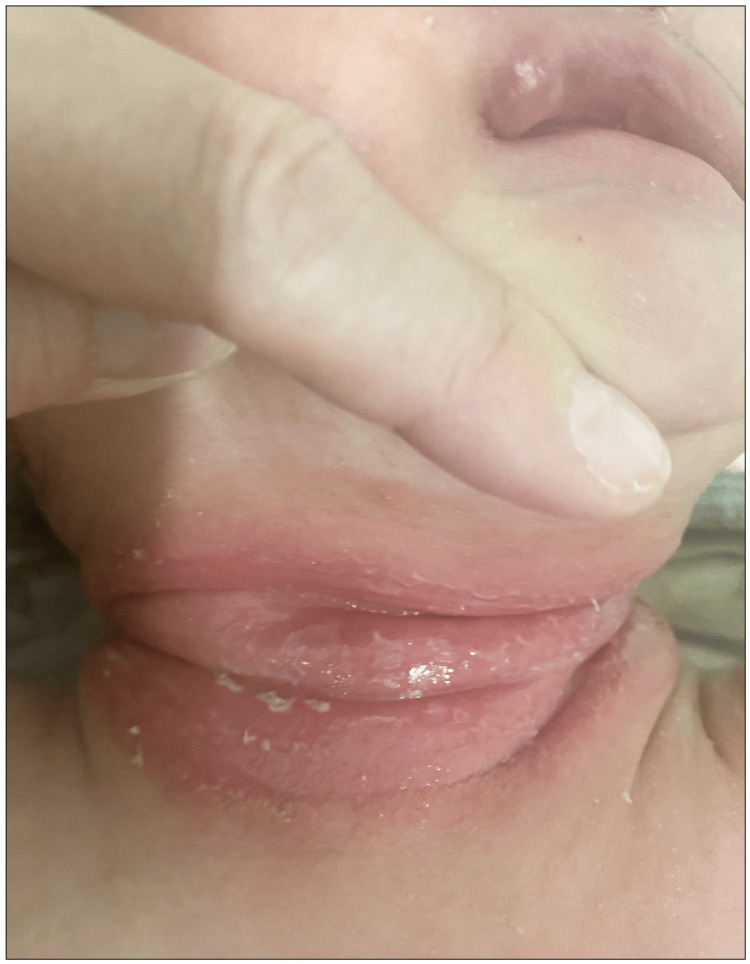
Intertrigo is the term for inflammation where skin surfaces rub together. In a baby’s neck, moisture can soften the skin and friction can make it sore. A fold may look shiny or raw, with a small crack at its deepest point. Intertrigo describes the location and process; it does not automatically mean that the baby has a yeast infection.1
Drool can contribute even before teeth appear. When saliva repeatedly wets the neck and dries, it can irritate the skin, and a damp bib may keep the area wet. The practical goal is to remove the moisture gently and prevent it from staying against the skin, not to scrub the fold until it looks perfectly clean.2
Clues that infection may be involved
Candida can grow in a warm, damp fold. A persistently inflamed moist patch with small separate bumps or pustules near its edge can suggest candidal intertrigo. Those “satellite” spots are a clue, not proof. A clinician may examine the area or obtain a sample when the diagnosis is uncertain, and treatment may include an appropriate topical antifungal.3
Increasing tenderness, pus, crusting, an unpleasant odor or spreading warmth can suggest bacterial involvement. Do not assume that a wet, worsening neck rash will settle with moisturizer or a dandruff wash. Seek an assessment so treatment addresses the actual cause.1
Other patterns on a child’s neck
Heat rash after overheating
Heat rash, or miliaria, can cause a crop of tiny prickly bumps where sweat ducts become blocked. The neck and upper body are common places in children. Cooling the environment, removing excess clothing and reducing sweating usually help. Heavy layers of ointment can trap heat, so repeatedly coating heat-rash bumps is not the same as moisturizing dry eczema.4
Dry, itchy eczema
Atopic eczema tends to itch and recur, with dry or rough patches rather than only a wet crease. Older children may also have eczema in the elbow or knee folds. Scratching and sweating can aggravate the neck, and an active flare may need prescribed anti-inflammatory treatment as well as moisture care. The neck eczema article covers that established diagnosis and its treatment.5
Seborrheic dermatitis with scalp scale
Infant seborrheic dermatitis can affect folds as well as the scalp. Scale around the scalp, eyebrows or ears may provide context, and itching is often less prominent than in atopic eczema. Cradle cap refers to the scalp form; it is not the name for every red baby rash. A sore neck crease without a clear diagnosis should not automatically receive a scalp-treatment routine.6
See the seborrheic dermatitis page for its characteristic distribution and care. A scalp brush is for loosening scalp scale, not for rubbing inflamed neck folds.
A reaction to something touching the neck
A rash beneath a necklace, collar or sports strap, or where shampoo runs over the skin, raises the possibility of contact dermatitis. Sweat and rubbing can irritate without an allergy. An allergic reaction may instead involve a particular material or ingredient and can appear after a delay. Stop a suspected nonessential product and note the contact pattern.7
Hives or a rash with an illness
Hives are raised welts that usually change over hours rather than staying as one raw crease. Each spot generally fades within a day, although others may appear. Viral infections are one possible trigger; hives alone do not prove an allergy. Ask the pediatrician about age-appropriate treatment rather than using an adult antihistamine dose.8
A rash that extends beyond the neck together with fever, sore throat or a child who feels ill needs a different assessment from simple chafing. Tell the clinician about the illness, new medicines and possible exposures. The location on the neck by itself cannot identify a virus or bacterial infection.
Gentle care matched to wet or dry skin
For a mild, localized rash in an otherwise well child, begin with a few small changes and watch the trend. Improvement means the skin is becoming more comfortable and less inflamed, not simply that it looks drier for an hour.
- Clean gently. Remove milk or drool with lukewarm water and a soft cloth. Use a mild, fragrance-free cleanser only when needed, rinse it off and avoid rubbing.
- Dry the folds. Pat carefully and allow brief air-drying while the baby is awake and supervised. Change damp clothing and bibs. Remove bibs for sleep.
- Reduce heat and friction. Use comfortable, breathable clothing and check that collars or straps are not rubbing.
- Match moisture care to the skin. Apply a fragrance-free cream to dry patches. For drool irritation on intact external skin, a thin layer of plain petrolatum after cleaning and drying can reduce repeat contact. A persistently wet, weeping or worsening fold needs assessment rather than thick repeated product layers.
Avoid powders near a baby’s face because they can be inhaled, and avoid essential oils, alcohol wipes or harsh antiseptics on an irritated neck. Do not borrow a strong eczema steroid or a combination steroid-antifungal cream for a baby’s fold. Thin skin and skin folds need an age- and site-appropriate treatment plan.1, 11
If dryness is the main issue, Happy Cappy Daily Shampoo & Body Wash can provide gentle fragrance-free cleansing, and Happy Cappy Moisturizing Cream can moisturize dry, eczema-prone areas. The cream’s glycerin and petrolatum help attract and retain moisture. Neither product treats a Candida or bacterial infection.
Signs that call for pediatric care
Get urgent help for breathing difficulty, trouble swallowing with swelling or drooling, a rapidly spreading painful rash, marked neck swelling, or a child who is unusually sleepy or very unwell. A baby younger than three months with a rectal temperature of 100.4°F (38°C) or higher needs immediate medical assessment.9, 10
Contact the pediatrician promptly for pus, painful cracks, blisters, fever or spreading redness. Arrange a visit if the rash keeps returning or is not clearly improving with gentle care. A photograph before cleaning, plus notes about feeding, drool, sweating and new products, can help explain what has been happening.
The next step follows the pattern: keep a mildly chafed fold gently clean and dry, moisturize dry eczema-prone skin, and have a persistent wet or painful rash assessed. For redness elsewhere, the skin-redness article gives a broader comparison.