

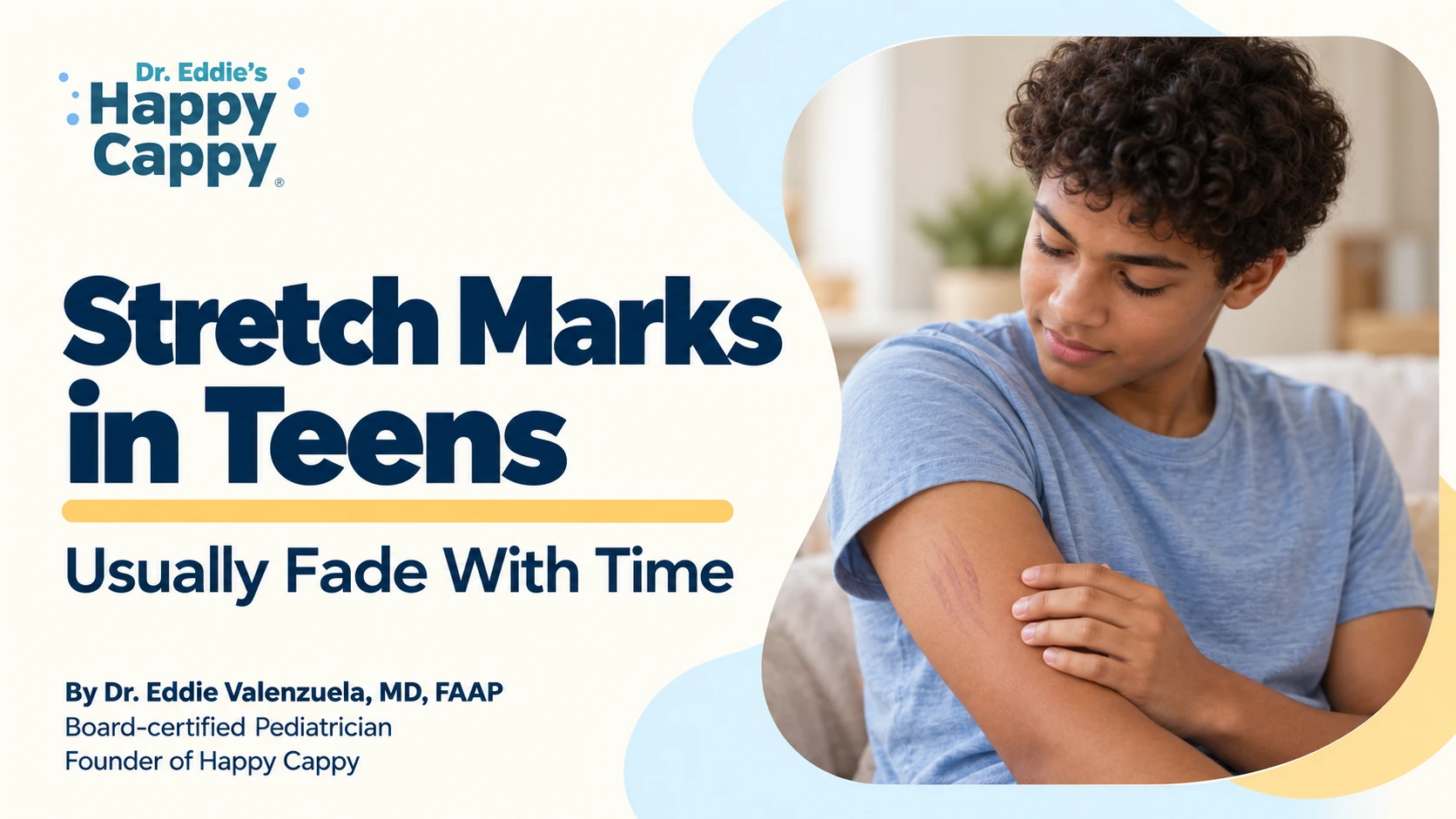
Quick answer: Stretch marks are lines of scarring that can develop as a teen grows during puberty. They often fade, although some lines remain visible. Moisturizers can ease dryness. Prescription tretinoin and certain procedures may improve appearance, but results vary and treatment is optional. A dermatologist can help assess whether treatment makes sense for an individual teen.1,2,3
A teenager may notice new lines on their thighs, hips or back and wonder whether something is wrong. Parents may want to know whether the marks will fade and whether treatment is worth considering. Understanding how stretch marks develop and what treatments can realistically accomplish helps families decide how to respond.
Growth spurts can cause stretch marks
Stretch marks, called striae, are narrow areas of scarring within the skin. Rapid growth can alter collagen and elastic fibers in the deeper skin layer. Hormones and inherited differences in the skin also influence who develops them. Puberty brings several of these factors together.1,2
Both boys and girls develop stretch marks. Common locations include the thighs, buttocks, hips and breasts. A teen can develop them during a height spurt without substantial weight gain. Having stretch marks does not, by itself, mean a teenager needs to lose weight.1,3
Lower back marks can follow growth spurts
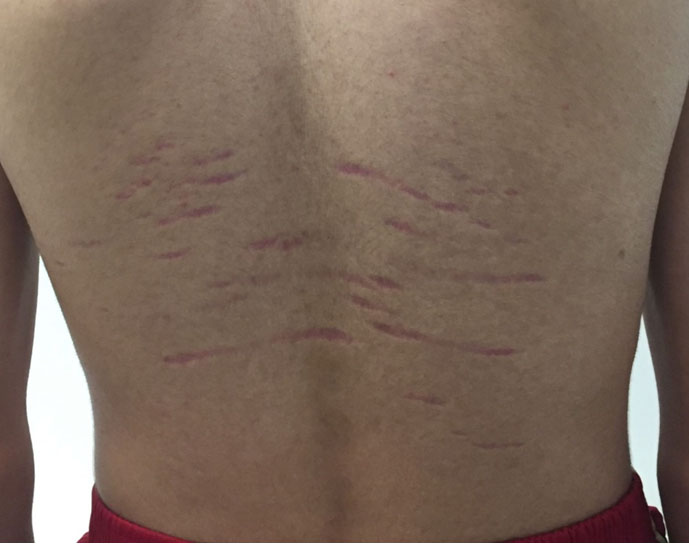
Horizontal lines across the lower back are a recognized pattern in adolescent boys. A small study linked this pattern with rapid growth, tall stature and a family history of stretch marks. When the examination and history are otherwise reassuring, these lines do not automatically call for laboratory testing.4
New stretch marks change as they mature
Fresh stretch marks can look pink, red, purple or brown, depending on skin tone. They may initially feel slightly raised or itchy. With time, the color generally fades and the lines become flatter or slightly indented. Mature marks may look pale, silvery or closer to the surrounding skin color.2,3
Fading happens gradually, and there is no dependable deadline for an individual teen. The lines can remain visible even after their color softens. Older, pale marks generally respond less to topical treatment than newer marks.2,7
Simple skin care can improve comfort
Moisturizer can ease dry skin
If the surrounding skin feels dry or itchy, try a plain, fragrance-free moisturizer after bathing. Gentle cleansing and moisturizing can help the skin feel comfortable, but they do not remove stretch marks.2,11 Our dry skin care guide covers cleansing and moisturizing in more detail.
Stretch mark creams have limited evidence
Cocoa butter, vitamin E and oils are frequently marketed for stretch marks, but good evidence that they reliably prevent or remove them is lacking. Some studies suggest benefit from topical hyaluronic acid on early marks, but that does not establish that every product containing it works.2
Prevention has limits during puberty
There is no reliable way to prevent every stretch mark during normal adolescent growth. Stretch marks are not a reason to restrict a growing teen's food intake. Parents can support regular meals and normal activity without making prevention another responsibility for their child.
Treatments may improve appearance
Choosing treatment means deciding whether a possible improvement is worth the irritation, expense or recovery involved. Studies differ in the kinds of marks treated and how improvement is measured, so no single option works predictably for everyone.1,7
Prescription tretinoin may help early marks
Tretinoin is a prescription retinoid. In a small randomized trial involving 22 people, six months of treatment improved early stretch marks compared with the inactive cream. Improvement meant less noticeable marks, not complete removal. This study does not establish a standard treatment plan for every adolescent.5
A dermatologist may consider tretinoin for selected teens after examining the skin. It can cause redness, peeling and irritation, and older pale marks are less likely to benefit. The strength and schedule need to suit the patient. Topical retinoids should not be used during pregnancy or while planning pregnancy.6,7
Procedures require individual assessment
Dermatologists sometimes use lasers or microneedling to reduce the visibility of stretch marks. These approaches aim to improve color or texture; they cannot promise completely clear skin. Several sessions may be needed, and cosmetic studies in adults do not establish the same benefit for a growing teenager.2,7,8,9
Treatment selection should account for age, skin tone and the type of marks. Ask about expected improvement, discomfort, recovery and the possibility of lasting pigment changes or scarring. Avoid home dermarolling or microneedling: puncturing the skin can cause infection, discoloration and additional scars.2,8
Certain changes deserve medical evaluation
Other symptoms can change the assessment
Most puberty-related stretch marks are harmless. Arrange an examination when marks are unusually broad, appear rapidly without an obvious growth change, or occur with other symptoms. Clues that deserve attention include easy bruising, muscle weakness, or weight gain while height growth slows. Rarely, this combination can reflect excess cortisol, as in Cushing syndrome. Purple color alone does not establish that diagnosis.3,10
Corticosteroid exposure belongs in the history
Long-term corticosteroid exposure can also contribute, including prolonged use of potent steroid creams. Mention oral steroids and creams used on the affected skin during the evaluation. Do not abruptly stop a prescribed steroid medicine; the prescriber can review whether a change is needed.3,10
Teens can choose whether to pursue treatment
Ask the teenager how they feel about the marks before treating them as a problem to solve. Some want information and reassurance. Others feel uncomfortable in sports clothes or swimsuits and want to discuss their options. Listen without commenting negatively on weight or appearance.
A helpful starting point is to explain that stretch marks can accompany ordinary growth and that treatment is a choice. If appearance worries begin to interfere with school, activities or eating, bring those concerns into the conversation with their clinician. Their comfort and confidence deserve attention even when the skin itself is healthy.