

Quick answer: Red cheeks in babies may be temporary flushing or a rash from dryness, drool, eczema, newborn pimples, hives or an illness. Texture, itching, duration and how the baby is acting are more useful than redness alone. Fever, poor feeding, painful spreading skin, blisters or breathing symptoms change the urgency.
A baby’s cheeks can look different after a nap, a feeding or a bout of crying. If the color settles and the skin stays smooth and comfortable, that is a different pattern from a rough patch that returns every day. Take a moment to feel the texture, notice where the rash begins and look for changes elsewhere on the body.
On deeper skin tones, inflammation may appear darker, purple or gray rather than rosy red. Swelling, roughness and a baby rubbing the face can be useful clues even when the color change is subtle. A photograph can help document change, but it cannot confirm the diagnosis.
Common patterns on a baby’s cheeks
Temporary flushing and dry, chapped cheeks
Warmth, crying and activity can temporarily increase blood flow to the cheeks. The color should ease as the baby settles or cools comfortably. Persistent one-sided swelling, tenderness or redness that keeps spreading does not fit ordinary flushing and needs assessment.
Dry air, wind and repeated washing can leave cheeks rough or chapped. Dry skin may sting when wiped and can overlap with eczema or drool irritation. Gentle cleaning and a fragrance-free moisturizer can help dry areas; scrubbing away flakes adds irritation.1
Drool and contact irritation around the mouth
Saliva can irritate the skin around the mouth, chin and nearby cheeks, especially when repeated wiping adds friction. This can happen during teething, but drooling also occurs as babies develop and explore. A rash where food touches the skin can likewise be local irritation rather than a food allergy.2
Pat away excess saliva, use water to remove food gently and protect intact external skin with a thin layer of plain petrolatum when needed. Teething can make gums uncomfortable, but it does not explain a true fever or a baby who is ill. Do not dismiss those symptoms as “just teething.”3, 12
Perioral dermatitis around the mouth, nose or eyes
Clusters of small, persistent bumps around a child’s mouth can be perioral dermatitis. When the nose or eyes are involved too, clinicians often call it periorificial dermatitis. A narrow strip next to the lip may stay clear, and the bumps can look pink, red or skin-colored. Unlike the broader irritated patches of a drool rash, these tend to be grouped, acne-like bumps. The condition can occur in infants, although it is more common in older children; an examination helps distinguish it from eczema, irritation or infection.16
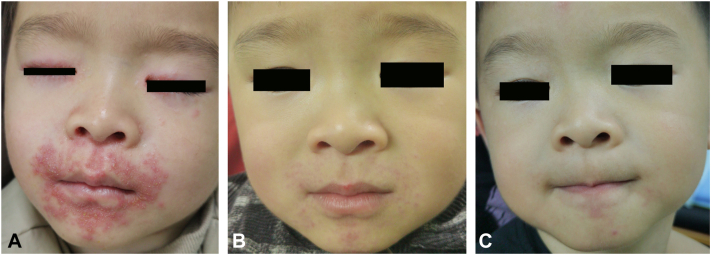
Do not self-treat suspected perioral dermatitis with hydrocortisone or another steroid cream. Topical steroids can trigger or prolong this rash, even when they briefly make it look better. If a prescribed steroid is already being used on the face, contact the prescriber for a stopping or tapering plan. A temporary rebound flare can follow withdrawal, so repeatedly restarting the steroid can keep the cycle going. Do not stop an essential inhaled or nasal steroid on your own; the clinician can review technique and medicine left on the facial skin.17
A physician may prescribe a nonsteroidal treatment such as pimecrolimus or tacrolimus, called a topical calcineurin inhibitor, or a topical antibiotic such as metronidazole or erythromycin. More persistent or extensive cases sometimes need an oral antibiotic selected for the child’s age and situation. Pediatric research supports calcineurin inhibitors as an option, but no single medicine works for every child. Keep the skin routine simple and avoid products that irritate or heavily coat the affected area.16, 18
Improvement is gradual: clearing may take several weeks and sometimes several months. A calcineurin inhibitor may be part of a longer physician-directed plan, but every child does not need months of that particular medicine. The diagnosis, response and follow-up determine the duration.17
Eczema with persistent dryness and itching
Atopic eczema often begins on the face and scalp in babies. The cheeks may feel rough and look inflamed, with small bumps or areas the baby rubs against bedding or a caregiver. Itching, repeated flares and eczema elsewhere add useful context. New oozing, crusts or pain may mean infection has developed and deserves an examination.4
An eczema flare is more than a cosmetic color change. Moisture care supports the skin barrier, while ongoing inflammation may require an age-appropriate medicine. Our baby facial eczema article explains cheek care and treatment. The eczema appearance page shows other patterns.
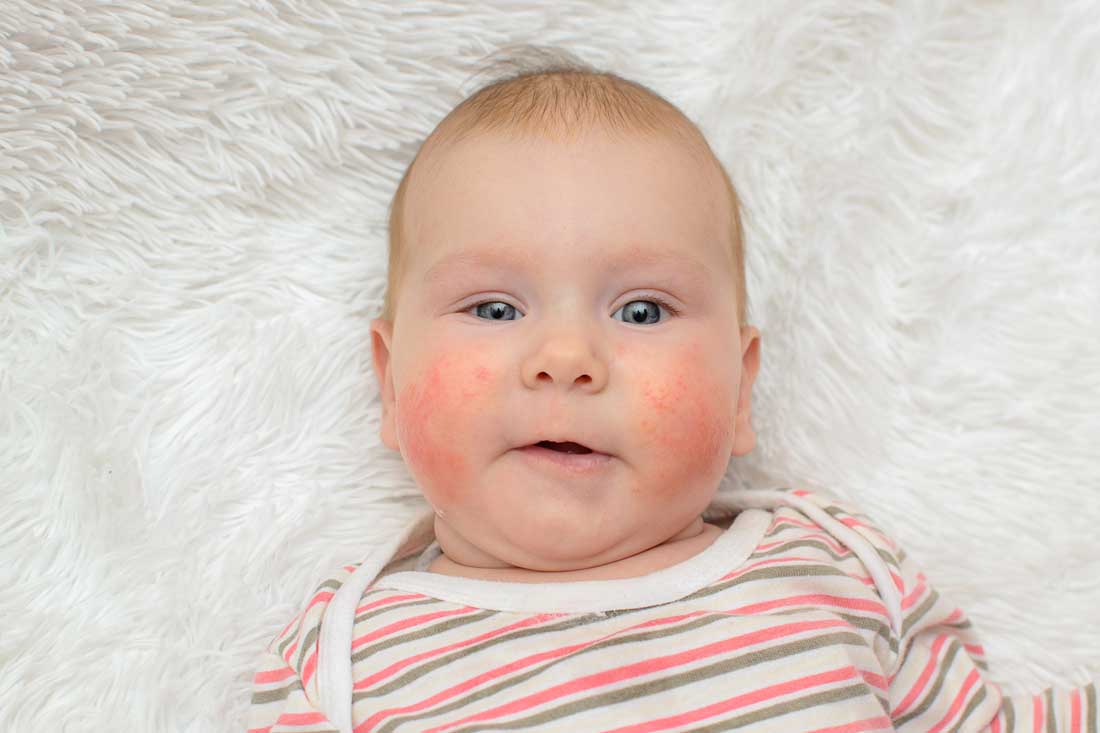
Existing Happy Cappy image; photograph unchanged.
Newborn pimples and later infantile acne
The common newborn breakout usually begins in the first six weeks and produces small pimples, often on the cheeks and forehead. It commonly settles without treatment. Avoid squeezing, scrubbing, adult acne products and oily products over the pimples. Small pus-tipped bumps are not necessarily the same as true clogged-pore whiteheads.5
Acne beginning after about six weeks deserves medical assessment, especially with blackheads, deep bumps or scars. Later infantile acne can need a different plan from a newborn eruption. Age is one clue, not a way to diagnose every facial bump. See baby acne versus eczema for a focused comparison and links to clinical examples.
A reaction to wipes, skin products or rubbing
A wipe, fragrance, skin product or repeated rubbing against fabric can irritate the cheeks. Allergic contact dermatitis is also possible, but an irritated patch does not prove an allergy. Notice whether the rash follows the area a product touches, and pause a suspected nonessential product. “Natural” or “hypoallergenic” on a label does not guarantee that every baby will tolerate it.6
Hives and possible immediate allergy
Hives form raised welts that change shape or location. An individual welt usually disappears within 24 hours; a dry patch that stays in the same place is a different pattern. Infections and other triggers can cause hives, so they are not automatically a sign that a baby is allergic to a food.7
Hives recurring for six weeks or longer are called chronic hives. A baby with new hives needs age-appropriate advice. If hives appear soon after eating together with repeated vomiting, swelling or breathing symptoms, seek urgent help. Trouble breathing, tongue or throat swelling, faintness or a suddenly floppy baby is an emergency. Use prescribed epinephrine according to the emergency plan and call 911; an antihistamine is not a substitute.8, 15
Do not remove multiple foods, change formula or restrict a breastfeeding parent’s diet solely because cheeks look red. Describe the timing and other symptoms to the pediatrician so any allergy assessment is targeted. Local skin contact and an immediate systemic reaction require different decisions.
Slapped-cheek rash from parvovirus B19
Fifth disease can cause a distinct cheek rash after a mild illness, sometimes followed by a lacy rash on the body. It is more typical in school-age children than young infants, so every baby with pink cheeks should not be labeled as having fifth disease. The baby’s age, illness and exposure history matter.9
In otherwise healthy children, spread is usually greatest before the characteristic rash appears, and they are generally no longer contagious once that rash develops. Pregnancy exposure, certain blood disorders and a weakened immune system require specific medical advice. A pregnant household member with a possible exposure should contact their own clinician.10, 9
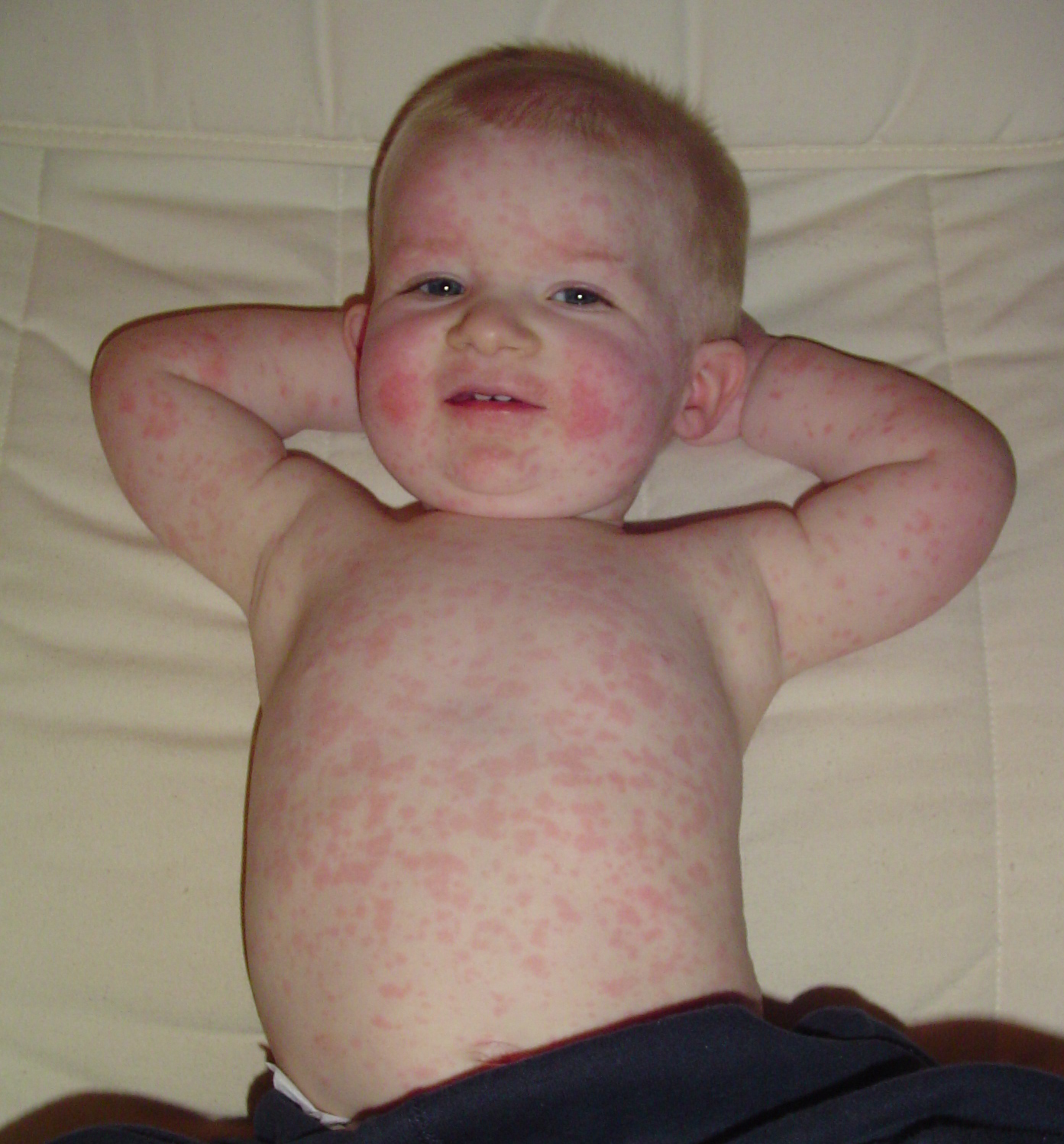
Photo: Andrew Kerr, Wikimedia Commons, public domain. Existing Commons crop; no additional retouching.
Heat rash after overheating
Heat rash can cause clusters of small prickly bumps after sweating or overbundling. It occurs when sweat ducts become blocked and may affect the face, neck and covered areas. A cooler environment and lighter clothing are more useful than layering heavy ointment over the bumps. Pus, marked pain or an unwell baby calls for an examination.11
Gentle cheek care without over-treating
Keep care simple while you watch a mild rash in an otherwise well baby. Use lukewarm water and a soft cloth for drool or food, pat rather than rub, and avoid fragranced wipes or new active skin products. Dry patches can benefit from a fragrance-free moisturizer. Pimples, heat rash and wet or infected-looking skin need a different approach, so there is no one cream for every red cheek.
For dry, sensitive, eczema-prone skin, Happy Cappy Moisturizing Cream offers a fast-absorbing, non-greasy option. Glycerin attracts moisture, petrolatum helps retain it, and licorice root extract helps calm the look of redness. Daily Shampoo & Body Wash is a gentle fragrance-free cleanser when cleansing is needed. Keep products out of the baby’s eyes and mouth, and follow the treatment plan for a diagnosed flare.
Signs a baby needs medical attention
A baby younger than three months with a rectal temperature of 100.4°F (38°C) or higher needs immediate medical assessment. Seek urgent care for poor feeding, unusual sleepiness, rapidly spreading painful skin, blisters, eye-area swelling or a baby who seems unwell. Breathing difficulty or a severe allergic reaction requires emergency help.13, 14
Contact the pediatrician for crusting, pus, persistent discomfort or a rash that is worsening or repeatedly returning. A mildly pink cheek by itself is not a reason to expect bleeding or infection. The aim is to recognize a change that needs attention without treating every normal fluctuation in skin color as disease.
Use the whole pattern to guide care
Notice whether the skin is smooth, rough, bumpy or raised; whether the color fades; and whether the baby is feeding and behaving normally. Those observations help distinguish ordinary flushing and irritation from a rash that needs a diagnosis. If moisture collects under the chin too, the child neck-rash article explains care for that different environment.