

Quick Answer
Newborn skin often peels during the first few weeks as the outer skin sheds. If the skin underneath is comfortable and intact, let the flakes come away naturally. Dry, rough areas may benefit from a fragrance-free cream or ointment and gentler bathing. Persistent inflammation, pain, blisters, oozing or an unwell baby needs medical assessment.1, 2
Normal Newborn Peeling and Dry Skin
Newborn peeling and dry skin can look similar, but they do not always need the same response. Thin flakes on a comfortable baby's hands, feet or body often reflect ordinary shedding after birth. Roughness that persists, cracks or a rash that seems to bother your baby calls for more attention.
Before birth, a waxy coating called vernix caseosa helps protect the skin. Vernix sits on the skin; it is not another skin layer. After birth, the outer skin sheds as your baby adjusts to the environment outside the womb. Babies born after their due date may have more noticeable peeling. This usually settles without a treatment to remove the flakes.1, 2
Look beyond the flakes to the skin underneath and your baby's comfort. Ordinary shedding should not leave painful, raw areas. Moisturizer can soften accompanying dryness, but continuing to see a few loose flakes does not mean the moisturizer has failed. The goal is comfortable skin, not making every flake disappear.
The Usual Peeling Timeline
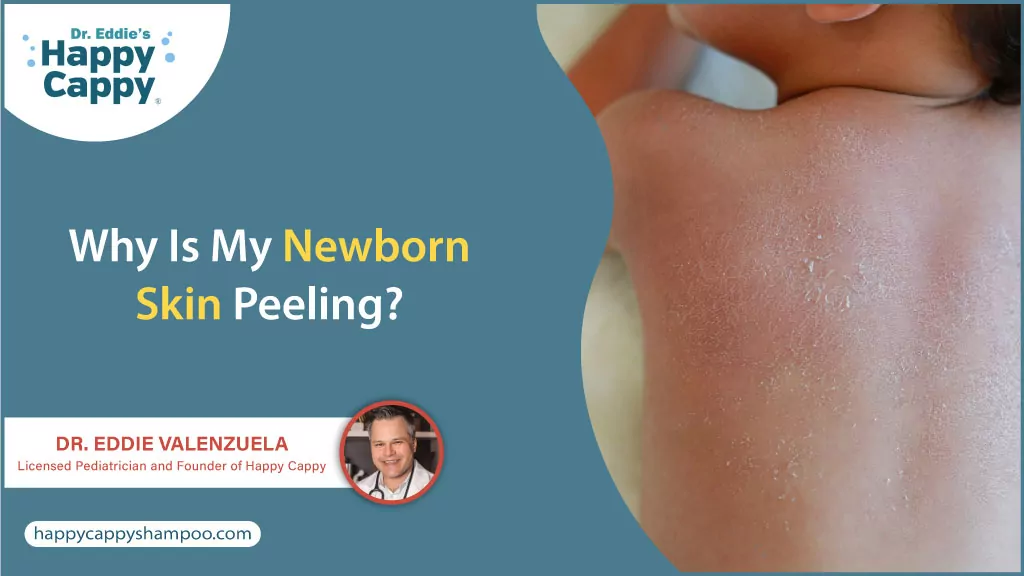
Peeling may become noticeable in the first days after birth and generally improves over the next few weeks. It can be more obvious around the wrists, ankles, hands and feet. Resist the temptation to pull away a loose edge; allowing it to shed on its own protects the skin underneath.1
If peeling continues beyond about three weeks, grows more extensive or seems uncomfortable, bring it to your pediatrician's attention. That is a useful checkpoint, not a deadline for every baby. A concerning rash deserves assessment sooner.
Persistent Dryness and Everyday Irritation
Dry skin develops when the outer skin does not hold enough moisture. Long, hot baths, drying cleansers and low indoor humidity can contribute. A baby's skin may feel rough between baths or develop dry patches even after the initial newborn shedding has eased.4
The location can offer a clue. A patch that appears where a new wipe, laundry product or garment touches the skin may reflect irritation. Review recent changes before adding another cream or cleanser. A persistent rash is worth examining because eczema, contact dermatitis and other conditions can overlap with what initially looks like simple dryness.2
Skin Dryness and Feeding Are Different Concerns
Dry-looking skin alone does not establish that a newborn is dehydrated. Continue breast milk or correctly prepared infant formula according to your baby's feeding plan. Do not give extra water or dilute formula to treat peeling; babies under 6 months generally do not need additional water unless their clinician directs it.9
Poor feeding, a clear drop in wet diapers or unusual sleepiness deserves prompt advice. Those changes need attention to the baby's overall health, rather than simply applying more moisturizer.10
Gentle Care for Dry, Peeling Newborn Skin
A simple routine makes it easier to see what helps. Begin with gentle washing and moisturize areas that feel dry. If the skin stays comfortable while the loose flakes gradually diminish, there is usually no need to keep adding products.
Brief Baths and Mild Cleansing
Most newborns do not need a full bath every day; about three baths a week may be enough, with cleaning of the diaper area and soiled skin between baths. Use sponge baths until the umbilical cord stump has fallen off and the area has healed. Keep all supplies nearby and your baby within reach throughout.3
Keep the water lukewarm and the bath under 10 minutes. Use a small amount of a gentle, fragrance-free cleanser where needed, rinse well and pat dry. Extra washing, rubbing or a foamy bubble bath can make dryness harder to manage. A non-soap cleanser can be a useful choice for sensitive skin; the finished formula matters more than whether the label simply says “baby.”4
Moisturizer for Dry Areas
A fragrance-free cream or plain petroleum jelly can help skin that feels dry. Apply it gently after washing while the skin is still slightly damp, and reapply as needed. Creams and ointments generally retain moisture better than thin lotions. If dryness keeps returning, regular moisturizing can be more useful than waiting until the skin is very rough.2, 4
Normal, comfortable peeling does not require a cream just to stop shedding. Avoid picking, exfoliating or using a scalp brush on peeling face or body skin. If a product stings or produces a new rash, stop using it and have persistent irritation assessed.
Clothing, Laundry and Dry Air
Soft, breathable clothing and fragrance-free laundry products can reduce everyday irritation. Avoid rough fabrics rubbing against affected areas. If heating leaves the room very dry, a cool-mist humidifier may help; keep it clean according to its instructions and avoid making the room damp. Our humidifier guide explains the practical precautions.4
Peeling, Cradle Cap and Inflamed Rashes
The pattern and your baby's comfort help determine the next step. A few loose flakes differ from thick scalp scale or an itchy rash that keeps returning. These clues can guide a conversation with your pediatrician, although a photograph alone cannot establish the diagnosis.
| Pattern | Typical clues | Care direction |
|---|---|---|
| Normal shedding | Thin, loose peeling in the first weeks, with comfortable, intact skin underneath. | Let flakes come away naturally; moisturize accompanying dryness. |
| Cradle cap | Thicker, greasy or adherent scale on the scalp, sometimes near the eyebrows or ears. Many babies are unbothered. | Use the cradle-cap guide for scalp-specific care.5 |
| Eczema | An itchy, rough, inflamed rash that persists or recurs. Cheeks, scalp and the outer surfaces of the limbs can be involved in infants. | Have an ongoing rash assessed. Our eczema guide explains care beyond moisturizing alone.6 |
| Contact irritation | A rash where skin touches an irritating product or material, often after an exposure changes. | Avoid the suspected trigger and seek advice if the rash persists.2 |
Eczema often begins later in infancy rather than in the first days of life. It is therefore unhelpful to label every peeling newborn patch as eczema. On darker skin, inflammation can look purple, gray or darker brown instead of bright red; texture, warmth, swelling and discomfort also matter.6
Unusual Scaling Present at Birth
Rare inherited skin disorders, including some forms of ichthyosis, can cause widespread, persistent scaling. A baby born with a tight, shiny membrane over the skin, called a collodion membrane, needs specialist care. This differs from ordinary loose newborn flakes and can involve problems with fluid loss, temperature regulation or infection. Do not peel the membrane or try to manage it with an ordinary dry-skin routine.11
Happy Cappy Cleansing and Moisturizing for Dry Skin
When your baby needs a cleanser and moisturizer, the two products serve different jobs. Cleansing removes everyday soil; moisturizing helps the skin retain water between washes. Neither step needs to remove normal newborn flakes.
Daily Shampoo & Body Wash
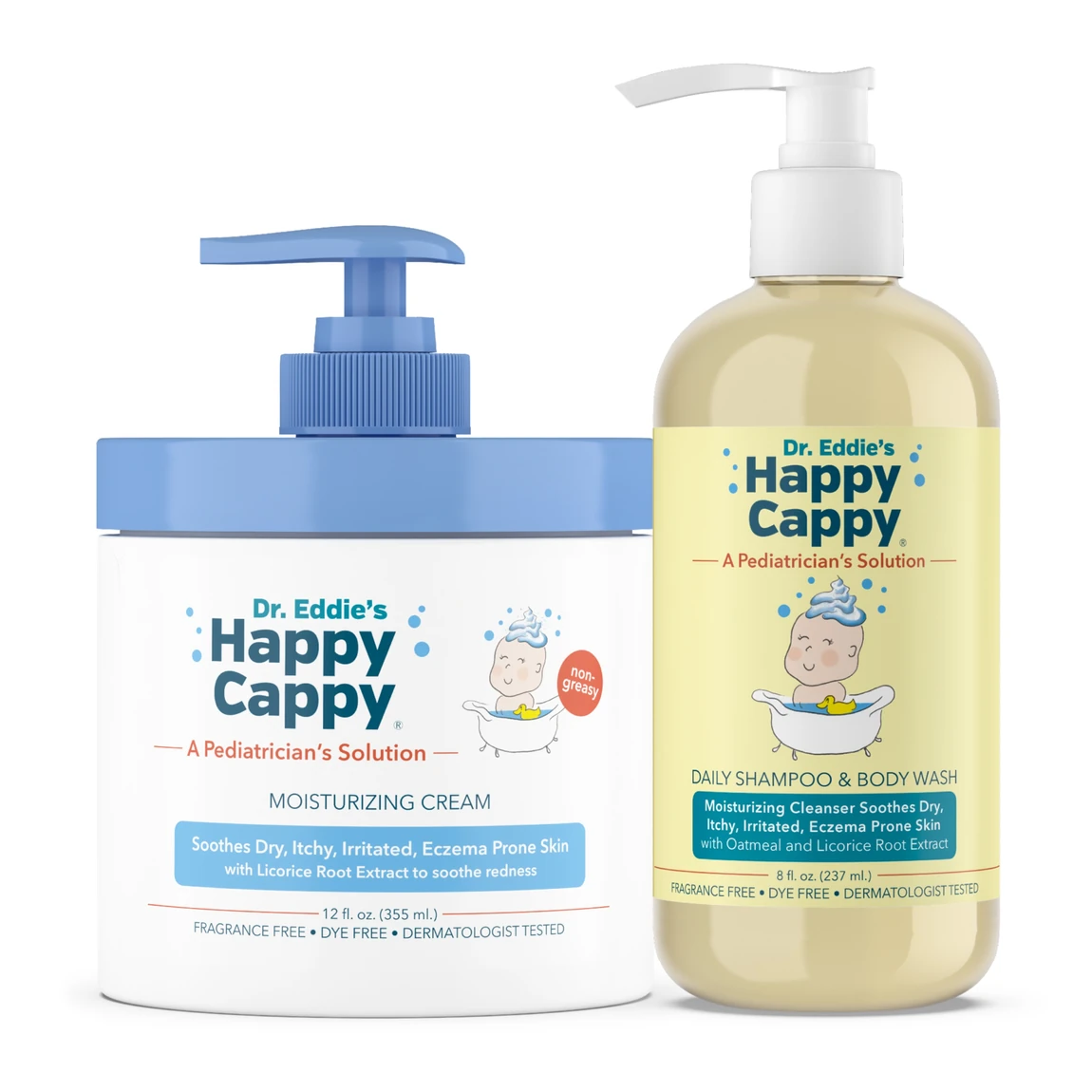
Happy Cappy Daily is a fragrance-free, non-soap cleanser for dry, sensitive, eczema-prone skin. Use a small amount when washing is needed, then rinse thoroughly. It is made without SLS and SLES and does not need to sit on the skin.
Moisturizing Cream
Happy Cappy Moisturizing Cream combines glycerin, which attracts water, with petrolatum, which helps reduce moisture loss. The fragrance-free formula is fast-absorbing and non-greasy. Apply it gently to dry areas after washing and as needed for comfort.
For dandruff and seborrheic dermatitis, including cradle cap, Happy Cappy Medicated Shampoo & Body Wash has a different purpose. Its 0.95% pyrithione zinc helps relieve associated flaking, scaling and itching. Ordinary newborn peeling does not require a medicated wash. See the cradle-cap guide when that is the concern.7
Changes That Need Medical Attention
Arrange an assessment when dryness remains uncomfortable despite gentle care, the rash keeps returning or peeling is worsening. Painful, raw, swollen, blistered or oozing skin needs prompt attention. An examination can distinguish a skin-care problem from inflammation or infection that needs specific treatment.
Fever or an Unwell Newborn Needs Prompt Advice
If your baby is 3 months old or younger and has a rectal temperature of 100.4°F (38°C) or higher, call your pediatrician immediately, even if your baby otherwise seems well.8
Also seek prompt advice for poor feeding, fewer wet diapers than usual or unusual sleepiness. Do not wait for the skin to improve before addressing those changes.10
If the changes come and go, photos can help show the pattern at a visit. Note when peeling started, whether it seems uncomfortable and any new products. Most ordinary newborn shedding settles with time; persistent dryness deserves a comfortable routine, and an inflamed or unusual rash deserves a closer look.
Sources and Further Reading
- Cleveland Clinic. Newborn skin peeling.
- Canadian Paediatric Society. Your baby's skin.
- American Academy of Pediatrics. Bathing your baby.
- American Academy of Pediatrics. Avoiding dry winter skin in babies and toddlers.
- American Academy of Dermatology. How to treat cradle cap.
- American Academy of Dermatology. Atopic dermatitis symptoms.
- DailyMed. Happy Cappy pyrithione zinc shampoo label.
- American Academy of Pediatrics. Fever and your baby.
- American Academy of Pediatrics. Preparing formula with water.
- American Academy of Pediatrics. Signs of dehydration.
- National Library of Medicine, MedlinePlus Genetics. Lamellar ichthyosis.