

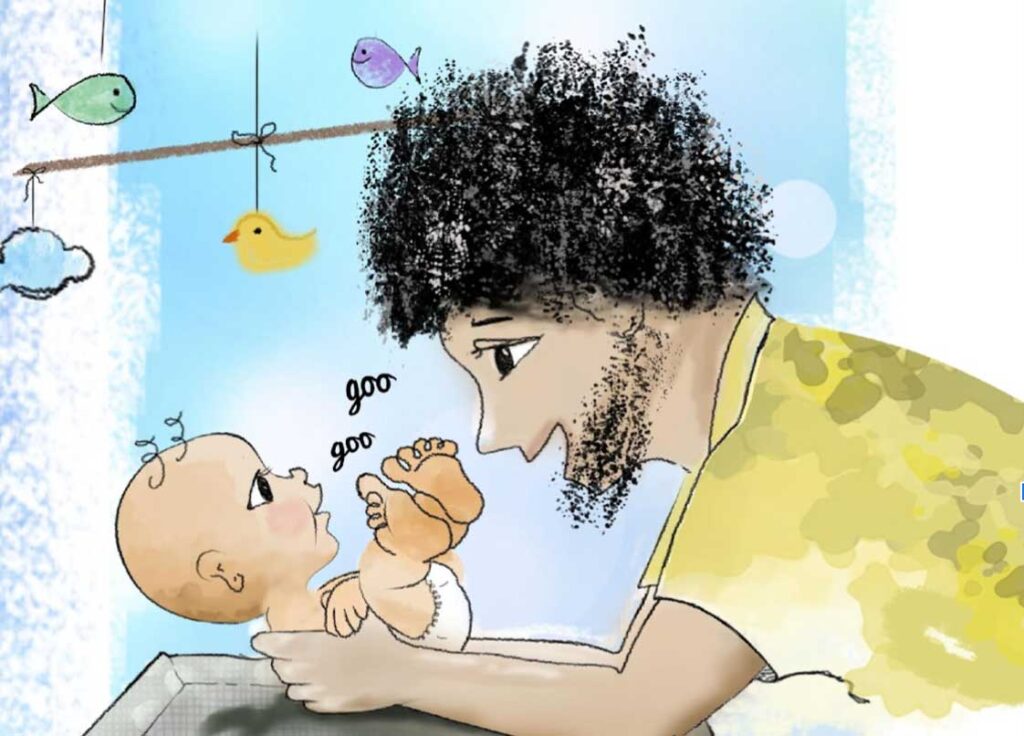
The myth: There is little point talking to a baby who cannot answer yet.
A little reassurance: Conversation starts before words. Your voice, your pauses, and your responses give your baby chances to listen, connect, and join in.
In this story
Understanding comes before a full conversation
Understanding language and speaking it are different skills. Babies begin noticing voices and patterns long before they can put words together. They communicate through looks, movements, sounds, and gestures along the way.
Talk during ordinary moments: name the washcloth, describe the dog walking past, or tell your baby what you are doing while getting them dressed. Pause when they make a sound, then answer. There is room for their turn even when the conversation is mostly vowels.
First words and communication milestones
There is variation, but milestones help you and your pediatrician notice whether development is progressing. These examples come from the CDC's current milestone checklists; they are guideposts, not a competition or a diagnosis.
| By this age | What most children can do |
|---|---|
| 9 months | Make varied strings of sounds and lift their arms to be picked up. |
| 12 months | Wave goodbye and use a special name for a parent. |
| 15 months | Try one or two words beyond mama or dada; point to ask for help. |
| 18 months | Try at least three other words and follow a simple one-step direction without a gesture. |
| 2 years | Put at least two words together, such as “more milk.” |
A consistent attempt at a word can count even when the pronunciation is still a work in progress. Tell your pediatrician about the sounds and gestures you hear at home, not only what your child chooses to demonstrate in the office.
Make room for back-and-forth
Follow what interests your baby. If they stare at the ceiling fan, that is today's discussion topic. Name it, pause, and respond to their expression or sound. Singing and reading together offer other easy openings.
You do not need to talk continuously or turn every activity into a lesson. Quiet moments belong in the day, too. A familiar, responsive voice matters more than an elaborate vocabulary exercise.
Communication concerns to discuss with your pediatrician
Bring up concerns about hearing, limited gestures or sounds, or missed milestones with your pediatrician. Loss of a skill your child previously had is a reason to seek assessment promptly. Do not wait for a distant birthday because someone says every child eventually catches up.
Hearing checks, developmental screening, and early-intervention services can help clarify what your child needs. Asking early is a useful step, not a prediction about their future.
A small thing to try today
During the next diaper change, tell your baby what comes next, then leave a pause for their response. If they answer with a squeal, you have successfully held a meeting.