

Quick answer: Itching after a shower often comes from dry skin, hot water, friction or a reaction to a cleansing product. Small hives after heat and sweating suggest a different pattern from intense water-triggered itching with no visible rash. Short lukewarm showers and prompt moisturizing may help dryness; recurrent, severe or unexplained itching deserves assessment.
The most useful clue is what your skin does as the itching starts. Does it feel tight and flaky? Do raised welts appear? Or does the skin look normal even though the itch is intense? Also notice whether it happens only after a hot shower or after contact with water at other temperatures.
These observations help separate problems that can feel similar but need different care. They also make an appointment more useful, especially if a brief rash has disappeared by the time you are examined.
Dry skin and irritation after washing
Hot water, long showers and rubbing
A shower briefly wets the skin, but prolonged washing, heat and cleanser exposure can leave its outer barrier irritated and more prone to losing moisture afterward. Dry skin may then feel tight, sting or itch as you towel off. A rough washcloth, loofah or vigorous towel-drying can add friction to the same already sensitive area.1
The pattern may be more noticeable in dry weather or when you shower frequently after exercise. That does not mean everyone must stop showering daily. Duration, temperature, cleanser use and after-shower care all matter. A short lukewarm shower followed by moisturizer can be more comfortable than a longer hot shower taken less often.
Cleansers, fragrances and contact dermatitis
A product can irritate the skin without causing an allergy. Allergic contact dermatitis is different: the immune system reacts to a particular substance, and the rash may develop hours or days after exposure. Both can produce itchy, inflamed patches, and a familiar product can become a problem after a long period of use.2
Consider what touches the itchy areas, including body wash, shampoo runoff, shaving products and fragranced after-shower lotion. Pause a suspected nonessential product and simplify the routine. A blanket list of “bad chemicals” cannot identify the cause; concentration, the finished formula and individual allergy history matter. Persistent or recurrent dermatitis may need patch testing.
Eczema aggravated by bathing
If dry, itchy patches are present between showers too, atopic eczema may be part of the picture. Bathing can be useful when it is gentle and followed by moisturizing, but hot water and repeated scrubbing can aggravate a flare. Moisturizer helps dryness; active inflammation may also need prescribed treatment. The eczema resource center covers those ongoing care decisions.3
Hives and itching without a visible rash
Small hives after heat or sweating
Cholinergic urticaria can produce small, short-lived itchy welts when body temperature rises and sweating is triggered. A hot shower, exercise or emotional stress may bring on a similar episode. The pattern is different from eczema, which usually leaves patches that persist rather than disappearing within an hour or so.4
Take a photograph if the bumps fade quickly, and note whether exercise causes the same reaction. A clinician can confirm the type of hives and discuss treatment, often including an appropriate antihistamine. Do not deliberately provoke a reaction to test it, particularly if a previous episode included dizziness, breathing symptoms or swelling.
Histamine explains the itching and welts
In hives, activated mast cells in the skin release histamine and other chemical messengers. Histamine binds to H1 receptors on the endothelial cells that line small skin vessels. This signaling makes the cells contract and loosens their junctions, creating gaps through which plasma and proteins escape into the upper dermis. The resulting edema, or tissue swelling, produces a raised wheal. Histamine also stimulates itch-sensing nerves and widens blood vessels, contributing to the surrounding redness.13, 14 Heat and sweating are possible triggers in susceptible people; hives do not always mean an allergy.12
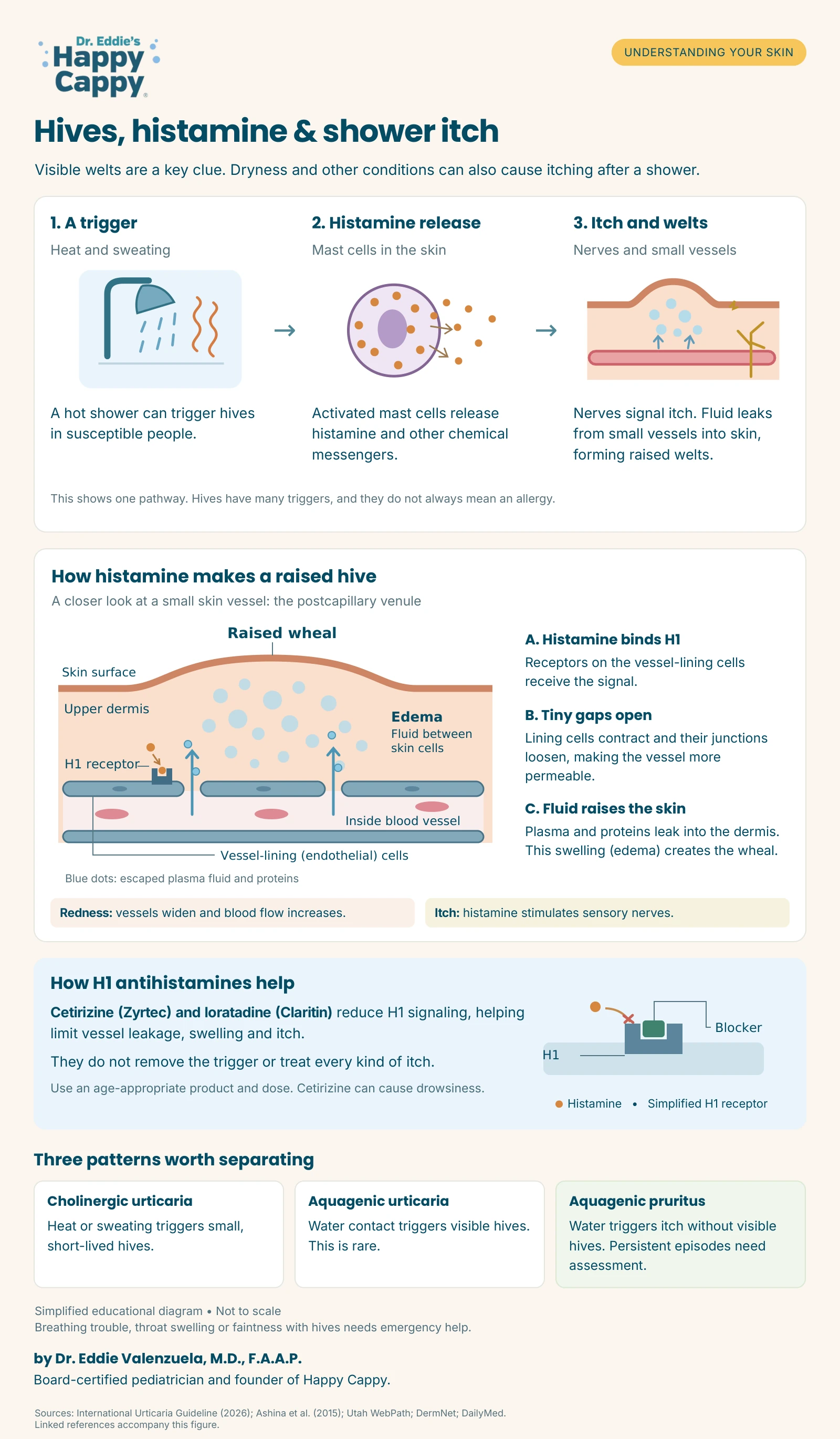
Second-generation H1 antihistamines, including cetirizine (Zyrtec) and loratadine (Claritin), are first-line medicines for hives. They reduce histamine signaling at H1 receptors, helping control itching and welts without removing the underlying trigger. They do not treat every cause of post-shower itch. Use an age-appropriate product and dose; a clinician should guide any increase above the label or combination of antihistamines. Cetirizine can cause drowsiness.10, 11
H2 blockers, such as famotidine, act at a different histamine receptor. Evidence for routinely adding them to H1 treatment for chronic hives remains uncertain, so they are not the usual first-line approach.10
Intense itching after water with normal-looking skin
Aquagenic pruritus describes itching or prickling triggered by water without visible hives or a primary rash. It may occur with water at different temperatures, not only a hot shower. Scratching can later leave marks, but the skin may look normal when the sensation begins. Repeated episodes that are severe or out of proportion to dryness deserve an assessment.5
This symptom can occur on its own, but it can also accompany a blood disorder such as polycythemia vera. Itching after one shower does not diagnose a blood disorder or cancer. Depending on your history and examination, a clinician may check blood counts or other targeted tests and decide whether follow-up is needed.5
Rare water-triggered hives
Aquagenic urticaria is a rare condition in which water contact triggers visible hives. It is distinct from aquagenic pruritus, where hives are absent, and from the more common heat-and-sweat pattern. Because symptoms can overlap, diagnosis may involve supervised testing rather than a home water challenge.6
Hard water and the limits of water-softener claims
Hard water contains more dissolved minerals, particularly calcium and magnesium. Researchers have studied whether it affects eczema and skin irritation, but a possible association does not establish that changing the water will relieve an individual person’s itch.
In the Softened Water Eczema Trial, 336 children with moderate or severe eczema received usual care with or without an ion-exchange water softener. Adding a softener did not improve the main, objectively assessed eczema outcome at 12 weeks. That trial studied childhood eczema, not every cause of post-shower itching, but it does not support promising a softener as an eczema treatment.7
Before investing in a water-treatment device for your skin, start with temperature, shower length, cleanser exposure and moisturizing. If those changes do not help, identifying the cause of the itch is more useful than assuming the water supply is responsible.
A more comfortable shower routine
For mild itching that fits dryness or irritation, make a few consistent changes so you can tell whether they help. Keep the routine uncomplicated rather than adding several anti-itch products at once.
- Use lukewarm water and keep showers brief. Aim for about five to ten minutes. Shortening a very hot shower does not remove heat as a trigger.
- Clean gently. Use a mild fragrance-free cleanser where needed, rinse thoroughly and avoid scrubs or rough loofahs.
- Pat dry. Leave dry-prone skin slightly damp rather than rubbing it completely dry.
- Moisturize promptly. Apply a fragrance-free cream or ointment after bathing and again when dry areas need it.
- Notice the response. Record whether itching is less intense, whether a rash appears and whether it happens away from shower time.
These steps support dry skin; they do not replace treatment for hives, aquagenic pruritus or another diagnosed condition.1, 3
Choosing supportive cleansing and moisture care
Happy Cappy Daily Shampoo & Body Wash is a fragrance-free non-soap cleanser for dry, sensitive, eczema-prone skin, made without SLS/SLES. After rinsing, Happy Cappy Moisturizing Cream provides fast-absorbing, non-greasy moisture care. Glycerin attracts moisture, petrolatum helps retain it, and licorice root extract helps calm the look of redness.
Use the cream on dry areas after gently patting the skin. Neither product is a treatment for heat-triggered hives or a blood disorder. If a product stings persistently or makes a rash worse, stop that product and reassess rather than applying more.
Details worth tracking when itching returns
Write down the water temperature, how quickly itching starts, how long it lasts and whether there are welts, flakes or no visible changes. Note the products used and whether handwashing, rain, exercise or sweating causes a similar reaction. A photo of transient welts is often more useful than trying to remember their appearance.
If itching also occurs throughout the day, the itchy skin overview explains other causes and assessment. Drinking extra water is not a reliable treatment for a damaged skin barrier, and antihistamines do not relieve every type of itch. Match treatment to the cause.8
Symptoms that need medical assessment
Arrange an appointment if episodes are recurrent, severe, interrupt sleep or continue despite a gentler routine. Mention generalized itching without a rash, new medicines, unexplained weight loss, drenching night sweats, persistent swollen glands or unusual fatigue. These symptoms can have many causes and warrant an assessment; they are not proof of cancer.8
Get emergency help if itching or hives occur with trouble breathing, throat or tongue swelling, faintness or collapse. A painful rapidly spreading rash, fever, blistering or sores affecting the mouth or eyes also needs prompt medical attention.9
Let the shower pattern guide the next step
Tight, flaky skin after a long hot shower often calls for gentler washing and moisture care. Fleeting welts or repeated intense itching on normal-looking skin call for a closer look at the trigger and, when persistent, a clinical assessment. That distinction helps you move toward relief without repeatedly treating the wrong problem.