

Quick answer: Closed comedones are plugged follicles associated with acne vulgaris. “Fungal acne” is Malassezia folliculitis, which often causes clusters of similar-looking, itchy papules or pustules. They can coexist, but fungal folliculitis does not itself produce true closed comedones.
Small bumps on the forehead or chin can be difficult to name, especially when several have pale tips. The word “whitehead” adds to the confusion: people use it for both a closed comedone and a pus-filled pimple. The useful distinction is what the bump contains and whether the follicle is plugged, inflamed, or both.
This guide compares the patterns and explains why treatment differs. Use the clues to describe your skin, rather than trying to prove a diagnosis with a photograph or a single symptom.
Fungal acne: inflamed bumps around hair follicles
Fungal acne is the common name for Malassezia folliculitis. It is associated with yeast in hair follicles, not the same process as ordinary acne. It often produces a fairly uniform crop of small papules or pustules on the forehead, hairline, chest, shoulders or upper back.1, 2
Itching is a helpful clue, but it is not universal. A pustule may have a pale, pus-filled tip, which can make it look like a “whitehead.” That appearance does not turn it into a closed comedone. Our fungal acne appearance guide explains these lesions and other look-alikes.
Malassezia normally lives on skin. Heat, sweating, occlusion and certain medicines can contribute to follicular inflammation in susceptible people. A flare does not mean the skin is dirty, and vigorous washing is not a reliable way to identify or treat it.1
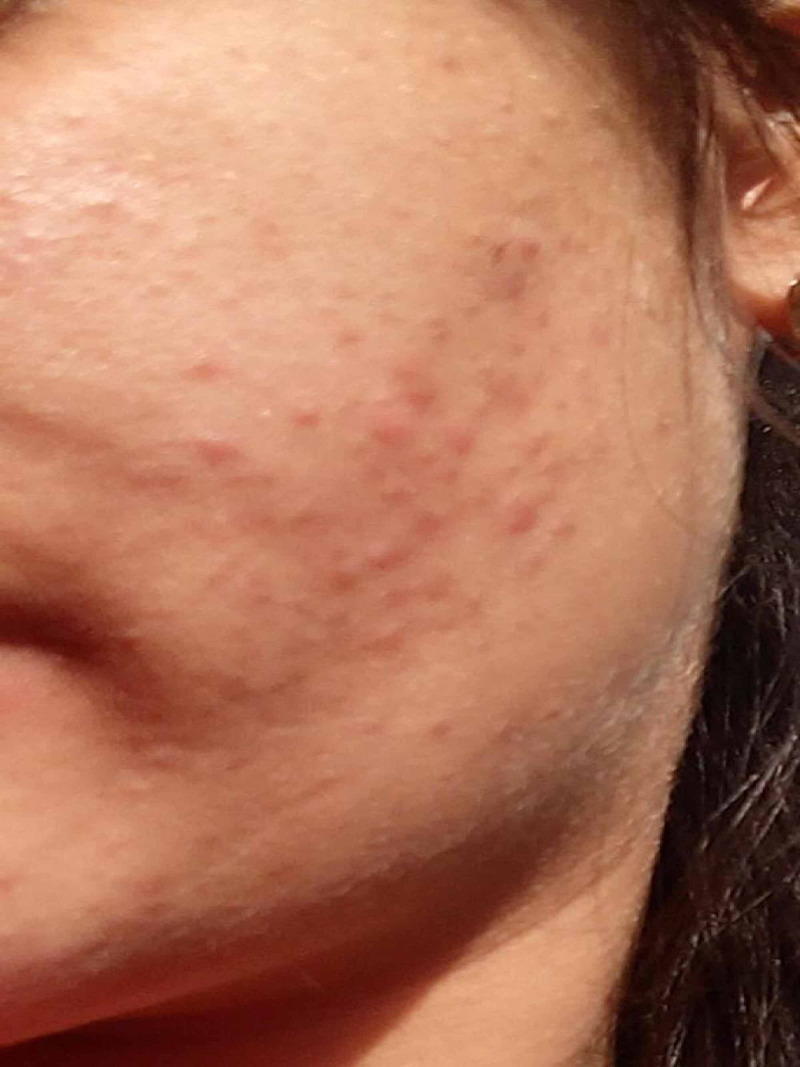
View larger photograph ↗Photograph: Malgotra V and Singh H, Cureus (2021), Figure 1. © 2021 the authors. Reproduced under the article’s Creative Commons Attribution license; clinical image unchanged.
Closed comedones: small plugged follicles
A closed comedone forms when material, including oil and dead skin cells, accumulates in a follicle beneath a closed opening. It often looks and feels like a small skin-colored or whitish bump. Closed comedones belong to acne vulgaris and may appear alongside blackheads and inflamed pimples.3, 4
Early comedones may have little redness or tenderness. Some acne lesions later become inflamed, so a bump changing into a red pimple does not establish a fungal cause. The mixture of lesions across the face can be more informative than the appearance of one spot.
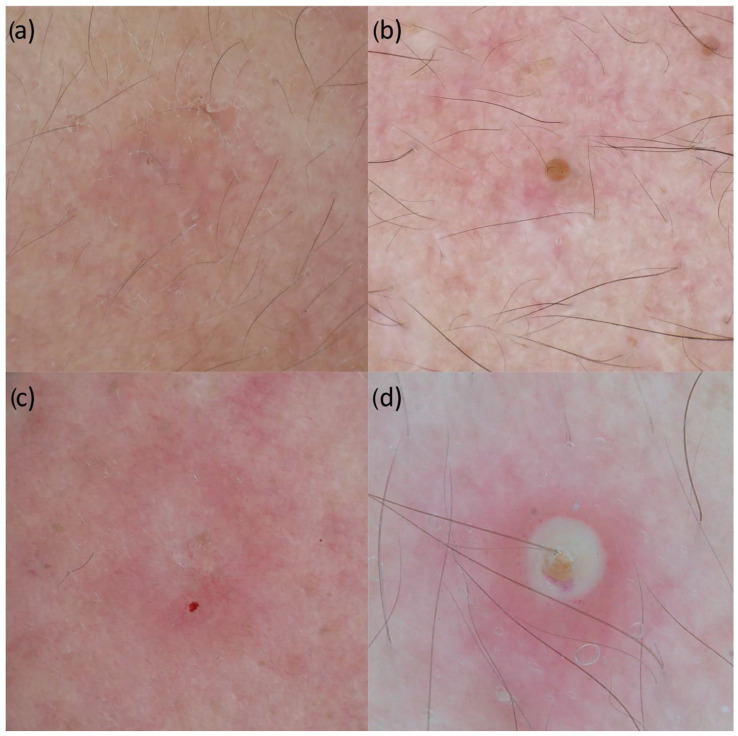
Papules and pustules also occur in ordinary acne. Their appearance alone does not establish a fungal cause.
View larger close-ups ↗Photographs: Alma A et al., Journal of Clinical Medicine (2022), Figure 2. © 2022 the authors; CC BY 4.0. Original panels reproduced without alteration.
Products also deserve a look. An oily styling product or leave-in conditioner that touches the forehead can contribute to small acne bumps along the hairline. If a breakout began after a new product, note the timing and where it contacts the skin. A sudden crop of bumps is not automatically fungal.5
Clues that help distinguish the two
| Clue | Malassezia folliculitis | Closed comedones |
|---|---|---|
| Type of bump | An inflamed follicular papule or pustule. | A plugged follicle beneath a closed skin opening. |
| Overall pattern | Many bumps often look similar in size and stage. | Small pale or skin-colored bumps, sometimes mixed with other acne lesions. |
| Itching | Common, but not present in everyone. | Less characteristic; irritated skin can still itch. |
| Location | Often the upper trunk, forehead or hairline. | Often the forehead, cheeks or chin. Locations can overlap. |
| Blackheads | Not produced by the folliculitis itself. | May occur alongside closed comedones as part of acne. |
| Treatment direction | Antifungal treatment when the diagnosis is established. | Acne treatment that addresses plugged follicles. |
Acne and Malassezia folliculitis can occur together. For example, a person may have both true plugged pores and a separate group of itchy pustules. That does not mean the folliculitis caused the comedones. It means the care plan may need to address two processes.2
If menstrual timing or deeper jawline lesions are a central part of the pattern, the fungal acne and hormonal acne comparison covers that separate question.
Comparison pictures and their limits
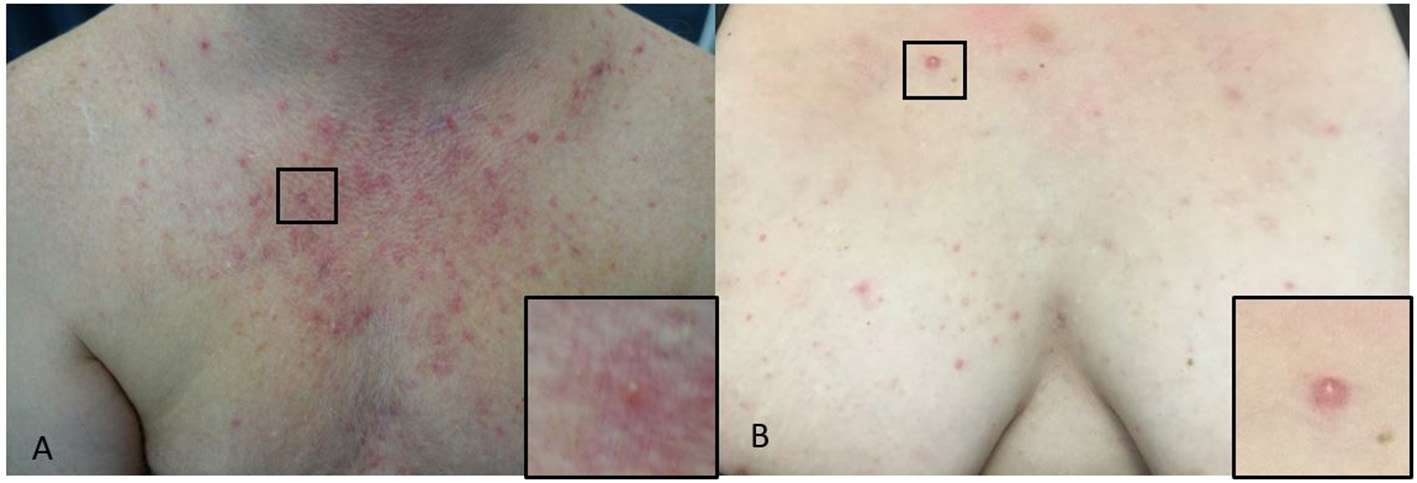
View larger photographs ↗Photographs: Saunte DML, Gaitanis G and Hay RJ, Frontiers in Cellular and Infection Microbiology (2020), Figure 4. © 2020 the authors; CC BY 4.0. Original panels reproduced without alteration.
Lighting, skin tone and image quality can change how a bump looks. A photograph cannot reliably show whether material is within a closed follicle or whether a pustule contains yeast. Take pictures in consistent light to document changes, but avoid repeatedly switching treatments to match an online image.
A clinician can examine the pattern and, when needed, test material from an affected follicle. Finding yeast on the skin surface alone is not enough because Malassezia also lives on healthy skin. The diagnosis section of our treatment guide explains the process.6
Treatment follows the type of lesion
Care directed at closed comedones
Acne medicines that address plugged follicles, such as a topical retinoid, may help closed comedones. Salicylic acid is another option used in acne care. The choice depends on age, skin tolerance, other acne lesions and pregnancy plans. Retinoids are generally avoided during pregnancy; discuss suitable alternatives with your clinician.7, 8
A dermatologist may professionally extract selected persistent comedones, but extraction does not prevent new plugs from forming. Avoid squeezing or digging at bumps yourself. It can injure the skin and add inflammation or scars without fixing the process that caused the breakout.
Care directed at Malassezia folliculitis
Confirmed Malassezia folliculitis may respond to a topical antifungal. More extensive or persistent disease may need a prescribed oral medicine with attention to interactions and medical history. The fungal acne treatment guide covers those choices, follow-up and recurring flares.6
If one type of bump improves while another remains, describe that difference at follow-up. Coexisting acne and folliculitis, irritation from treatment, or a different original diagnosis may explain an incomplete response. Adding more products without that distinction can make the picture harder to interpret.
A routine that supports the treatment plan
Keep cleansing gentle and avoid abrasive scrubs. Consider noncomedogenic skin and hair products, particularly when bumps follow areas of product contact. Change out of damp clothing after sweating when practical and use a moisturizer and sunscreen that suit your skin and treatment plan.5, 7
Introduce changes in a way that lets you judge their effects, following the medicine’s directions. More exfoliation is not automatically more effective. If the skin becomes sore, persistently burns or peels excessively, ask whether the routine needs adjusting.
Do not apply this adult acne comparison directly to a baby’s bumps. Infants have different common causes and need age-appropriate care. Check with the pediatrician before using an acne medicine or copying an antifungal routine.
The role of a cleanser
A cleanser removes sweat, excess surface oil and everyday residue. It does not replace treatment directed at a plugged follicle, and a product discussed online as a “fungal acne cleanser” is not proof of your diagnosis.
Happy Cappy Medicated Shampoo & Body Wash contains 0.95% pyrithione zinc. Its labeled medicated uses are dandruff and seborrheic dermatitis. Ingredient activity against Malassezia does not by itself establish how a particular finished product treats folliculitis or closed comedones.9
Our Happy Cappy and fungal acne guide brings together the ingredient research and practical cleanser discussion. Keeping that role clear helps you choose cleansing around the treatment your skin actually needs.
Putting the comparison to use
Start by describing the pattern: plugged pores, uniform itchy bumps, or a mixture. Persistent uncertainty, painful lesions or scarring deserve an examination. Once the cause is clearer, you can judge the response to a focused plan instead of asking one wash to treat every kind of bump.