


Cover: AI-generated illustration with the original Happy Cappy logo. Clinical photographs below, when shown, are separately credited.
Quick answer: Most flat, lighter or darker marks after baby eczema are pigment changes rather than true scars. Lighter marks are called post-inflammatory hypopigmentation, while darker marks are called post-inflammatory hyperpigmentation. Pityriasis alba is a common pattern of lighter facial patches in children, often associated with eczema. Skin color usually improves gradually, but recovery can take months or longer. Persistent changes in texture or unexplained pale patches deserve an examination.
Eczema marks and scars are different
A flat lighter or darker patch after baby eczema is usually described as a pigment change, not a scar. Inflammation can temporarily change how skin makes or distributes pigment. These marks can remain after itch and roughness have settled and may stand out more on darker skin.1, 2
Post-inflammatory pigment changes
Post-inflammatory hypopigmentation means lighter skin left after inflammation. Post-inflammatory hyperpigmentation means darker skin left after inflammation. In plain language, these are the light or dark marks that can linger after an eczema flare. A change in color alone does not mean the skin has scarred.1, 2
Pityriasis alba: light patches on the face
Pityriasis alba describes a common pattern of lighter patches on children’s faces, especially the cheeks. It is associated with eczema and is thought to follow mild skin inflammation, even when an earlier rash was not noticed. The affected patches may tan less than the surrounding skin, making the color difference more noticeable after sun exposure. The pale color alone does not mean eczema is still active or that the skin has scarred.9, 12
True scars involve structural change
A true scar involves a change in the skin’s structure after injury. Some scars are flat, so the injury history and skin texture matter too. Deeper damage, including injury complicated by infection, can leave scarring. It is therefore unhelpful either to call every eczema mark a scar or to promise that scarring can never happen.3
Clues in color, texture and comfort
Flat color changes
A darker, lighter or lingering pink area may remain where an earlier patch was. Color by itself does not establish whether eczema is still active.
Active eczema
Itch, dryness, scale, cracking or swelling suggest the skin still needs assessment and care. Redness may be less obvious on darker skin.
Thickened skin
Repeated rubbing can make skin feel leathery and accentuate its lines. This is called lichenification; it does not automatically mean a permanent scar.
A possible true scar
A lasting raised, indented or otherwise altered area deserves an examination. A photo alone cannot establish the cause or predict permanence.
Use these distinctions to describe a concern to your pediatrician, rather than to make a home diagnosis.1, 3, 4
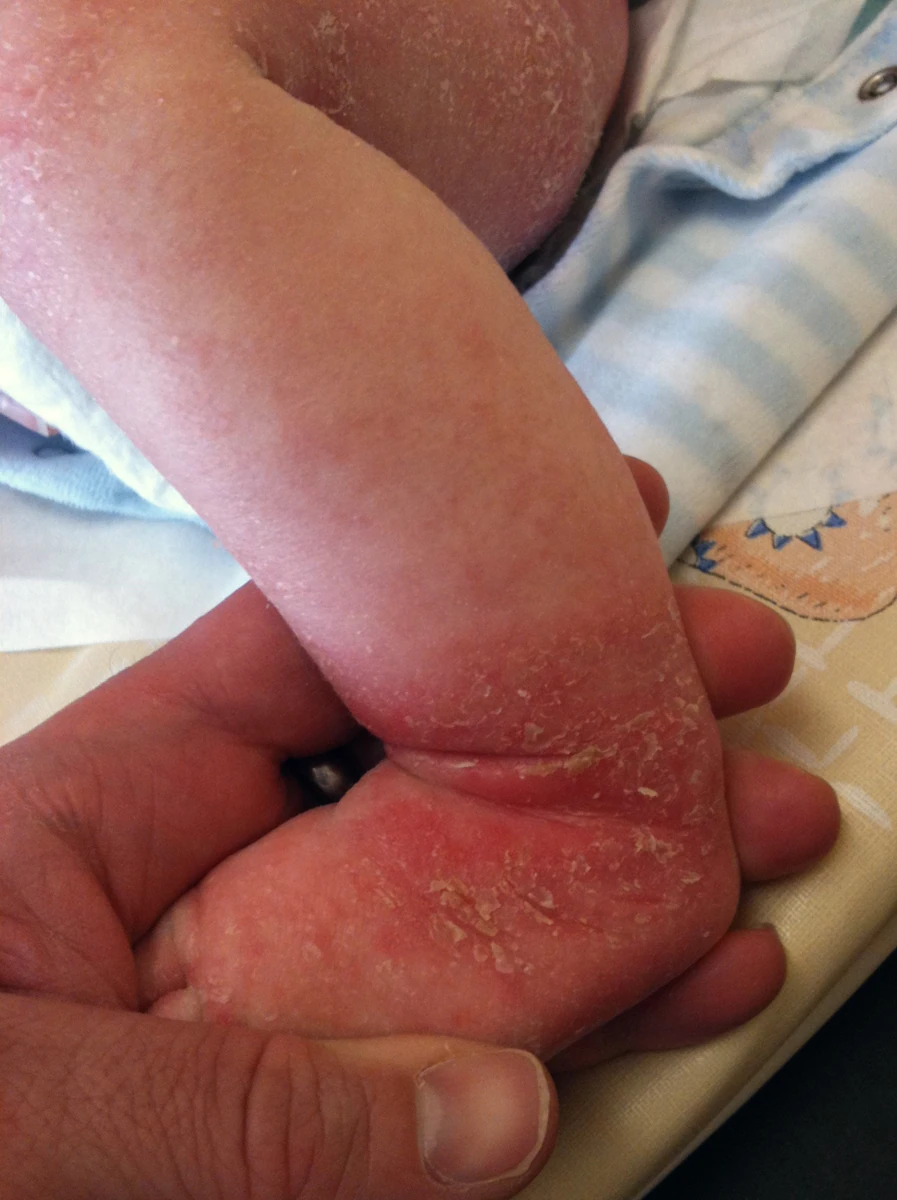

Clinical examples of lighter and darker marks
These photographs show pigment changes in different patients and skin tones. The child is 10 years old and the leg example is an adult. They illustrate changes in color; they do not predict how a baby’s skin will look or how long recovery will take.

Both lighter and darker marks can occur across skin tones. Compare color with texture and symptoms: a smooth mark after inflammation settles has a different meaning from an itchy, scaly patch or a lasting change in the skin’s structure. A clinician can help distinguish them.1, 3
Color often recovers more slowly than comfort
Darker marks can gradually fade as inflammation stays controlled, but there is no dependable four-week or six-month deadline for every baby. The original inflammation, skin tone, repeated flares and sun exposure affect what you see. Pigment changes can remain noticeable for months and sometimes longer.1, 2
Lighter areas also have several possible causes. Treating the underlying eczema helps prevent continuing inflammation; a new sharply defined white patch or a spot outside the previous rash should be assessed rather than automatically called an eczema mark.5
Compare the same area in similar lighting every few weeks if useful. Daily photographs under different lighting can exaggerate apparent changes. Our guide to signs baby eczema is healing explains how comfort and texture help you judge progress.
Protecting the skin while marks settle
Control the itch and active inflammation
Follow the treatment plan for your baby’s age and affected body area. Keep nails short, use comfortable clothing and ask for help if scratching disrupts sleep. A moisturizer supports dry skin, but an active flare may also need prescribed medicine.6
Do not continue a prescribed flare medicine solely until every patch matches the surrounding color. Equally, do not assume a pale area was caused by correctly used topical steroids and stop needed treatment without discussing it. Ask the clinician which areas are still inflamed and exactly when to stop or step down medicine.1
Use age-appropriate sun protection
Shade and protective clothing are especially important for young babies. For babies younger than six months, prioritize keeping them out of direct sun; ask about sunscreen on small exposed areas if shade and clothing are inadequate. From six months, use an appropriate broad-spectrum, water-resistant SPF 30 or higher sunscreen on exposed skin.7
Leave adult fading treatments out of a baby’s routine
Do not start bleaching or brightening creams, exfoliating acids, scrubs, essential-oil mixtures or cosmetic procedures for a baby’s eczema marks. Products that irritate skin can create more inflammation. If a clinician confirms an actual scar or another pigment disorder, ask about care suitable for the child’s age.2, 5
Cleansing and moisturizing without scar-removal claims
For lingering dryness, a simple cleansing and moisturizing routine can support comfort. Happy Cappy products are skin-care products; they are not scar removers or skin-lightening treatments.
Happy Cappy’s fragrance-free Daily Shampoo & Body Wash is a gentle rinse-off cleanser with glycerin and provitamin B5 to help soften skin. Follow with Moisturizing Cream for leave-on moisture: glycerin draws in water and petrolatum helps retain it. The cream absorbs quickly without a greasy feel.
Shop the Daily Wash + Moisturizing Cream Bundle with one 8 oz wash and your choice of a 6 oz cream tube or 12 oz pump jar. Continue prescribed treatment as directed.
Changes that deserve a closer examination
Arrange a visit for a persistent raised or depressed area, expanding pale patches, continued itch or a diagnosis you are unsure about. Get prompt medical advice for increasing pain, warmth, pus, honey-colored crust or fever with worsening skin.8
For more examples of how eczema appears across darker skin tones, see eczema on Black skin. For the broader treatment routine, return to baby eczema treatment and daily care.