
A pediatrician’s guide to skin & scalp care
Understand the flakes you see, recognize common patterns, and find the right next step for your face, body, hands, or scalp.

Quick answer
Flaky skin means that pieces of the skin’s outer layer are visibly shedding. Dryness is one common reason, but irritation, eczema, and seborrheic dermatitis can also cause flakes. Gentle cleansing and moisturizing can help dry skin; recurring, inflamed, or oily scale may need different care. The location and accompanying symptoms help guide the next step.
In this guide
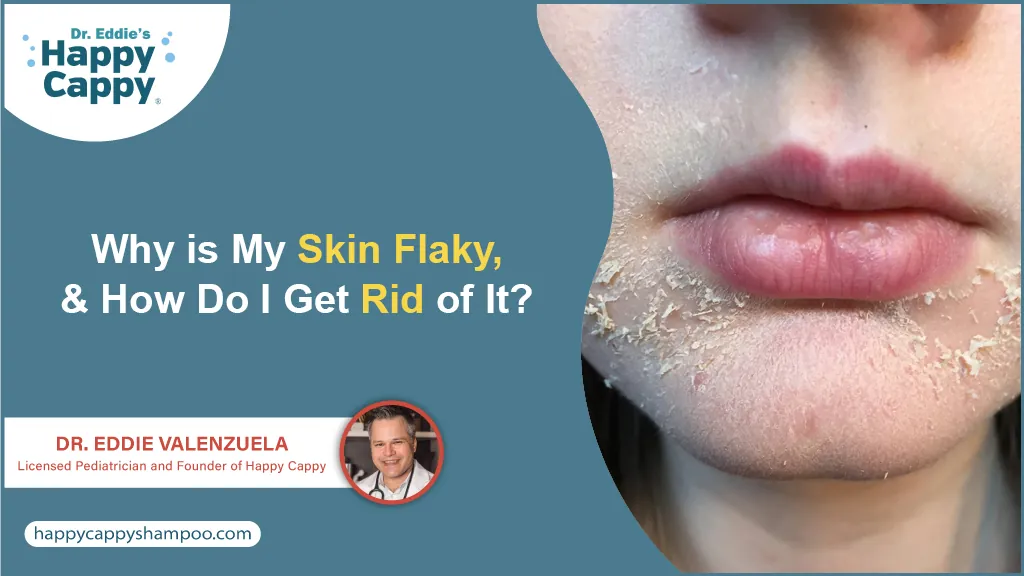
What does flaky skin look like?
You may notice tiny white flakes, a rough or ashy surface, or skin lifting away in larger pieces. Dryness can also bring tightness, itching, and cracks. These descriptions overlap, but they help you explain what has changed.
Small, loose pieces
A dusting of surface skin that may be most noticeable after washing or against clothing.
A layer that clings
More visible buildup that may feel rough or look dry, greasy, white, or yellowish.
Larger lifting pieces
Skin separating in sheets or strips, sometimes after irritation or a skin injury.
Also note itch, soreness, oiliness, cracks, and changes in color. Inflammation can look pink or red on lighter skin, and darker, purple, grayish, or lighter than surrounding skin on darker skin tones. A photo can help you track a changing patch, but it cannot reliably distinguish every cause.
Why is my skin flaky?
Start with what changed before the flakes appeared: colder weather, frequent washing, a new product, or a recurring rash. Several conditions can look similar, and more than one can be present.
| Possible cause | Clues you may notice | A useful next step |
|---|---|---|
| Dry skin | Fine flakes, roughness, or tightness, often after hot showers, frequent washing, or dry weather. | Start gentle cleansing and regular moisturizer. Our dry-skin guide covers the full daily routine. |
| Irritation or contact dermatitis | Flaking with burning, stinging, itching, or a rash where skin contacts a product or substance. | Pause a newly introduced product that appears to worsen symptoms. Persistent reactions need assessment to identify the trigger. |
| Eczema | Itchy, inflamed, dry patches that may crack, thicken, or return in the same areas. | Moisturizing supports the skin, but active inflammation may need treatment. See our eczema guide. |
| Seborrheic dermatitis | Recurring flakes or greasy scale around the scalp, eyebrows, sides of the nose, ears, or chest. | Explore seborrheic dermatitis for care matched to the location and age. |
| Other skin conditions | A persistent thick patch, an expanding scaly rash, or an area that behaves differently from the rest of your skin. | Psoriasis, fungal infections, and other conditions can also scale. Get an assessment when the pattern is unclear instead of treating every patch as dryness. |
Use the pattern as a clue. The amount of flaking alone does not tell you which condition you have or which treatment will work.
Flaky skin on the face, hands, body, or scalp
Face and cheeks
Dryness and irritation from cleansers, acne products, or exfoliants can make the face flaky. Simplify a routine that leaves your skin stinging or tight. Recurrent itchy patches may need the approach in our eczema guide.
Eyebrows, nose, and ears
Scale that repeatedly appears in these oil-rich areas, especially with scalp flakes, can fit seborrheic dermatitis. Persistent eyelid symptoms deserve care appropriate for the eye area.
Hands and fingers
Frequent washing and contact with cleaning products can contribute to dryness or hand dermatitis. Recurrent peeling, cracks, or blisters need a closer look. Our flaky-hands guide explores those patterns.
Arms, legs, and body
Broad areas of fine, rough scale may reflect dryness. A distinct, growing, or repeatedly inflamed patch is a reason to check the cause. For everyday moisture care, start with the dry-skin routine.
Scalp
Recurring scalp flakes often lead to questions about dandruff. If itching is the main problem, use our itchy-scalp guide. Broken hairs, bald patches, or a painful scalp should be assessed.
Newborn skin
Newborns commonly shed some outer skin as they adjust after birth. This differs from the thicker scalp scale called cradle cap. Our newborn-peeling guide explains normal shedding and when to ask your pediatrician.
If the skin mainly itches but you see little flaking, our itchy-skin guide is a better place to explore that symptom.
What can help dry, flaky skin?
When dryness is the main issue, a simple routine can reduce the cycle of washing, tightness, and visible flakes.
Cleanse without scrubbing
Use lukewarm water and a gentle, fragrance-free cleanser. Keep showers or baths brief, and pat dry instead of rubbing with a towel.
Moisturize while skin is still damp
A fragrance-free cream or ointment helps hold moisture in the skin. Reapply when skin feels dry, including after handwashing.
Reduce irritation
Pause optional scrubs, exfoliating acids, or newly added products that sting or worsen the flaking. If a prescribed treatment is irritating your skin, ask the prescriber how to adjust it.
Check the direction of change
Look for improving comfort and fewer flakes. If the area remains inflamed, keeps returning, or worsens, seek help identifying the cause rather than simply using more moisturizer.
For bathing habits, moisture support, and everyday prevention, continue to the complete dry-skin guide.
Should you exfoliate flaky skin?
Not automatically. Loose flakes can make scrubbing tempting, but irritated skin may become more sore, dry, or inflamed afterward. Avoid picking or exfoliating skin that is cracked, raw, sunburned, or actively irritated.
There is no universal weekly schedule. Your skin condition and other products matter: retinoids and exfoliating acids can increase sensitivity to additional exfoliation. Persistent, thick scale may need a clinician’s guidance rather than a stronger scrub.
Read the American Academy of Dermatology’s guidance on safe exfoliation.
Where Happy Cappy fits
Gentle cleansing, moisture, and medicated care serve different purposes. Choose the product that matches the skin concern.
For dry, itchy, sensitive skin
Happy Cappy Daily Shampoo & Body Wash provides fragrance-free cleansing, and Happy Cappy Moisturizing Cream helps moisturize and soothe dry, itchy, eczema-prone skin. Together they support a simple daily care routine.
For dandruff & seborrheic dermatitis symptoms
Happy Cappy Medicated Shampoo & Body Wash helps control flaking, scaling, and itching associated with dandruff and seborrheic dermatitis. It has a specific role when those conditions explain the flakes.
Explore Medicated WashFollow the Drug Facts directions. Avoid contact with the eyes. Ask a doctor if the condition worsens or does not improve with regular use as directed.
Explore the Happy Cappy ingredients or read the Medicated Wash Drug Facts.
When should you get medical advice?
Arrange a visit for flaking that persists despite gentle care, keeps returning, disrupts sleep, or leaves a patch that will not heal. A clinician can distinguish dryness from a condition that needs targeted treatment.
Get prompt medical advice if you notice:
- Increasing pain, swelling, warmth, pus, or crusting that suggests infection.
- Widespread peeling, blisters, open sores, or a rapidly spreading rash.
- Fever or feeling unwell with a rash, particularly in a baby or child.
- Eye or mouth involvement, or scalp scaling with hair loss.
Seek emergency care for trouble breathing or swallowing, or sudden swelling of the lips or eyes.
Flaky-skin questions, answered
Is flaky skin the same as dry skin?
No. Dryness can cause flaking, but flaking describes what you can see on the surface. Eczema, seborrheic dermatitis, irritation, and other conditions can also produce flakes. Notice whether the area is oily, itchy, inflamed, or repeatedly affected.
Why is my skin flaky even though it is oily?
Oiliness does not rule out flaking. Seborrheic dermatitis can affect oily areas such as the scalp, eyebrows, and sides of the nose. Irritating skin-care products can also leave oily skin feeling tight or looking flaky.
Why am I still flaking after using moisturizer?
Moisturizer can help dryness, but it may not address an ongoing irritant or an inflammatory skin condition. If the same area keeps flaking, becomes sore, or does not improve with gentle care, have the cause checked rather than repeatedly adding new products.
Should I exfoliate or peel the flakes off?
Avoid picking, scraping, or scrubbing irritated skin. Exfoliation can worsen dryness and inflammation, especially if you already use a retinoid or an exfoliating acid. Let irritated skin settle; thicker, persistent scale may need care directed at its cause.
How long does it take for flaky skin to improve?
There is no single timeline because the causes differ. Watch for less tightness, irritation, and visible flaking as you use an appropriate routine. Worsening symptoms, repeated flares, or a patch that will not heal are reasons to seek medical advice.
Does every type of flaking need a medicated wash?
No. Gentle cleansing and moisturizer may be enough when dryness is the main issue. Happy Cappy Medicated Shampoo & Body Wash targets flaking, scaling, and itching associated with dandruff and seborrheic dermatitis. Follow its Drug Facts directions and choose care based on the cause.
Sources & further reading
- American Academy of Dermatology: dry-skin signs and symptoms, causes, and tips for relieving dry skin.
- American Academy of Dermatology: contact dermatitis symptoms, atopic dermatitis symptoms, and hand eczema.
- DermNet: seborrhoeic dermatitis.
- American Academy of Dermatology: how to exfoliate safely and rash symptoms that need medical attention.
- Cleveland Clinic: newborn skin peeling.
- DailyMed: Happy Cappy Medicated Shampoo & Body Wash label.
- About
- Latest Posts

- WhatToExpect Mentioned Happy Cappy Shampoo as the Best Medicated Shampoo For Cradle Cap - September 29, 2025
- Parents.com Mentioned Happy Cappy Shampoo in the List of 10 Best Shampoos for Babies and Kids of All Hair Types - September 29, 2025
- Chain Drug Review Covers Happy Cappy’s CVS Launch Nationwide - August 27, 2025
Suggested Products

Buy today
-
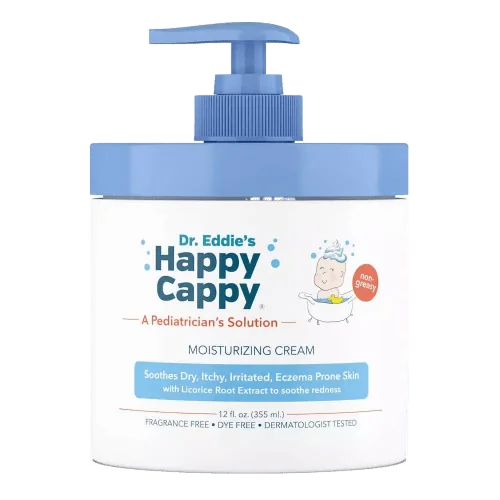 Moisturizing Cream for Dry, Itchy, Eczema-Prone Skin, 12 oz Pump Jar
$25.65 / 3 weeks – $49.00
Moisturizing Cream for Dry, Itchy, Eczema-Prone Skin, 12 oz Pump Jar
$25.65 / 3 weeks – $49.00
-
 Complete 3-Step Routine for Cradle Cap & Eczema-Prone Sensitive Skin
Original price was: $51.45.$47.00Current price is: $47.00.
Complete 3-Step Routine for Cradle Cap & Eczema-Prone Sensitive Skin
Original price was: $51.45.$47.00Current price is: $47.00.
-
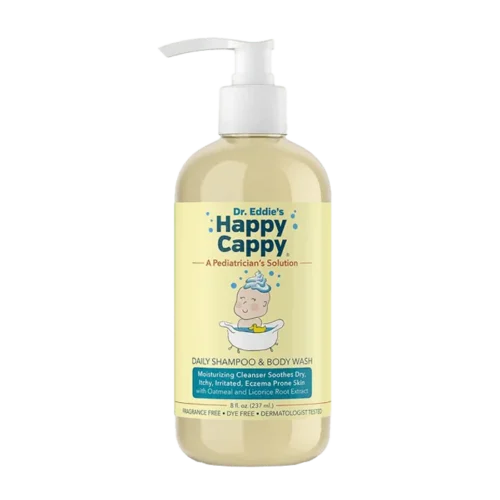 Daily Eczema Shampoo & Body Wash for Dry, Itchy, Sensitive Skin
$24.70 / 3 weeks – $109.08
Daily Eczema Shampoo & Body Wash for Dry, Itchy, Sensitive Skin
$24.70 / 3 weeks – $109.08