
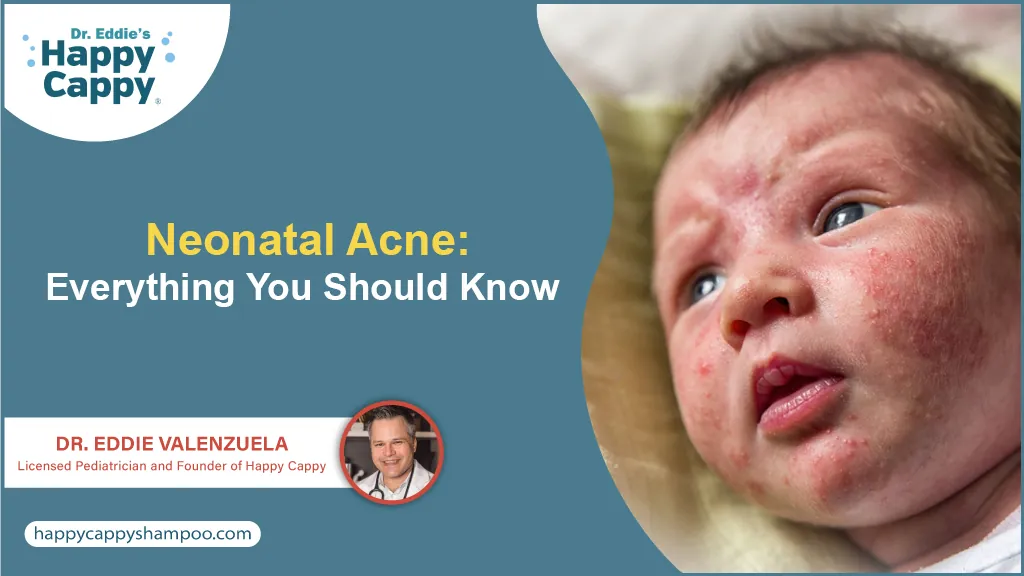
Ok, 3 weeks after birth. We got this!…yellowing of my baby’s skin (jaundice) is going away, weird red ant-bite-looking things (erythema toxicum) are no longer all over her body, and she is finally sleeping just a tad better.
Now what in the world are these new red bumps on the baby’s face? Your little one most likely has neonatal acne. Weren’t they supposed to experience acne in their teens? NO! Babies can experience acne, which is often referred to as baby acne. In this blog, we’ll help you understand what neonatal acne is, its symptoms, causes, and how to get rid of it.
Quick answer: Baby acne commonly appears in the first few weeks of life and usually fades without treatment. Gently clean the skin, avoid squeezing or scrubbing, and let your pediatrician assess new acne that starts after 6 weeks, deep bumps, or a rash that is worsening.
What is Neonatal Acne?
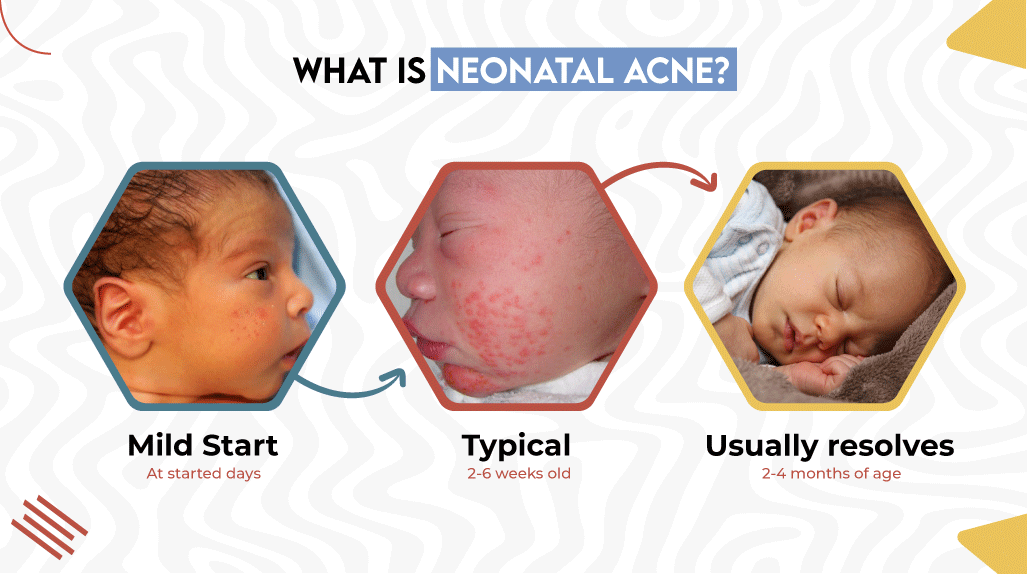
Neonatal acne means acne appearing during the first 6 weeks of life. Parents also use “baby acne” for neonatal cephalic pustulosis, a common newborn eruption of small bumps and pustules. These terms overlap in everyday conversation, but they are not exact medical synonyms: neonatal cephalic pustulosis has no comedones (blackheads or closed whiteheads). Infantile acne starts later and deserves its own assessment.
What a mouthful. It is no wonder pediatricians still just call this benign, temporary condition neonatal acne or baby acne. “According to the American Academy of Dermatology, about 20% of newborns experience it, but in my pediatric experience, I would say it happens much more frequently. It usually appears before the baby is 5 weeks old and is most common in babies of 4 weeks of age,” says Dr. Eddie.
Neonatal Acne Symptoms
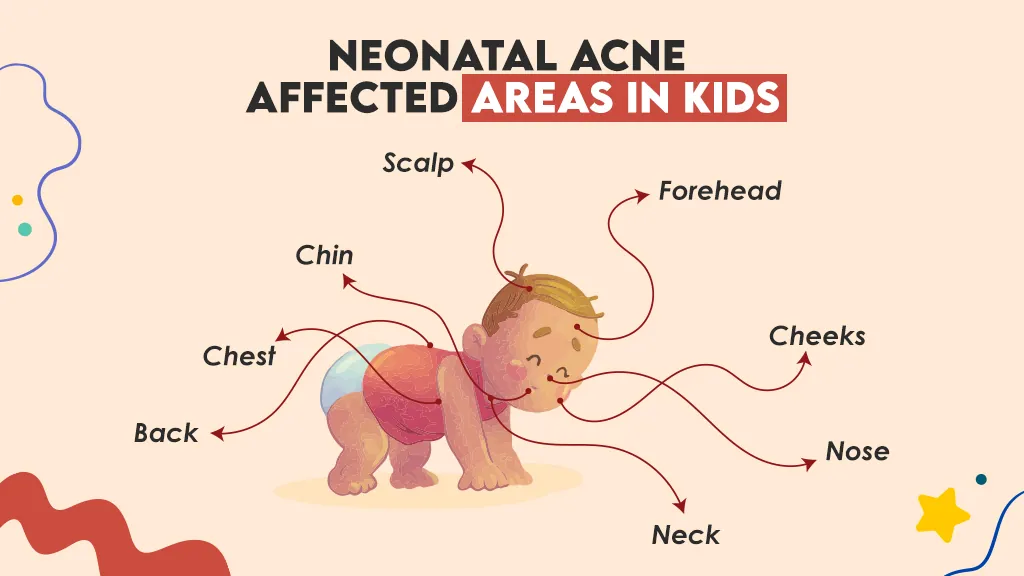
Most people think that newborn acne usually only affects the face; however, the truth is, according to the Cleveland Clinic, those tiny white pimples can also appear on the:
- Cheeks
- Neck
- Forehead
- Chin
- Scalp
- Nose
- Chest
- Back
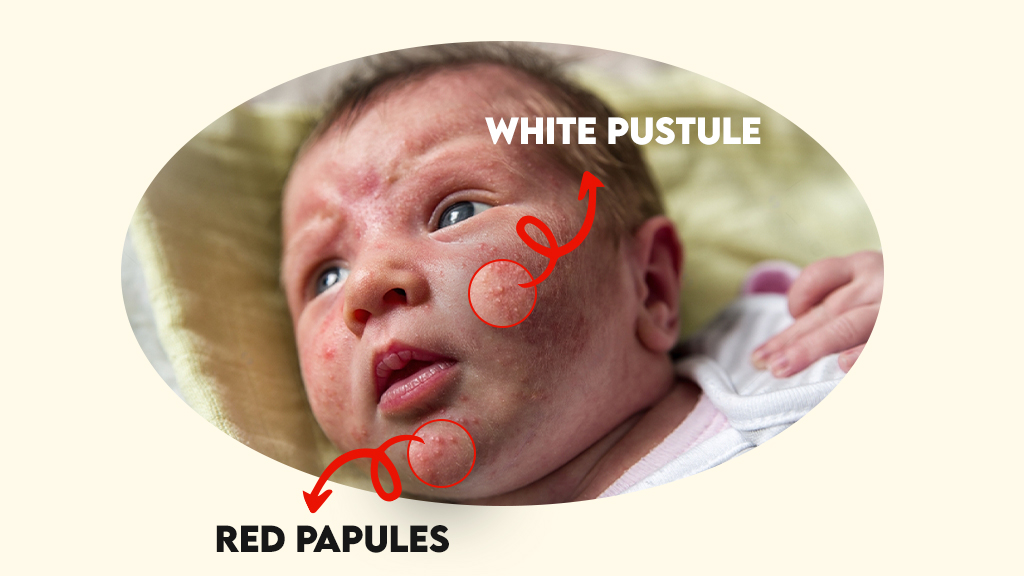
Baby acne can appear as clusters of red bumps (papules) and pus-filled bumps (pustules), sometimes with redness around them.
A pus-filled bump is a pustule; it is not the same as a closed whitehead. Blackheads and closed whiteheads can occur in true acne, but are absent in neonatal cephalic pustulosis. If you see them, ask your pediatrician to clarify which condition your baby has.
The redness around the bumps and pimples may vary depending on the baby’s skin tone. It may appear as red or pink in babies with lighter skin tones and purple in darker skin tones.
A photograph alone cannot confirm the cause of a newborn rash.
What Causes Baby Acne?
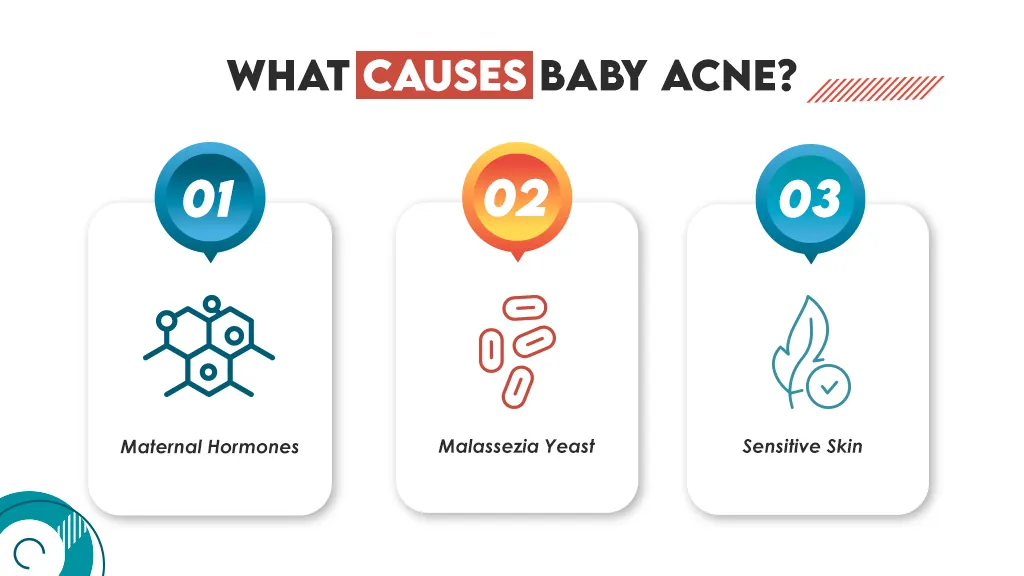
The experts are not sure about what exactly might be causing pimples in newborns. However, some of the common baby acne causes are:
Maternal Hormones
Hormones from the mother and the baby can stimulate oil glands around birth. In true acne, oil and skin cells can plug follicles. This does not mean a parent has done anything wrong.
Malassezia Yeast
The yeast Malassezia normally lives on skin. It is associated with neonatal cephalic pustulosis, although that does not make every newborn breakout a fungal infection. DermNet explains this distinction.
Malassezia also plays a role in cradle cap and seborrheic dermatitis. These conditions have other contributing factors and require care appropriate to the diagnosis.
Sensitive skin
Milk, spit-up, drool, rubbing, and irritating products can aggravate delicate skin. Gently remove residue without repeated scrubbing. A baby’s breakouts are not evidence that their face is dirty.
Can Breastfeeding Cause Neonatal Acne?
Baby acne is not a reason to stop breastfeeding or change formula. Hormonal influences have been proposed, but an individual breakout does not establish that breast milk caused it. Continue your usual feeding plan and gently clean milk or spit-up from the face. Cleveland Clinic’s baby acne guidance also advises that this temporary condition should not change how you feed your baby.
Diagnosing Baby Acne
Your pediatrician can usually identify baby acne by examining the skin and asking when the bumps began. Routine allergy tests or a skin biopsy are not needed. Different-looking lesions, blisters, deep bumps, or an unwell baby may require a different evaluation.
Milia, eczema, and other newborn rashes can look similar. For a focused comparison, see baby acne or rash.
Neonatal Acne Treatment
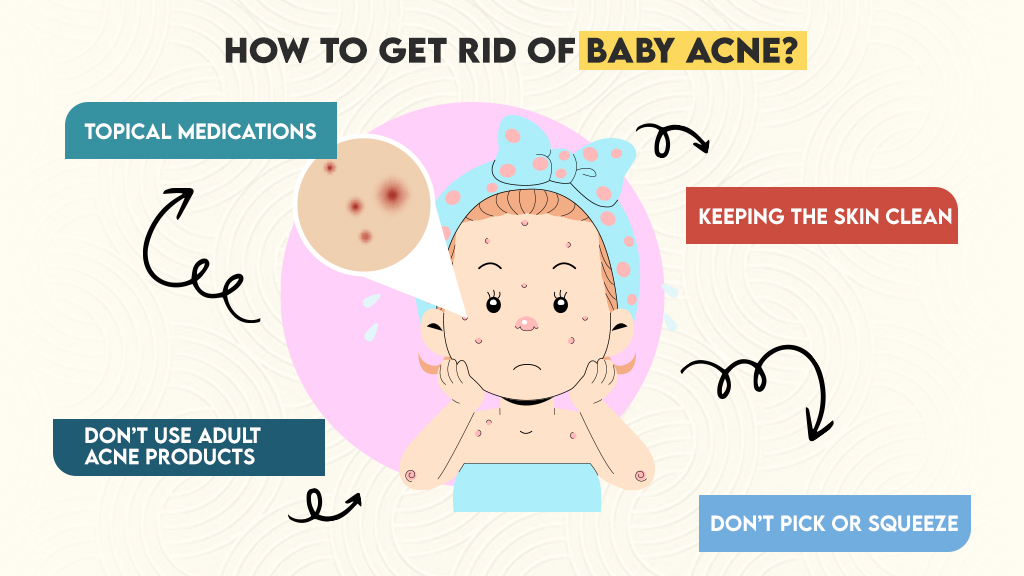
Most newborn acne improves without medication. Gentle care can limit additional irritation while the skin settles; no cleanser can promise that every baby’s acne will clear in days.
Gentle Cleansing
Clean the face gently with lukewarm water, adding a mild, fragrance-free cleanser when needed, then rinse and pat dry. Skip scrubbing brushes and exfoliation on the bumps. Mayo Clinic recommends gentle washing and avoiding oily products.
Happy Cappy Daily Shampoo & Body Wash is our fragrance-free option for routine cleansing of sensitive skin. Keep cleanser out of the eyes and rinse well. Daily cleansing is skin care, not a guaranteed acne treatment.
Happy Cappy Medicated Shampoo & Body Wash contains 0.95% pyrithione zinc to help relieve flaking, scaling, and itching associated with dandruff and seborrheic dermatitis. If your baby also has cradle cap, discuss an appropriate routine with their pediatrician. Ask the clinician before using a medicated wash specifically for facial bumps, since the diagnosis matters.
Avoid Harsh Products
Do not start adult acne washes, benzoyl peroxide, retinoids, or other acne medicines on a newborn unless the child’s clinician recommends them. Avoid fragrance, abrasive scrubs, essential oils, vinegar, and greasy products on the breakouts. More products do not necessarily mean faster clearing.
Don’t Pick or Squeeze
Squeezing or picking the pimples on the baby’s skin will only make the condition worse. Bacteria from our hands can also cause other skin infections. So it is best to leave the pimples and breakouts alone. Just wash them, pat them dry, and that’s all.
Topical Medications
Most newborns need no acne medicine. For persistent neonatal cephalic pustulosis, a clinician may consider a topical antifungal such as ketoconazole. True infantile acne may need a different prescription treatment. Let the clinician choose the product and schedule; a rash that looks like acne may need entirely different care.
How Long Does Newborn Acne Last?
Most newborn breakouts fade over a few weeks, although some take several months. There is no exact deadline that fits every baby. Contact your pediatrician if the rash is worsening or not gradually improving; do not wait for a particular birthday if you are concerned. Scars are unusual with mild newborn acne, but deep lesions or infantile acne deserve assessment.
Stages of Baby Acne Healing
As the eruption settles, fewer new bumps appear, existing bumps flatten, and the surrounding redness or discoloration fades. Improvement can be uneven from day to day. There is no fixed sequence or one-week healing schedule; watching the overall trend is more useful than counting individual pimples.
Can You Prevent Baby Acne?
There is no reliable way to prevent the usual newborn breakout. The gentle-care steps above can help limit extra irritation while it clears.
When to Consult a Pediatrician?
Arrange an assessment if acne first starts after 6 weeks, develops blackheads, deep nodules or scars, or is persistent or worsening. The American Academy of Dermatology recommends evaluation for acne that begins after 6 weeks.
Get prompt medical advice for blisters, spreading redness, skin peeling with illness, poor feeding, or unusual sleepiness. These are not features to dismiss as routine baby acne.
For a baby 3 months old or younger, a rectal temperature of 100.4°F (38°C) or higher requires an immediate call to the pediatrician, even if the baby otherwise seems well. See AAP guidance on fever in young babies.
Neonatal Acne and Similar Skin Conditions
Neonatal and Infantile Acne
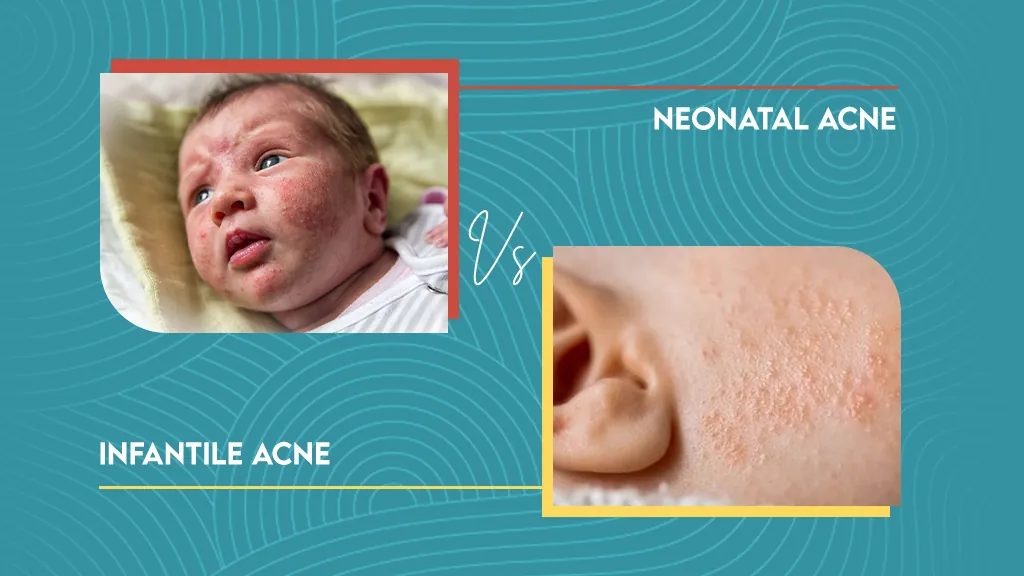
Many people consider infantile acne, neonatal acne, and baby acne to be the same. But the truth is, neonatal or baby acne is a little different from infantile acne. Baby acne usually appears in the first few weeks of your baby’s life, mostly before 6 weeks, and disappears within a few weeks.
Infantile acne begins after 6 weeks of age, often between 3 and 6 months. It may take months to settle and sometimes lasts longer. Deep bumps and scarring are reasons to seek a pediatric dermatologist’s advice.
Here are a few key differences between baby acne vs infantile acne to help you identify them.
| Neonatal Acne | Infantile Acne | |
| Age of onset | Birth to 6 weeks | After 6 weeks, often 3 to 6 months |
| Blackheads | Absent in neonatal cephalic pustulosis; possible in true neonatal acne | May be present |
| Resolves | Usually over weeks to months | Usually lasts for months, sometimes until the baby turns 1 or 2 years old |
| Scarring | Usually no | Possible, especially if left untreated |
| Hormones associated | Hormonal influences; Malassezia association in pustulosis | Hormonal stimulation of oil glands |
| Treatment | Usually resolves on its own with gentle cleansing and care | May require medical treatment and topical medications |
Neonatal Acne Vs Milia
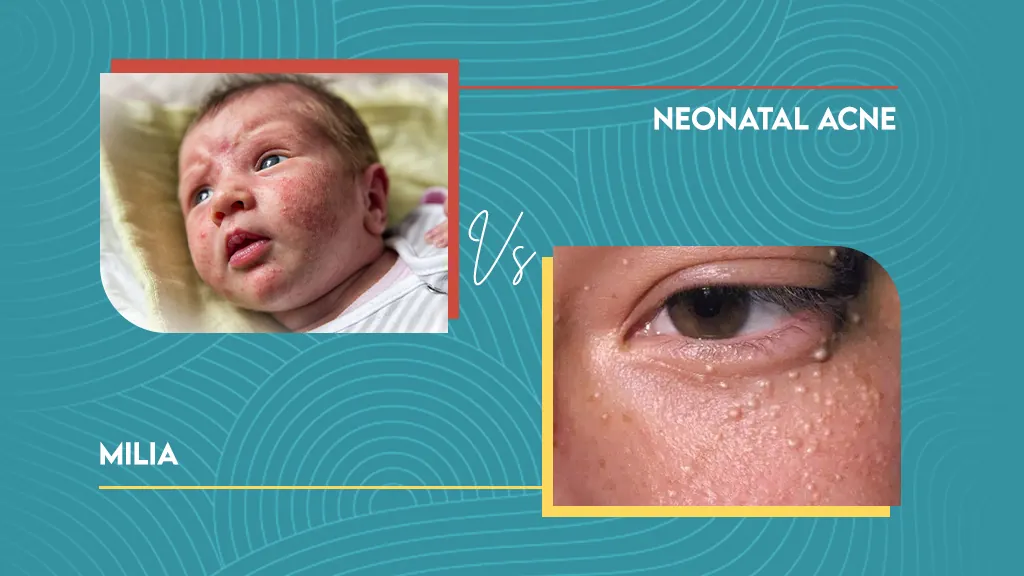
Parents often confuse neonatal acne with another common skin condition known as Milia or milk spots, that causes small bumps on a baby’s face. The bumps are usually white in color.
Baby acne can cause inflamed papules and pustules, while milia are tiny cysts containing trapped keratin. Inflammation around the bumps favors a different explanation from simple milia.
Here are a few key differences to help you distinguish them.
| Neonatal Acne | Milia | |
| Causes | Depends on the eruption: hormonal influences in acne or Malassezia-associated pustulosis | Trapped skin cells under the skin |
| Inflammation | Yes | No |
| Appearance | Red or white pimples | Small pearly-white bumps |
| Location | Face, chest, neck, and back | Cheeks, nose, and around eyes |
Erythema Toxicum vs Neonatal Acne
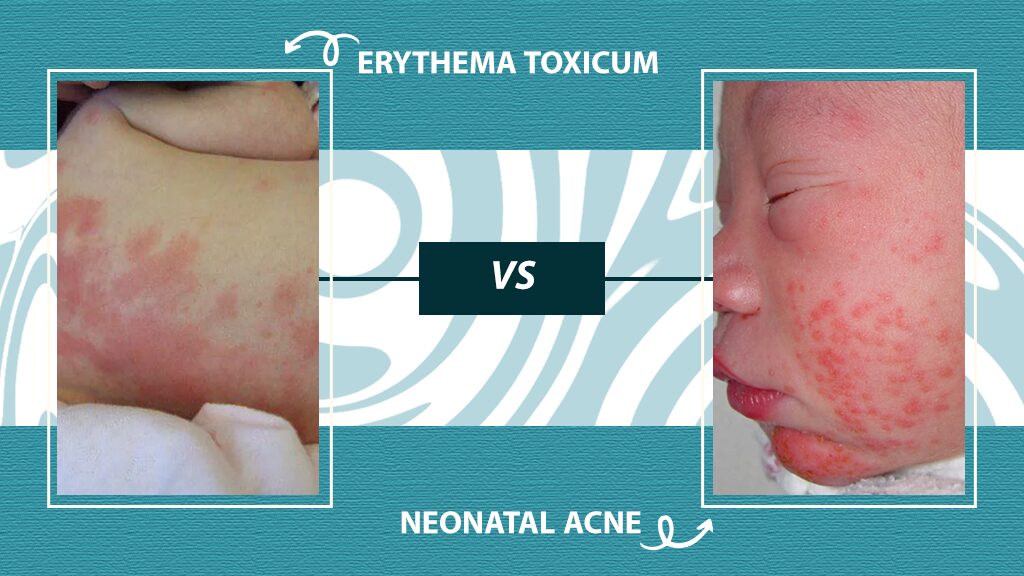
Another common skin condition experienced by newborns is erythema toxicum neonatorum, or ETN. Parents often confuse both the conditions because they cause redness on the skin. However, the two conditions are quite different.
Erythema appears within a few days after birth and usually appears as red patches with a small white or yellow center. On the other hand, baby acne appears between the ages of 2 and 6 weeks and usually causes white pimples with redness around them.
Here are some differences between the conditions to help you identify them.
| Neonatal Acne | Erythema Toxicum | |
| Onset | 2-6 weeks | 2-5 days after birth |
| Duration | A few weeks or a month | A few days, faster than neonatal acne |
| Appearance | Red or white pimples | Red blotches with yellow or white center |
The good thing is that both the skin conditions are harmless and usually resolve on their own without any medical treatment.
Baby Acne or Eczema
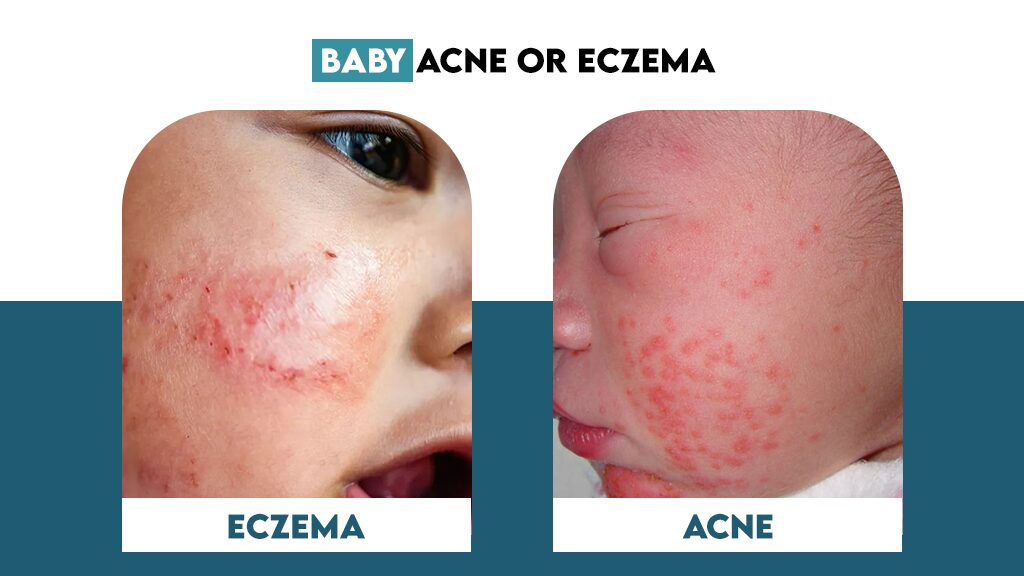
Eczema, also known as atopic dermatitis, and baby acne are two very common skin conditions in babies. These conditions are often confused with each other because of their similar symptoms, such as redness, rashes, and small bumps on the skin.
However, both conditions are totally different and require different treatments. Newborn acne usually starts in the first 6 weeks, while eczema can begin during infancy, including before 6 months. Age alone cannot distinguish them. Baby acne is a temporary condition that will resolve in a few weeks, but eczema is a chronic condition. This means that it may resolve on its own, or it may persist in the form of eczema flare-ups for a long time.
Here are some common differences between baby acne and eczema.
| Neonatal Acne | Eczema | |
| Onset | 2-6 weeks of age | Can begin in the first months of life |
| Causes | Hormonal influences in acne; Malassezia association in pustulosis | Genetics, skin barrier dysfunction, and environmental triggers |
| Appearance | Red and white pimples | Dry, itchy, inflamed or flaky patches; pus can suggest infection |
| Itching | No | Yes |
| Chronic | No, clears up after a few weeks | Yes, it may appear again as a flare-up |
If you notice that your baby’s skin is becoming dry, flaky, or itchy or has red patches on it, then there are chances they may be experiencing eczema. To be sure, it is a great idea to consult your baby’s pediatrician.
Care for diagnosed eczema is different from acne care. A pediatrician may recommend a gentle eczema skincare routine that includes:
- Keeping the skin clean with an eczema shampoo and body wash as needed, with lukewarm water.
- Moisturizing the skin with baby eczema cream at least twice daily.
Learn more about the difference between baby acne vs eczema in detail in this blog.
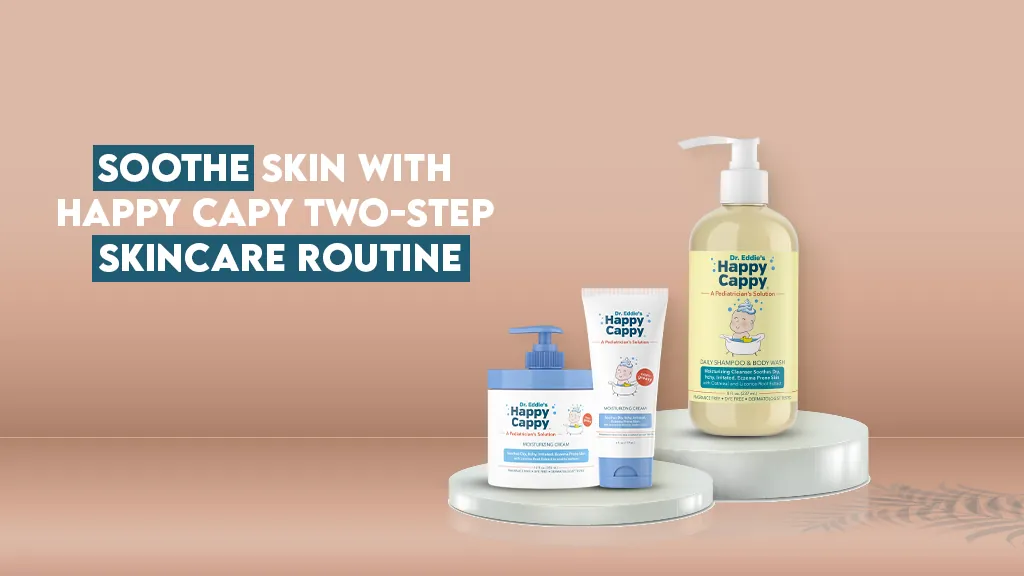
Do not apply a heavy cream to acne bumps simply because it helps a separate dry-skin condition.
Can Kisses Cause Baby Acne?
If you are not kissing your baby and are scared that it will cause acne on their face, please don’t be. Kisses are not related to causing acne on a baby’s face. It is mostly the hormones in the baby’s body.
However, excessive kissing can result in irritated skin and red rashes. Babies have sensitive skin, and their natural barrier is still developing, which makes it difficult for the skin to protect itself against the bacteria and viruses transferred from kissing.
Key Takeaways
- Baby acne is common and usually begins in the first few weeks.
- Gentle skin care and time are enough for most newborn breakouts.
- Continue normal feeding; avoid picking and unnecessary remedies.
- New acne after 6 weeks, deep lesions, or a worsening rash deserves an assessment.
- A fever or an unwell young baby needs prompt medical attention.
FAQs
- About
- Latest Posts

- WhatToExpect Mentioned Happy Cappy Shampoo as the Best Medicated Shampoo For Cradle Cap - September 29, 2025
- Parents.com Mentioned Happy Cappy Shampoo in the List of 10 Best Shampoos for Babies and Kids of All Hair Types - September 29, 2025
- Chain Drug Review Covers Happy Cappy’s CVS Launch Nationwide - August 27, 2025
Do all babies get baby acne?
No. Baby acne is common, but it does not affect every newborn. A breakout does not mean you have washed your baby too little or done anything wrong.
What is another name for neonatal acne?
Parents often say baby acne, newborn acne, or acne neonatorum. Neonatal cephalic pustulosis is a related-looking newborn eruption without blackheads or closed whiteheads. Infantile acne begins later and is not an exact synonym.
Does baby acne go away on its own?
Usually, yes. Most newborn breakouts gradually improve over weeks to months without medication. Contact your pediatrician if they are worsening, developing deep bumps, or not improving.
Why does my baby have acne?
The cause is not completely understood. Hormonal stimulation of oil glands can contribute to true acne. Malassezia yeast is associated with neonatal cephalic pustulosis, a common acne-like newborn eruption.
How do you care for newborn pimples?
Use lukewarm water and a mild cleanser when needed, rinse gently, and pat dry. Do not squeeze or scrub the bumps. Ask the pediatrician before starting an acne medicine or medicated wash for the face.
When does baby acne start?
It often appears around 2 to 4 weeks, but can be present at birth or develop during the first 6 weeks. Acne that first appears after 6 weeks should be assessed because it may be infantile acne or another condition.
Does breast milk help with baby acne?
Applying breast milk is not an established treatment for baby acne. Most newborn breakouts settle without it. Continue breastfeeding normally and ask your pediatrician before trying skin remedies.
Can breastfeeding cause baby acne?
Hormonal influences have been proposed, but a breakout does not show that breast milk caused it. Baby acne is not a reason to stop breastfeeding or change formula. Gently remove milk or spit-up left on the face.
What is the difference between neonatal acne and infantile acne?
Neonatal acne starts during the first 6 weeks. Infantile acne starts later and may include blackheads, closed whiteheads, or deeper bumps that can scar. A pediatrician or pediatric dermatologist can confirm the diagnosis and decide whether treatment is needed.
What is the best face wash for neonatal acne?
Start with gentle care: lukewarm water and a mild, fragrance-free cleanser when needed. A face wash does not need an acne drug or antifungal ingredient for routine newborn cleansing. Use medicated products for facial bumps only with the baby’s clinician’s guidance.
What medication is used for neonatal acne?
Most newborn breakouts need no medication. A clinician may recommend a topical antifungal for persistent neonatal cephalic pustulosis or a different prescription for true infantile acne. The choice depends on the diagnosis and the baby’s age.
Can you prevent baby acne?
There is no reliable way to prevent usual newborn breakouts. Gentle cleansing, removing feeding residue, avoiding greasy products on bumps, and leaving pimples alone can help limit extra irritation.
What is the ICD-10 code for baby acne?
L70.4 is the ICD-10 category titled infantile acne and is commonly associated with neonatal acne terminology. Neonatal cephalic pustulosis may be classified differently. The clinician or coder should select the code for the documented diagnosis and applicable coding system.
Suggested Products

Buy today
-
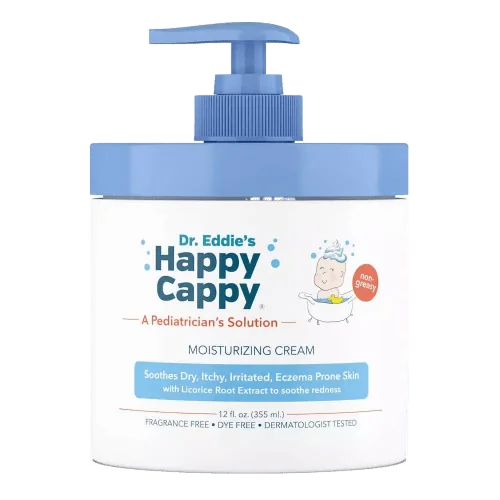 Moisturizing Cream for Dry, Itchy, Eczema-Prone Skin, 12 oz Pump Jar
$25.65 / 3 weeks – $49.00
Moisturizing Cream for Dry, Itchy, Eczema-Prone Skin, 12 oz Pump Jar
$25.65 / 3 weeks – $49.00
-
 Complete 3-Step Routine for Cradle Cap & Eczema-Prone Sensitive Skin
Original price was: $51.45.$47.00Current price is: $47.00.
Complete 3-Step Routine for Cradle Cap & Eczema-Prone Sensitive Skin
Original price was: $51.45.$47.00Current price is: $47.00.
-
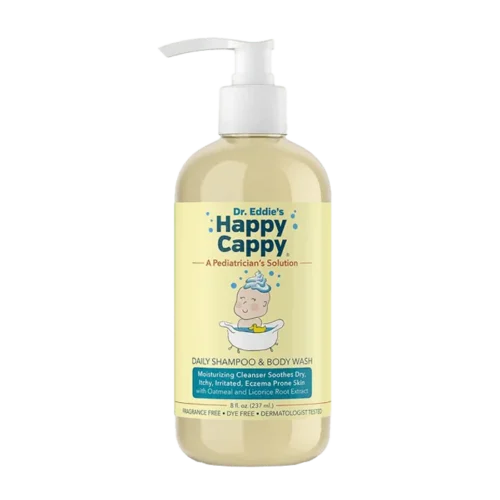 Daily Eczema Shampoo & Body Wash for Dry, Itchy, Sensitive Skin
$24.70 / 3 weeks – $109.08
Daily Eczema Shampoo & Body Wash for Dry, Itchy, Sensitive Skin
$24.70 / 3 weeks – $109.08