

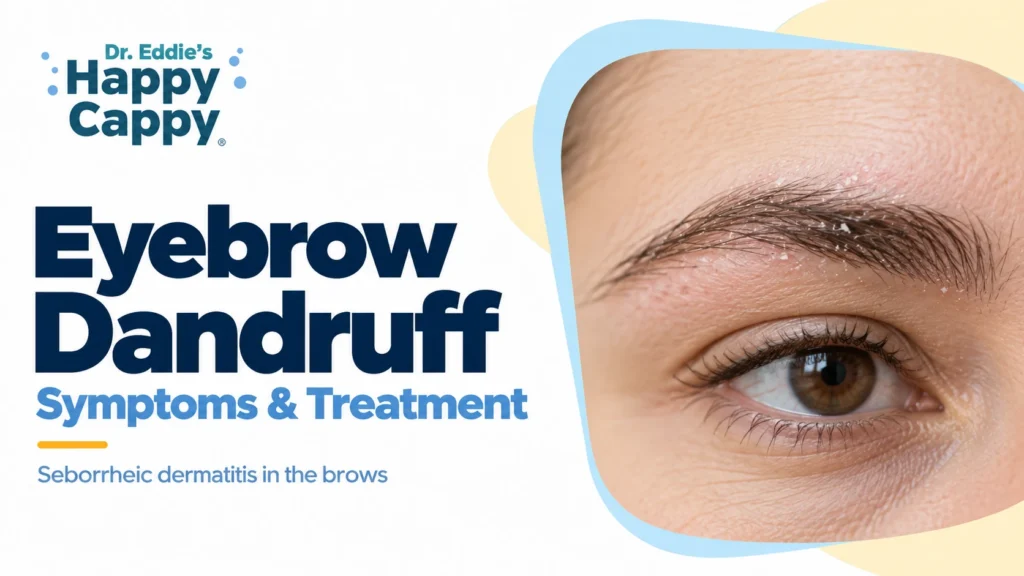
Eyebrow flakes have several possible causes
Eyebrow dandruff usually means seborrheic dermatitis under or between the brows. Dry skin, eczema, and reactions to products can also cause flakes. Recurring scale alongside scalp dandruff or scaling beside the nose supports a seborrheic pattern; appearance alone cannot confirm it.1,7
Look at the surrounding skin and when symptoms began. Greasy or loose scale, itching, and changes in skin color can occur with seborrheic dermatitis. On darker skin, the affected area may look lighter or darker rather than obviously red.1
The pattern helps distinguish dandruff from dryness
| What you notice | What to consider |
|---|---|
| Recurring white or yellowish scale beneath the brows | Seborrheic dermatitis is more likely when the scalp, nose creases, or ears are also affected. |
| Fine flakes with skin that feels tight or rough | Dry skin may follow harsh washing or dry weather; gentle cleansing and moisturizer can help. |
| Prominent itching with dry, inflamed patches | Atopic eczema is another possibility, especially with eczema elsewhere. |
| Burning, stinging, or a rash after a product or grooming change | Irritant or allergic contact dermatitis may be responsible. |
| Persistent, sharply defined scaly patches | Psoriasis may resemble seborrheic dermatitis; scalp, nail, or other skin changes help a clinician assess it. |
These patterns can overlap. Bring product names and photographs of earlier flares to an appointment if the diagnosis remains uncertain.1,5,7,8
Products and grooming can irritate eyebrow skin
Consider brow gels, tint, makeup, facial cleansers, hair dye, fragrance, and products transferred by your fingers. Reactions may follow a new product or develop after repeated use. An ingredient allergy cannot be identified reliably from the appearance of a rash alone.5
Pause a suspected cosmetic product and keep cleansing gentle. Avoid waxing, scrubbing, and adding several new remedies while the skin is irritated. If symptoms recur, a dermatologist can assess whether allergy testing would help.
Match eyebrow care to the likely cause
Start with gentle cleansing
Wash with lukewarm water and a mild, fragrance-free cleanser, rinse thoroughly, and pat dry. Leave attached scales alone. A fragrance-free moisturizer can help dry surrounding skin. Avoid abrasive brushes, essential oils, and products that sting.2,5
Choose treatment for seborrheic dermatitis
A medicated wash or a clinician-selected antifungal cream can help when seborrheic dermatitis is the cause. Persistent inflammation may need another treatment suitable for facial skin. Do not use a steroid cream near the eyes without specific guidance on the product and duration.3
Where Happy Cappy Medicated fits
Happy Cappy Medicated Shampoo & Body Wash contains 0.95% pyrithione zinc to relieve flaking, scaling, redness, and itching associated with dandruff and seborrheic dermatitis. Its fragrance-free formula includes licorice root extract to help soothe redness.4
Follow the current bottle's directions. Wet the affected skin and hair, massage gently, and rinse thoroughly. For best results, use at least twice weekly or as directed by a doctor. Keep it away from the eyes, eyelid margins, and lashes; rinse eyes thoroughly with water if contact occurs.4
For external use only. Ask a doctor before use for seborrheic dermatitis over a large body area. Stop use and ask a doctor if the condition worsens or does not improve with regular use as directed.4
Our Daily Shampoo & Body Wash and Moisturizing Cream provide gentle cleansing and moisturizing for dry, sensitive skin. They have different roles from a dandruff medication; Medicated is not an atopic eczema treatment.
Seborrheic eyebrow flakes can return
Adult seborrheic dermatitis commonly improves and flares again. Note whether scalp symptoms, weather, stress, or irritating products change at the same time. A maintenance routine may help once a flare settles. The main seborrheic dermatitis guide explains causes and broader treatment options.1,2
If directed care is not helping, reassess the diagnosis before adding more treatments. Dryness, eczema, and contact reactions require care suited to their cause.
Baby eyebrow care and persistent itching have dedicated guides
Babies can develop eyebrow scaling alongside cradle cap. Use the baby eyebrow guide for gentle care around small brows and eyes. If itching is your main concern, the itchy eyebrows guide covers that symptom in more detail.
Eyelid symptoms and worsening skin need a closer look
Crust at the lash roots, sore lids, or gritty eyes may reflect blepharitis. Keep dandruff wash away from the lash line. Our eyelid dermatitis guide explains other eyelid patterns.
Arrange an assessment for an uncertain rash, symptoms that persist despite directed care, pain, oozing, swelling, or patchy eyebrow hair loss. Seek urgent care for eye pain, a very red eye, light sensitivity, or a change in vision.6