

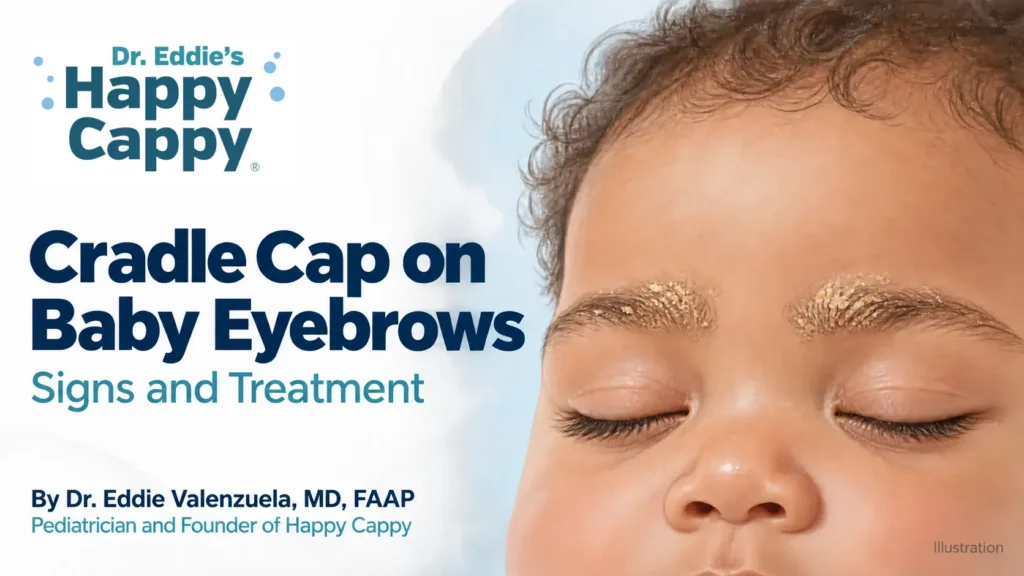
Cradle cap can affect baby eyebrows
White or yellowish scales in and between a baby's eyebrows can be infantile seborrheic dermatitis. On the scalp, the same condition is called cradle cap. Babies with ordinary cradle cap are usually comfortable. Clean gently, leave attached scales alone, and keep products out of the eyes.2,3
This guide covers eyebrow skin and hair. Crust along the eyelids or lashes needs separate care. For the scalp routine and causes, see the cradle cap guide.
Greasy scales can collect in eyebrow hairs
Scales may look white, cream, or yellow and cling to the eyebrow hairs, with mildly inflamed skin underneath. Scalp or forehead scales may appear at the same time. Flake color alone cannot identify the cause.3,6
Marked itching, pain, or a baby who seems unwell is not typical of simple cradle cap. The condition is not contagious or a sign of poor washing.2,6
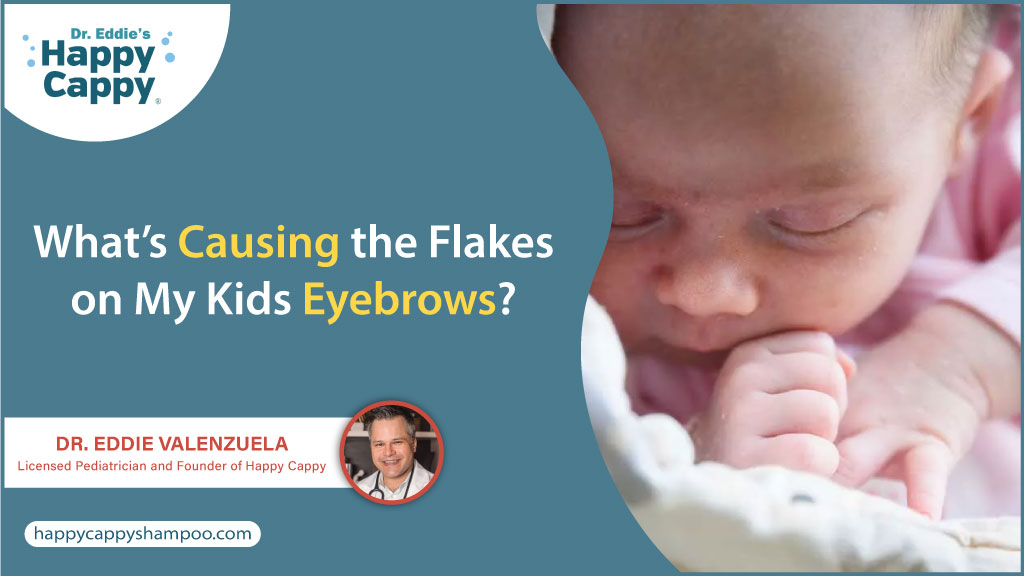
Gentle cleaning protects the eyebrow area
- Clean lightly. Use lukewarm water and clean fingertips or a soft cloth. A gentle, fragrance-free emollient cleanser can help affected facial skin. Keep cleanser and rinse water away from the eyes.3
- Let loose flakes wash away. Leave scales that remain attached. Avoid picking, scraping, tweezers, or vigorous brushing.
- Pat dry. A small amount of bland, fragrance-free emollient may soften stubborn scale on the skin. Keep it away from the eyelid edges and lashes.3,5
- Keep the routine simple. Avoid fragranced remedies and essential oils. Stop a product that irritates the skin.
A scalp brush belongs on the scalp. Use fingertips or a soft damp cloth on the eyebrows. The goal is comfortable skin, without forcing every flake off during one wash.
Medicated washing can help seborrheic scales
Happy Cappy Medicated Shampoo & Body Wash contains 0.95% pyrithione zinc to relieve flaking, scaling, redness, and itching associated with dandruff and seborrheic dermatitis. Its fragrance-free formula includes licorice root extract to help soothe redness.4
Follow the current bottle's directions. Wet the affected skin and hair, massage gently, and rinse thoroughly. For best results, use at least twice weekly or as directed by a doctor. Keep it away from the eyes, eyelid margins, and lashes; rinse eyes thoroughly with water if contact occurs.4
For external use only. Ask a doctor before use for seborrheic dermatitis over a large body area. Stop use and ask a doctor if the condition worsens or does not improve with regular use as directed.4
Adult dandruff shampoos differ in their ingredients and age directions. They are not interchangeable choices for a baby. Persistent or very inflamed facial patches may need a clinician-selected treatment.5,8
Other causes matter when a child has eyebrow flakes
| What you notice | What to consider |
|---|---|
| Greasy scales and a comfortable baby | Infantile seborrheic dermatitis is a common explanation. |
| Dry, very itchy, inflamed skin | Eczema may need a different care plan. |
| A rash after a lotion, cleanser, or grooming product | Irritant or allergic contact dermatitis is possible. |
| Sticky eyes, sore eyelids, or crust at lash roots | An eyelid problem such as blepharitis needs separate assessment. |
These are clues, not a diagnosis. In an older child, persistent eyebrow flaking should not automatically be called cradle cap. The eyebrow flaking guide compares dandruff, dryness, and other causes.2,5,7,9
Arrange an examination for worsening or persistent symptoms, bleeding, oozing, pus, painful swelling, or patchy hair loss. Seek urgent care for eye pain, a very red eye, changes in vision, or an unwell baby.2,7
Improvement is gradual
Infantile seborrheic dermatitis often improves over weeks to months. If gentle care is not helping after a few weeks, have the rash checked. Read more about how long cradle cap lasts.2,3
For related concerns, see forehead and hairline care and cradle cap and hair loss.