


Part of the Eczema Symptoms and Pictures guide.
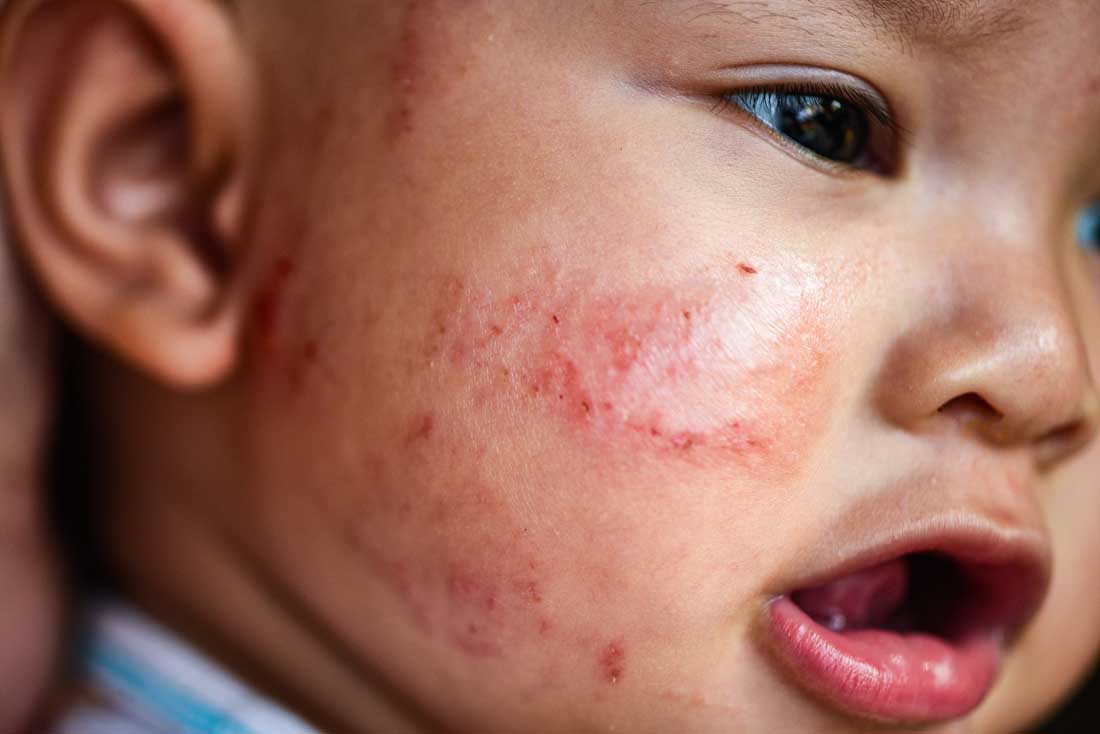
Quick answer: Baby eczema often appears as itchy, dry, rough or scaly patches. Babies may rub the affected skin before they can scratch. Color varies with skin tone, and photographs alone cannot confirm a diagnosis. New pain, oozing or a worsening rash need assessment.
The appearance of baby eczema
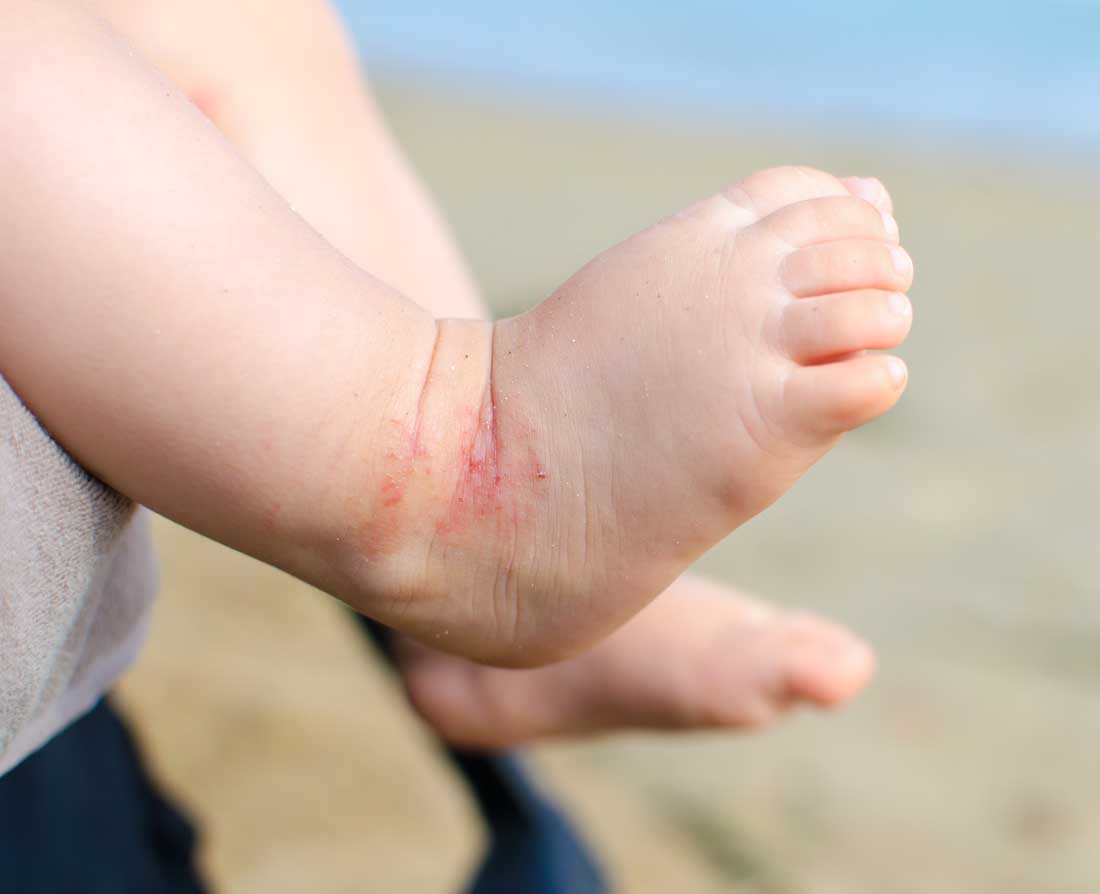
Possible signs include dry or scaly patches, tiny bumps, scratch marks, and skin that feels rougher than the surrounding area. A baby who cannot scratch may rub their face against bedding or a caregiver. Itching can disturb sleep. Symptoms may settle and then return.
Some patches become cracked or weepy. Oozing alone cannot tell you whether there is an infection. New crusting, tenderness, pus, blisters, or rapid worsening should prompt medical advice.
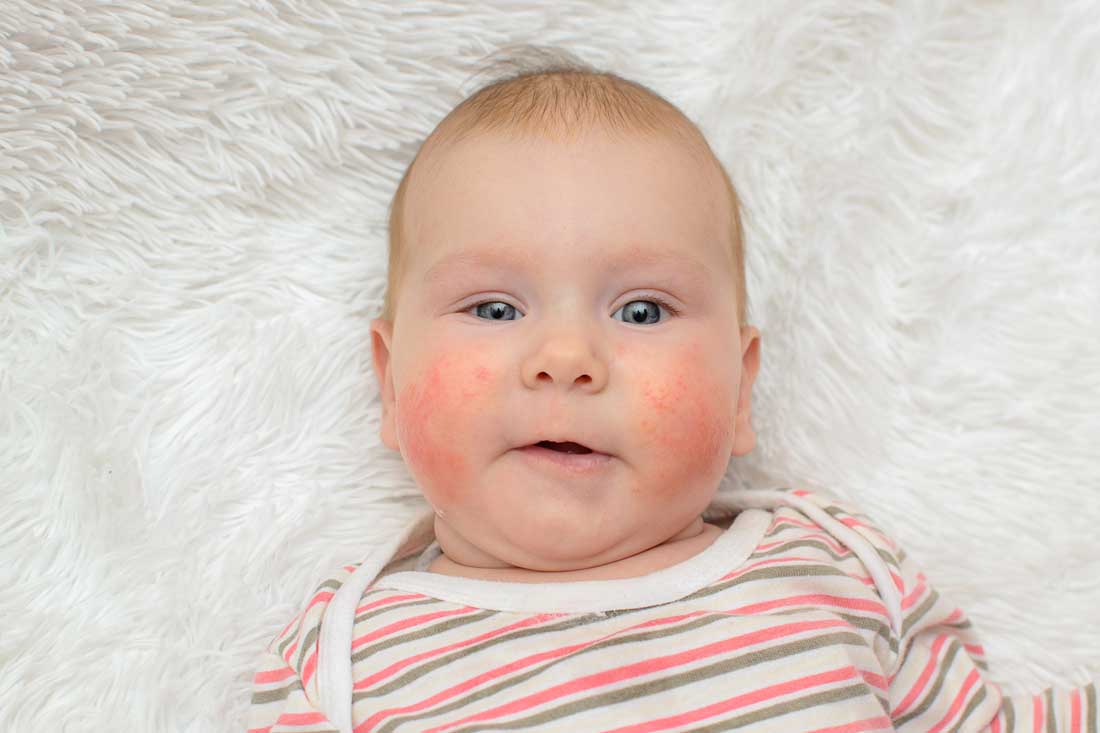
Appearance across skin tones
Compare affected areas with nearby skin in natural light. Inflammation may be easier to notice by its roughness, swelling, or itch than by redness, especially on deeper skin tones.
| What to notice | Possible appearance |
|---|---|
| Color during a flare | Pink or red patches may be prominent on lighter skin. On brown or Black skin, patches may look darker brown, purple, gray, or less visibly red. |
| Surface and texture | Dryness, scaling, small raised bumps, thickening, or scratch marks can occur at any skin tone. |
| Color after a flare | An area may stay lighter or darker after the active inflammation improves. A color change alone does not mean the flare is still active. |
The photographs on this page show a limited range of skin tones. For additional clinical examples, including darker skin, see the AAD's atopic dermatitis image and symptom guide1. A photograph is a useful example, but it cannot establish your baby's diagnosis.
Common locations by age
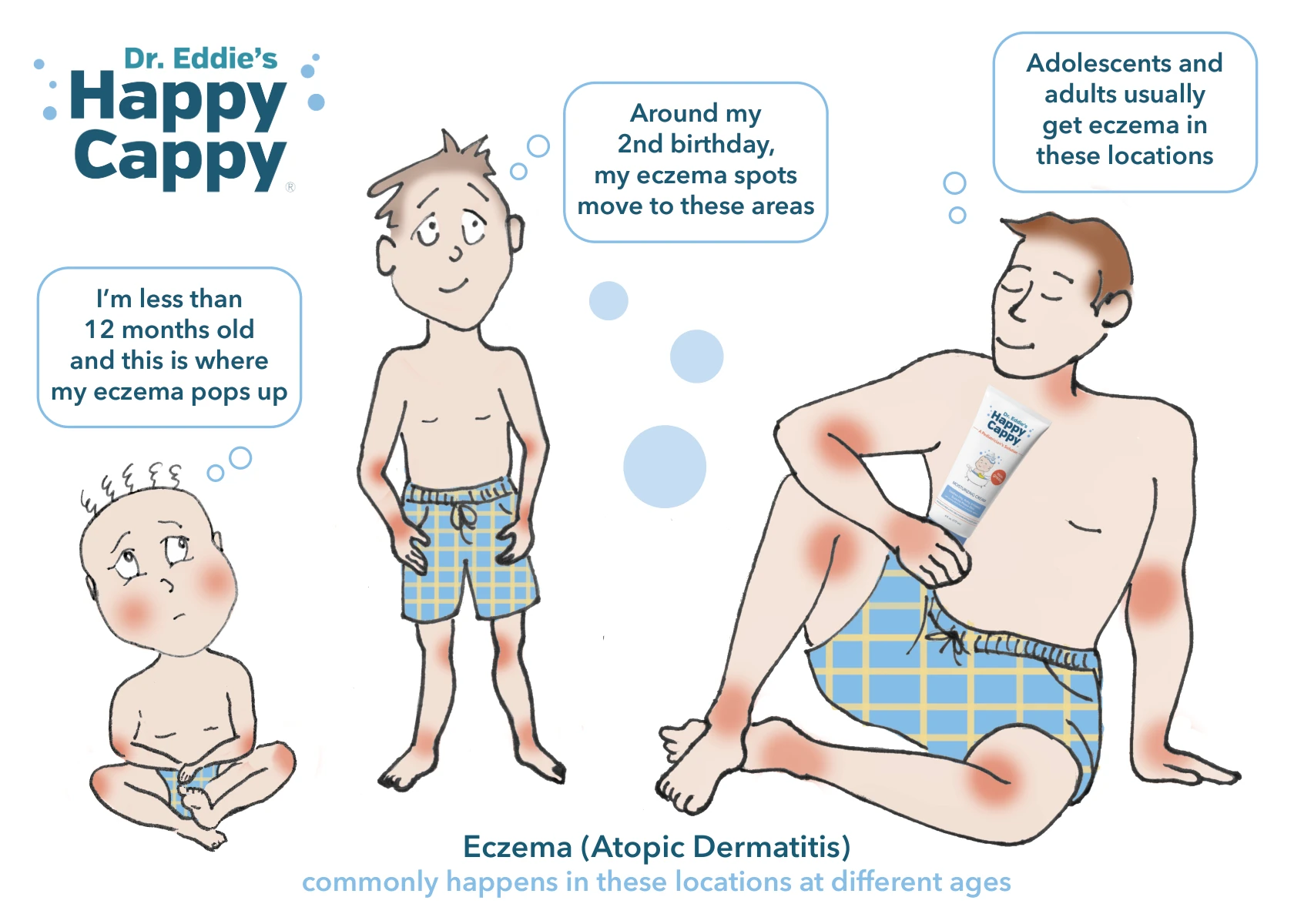
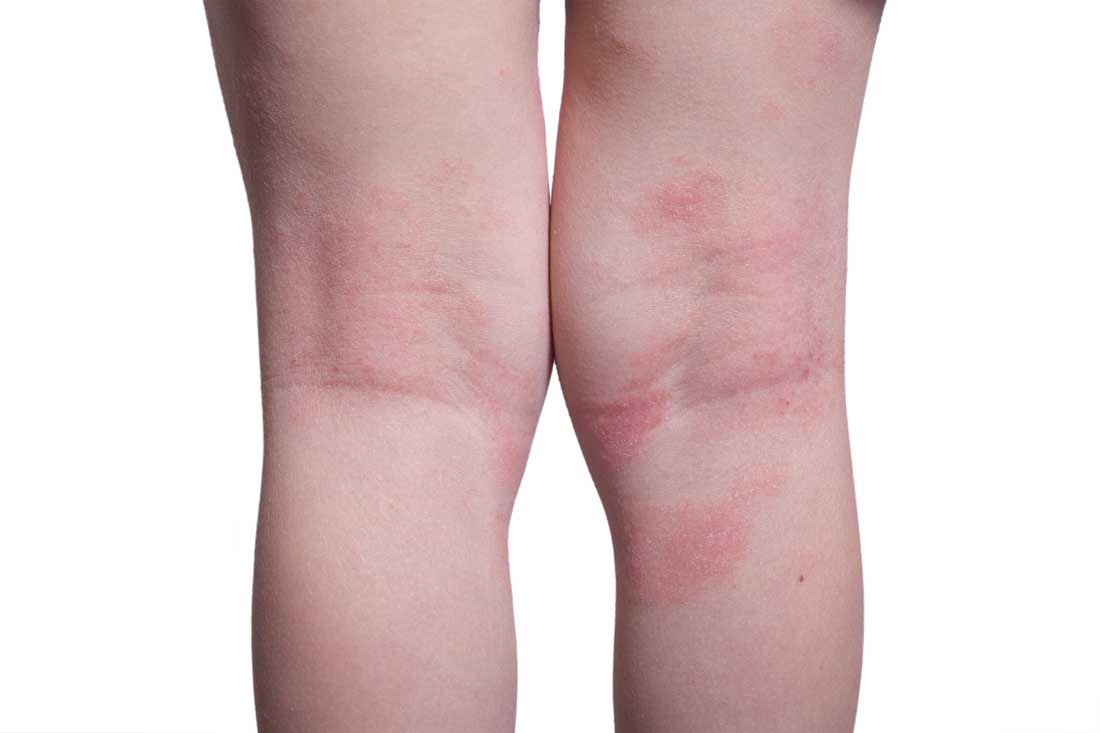
In babies, eczema often affects the cheeks, scalp, and outer arms or legs; the trunk can also be involved. As children grow, patches commonly occur in skin folds such as the elbows and knees. The diaper area is often less affected in atopic dermatitis, so a rash concentrated there needs consideration of other causes.
Baby rashes that resemble eczema
Several conditions overlap in appearance, and more than one can occur at the same time. These clues help you describe a rash; they are not a way to rule conditions in or out at home.
| Possible lookalike | Clues to discuss with a clinician |
|---|---|
| Cradle cap | Greasy-looking or crusty scales, often on the scalp and sometimes around the eyebrows. It usually causes little discomfort. Eczema tends to be itchier, and both can coexist. |
| Baby acne | Small spots or pimples, often on the cheeks, nose, or forehead. A clinician can distinguish acne-like bumps from eczema or infection. |
| Irritant or contact dermatitis | A rash where saliva, wipes, a cleanser, or another substance repeatedly touches the skin. Location and a recent product change may be useful clues. |
| Heat rash | Small raised spots associated with overheating or sweating. Heat can also aggravate existing eczema. |
| Ringworm | A round or expanding scaly patch may be a fungal infection, but eczema can also form round patches. An examination, and sometimes testing, is needed to tell them apart. |
See the NHS cradle cap guide2, AAD baby acne guide3, and NHS guide to childhood rashes4 for more examples.
Signs that need an examination
A scheduled examination
Book an examination when the diagnosis is uncertain, a rash persists or spreads, or itch is disrupting sleep or feeding. Bring up any treatment that has not helped, including the product name and how long you used it.
Urgent skin assessment
Seek urgent medical care if the skin rapidly worsens, becomes painful, hot, or swollen, develops pus or clusters of blisters, or the baby has a fever or seems unwell. Blistering near the eyes needs urgent assessment. These changes can signal an infection that needs treatment.
Emergency symptoms
If a baby has trouble breathing, marked facial swelling, or is difficult to wake, call emergency services. The NHS rash guidance4 describes additional emergency warning signs.
Information for the appointment
- When the rash began and whether it comes and goes.
- Where it started and which areas are now affected.
- Whether your baby rubs, scratches, sleeps poorly, or seems uncomfortable.
- Recent changes in cleansers, creams, wipes, clothing, or medicines.
- Clear photographs taken at different times in similar lighting, without filters.
For the condition's background, read What Is Eczema (Atopic Dermatitis)? Once the diagnosis and care plan are clear, our baby eczema treatment guide explains bathing, moisturizing, flare care, and reassessment. The eczema hub connects these guides with other ages and body areas.