
Quick Answer: Baby eczema care combines short, lukewarm baths, gentle fragrance-free cleansing, and a thick moisturizer at least twice daily and after washing. Flares may also need medicine chosen by your baby’s clinician. Ask for reassessment when the plan is not working, and seek prompt care for possible infection.
A useful treatment plan tells you what to do on a comfortable-skin day, what changes during a flare, and when to call for help. Consistent moisturizing is one of its foundations, but ongoing inflammation deserves treatment too.
Start with the right diagnosis
Before treating a new rash as eczema, have your baby’s clinician confirm what is causing it. Baby acne, cradle cap, contact irritation, and infection may need different care. Our baby eczema appearance guide explains the clues and lookalikes.
Atopic dermatitis involves skin barrier differences and inflammation. For background on those causes, read What Is Eczema (Atopic Dermatitis)? Here, the focus is putting the diagnosis into a practical care plan.
Build a consistent daily care routine
1. Bathe gently
Use lukewarm water and keep baths to about 5 to 10 minutes. A daily bath can fit an eczema routine, but agree on frequency with your baby’s clinician if bathing seems to worsen dryness. Use a mild, fragrance-free cleanser where needed, rinse well, and skip scrubbing and bubble bath. Gently pat the skin rather than rubbing it dry.
2. Moisturize at least twice daily
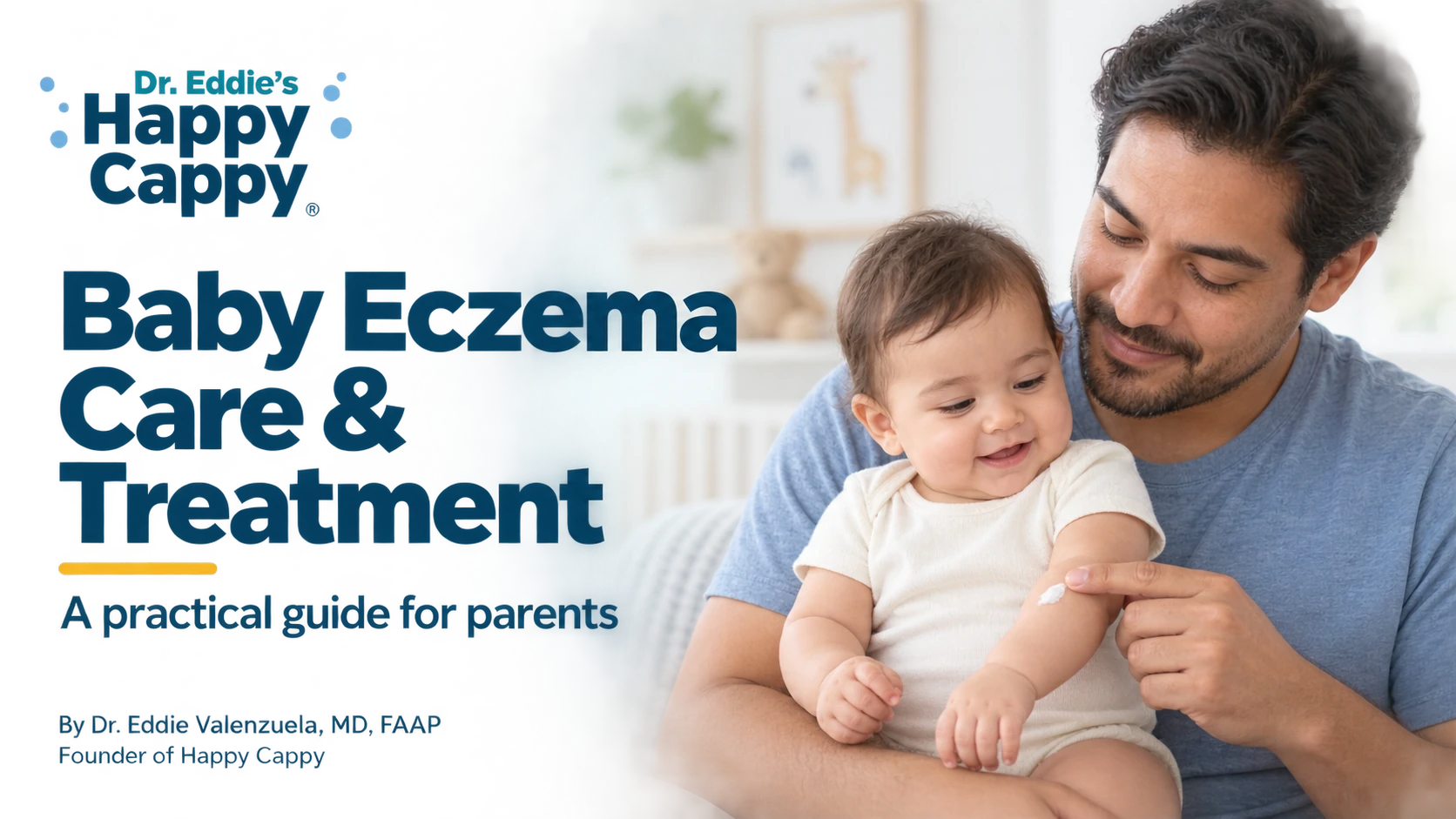
Apply a thick, fragrance-free cream or ointment soon after bathing, while the skin is still slightly damp. Reapply at least twice daily and after washing. Include the dry areas between obvious patches, and keep moisturizing when the skin looks calmer.
Creams and ointments generally hold moisture better than thin lotions. If a product repeatedly stings or seems to worsen the rash, stop using it and ask the clinician about another option. The AAD’s baby eczema care guidance explains these bathing and moisturizing basics.
3. Make the routine easy to repeat
Keep moisturizer near the changing area and with the supplies used by other caregivers. Choose two dependable points in the day, such as the morning change and bedtime, then add applications after washing. Share a written plan so everyone knows which product is the everyday moisturizer and which is a medicine.
What should change during a flare?
Continue the daily routine and follow the clinician’s instructions for treating inflamed patches. Moisturizer helps dryness, but it may not be enough to settle an active flare.
Ask for a plan that states:
- Which medicine belongs on each affected area.
- How much to apply, how often, and for how long.
- When to stop, reduce, or restart it.
- What to do if the rash returns in the same place.
- When to call if the skin is not improving.
For some children with frequent flares, a clinician recommends intermittent medicine on recurrent trouble spots even after improvement. Use that approach only as prescribed. The American Academy of Pediatrics treatment guidance explains how maintenance and flare treatment fit together.
Medicines and treatments your clinician may recommend
Topical corticosteroids
These medicines reduce inflammation and itch. A clinician chooses the strength and duration based on the baby’s age, the body area, and the flare. Infants and delicate areas such as the face usually need lower-potency choices. Even nonprescription hydrocortisone should be checked with your baby’s clinician.
Use the specified amount and course. Ask for a demonstration if you are unsure. Eyelids, skin folds, and skin under a diaper need particular care. Do not cover medicated skin with wraps or an extra dressing unless instructed, because covering can increase absorption. The AAD topical corticosteroid guide explains benefits and precautions.
Prescription nonsteroid options
Some babies need another anti-inflammatory treatment. In the United States, crisaborole ointment is approved for mild to moderate atopic dermatitis from 3 months of age. Dupilumab, an injectable medicine, is approved from 6 months for moderate to severe disease inadequately controlled with prescription topical treatment, or when that treatment is not advisable.
These are examples, not a treatment sequence for every baby. A specialist considers severity, previous response, age, benefits, and risks. Other medicines have different age limits. Our guide to nonsteroid treatments for itchy skin covers more options across age groups.
Wet wraps, antihistamines, and infection treatment
Wet wraps can be useful in selected flares, but a baby’s clinician should explain the products, technique, and duration. They can increase medicine absorption and can make an infant cold.
Antihistamines do not treat the underlying eczema inflammation and are not routine baby eczema care. Do not give a baby an antihistamine for itch or sleep unless their clinician specifically directs it. Suspected infection needs assessment; antibiotics or antiviral medicines are used when indicated.
Reduce avoidable irritation and improve comfort
Use soft, breathable clothing, avoid overheating, and keep nails short. Gently remove drool or food from the skin without repeated rubbing, then follow the skin-care plan for that area. Choose fragrance-free products and avoid an ingredient that has already caused a reaction.
Keep a simple record if flares repeatedly follow a particular exposure. Changing many products at once makes the pattern harder to interpret. Our guide to scratching and baby eczema offers more comfort strategies.
Food and allergy questions
Do not remove major foods, change formula, or restrict a breastfeeding parent’s diet just because a baby has eczema. A clinician may investigate allergy when there are reproducible food reactions, growth concerns, or persistent eczema despite an appropriate plan. Unnecessary restrictions can affect nutrition. The AAD explains why dietary changes are not a general eczema cure.
Where Happy Cappy fits into daily care
Happy Cappy Daily Shampoo & Body Wash provides gentle, fragrance-free cleansing and is made without SLS or SLES. Its moisturizing ingredients include glycerin, panthenol (provitamin B5), hyaluronic acid, apple fruit extract, and aloe vera. Oat kernel extract supports comfortable dry skin, while licorice root extract helps calm the appearance of redness. Wet the skin, gently lather where needed, and rinse; use daily or as often as needed.
Happy Cappy Moisturizing Cream is a fragrance-free, lightweight, non-greasy option for dry, sensitive, eczema-prone skin. Glycerin attracts moisture, petrolatum helps retain it, and licorice root extract helps calm the appearance of redness. Apply at least twice daily and after washing.
Use these skin-care steps alongside the baby’s prescribed plan. If the skin remains inflamed or itchy, the next step is to review that plan with the clinician.
When should treatment be reassessed?
Contact your baby’s clinician if the prescribed course is not helping, the rash keeps returning quickly, or itching continues to interfere with sleep or feeding. Do not keep extending or increasing a medicine on your own. If no review date was given, ask what improvement to expect and when to report back.
When a topical corticosteroid is not helping after about two weeks, the AAD recommends contacting the treating dermatologist. Review may involve checking the diagnosis, application technique, medicine strength, ongoing irritants, or infection. Seek help sooner if symptoms worsen.
Seek urgent care for rapidly worsening, painful, hot, swollen, blistering, or pus-producing skin, particularly with fever or a baby who seems unwell. Do not wait for the next routine appointment. The NHS eczema guidance describes infection warning signs.
Return to the eczema hub for guides to other ages, locations, and everyday questions.
Common questions about treating baby eczema
- About
- Latest Posts

- WhatToExpect Mentioned Happy Cappy Shampoo as the Best Medicated Shampoo For Cradle Cap - September 29, 2025
- Parents.com Mentioned Happy Cappy Shampoo in the List of 10 Best Shampoos for Babies and Kids of All Hair Types - September 29, 2025
- Chain Drug Review Covers Happy Cappy’s CVS Launch Nationwide - August 27, 2025
How often should I moisturize my baby's eczema-prone skin?
Apply a fragrance-free cream or ointment at least twice daily and after washing. Apply it soon after a bath while the skin is still slightly damp, and keep the routine going between flares.
Can I bathe my baby every day if they have eczema?
A short daily bath can be part of an eczema plan. Use lukewarm water for about 5 to 10 minutes, cleanse gently where needed, and moisturize afterward. Ask the baby's clinician to adjust the frequency if bathing seems to worsen dryness.
Can moisturizer replace an eczema medicine?
Moisturizer helps dryness and supports the skin barrier. Active inflammation may also need medicine. Continue daily skin care and follow the clinician's instructions for treating inflamed areas.
Can I put hydrocortisone on my baby's face?
Check with your baby's clinician first. The face needs particular care, and the correct medicine, strength, amount, and duration depend on the baby's age and diagnosis. Do not apply it near the eyes or under coverings unless specifically instructed.
Should I change formula or avoid foods to treat eczema?
Do not make broad food restrictions, change formula, or restrict a breastfeeding parent's diet solely because of eczema. A clinician can decide whether a reproducible food reaction, growth concern, or persistent symptoms warrant targeted evaluation.
What if the prescribed treatment is not working?
Contact the treating clinician at the planned review point, or sooner if symptoms worsen. A topical corticosteroid that has not helped after about two weeks warrants review. Do not keep increasing the strength or extending treatment yourself.
Which changes need urgent medical care?
Seek urgent care for rapidly worsening, painful, hot, swollen, blistering, or pus-producing skin, especially with fever or a baby who seems unwell. Possible infection should be assessed promptly rather than waiting for a routine review.
Suggested Products

Buy today
-
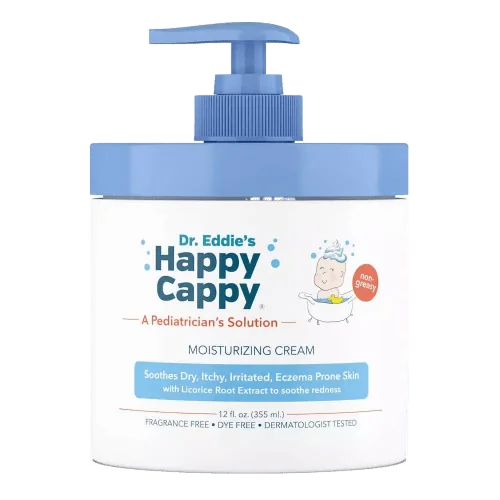 Moisturizing Cream for Dry, Itchy, Eczema-Prone Skin, 12 oz Pump Jar
$25.65 / 3 weeks – $49.00
Moisturizing Cream for Dry, Itchy, Eczema-Prone Skin, 12 oz Pump Jar
$25.65 / 3 weeks – $49.00
-
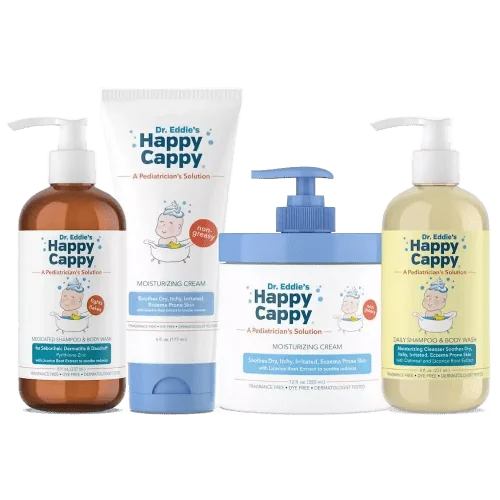 Complete 3-Step Routine for Cradle Cap & Eczema-Prone Sensitive Skin
Original price was: $51.45.$47.00Current price is: $47.00.
Complete 3-Step Routine for Cradle Cap & Eczema-Prone Sensitive Skin
Original price was: $51.45.$47.00Current price is: $47.00.
-
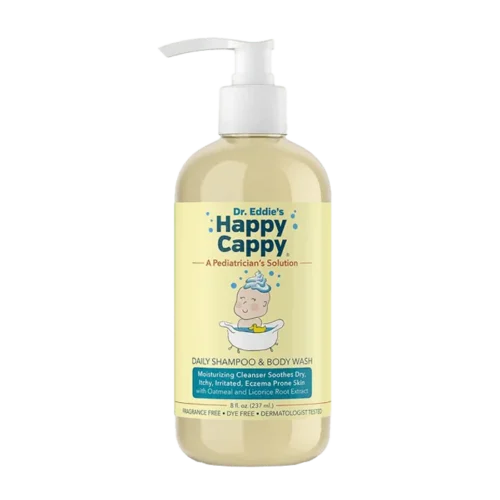 Daily Eczema Shampoo & Body Wash for Dry, Itchy, Sensitive Skin
$24.70 / 3 weeks – $109.08
Daily Eczema Shampoo & Body Wash for Dry, Itchy, Sensitive Skin
$24.70 / 3 weeks – $109.08