

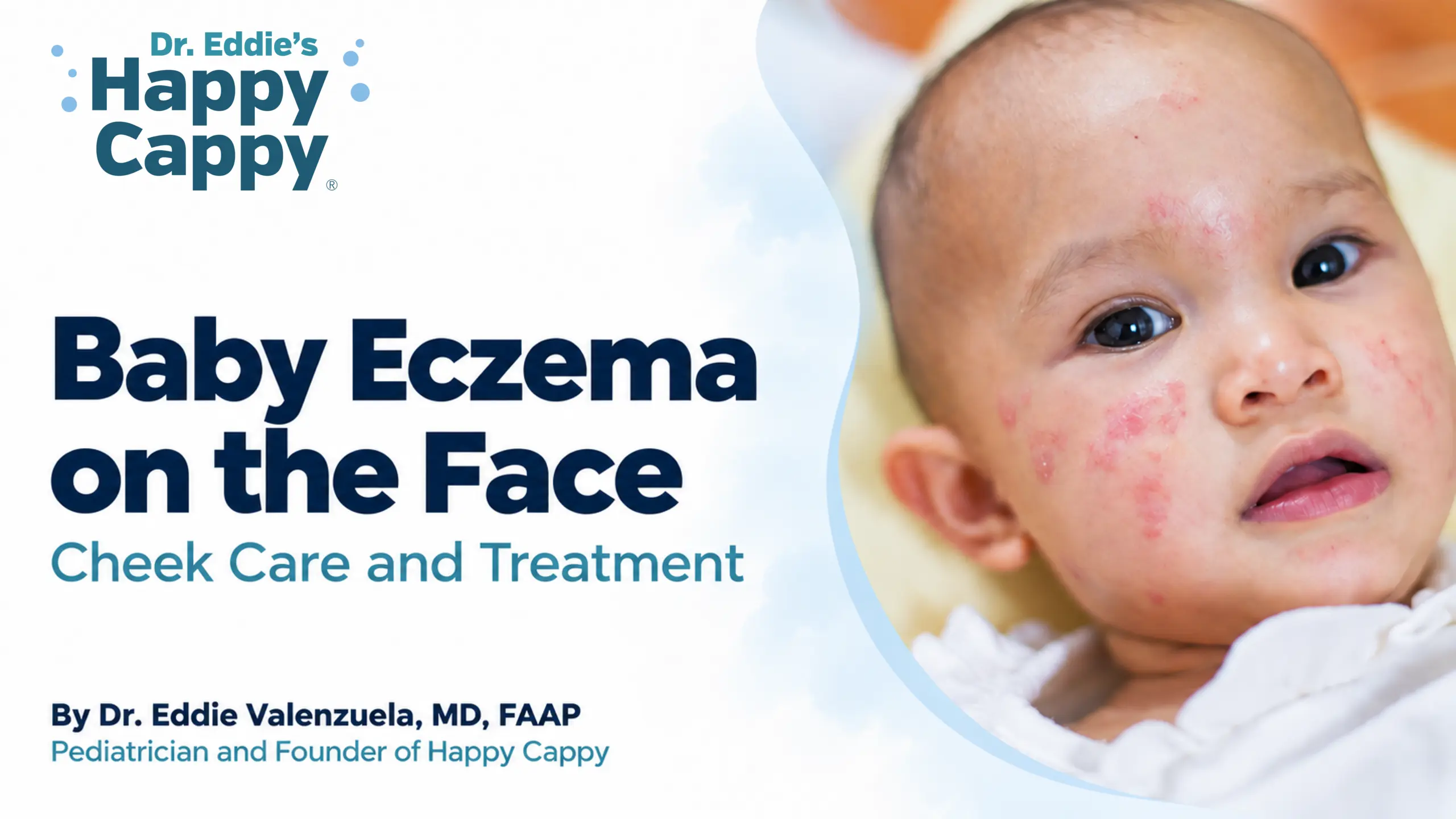
Quick answer: Baby facial eczema often causes dry, itchy cheek patches. Gentle cleaning, regular fragrance-free moisturizer and a clinician-directed flare plan can help. Saliva can worsen irritation, but not every facial rash is eczema. New painful blisters, spreading crust or pus, fever or an unwell baby needs prompt medical care.
Facial eczema often affects the cheeks
Atopic dermatitis can make a baby’s cheeks dry, rough and itchy. Rubbing the face against clothing or bedding may be a clue to discomfort. Inflammation may look pink or red on lighter skin and purple, gray or darker brown on deeper skin tones.16
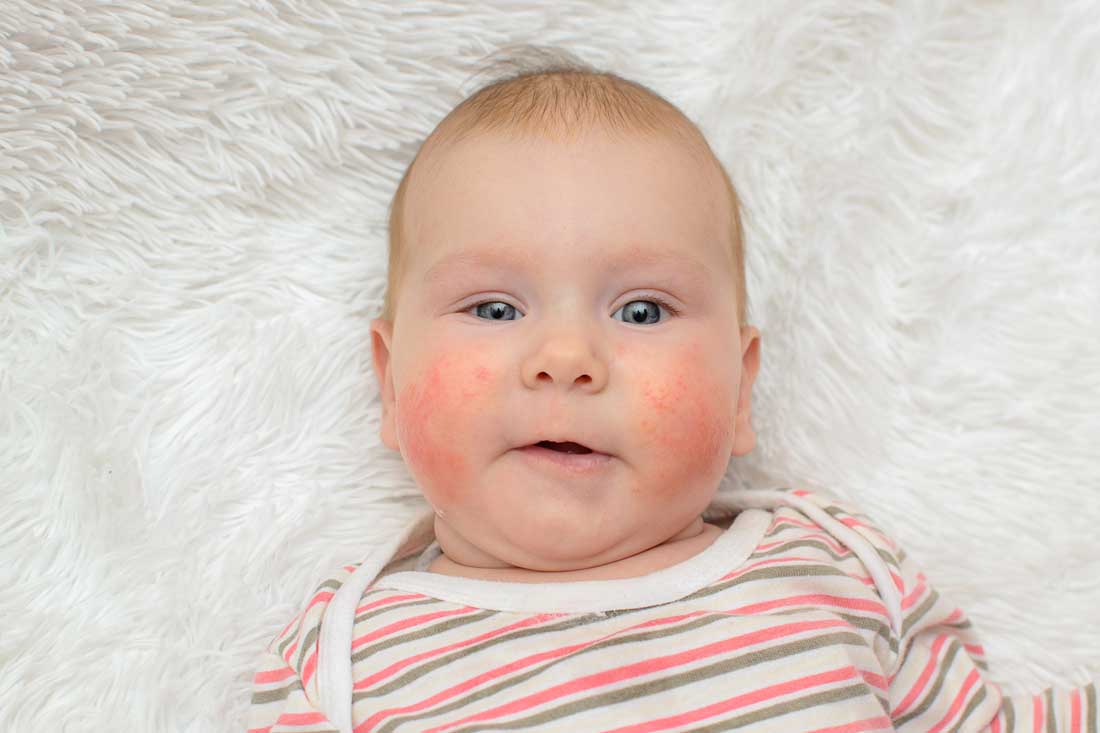
Flat lighter or darker areas may remain after a flare. These are often pigment changes rather than true scars. The eczema marks and scars guide explains the difference and when a pale patch needs examination.
Several facial rashes can look similar
Saliva and repeated wiping can irritate the skin around the mouth and chin, including skin that already has eczema. Baby acne and seborrheic dermatitis can also affect the face. A new or persistent rash deserves a diagnosis rather than repeated trials of eczema products.
Tell the pediatrician where the rash began, whether it itches, what touches the area and whether there is scalp scale. The baby eczema appearance guide compares common patterns. New yellow crust, pus or painful blisters needs an infection assessment.3
Keep facial care gentle and consistent
Clean without repeated scrubbing
Use lukewarm water and a soft cloth to remove food and saliva gently. When a cleanser is needed, use a mild, fragrance-free product and rinse it off. Blot rather than scrub, and avoid fragranced wipes on sore cheeks.1
Moisturize the dry areas
Apply a fragrance-free cream or ointment at least twice daily and after washing. Smooth it onto slightly damp skin when practical. Keep skin-care products out of the eyes and mouth. If the eyelids are involved, ask for specific care instructions for that area.12
Protect skin exposed to drool
A thin layer of plain petroleum jelly on the external skin around the mouth can reduce contact with saliva, particularly before feeding. Gently pat away drool and change damp clothing. Keep nails short and smooth to reduce skin injury from rubbing.1
The Baby Eczema Treatment guide covers the full bathing and moisturizing routine.
Facial inflammation needs an age-appropriate plan
Moisturizer helps the skin barrier, but an active flare may also need medicine. A pediatrician may recommend a low-potency topical corticosteroid for a limited course, or another treatment appropriate to the baby’s age and the affected area. The face and eyelids need different decisions from thicker skin elsewhere.2
Ask exactly where to apply it, how much to use and when to stop or follow up. Do not borrow a stronger body treatment for a baby’s face. Antihistamines are not a routine treatment for eczema inflammation or its itch.2
A facial rash does not establish a food allergy
Food or saliva touching irritated skin can leave a local rash. That alone does not prove food allergy. Hives away from the contact area, repeated vomiting, swelling or breathing symptoms after eating need medical attention; breathing difficulty or collapse is an emergency.4
Do not remove foods, change formula or restrict a breastfeeding parent’s diet solely because a baby has eczema. Discuss a consistent reaction pattern or poorly controlled eczema with the pediatrician so testing and nutrition advice are targeted.45
A simple routine for dry, eczema-prone skin
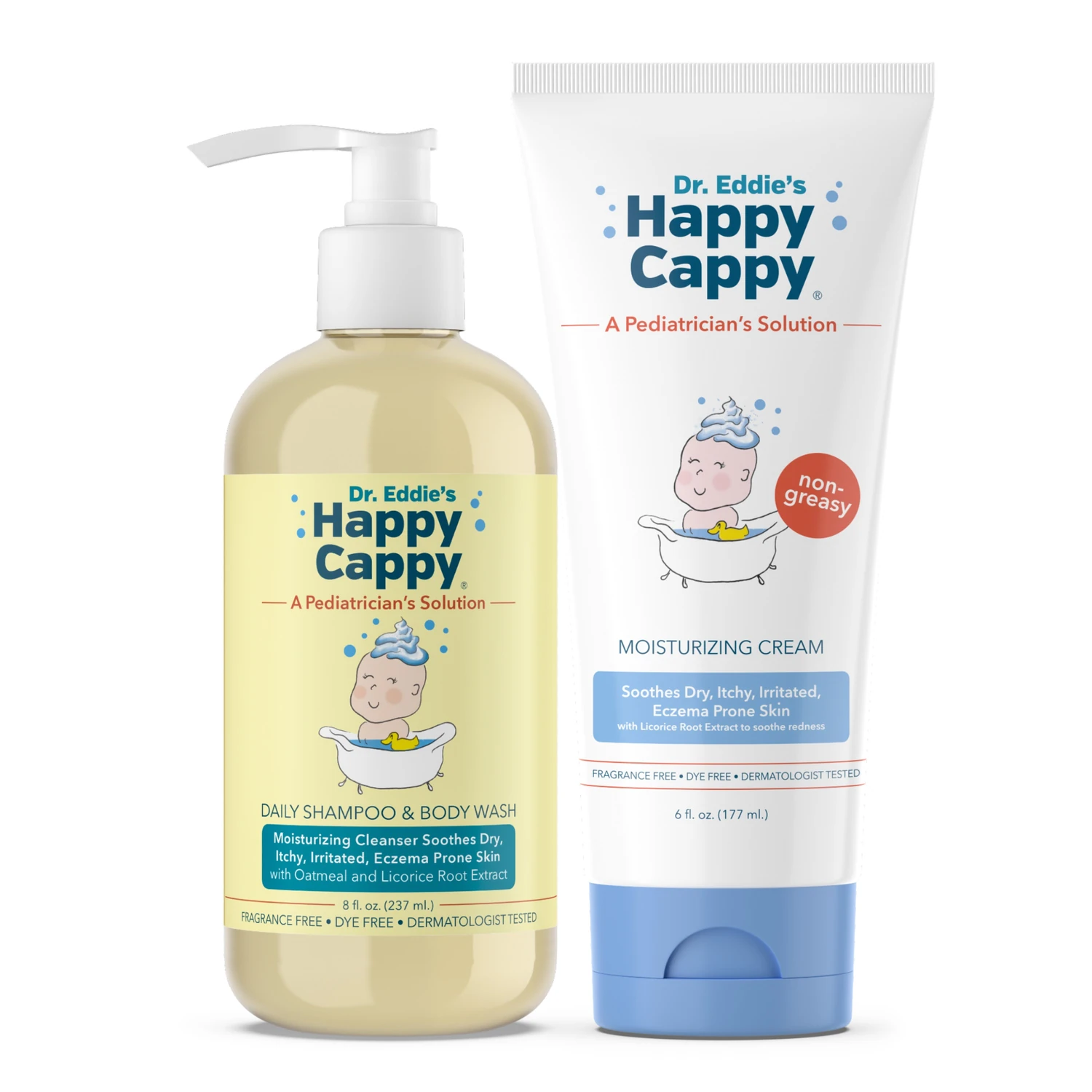
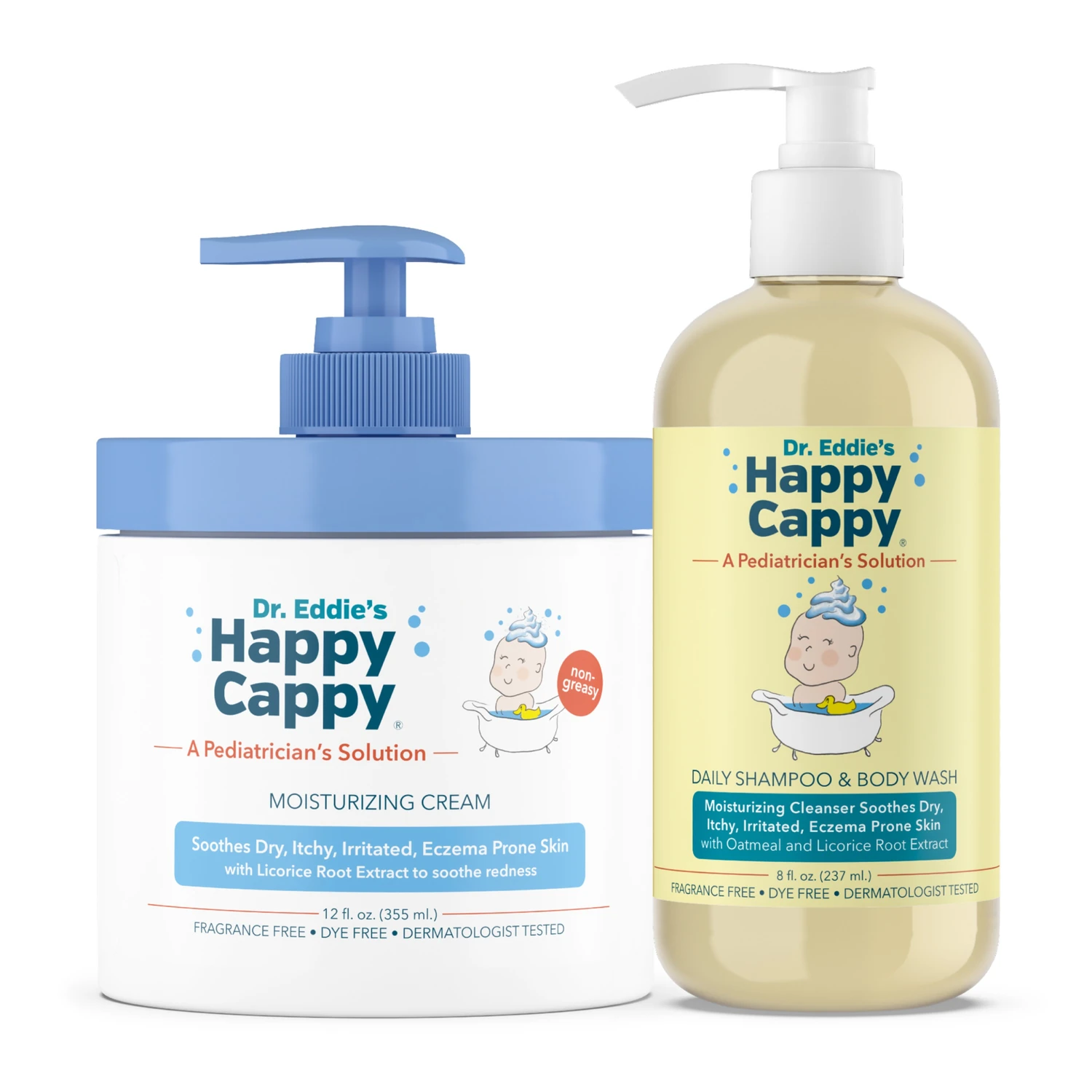
Happy Cappy Moisturizing Cream is a fragrance-free, fast-absorbing, non-greasy option for dry, sensitive skin. Glycerin attracts moisture and petrolatum helps retain it. Licorice root extract helps calm the look of redness, complementing those moisturizing ingredients. Apply a small amount gently to dry facial skin, avoiding contact with the eyes and mouth.
Happy Cappy Daily Shampoo & Body Wash provides fragrance-free cleansing without SLS/SLES. Use daily or as often as needed; facial cleansing should stay gentle and based on what needs washing. Choose one 8 oz Daily Wash with either one 6 oz Cream tube or one 12 oz Cream pump jar.
Signs that need medical attention
Contact the pediatrician for a first or uncertain facial rash, ongoing sleep or feeding disruption, or symptoms that are not improving with the agreed plan.
Seek urgent care for rapidly spreading painful skin, new clusters of blisters, pus, marked swelling, fever or a baby who seems unwell. Blisters near the eyes or eye pain need urgent assessment. A baby with eczema should avoid skin contact with someone who has an active cold sore, because herpes can cause a serious eczema infection.3
Continue with the Baby Eczema Treatment guide or return to the Eczema Resource Center.