

Quick answer: Dandruff does not spread from person to person, and ordinary contact with someone who has dandruff will not give it to you. Head lice and scalp ringworm can also cause itching or visible scalp changes, but they are different conditions that can spread.
Dandruff is a scalp condition
Dandruff causes flakes and sometimes itching. It is considered the mildest form of seborrheic dermatitis. Neither dandruff nor seborrheic dermatitis is contagious.1
Everyday contact does not spread dandruff
You do not need to avoid hugs, sitting together, school, work, or normal family contact because of dandruff. Loose dandruff flakes are shed skin, not evidence of an infestation. Dandruff alone does not require household disinfection or treatment of everyone in the home.1
If several people at home develop scalp symptoms, do not assume that someone passed on dandruff. Confirm the cause, especially when there are attached nits, broken hairs, or patches of hair loss.
Malassezia does not make dandruff contagious
Malassezia is a yeast normally found on skin. Skin oil and an individual's response to this yeast contribute to seborrheic dermatitis and dandruff. Yeast involvement does not turn dandruff into a contagious scalp infection. See the explanation of Malassezia and scalp symptoms for more detail.2
Scalp conditions that can spread
| Condition | Clues | Spread |
|---|---|---|
| Dandruff | Loose scalp flakes, sometimes with itching. | Not contagious. |
| Head lice | Crawling lice or nits firmly attached to hair. | Mostly through direct hair-to-hair contact. |
| Scalp ringworm | Scaly patches, broken hairs, or patches of hair loss. | Can spread through infected people, animals, or contaminated items. |
These clues help decide what to check; they do not replace an examination when the cause is unclear.1,3,4,6
Head lice need a lice check
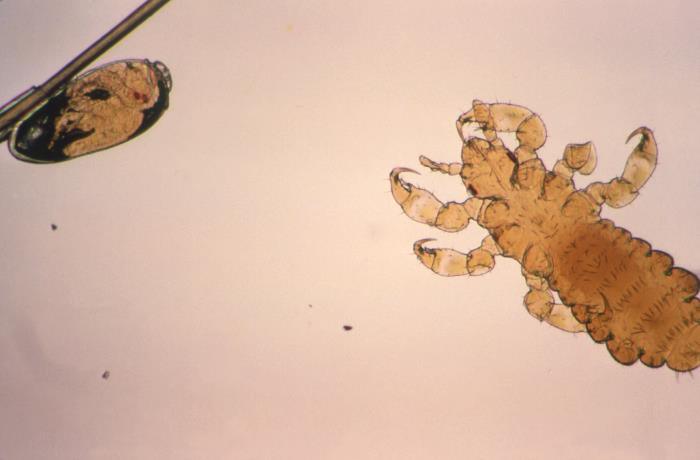
Finding a live crawling louse is the best way to confirm an active infestation. Dandruff flakes generally loosen more easily than nits, which are attached to hair shafts. Our lice eggs versus dandruff guide explains the distinction.3
Scalp ringworm needs different treatment
Scalp ringworm, or tinea capitis, usually needs prescription antifungal medicine taken by mouth. Dandruff shampoo alone does not cure it. Have a clinician assess suspected scalp ringworm rather than repeatedly switching dandruff products.5
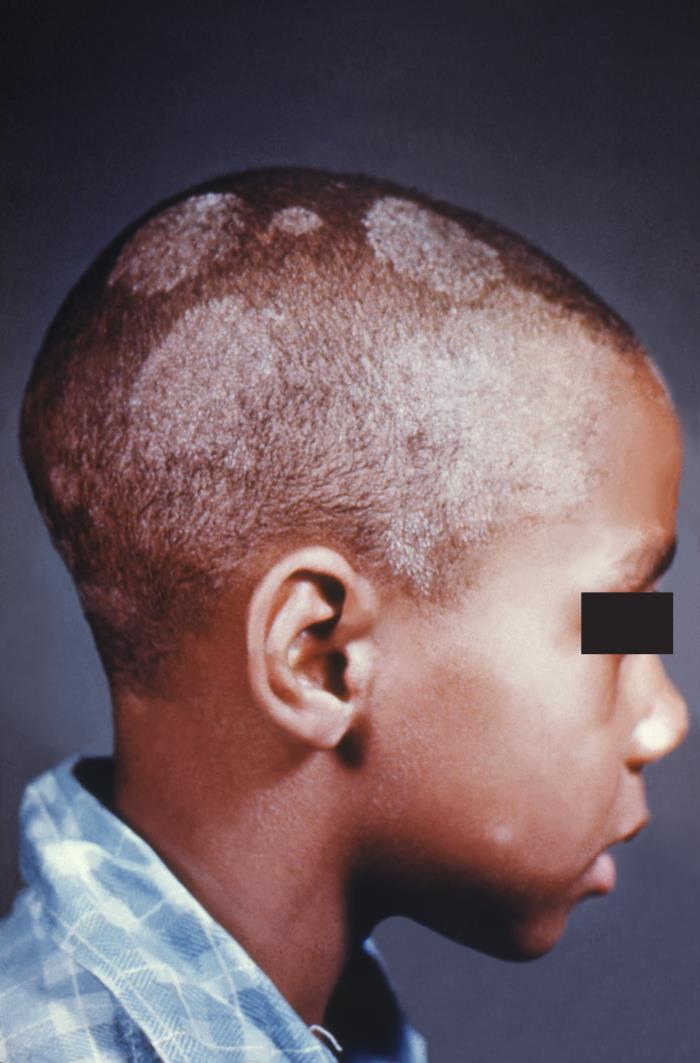
These CDC images are available free from the linked source pages. Their use does not imply endorsement of Happy Cappy or its products by CDC, HHS, or the U.S. government.
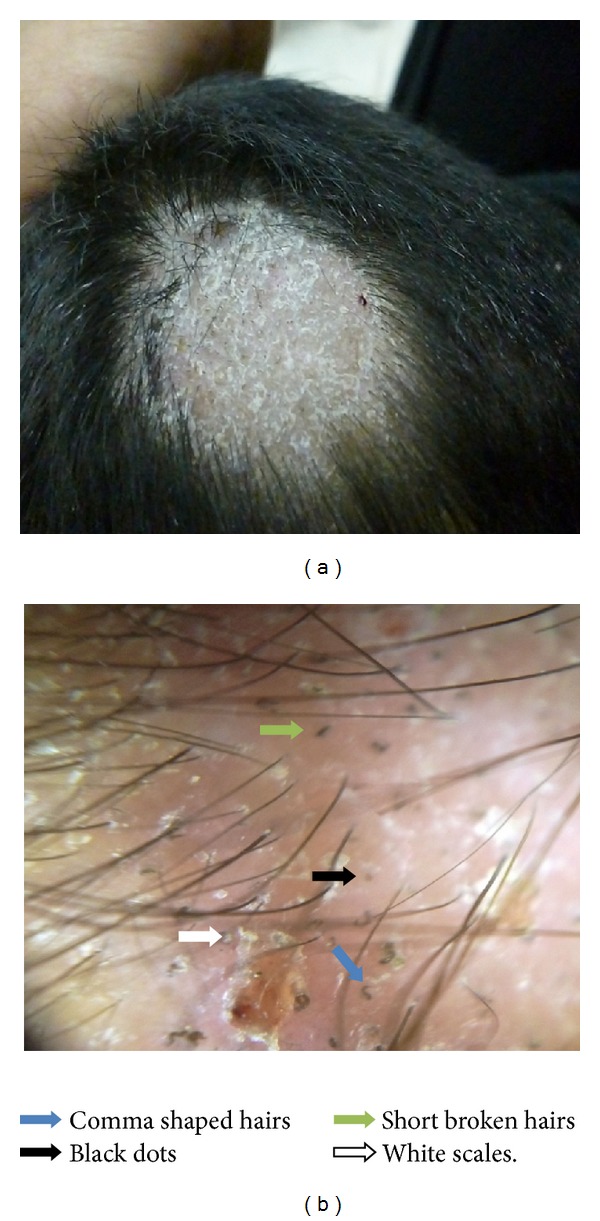
Broken hairs and black dots can also occur in other causes of hair loss; this photograph alone cannot establish a diagnosis.
The blue arrow also marks a comma hair: a short, curved shaft associated with fungal damage. Explore these clues, oral treatment and kerions in Scalp Ringworm and Its Effects on Hair.
Care depends on the diagnosis
For dandruff, use an appropriate dandruff shampoo as directed. Happy Cappy Medicated Shampoo & Body Wash contains pyrithione zinc 0.95% for dandruff and seborrheic dermatitis symptoms. It does not treat a head-lice infestation or replace oral treatment for scalp ringworm. The Dandruff guide covers the broader care options.7,5
Keep combs, hats, and towels personal as a general hygiene practice. If lice or ringworm is suspected, follow guidance specific to that condition.3,4
Seek an examination for persistent symptoms, painful or draining patches, broken hairs, or new patchy hair loss. Those signs can point to a problem other than uncomplicated dandruff.6,7
Cradle cap also does not spread
Infant seborrheic dermatitis, commonly called cradle cap, is not contagious. Parents and siblings can continue normal contact. For infant-specific care, use the Cradle Cap guide.1